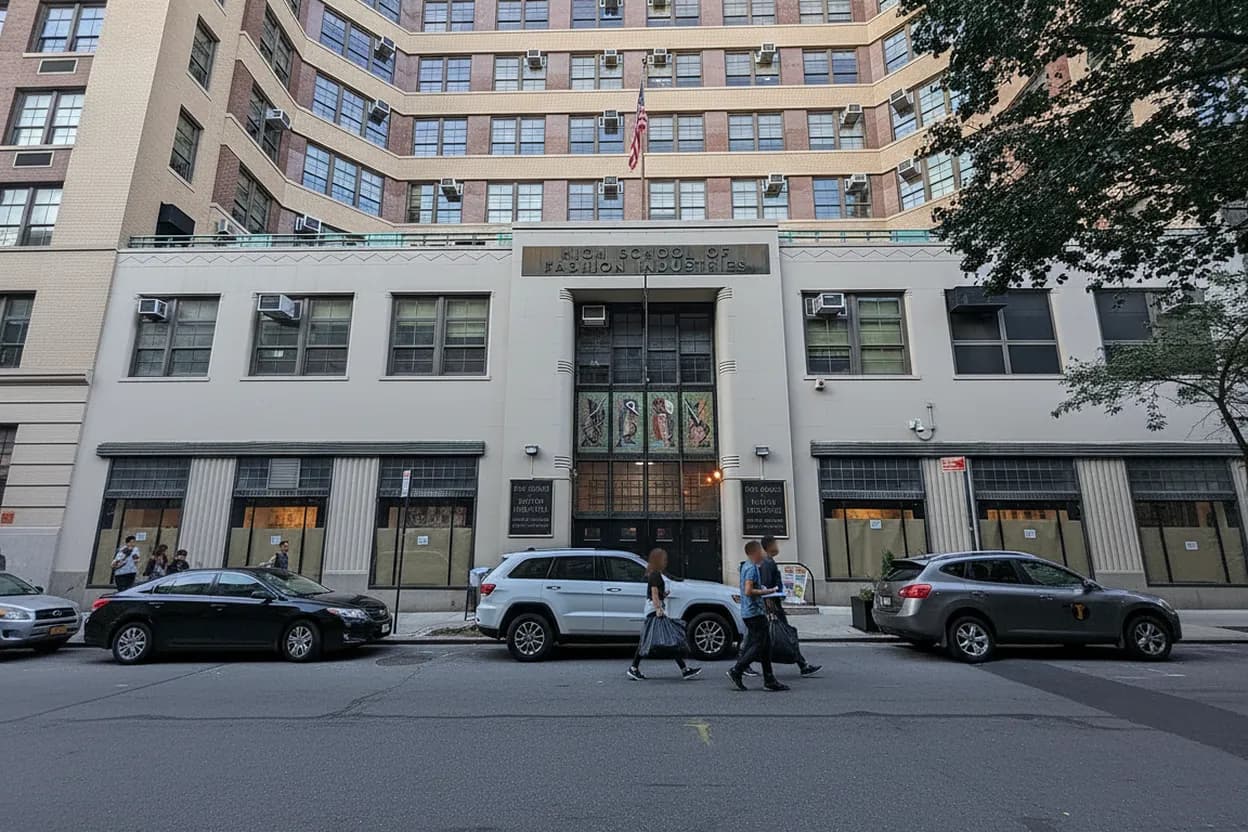
The first fabric errand before projects start at the High School of Fashion Industries is less about buying everything and more about learning how to shop under real constraints. The school is at 225 West 24th Street in Chelsea, with the Garment District close enough for a weekday afternoon run but far enough that heat, crowds, store hours, and indecision can eat the whole window. Treat this as a focused route for a fashion student and a classmate: confirm assignment requirements first, build a small swatch-and-notions list, then use verified shop hours and addresses to decide whether today is a buying trip or only a scouting pass.
Want a tighter fabric plan before the first studio brief gets messy? Text Karpo with your assignment, budget range, and pickup window for a route that prioritizes usable swatches over impulse buys.
Start at HSFI With the Assignment, Not the Aisle
High School of Fashion Industries sits at 225 West 24th Street, and NYC Public Schools lists the building as fully accessible, with minor barriers possible in older construction. That matters because a supply run often begins with logistics: who can carry bolts, who needs elevator-friendly routing, and whether the after-school window is realistic. Before leaving the block, write the garment type, fiber restrictions, color family, yardage range, and any teacher warnings in one shared note.
The common failure mode is walking north with only a mood board and coming back with fabric that photographs well but behaves badly. A fashion student preparing first studio assignments should separate required materials from optional inspiration. If the brief is not explicit, make this a swatch run, not a final purchase. Photograph labels, ask about fiber content when staff can confirm it, and avoid buying yardage for construction details the class has not covered yet.
Walk North Only If the Heat Window Still Works
On a sunny, pavement-hot weekday afternoon, the HSFI-to-Garment District walk can feel longer than the map suggests, especially with portfolios, water bottles, and sample books. The practical tradeoff is time versus stamina. Walking keeps the route simple and lets two classmates talk through choices, but it also spends energy before the serious looking starts. If either student is already tired, use transit or split the errand into one store plus one backup.
Pacing should be conservative: leave a margin for elevator waits, crowded fabric tables, and the slow work of comparing weight, drape, opacity, and stretch. Build in one water stop before entering the main store cluster. If the afternoon is already slipping toward closing time, skip wandering and go directly to a verified address. A rushed final yardage purchase is worse than returning with three documented swatches and a clear question for the teacher.
Use Mood Fabrics for Range, Then Narrow Fast
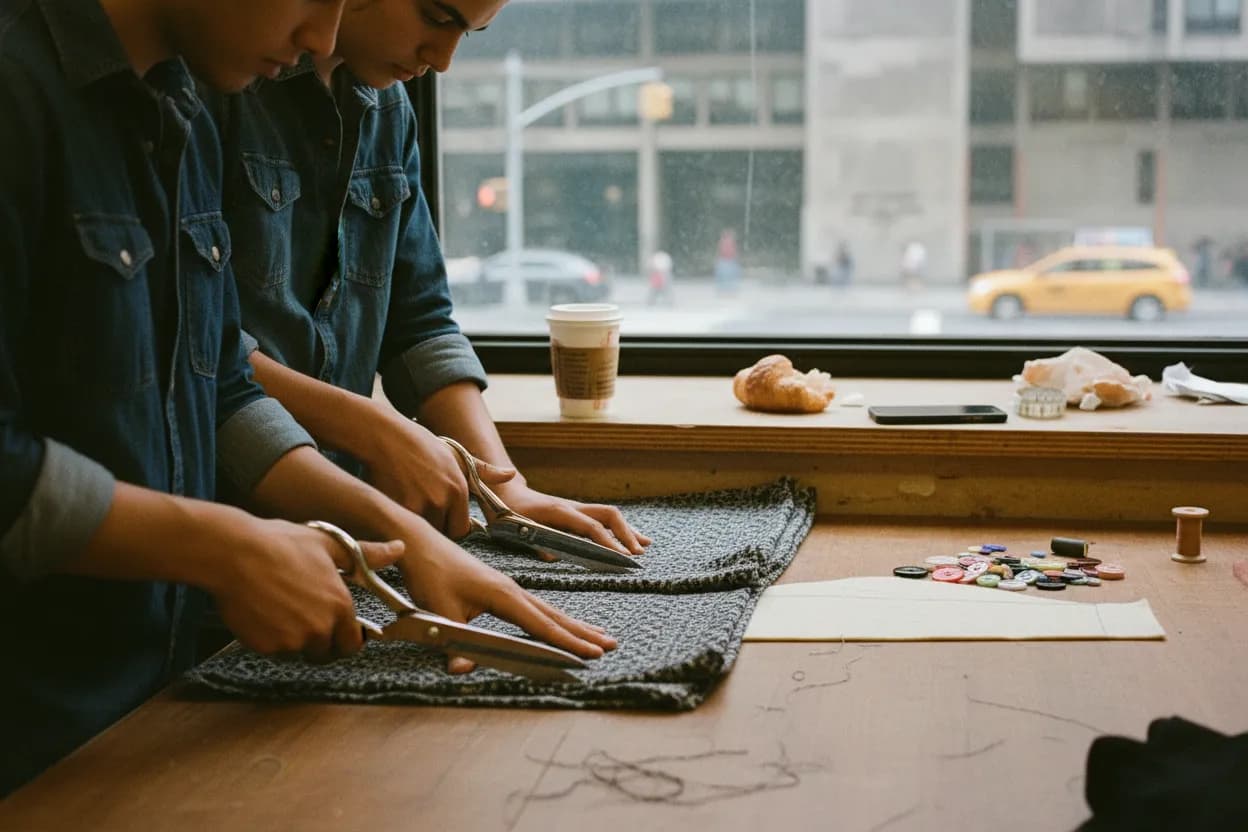
Mood Fabrics lists its New York City store at 225 West 37th Street, third floor, with weekday and Saturday hours posted on its store page. It is useful when the assignment is still broad because the range of textiles, trims, and notions can expose a student to real material differences quickly. The downside is overload. Enter with two target categories, such as cotton shirting and lining, rather than trying to inspect every aisle.
For a first project, Mood works best as a comparison lab: handle the fabric, note the weight, check recovery if stretch matters, and photograph shelf or tag details only where store policy and courtesy allow. Do not assume every appealing textile is beginner-friendly or washable. If the staff is busy, ask one narrow question, not a full design consultation. Leave with swatches or notes that match the brief, not just the most dramatic option.
Choose B&J Fabrics When the Brief Needs Precision
B&J Fabrics posts its store at 525 Seventh Avenue, second floor, with weekday hours and weekend closure on its website. This is a stronger stop when the student already knows the project needs finer fabric judgment: wool versus crepe, lining compatibility, formalwear hand, or a cleaner color match. The tradeoff is that precision shopping can be slower and less forgiving if the assignment is vague or the budget has not been set.
The decision rule is simple: go to B&J when you can describe the use case in one sentence. For example, a structured skirt muslin becoming a final garment needs different fabric behavior than a draped top exercise. Bring the classmate in as a second set of hands and eyes, but avoid committee shopping. One person should check drape and opacity while the other tracks item names, floor location, and questions to verify before buying.
Add Loom and Stars Only for a Smaller Specialty Detour
Loom and Stars lists in-person shopping on Broadway between 25th and 26th Streets, with limited posted shop hours and appointment flexibility. Because it is much closer to HSFI than the West 37th and 38th Street cluster, it can be a useful specialty detour when the project calls for distinctive cottons, handwoven textures, or a calmer browsing environment. The limitation is selection scope: it is not a one-stop emergency source for every notion.
This stop makes sense when the student has extra time before heading north or needs a quieter place to compare fabric character without the full Garment District rush. Verify hours before relying on it, because limited windows can change how the errand works. If the shop is closed or the fabric type is too specific, treat the detour as optional and continue to the larger supply cluster rather than forcing the assignment around one beautiful textile.
Read the Garment District as a Supply Cluster, Not One Store
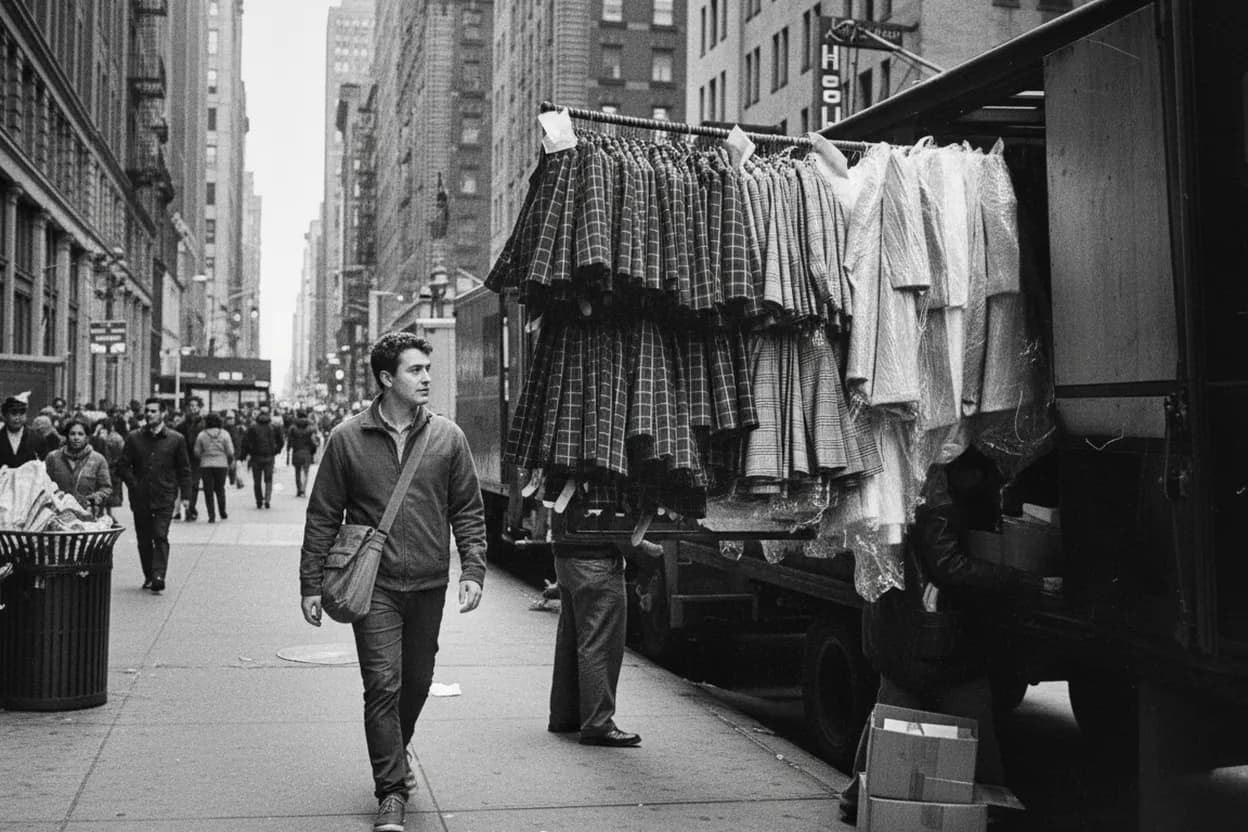
The Garment District Alliance describes the neighborhood as a Midtown fashion district with thousands of businesses across a compact area. For students, that density is the real advantage: fabric, trim, zippers, buttons, thread, and specialty materials may sit within a few blocks, but not always in the same shop. The route works when you cluster needs by category instead of bouncing randomly between windows, sale signs, and upstairs showrooms.
The risk is decision fatigue. A classmate can help by calling out when options are no longer improving the project. Set a cap: one broad fabric store, one precision store, and one trim or notions stop only if the assignment already requires it. If a store is appointment-only, wholesale-focused, closed, or too expensive, do not improvise a purchase just to finish. Record the gap and verify another source before committing.
End Back at 24th Street With Proof, Questions, and a Backup
The final step should happen before the student leaves the area, not later at home when details blur. Sit near school or at a nearby public spot, compare photos, swatches, receipts, and notes, then sort them into buy now, ask teacher, and reject. This is also the accessibility check: confirm the return route, elevator needs, bag weight, and whether the next trip requires a guardian, more time, or online ordering.
Before projects start, the best outcome may be restraint. Verify store hours, assignment rules, yardage, fabric care, return policy, and whether swatches are enough for the next class. If any one of those facts is uncertain, make verification the decision guide rather than guessing. A medium-difficulty supply route succeeds when the student returns excited, slightly less overwhelmed, and able to explain why each material either fits the brief or needs another look.
Tags: #HighSchoolOfFashionIndustries #HSFI #GarmentDistrictNYC #NYCFashionStudents #FabricShoppingNYC #BackToSchoolNYC #StudentSupplies #FashionDesignStudent #ChelseaNYC #NYCSchools #SewingSupplies #AskKarpo #BeforeYouGo #KarpoNYC
Sources consulted: Source 1: schools.nyc.gov · Source 2: hsfi.nyc · Source 3: moodfabrics.com · Source 4: bandjfabrics.com · Source 5: garmentdistrict.nyc · Source 6: loomandstars.com
All trademarks are the property of their respective owners.
Ask Karpo first
Tell Karpo your date, group size, budget, and starting neighborhood. We’ll check current access, timing, transit, and the cleanest plan for High School of Fashion Industries area before you head out.