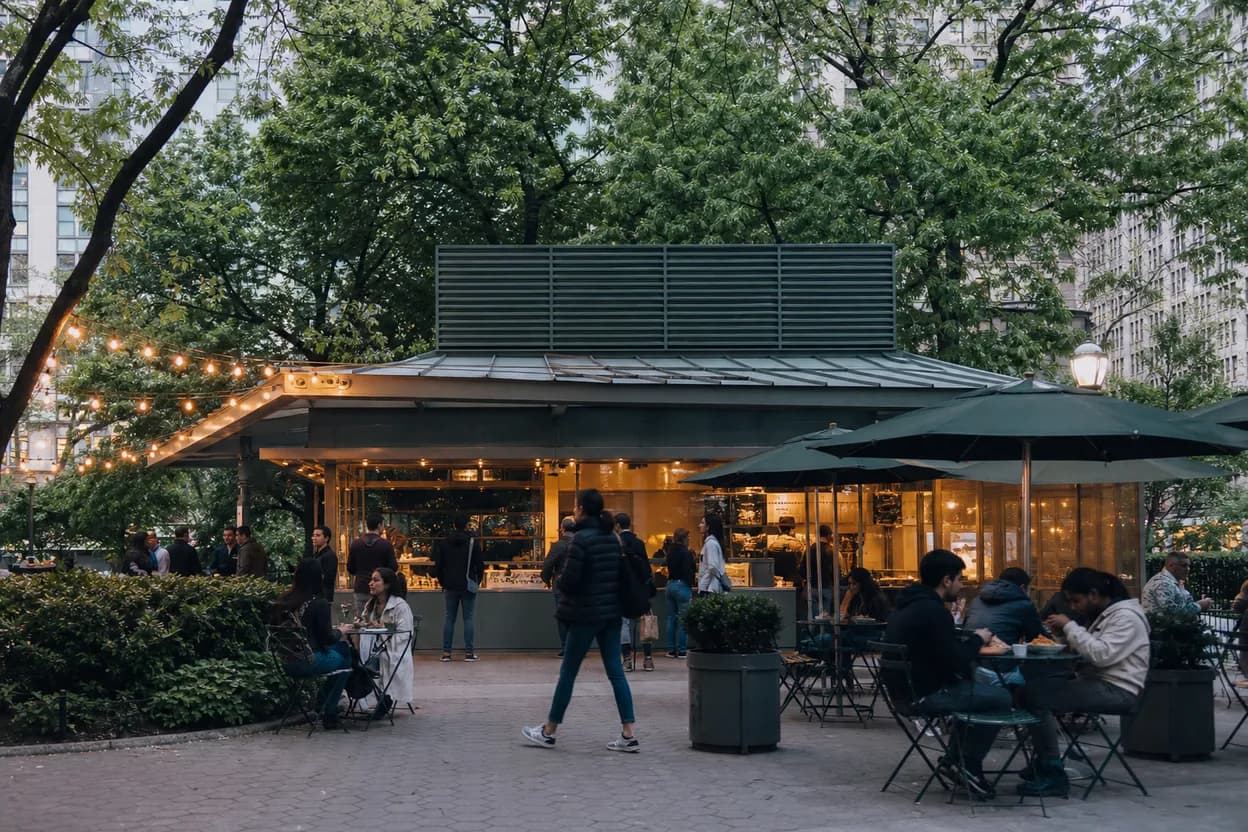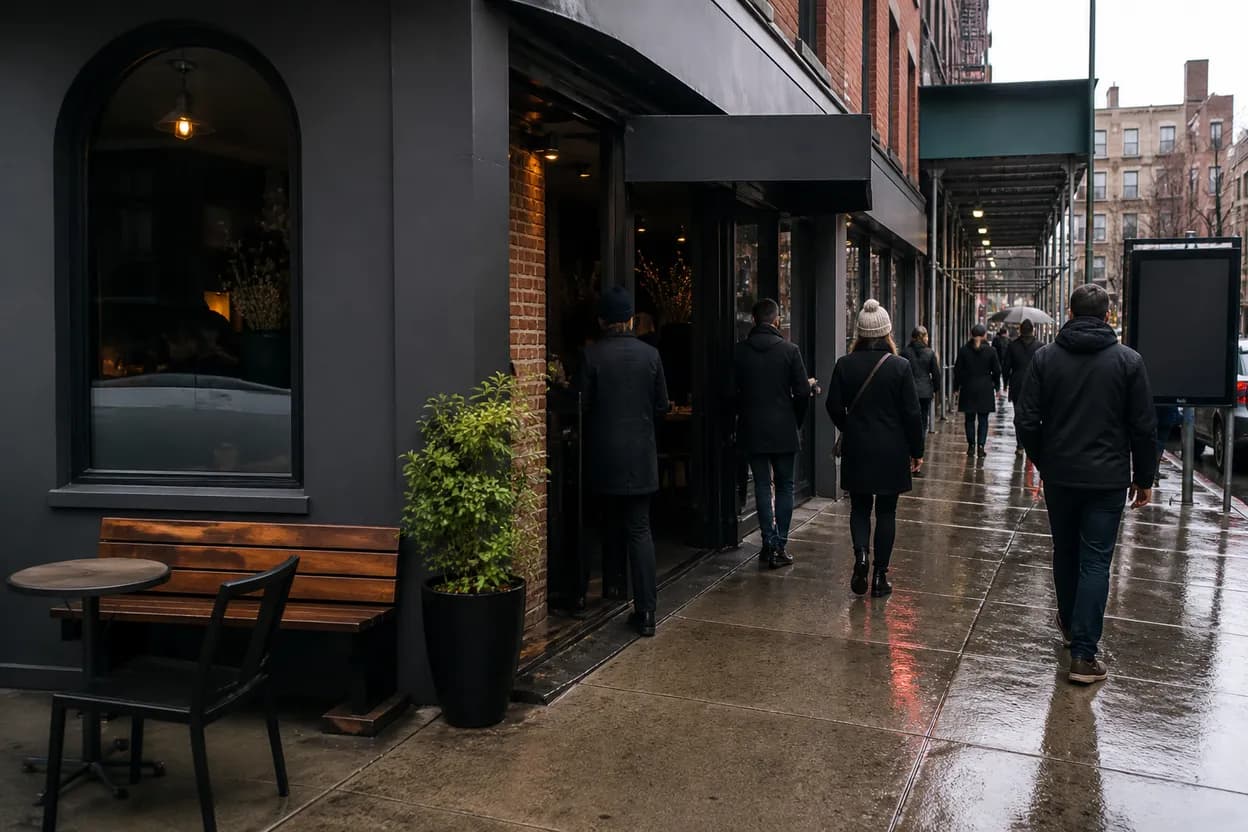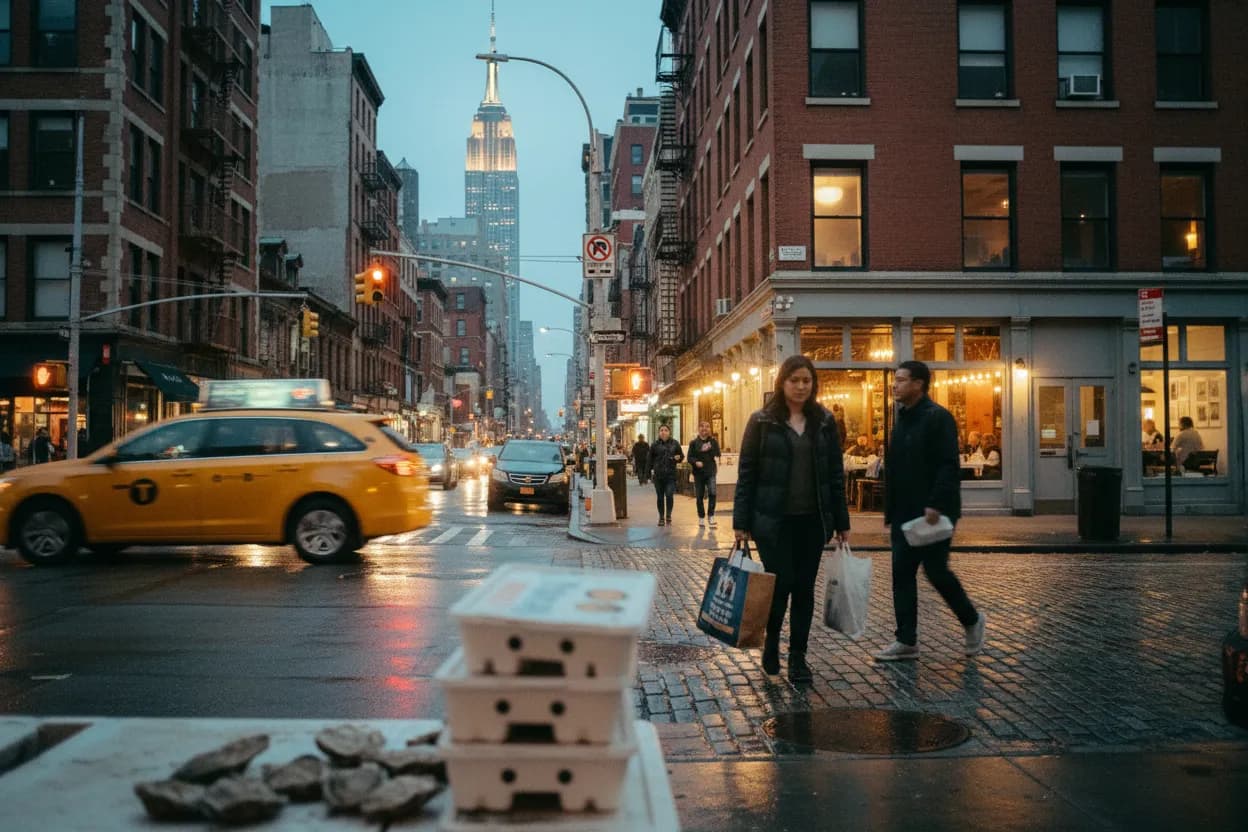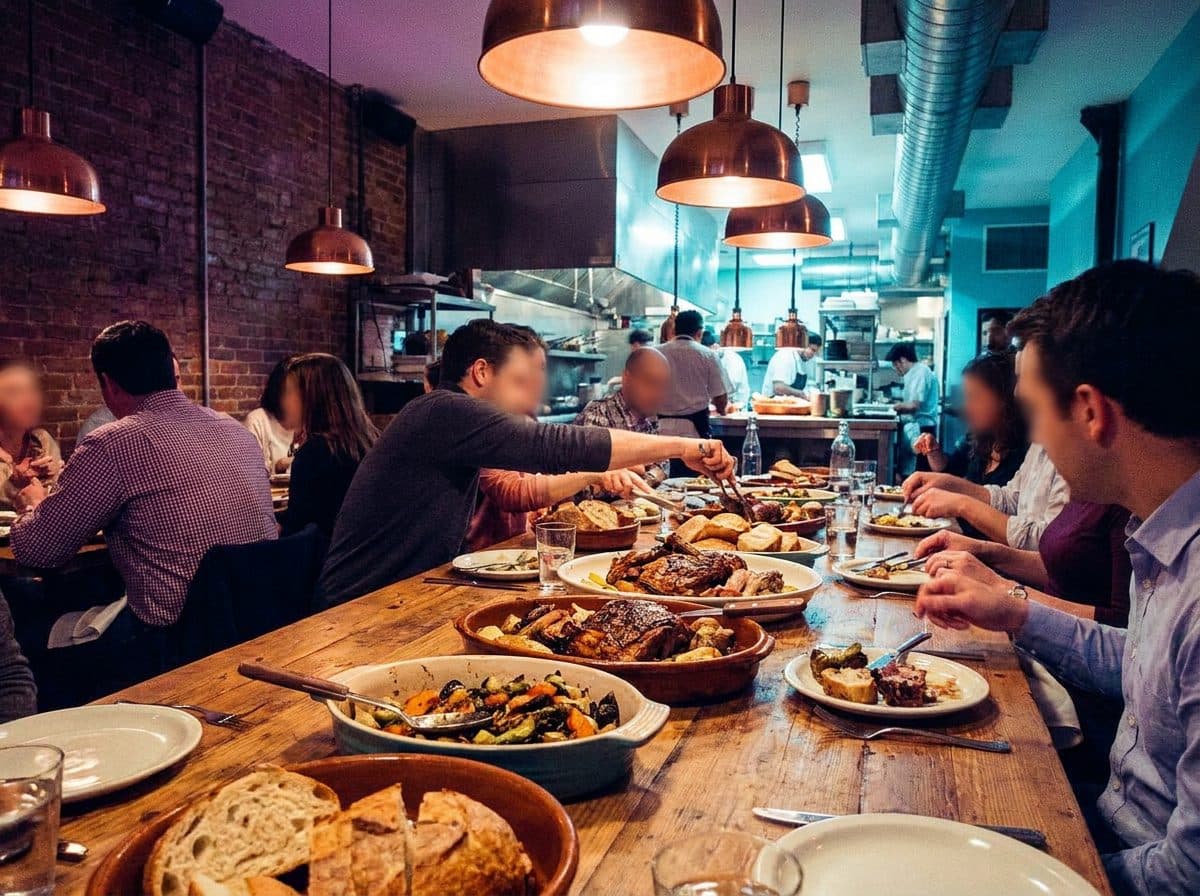
The corner storefront sits on a stretch of Harlem where the evening foot traffic thins after the bodegas close, a block or two from the main avenue bustle. Inside, the room holds maybe twelve tables, and the injera — that spongy, sour flatbread that functions as plate, utensil, and flavor vehicle in Ethiopian cuisine — arrives before anyone has finished reading the menu. This is the kind of place that decides what hospitality looks like before the guest does.
The Bread That Sets the Terms
Ethiopian restaurants in New York run a wide spectrum, from quick-service lunch counters to ornate dining rooms with woven basket tables. This one occupies a middle register: unhurried but not ceremonial, family-run but not chaotic. The injera comes out on a wide metal platter, still warm, edges slightly curled from the griddle. It lands on the table as a statement of intent. The kitchen will send food when the food is ready. The menu exists, but the meal has its own logic.
First-timers sometimes look around, uncertain whether to wait or start tearing. The regulars know: pull a piece, let it sit. The bread is both preview and pacing device. By the time the stews arrive — arranged in colorful mounds across a second, larger injera — the table has already settled into the rhythm of the room.
A Weeknight Secret on the Platter
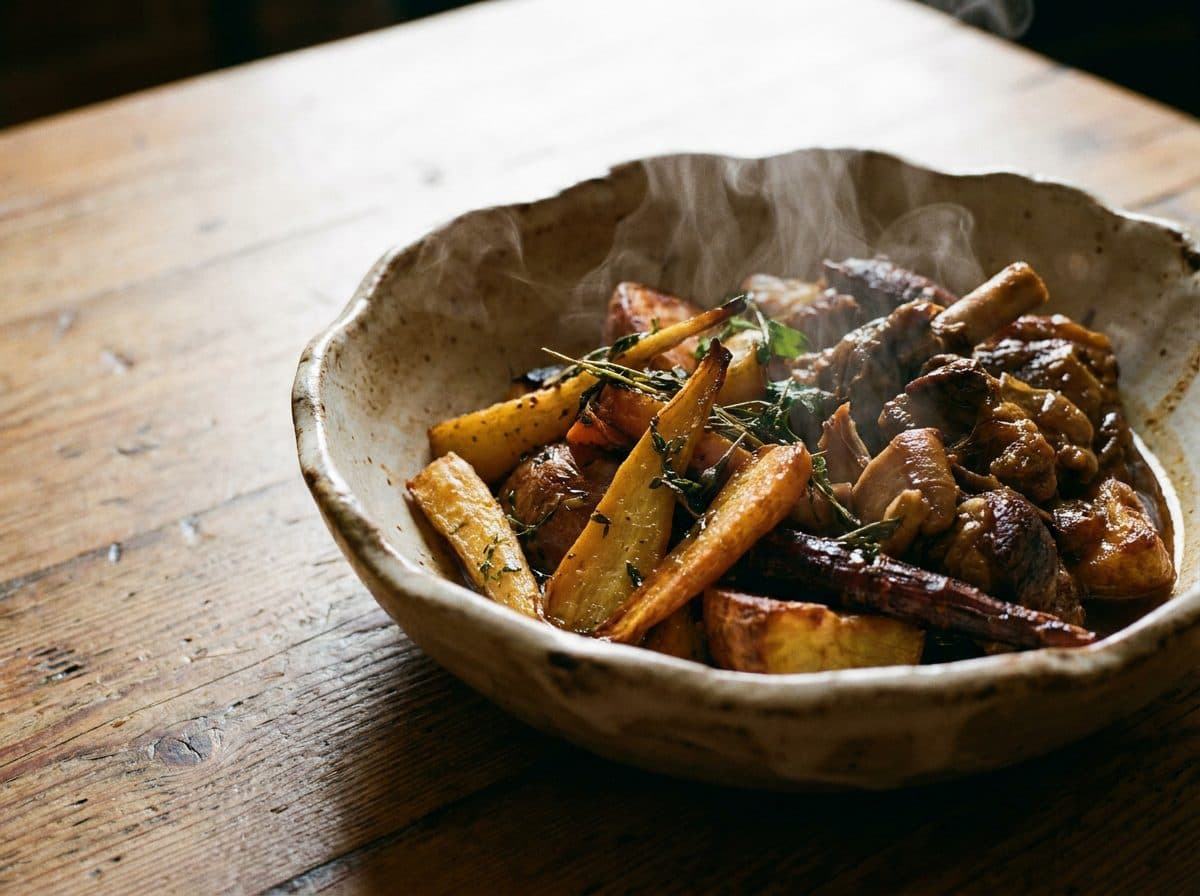
The combination platters here follow a familiar template: doro wot (the canonical chicken stew, brick-red with berbere), misir wot (red lentils, earthy and soft), gomen (collard greens, simply braised), and one or two vegetable sides that rotate. But on weeknights — Tuesday through Thursday, specifically — the kitchen adds a dish that doesn't appear on the laminated menu. It's a lamb tibs preparation, the meat seared with rosemary and green pepper, tucked into one corner of the platter like an afterthought.
The servers don't announce it. Those who notice, notice. Those who ask are told only that the kitchen made extra. Whether this is inventory management or quiet generosity depends on interpretation. Either way, the weeknight platter carries more weight than the weekend version, both literally and in terms of what it reveals about how the place operates when the crowds thin out.
Honey Wine in a Berele
Tej, the Ethiopian honey wine, appears on most Ethiopian menus in the city. Here, it arrives in a berele — a round-bottomed glass flask with a narrow neck, the traditional vessel from the northern highlands around Gondar. The shape matters. The narrow opening concentrates the aroma, honeyed and faintly medicinal, before the first sip. The rounded base means the glass cannot be set down until emptied, a design feature that enforces a certain commitment to the drink.
The tej itself is made off-site, sourced from a producer in the Bronx who supplies several Ethiopian restaurants in the tristate area. It's sweeter than wine, lower in alcohol than most expect, and pairs unexpectedly well with the heat of the berbere-spiced stews. One glass is enough for most. Two glasses, and the room softens at the edges. The servers pour with a slight ceremony, tilting the berele to show the golden color against the overhead light before setting it down.
The Room After Eight
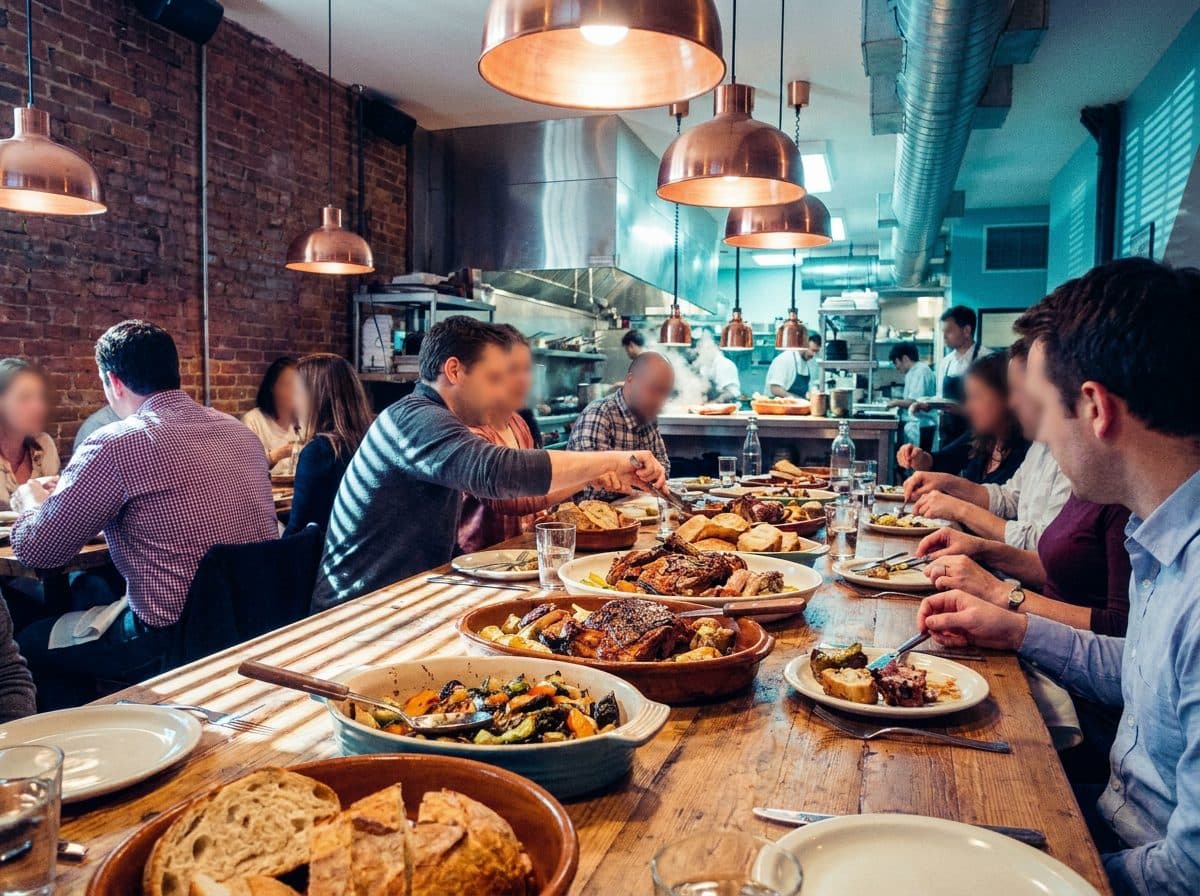
The dinner service here runs long by New York standards. The kitchen stays open past ten on weekends, and the room shifts character as the evening deepens. Early diners — families, couples on first dates, the occasional solo diner with a book — give way to a later crowd that lingers. By nine o'clock, the tables closest to the kitchen window fill with groups who seem to know each other from somewhere else: community gatherings, church functions, the invisible social infrastructure of the diaspora.
The television in the corner, muted during early service, sometimes flickers to life for soccer matches that matter to the room. When the Ethiopian national team plays, or when a European league match carries weight, the volume comes up and the conversation shifts. The communal eating culture — hands reaching across the platter, injera torn and shared — extends to the viewing. Strangers at adjacent tables exchange glances when a goal lands.
The Table by the Window
For groups of four, the table to request is the one nearest the front window, slightly angled away from the door. It's the only four-top that doesn't require the staff to push two smaller tables together, which means no waiting during peak hours while the room reshuffles. The window seat also catches the last of the evening light in summer, and offers a view of the street that makes the meal feel less enclosed.
The other tables work fine. But the window four-top has a particular quality: enough distance from the kitchen to allow conversation, enough proximity to the entrance to see who comes and goes. Regulars know to arrive by seven-thirty on Fridays to claim it. By eight, the wait begins.
The Pace of the Place
Nothing here moves quickly. The injera arrives fast, but the main platters take time — twenty minutes, sometimes longer. The servers check in without hovering. Water refills happen when they happen. This is not inefficiency; it's a different theory of what a meal is for. The food is meant to be eaten slowly, with hands, in conversation. The kitchen sends it when the kitchen is ready, and the table adjusts.
For diners accustomed to the transactional pace of most New York restaurants, this requires recalibration. The reward is a meal that feels less like consumption and more like participation. By the time the check arrives — unhurried, often only after a gentle request — the table has usually been sitting for ninety minutes or more. No one seems to mind.
Practical Notes
The restaurant sits in central Harlem, accessible from the 2 and 3 trains with a short walk east. Street parking exists but requires patience after six o'clock. The room does not take reservations; walk-ins only, first-come seating. Weeknights before seven-thirty rarely involve a wait. Friday and Saturday after eight, expect fifteen to twenty minutes if the window table is the goal. The kitchen closes around ten-thirty on weekends, earlier on quieter nights. Cash is preferred but cards are accepted. A meal for two with tej runs somewhere in the mid-range for the neighborhood — not cheap, not special-occasion expensive. The dress code is nonexistent. The vibe is come-as-you-are, stay-as-long-as-you-like.
Tags: #HarlemEats #EthiopianFood #InjeraCulture #TejHoneyWine #FamilyStyleDining #NYCRestaurants #HarlemDining #CommunalEating #EthiopianCuisine #HiddenGems #DiasporaDining #SlowFood #HarlemNights #WeekdayFinds #BereleService
Sources consulted: eater.com · timeout.com · infatuation.com
All trademarks are the property of their respective owners.
Ask Karpo first
Want to know whether the kitchen is doing the extended family-style service tonight, which platter is the right call for a first visit, and how long you should actually budget for dinner? Ask Karpo for a current read on the room and a Harlem evening worth planning around.