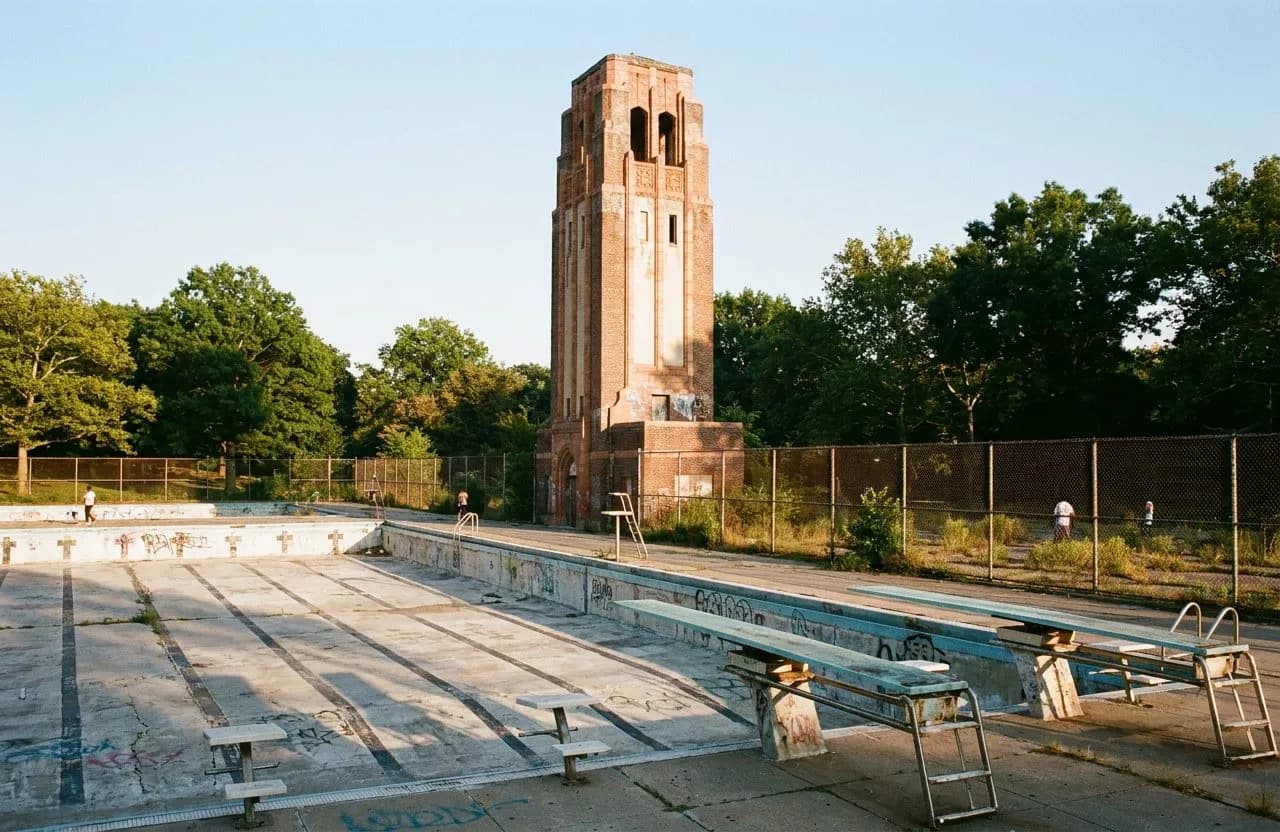
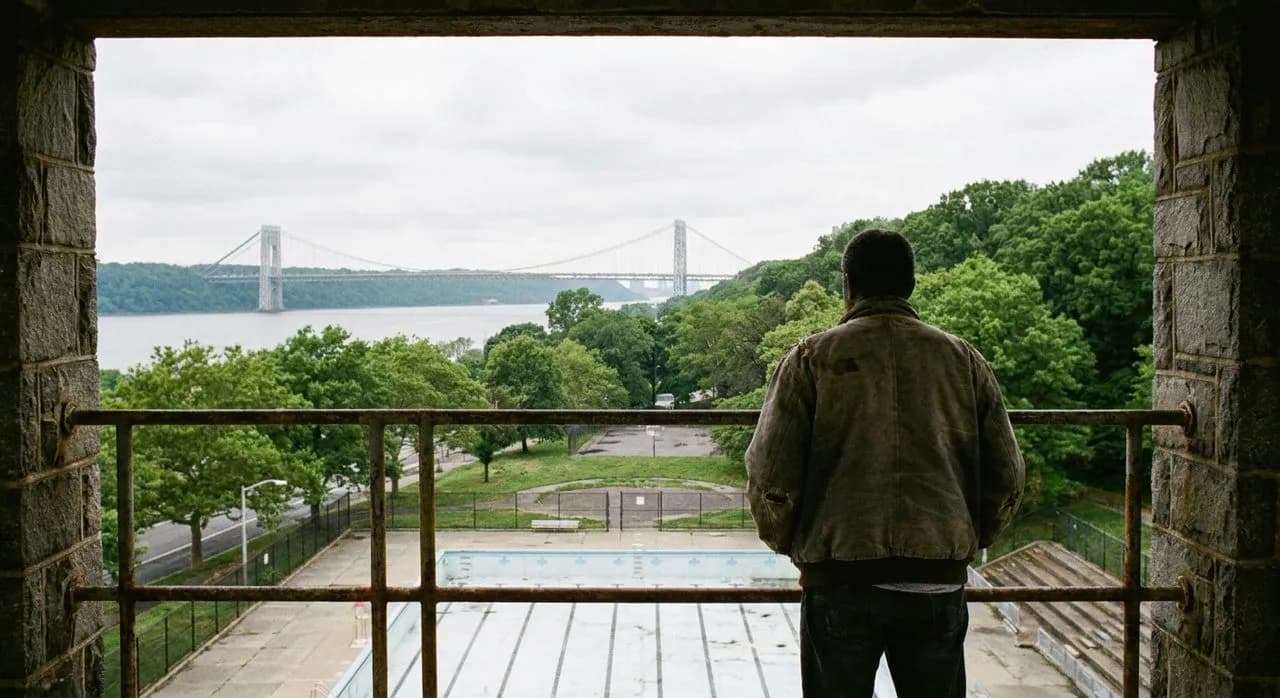
Most people walk past the Colonial Park Pool tower without a second glance—a pale concrete column rising above the empty basin, shuttered and silent for much of the year. But between September and May, when the pool lies dormant and the Colonial Park entrance is open during park hours, this five-story 1936 sentinel becomes one of Harlem's quietest vertical escapes. No admission booth, no posted hours, no queue. Just poured concrete, original terrazzo treads worn smooth by decades of lifeguard shifts, and a rooftop deck that frames the Hudson, the George Washington Bridge, and blocks of brownstone cornices stretching east toward the bluffs of Morningside.
A WPA monument hiding in plain sight
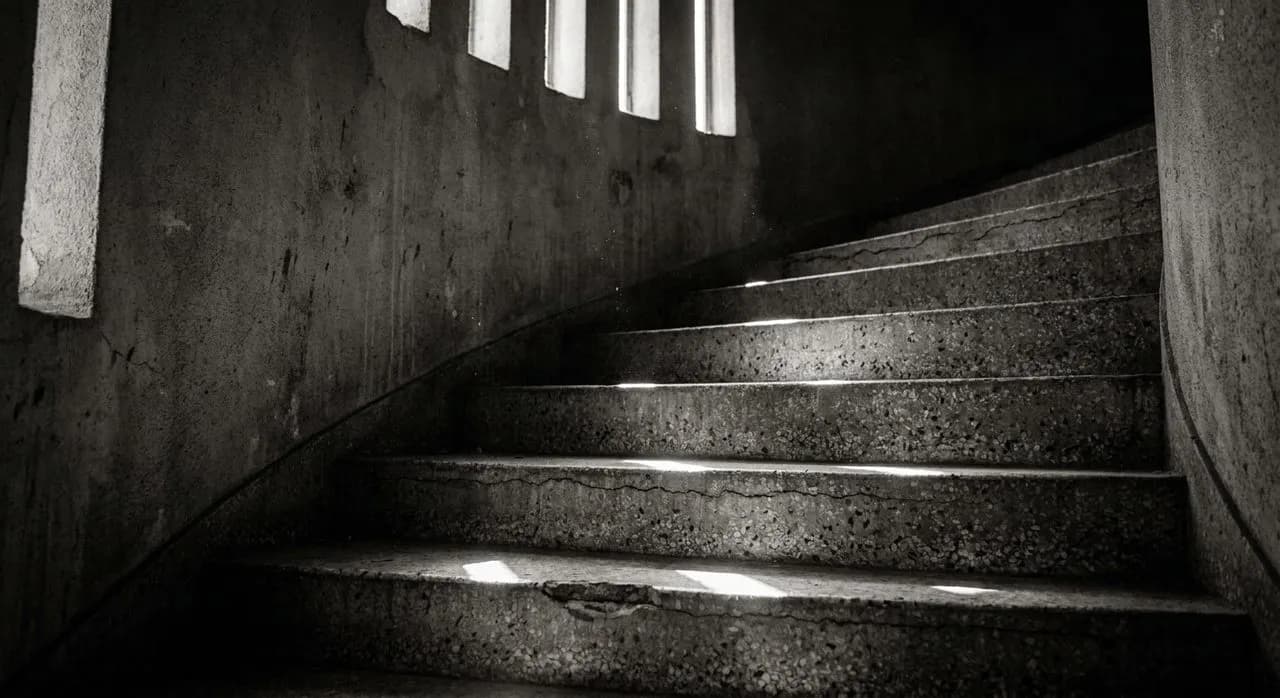
The tower belongs to that confident stripe of civic architecture born during the Works Progress Administration's New York building surge—utilitarian in purpose, art deco in execution, built to last through wars and budget cuts. Its walls are thick enough to stay cool in July and muffle street noise year-round. The stairwell spirals upward in a tight helix, each landing lit by narrow casement windows that slice the climb into frames: a wedge of sky, a fire escape, a row of ailanthus tops swaying against brick.
There's no placard explaining its history, no interpretive panel crediting the crews who poured the forms or laid the terrazzo. It simply stands, doing what it was designed to do—watch over water that no longer fills the basin below, a functional relic that outlived its original script.
The off-season access window
The tower is accessible during pool off-season—September through May—via the park entrance at West 145th Street and Bradhurst Avenue. Security rarely questions daytime visitors who enter with the casual confidence of someone who belongs. There's no formal permission to seek, no key to borrow. The logic is simple: the pool is drained, the tower is city property, and the gate stays open until dusk. Walk in like you've done it before.
Weekday afternoons are quietest. The occasional jogger loops the perimeter path, a dog-walker pauses near the benches, but few venture toward the tower itself. By late afternoon the light slants low through the stairwell windows, turning the terrazzo treads amber and stretching shadows across each landing. The climb is steep enough to feel earned but short enough that you're not gasping by the top—five flights, maybe ninety seconds if you take them steadily.
What most visitors miss on the fourth floor
Most climbers stop at the fourth-floor landing, assuming they've reached the summit. The space opens onto a utility room with metal shelving, old pool equipment, and a narrow door that looks locked. It's not. The original 1936 brass door handle still turns—cool and heavy in your palm, its patina darkened by decades of hands—and beyond it, a final ladder climbs to the rooftop platform. That last push rewards you with three hundred sixty degrees of unobstructed Harlem: the Gothic spires of City College rising to the west, the roofline cascade toward the valley of St. Nicholas Avenue, and the bridge spanning the Hudson like a suspension of frozen light.
The rooftop itself is bare—no railings beyond a low parapet, no furniture, just poured concrete and the wind. In cooler months the air smells faintly of wood smoke and diesel. On clear days you can trace the Palisades north until they blur into haze, and watch the Metro-North trains threading the riverbank below like silver stitches.
The bridge window
Timing matters if you're chasing the best light. Sunset from the top deck aligns perfectly with the George Washington Bridge span between mid-June and early July—a narrow calendar window when the sun drops directly behind the tower's western cables and sets the whole structure ablaze. Locals call it the 'bridge window,' and the handful of regulars who know the tower well enough to climb it will reappear during those weeks, perched on the parapet with thermoses and cameras, waiting for the sky to turn coral and copper.
Outside that window, the view shifts with the seasons. Winter sunsets come earlier and farther south, silhouetting the bridge at an angle. Spring and fall split the difference. But any clear evening offers the same fundamental gift: height, silence, and the rare chance to see a neighborhood from above without glass or admission fee between you and the air.
Why it stays open (and empty)
The tower's accessibility feels like an oversight, but it's more likely benign neglect—a structure that costs nothing to leave unlocked and generates no liability when the pool itself is drained. No one swims, no one drowns, no lifeguard is needed. The tower simply reverts to being a very tall concrete sculpture in a public park, and the city's risk calculus shifts accordingly.
There's something almost anachronistic about that logic now, in an era of locked rooftops and liability waivers. The tower belongs to an older civic contract, one that assumed adults could climb stairs without supervision and that public infrastructure didn't need to be defensively gated year-round. Whether that openness survives another decade of bureaucratic review is anyone's guess. For now, it endures.
What to do after the climb
Descending leaves you back on Bradhurst in the golden hour, with the whole sweep of central Harlem within walking distance. If you're hungry, the blocks around Frederick Douglass Boulevard offer Caribbean takeout, soul food counters, and newer wine bars that have moved into old storefronts without erasing the ghost signs above. Verify hours directly—the neighborhood's dining landscape has been shifting steadily, and what thrives one season may shutter the next. Better to wander and trust your eyes than to navigate by outdated recommendations.
Alternatively, stay in the park. St. Nicholas stretches north and south along the bluff, with paths that trace the ridge and benches positioned to catch the last light. On warm evenings you'll find pickup basketball, impromptu drum circles, and the low hum of conversation drifting through the trees—a neighborhood living room that happens to include a five-story WPA New York monument most visitors never notice.
Practical notes
The Colonial Park Pool tower is located within Colonial Park (also known as Jackie Robinson Park), accessible via the entrance at West 145th Street and Bradhurst Avenue. Nearest subway: A/B/C/D to 145th Street (St. Nicholas Avenue). Street parking is available but competitive; the tower is a short walk from the station. No official hours are posted; access is reliably open during daylight in the off-season (September–May). The climb involves five flights of stairs with no elevator. Bring water, a flashlight if visiting near dusk, and sturdy shoes—the terrazzo can be slick. The rooftop has no railing; use caution.
Tags: #HarlemFinds #FreeAndFine #NYCHiddenGems #StNicholasPark #WPAArchitecture #ColonialParkPool #HarlemViews #GeorgeWashingtonBridge #CivicArchitecture #NYCRooftops #UrbanExploration #HarlemHistory #Summer2026 #NYCParks #HiddenNYC
Please drink responsibly. Must be of legal drinking age.
Sources consulted: Works Progress Administration · Jackie Robinson Park (Colonial Park) · Harlem · Time Out New York · NY Times New York
All trademarks are the property of their respective owners.