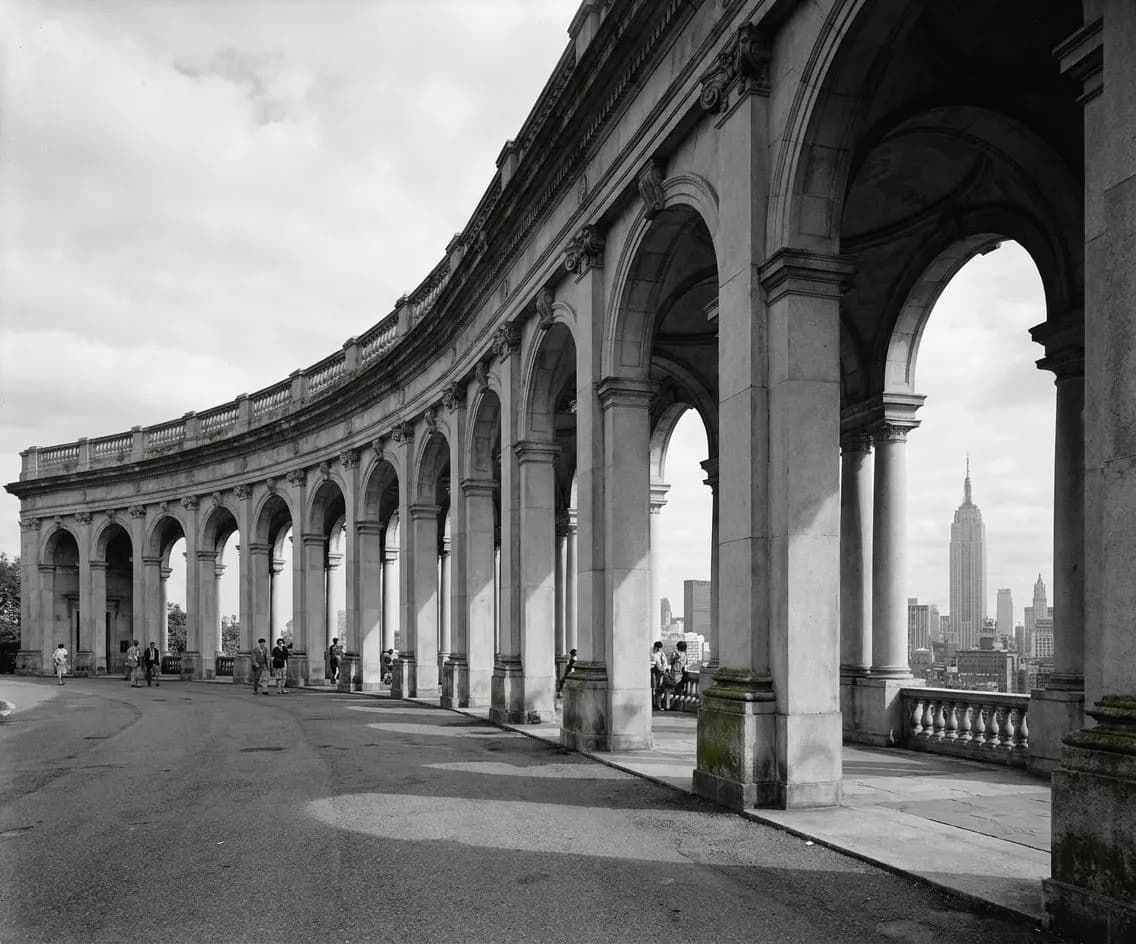
Most New Yorkers couldn't place the Hall of Fame for Great Americans if you spotted them the borough. It sits on a bluff at Bronx Community College, 630 feet of open-air colonnade curving around a terrace with nothing between you and the southern sky but the names Edison, Whitman, Audubon cast in bronze. Stanford White designed it in 1901 as the nation's first hall of fame—two decades before Cooperstown, forty before Canton. The limestone is still perfect. The sightlines are better than anything Midtown will sell you. And on a weekday afternoon in summer 2026, you'll likely have it to yourself.
The bluff nobody climbs anymore
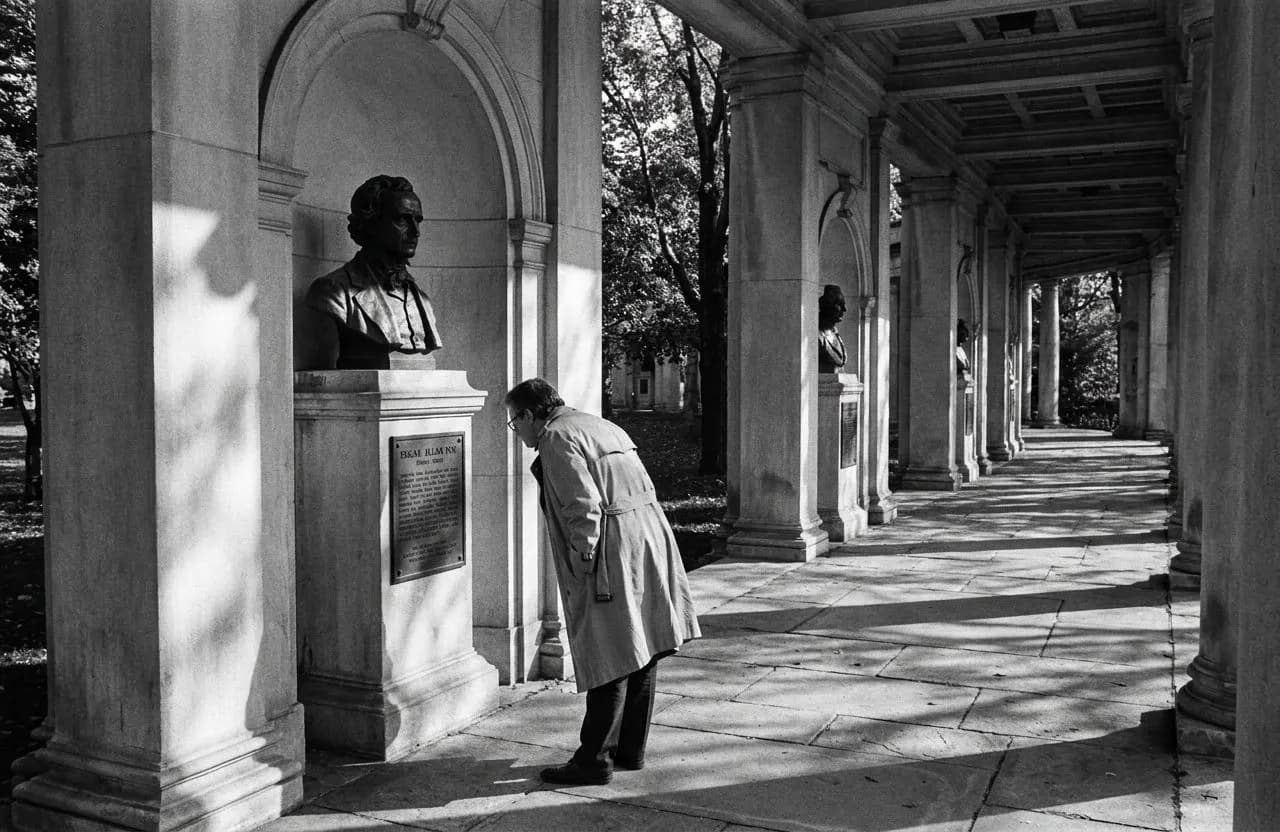
The colonnade occupies the high ground of the old NYU uptown campus, back when the university thought the Bronx was its future. White gave it the full Beaux-Arts treatment: Corinthian columns, a sweeping hemicycle, bronze plaques underfoot naming the honorees' hometowns. The terrace drops away to reveal the Harlem River, the spine of upper Manhattan, the crosshatch of Washington Heights. No trees block it. No high-rises crowd in. It's the kind of civic monument that would draw lines in any other city.
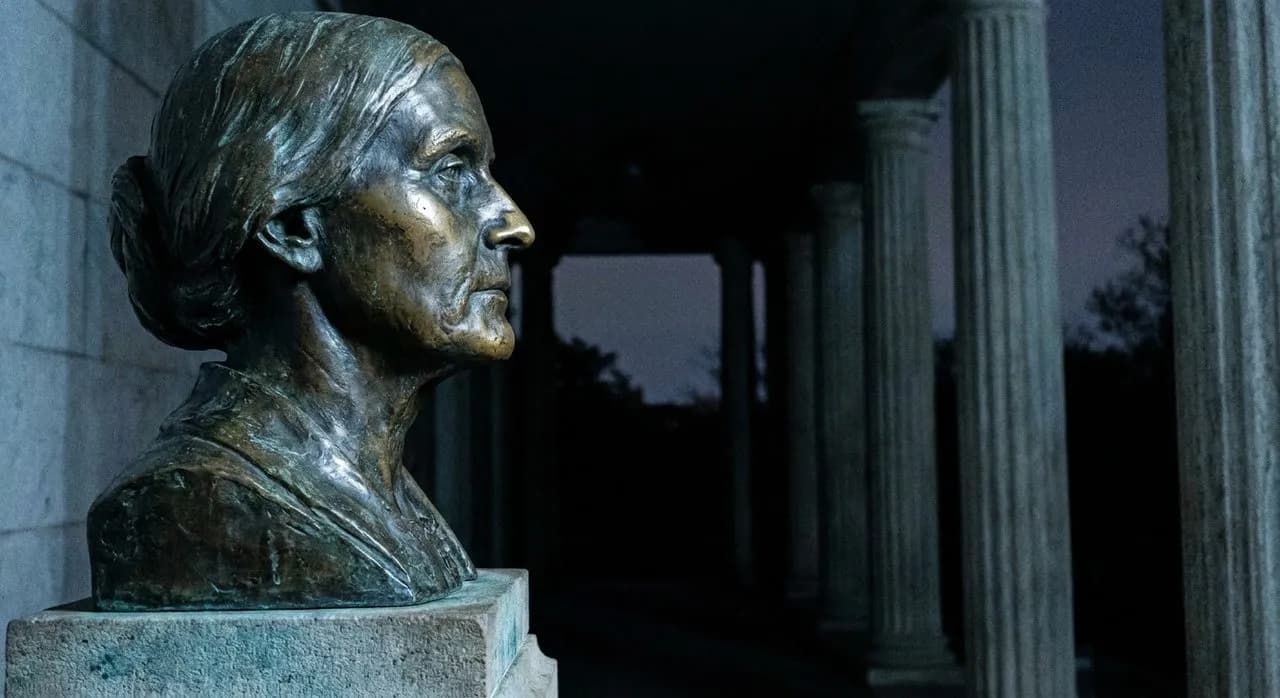
Here, it draws students cutting between buildings and the occasional architecture pilgrim who remembered to look up the campus hours. The busts—98 of them, elected by a blue-ribbon committee in waves through 1976—gaze outward from their niches. Some you expect: Lincoln, Jefferson, Washington. Others remind you how fame curdles. Who now remembers Eli Whitney's legal battles, or Charlotte Cushman's Shakespearean Lady Macbeth? The colonnade doesn't editorialize. It just holds the names in stone and lets the river wind do the rest.
Where to sit when the light turns
The western terrace bench, third column from the north end, frames the George Washington Bridge between two busts at sunset May through August. You want to arrive with an hour to spare. Walk the full colonnade first—it takes twenty minutes if you read the plaques, ten if you're skimming for the poets—then double back and claim the spot. The bench is plain limestone, cool even in July. To your left, Audubon. To your right, depending on the committee's spacing, Morse or Fulton.
The bridge cables catch the sun first, then the towers, then the whole span glows silver against New Jersey's purple ridgeline. The Hudson below turns to hammered copper. You're high enough that the traffic hum fades into white noise, low enough to hear the campus carillon if it's feeling ambitious. This is the free public sculpture the city forgot to monetize, the view it forgot to gentrify, the hour it forgot to schedule.
Getting past the gate
Entry is free during Bronx Community College campus hours; verify current public access hours with the college before visiting, Weekend access is not guaranteed; verify public access with Bronx Community College/security before visiting They've heard it before. The colonnade predates the community college by decades; technically it's a landmark, open to the public, administered by a foundation that doesn't advertise. The guards know this. You walk in, you nod, you mention the Hall, they buzz you up the hill.
The weekend loophole matters because the light is better Saturday and Sunday, softer and less industrial than the midweek glare. Fewer students, too, which means you can sit at the central viewing point without feeling like you're blocking a campus thoroughfare. Bring water—the colonnade has no concessions, no vendor trucks, no bodega within easy range. It was designed for contemplation, not convenience.
The route nobody mentions
The 4 train to Burnside Avenue, then the Bx3 bus toward University Avenue, drops you at the campus south gate—10-minute walk uphill to the colonnade. The hill is steeper than the map suggests, a real Bronx bluff that makes your calves remember the city had topography before the grid. You pass a brutalist library, a field house, then the Gothic revival Gould Memorial Library that White also designed. The colonnade wraps behind it like an afterthought, though it was the centerpiece.
If you're driving, parking is metered along University and Sedgwick Avenues on weekends, free after six. The walk from street level to terrace is the same uphill march. Think of it as earning the view. Or as filtering out everyone who expects New York to deliver its best moments at sidewalk grade.
What the busts won't tell you
The selection criteria shifted over the decades. Early honorees leaned heavily on statesmen and inventors: Franklin, Whitney, Fulton, Morse. Later waves admitted writers—Hawthorne, Melville, Poe—and eventually performers, suffragists, educators. The committee dissolved in the 1970s, leaving the count frozen at 98. No internet pioneers, no civil rights icons past Booker T. Washington, no astronauts. The Hall of Fame is a snapshot of consensus that stopped updating, which gives it a strange purity. It's not trying to be relevant. It just is what it was.
Walk the southern curve and you'll find the lesser-known names, the ones whose bronze has weathered to matte green anonymity. Emma Willard, educator. James Abbott McNeill Whistler, painter. Josiah Willard Gibbs, physicist. Their busts face the river with the same dignity as Lincoln's. The colonnade makes no hierarchy. Every niche is identical, every pedestal the same height. Democracy in limestone.
Why summer 2026 matters
The Bronx is shedding its bridesmaid reputation, slowly, in the way a borough does when enough people stop asking permission to enjoy it. The Hall of Fame isn't being rediscovered so much as remembered by a generation that never knew it was there. By late summer 2026 the colonnade will still be free, still quiet, still offering that western bench at sunset to whoever climbs the hill. Go before the travel blogs find it. Or go after—it's big enough to absorb a few more visitors without losing its sense of suspension.
Bring a book you've been meaning to finish, or just your phone in airplane mode. The Wi-Fi doesn't reach the terrace. The view doesn't need a filter. You're standing in Stanford White's valentine to American achievement, on a bluff above a city that already forgot it once and might forget it again. That's not melancholy. That's just the terms of the deal when you visit monuments the crowds haven't claimed.
Practical notes
Hall of Fame for Great Americans, Bronx Community College, 2155 University Avenue, Bronx. Nearest subway: 4 train to Burnside Avenue, then Bx1/Bx2 bus to University Avenue. Limited metered parking on surrounding streets. Officially open 8 a.m.–6 p.m. weekdays; weekend access granted at security discretion—mention you're visiting the Hall of Fame. The site is outdoors and exposed; bring sun protection, water, and layers for wind. The terrace is accessible, though the surrounding campus has hills. No food or restrooms at the colonnade itself; plan accordingly. Verify hours directly with Bronx Community College if visiting during academic breaks.
Tags: #HallOfFameForGreatAmericans #TheBronx #StanfordWhite #FreeAndFine #HiddenNewYork #NYCHistory #BronxCommunityCollege #NeoclassicalArchitecture #ManhattanViews #SunsetBench #CivicMonuments #PublicSculture #SummerInTheCity #NYCLandmarks #KarposFinds
Sources consulted: Hall of Fame for Great Americans - Wikipedia · Bronx Community College - Official Site · NYC Parks · Stanford White - Wikipedia · Time Out New York
All trademarks are the property of their respective owners.