 Haaland Has Seven Goals and Norway Runs Entirely Through Him
⚽️2026 FIFA WORLD CUP

Guadalajara Around the World Cup: Two Days Beyond the Stadium
Beyond Estadio Akron's three World Cup group matches, Guadalajara offers tequila trails, mariachi plazas, and birria that rewards the curious traveler.
Why Guadalajara earns more than a match-day stopover
Estadio Akron, home to Chivas and three group-stage fixtures in June 2026, sits on the city's southern edge—a sleek, modern bowl that feels worlds away from the colonial heart fifteen kilometers north. Most visitors will fly in, catch a match, and fly out. That rhythm misses the point entirely.
In Guadalajara for the World Cup? Ask Karpo what to see beyond the stadium.
Guadalajara is Mexico's second city by population and first by mariachi tradition, tequila heritage, and a certain self-assured regionalism that never apologizes. The tournament window gives you a legitimate excuse to linger, and two full days beyond match obligations let you taste why tapatíos consider their city the cultural capital the rest of the country forgot to acknowledge.
The 48-team format running June 11 to July 19, 2026 spreads group play across sixteen cities in three countries, so you'll have company—thousands of fans threading the same plazas, ordering the same bowls of birria, asking the same questions about which tequila distillery takes walk-ins. The trick is moving at the city's own pace rather than a checklist sprint.

Day one: Centro Histórico to Tlaquepaque on foot and by Uber
Start at the cathedral in Plaza de Armas, twin neo-Gothic spires that anchor the historic core. The square fills with balloon vendors, shoe-shiners, and couples on iron benches by mid-morning; grab coffee at one of the portales cafés and watch the city wake up without hurry. Walk east two blocks to the Palacio de Gobierno to see Orozco's murals—dark, allegorical panels that make Rivera look cheerful—then loop south through the Rotonda de los Jaliscienses Ilustres, a columned memorial to the state's notable dead.
By noon you'll want birria, and the stalls ringing Mercado San Juan de Dios deliver the real article: slow-braised goat in a chile-spiked consommé, served with corn tortillas, onion, cilantro, and lime. Order a half kilo, dip everything, ignore your shirt. The market itself is a three-story labyrinth of leather goods, ceramics, and pirated soccer jerseys; it's chaotic and exactly what it should be.
Afternoon belongs to Tlaquepaque, a former pottery village now folded into the metro area but still distinct in character. Uber or taxi takes fifteen minutes. The pedestrian streets—Independencia, Juárez—are lined with galleries, workshops, and courtyards where artisans blow glass, hammer copper, and paint Talavera tiles. You're not obligated to buy, but a hand-thrown mug or a small ceramic skull makes a better souvenir than anything in the stadium shop. Stay for an early dinner at one of the open-air restaurants on the main plaza; mariachi trios work the tables, and if you're polite they'll play requests without the hard sell.
Tequila country: a half-day in the agave fields
Tequila the town lies fifty-five kilometers northwest, a straight shot on the highway past endless blue-agave fields that glow silver in morning light. Organized tours leave Guadalajara early—around eight or nine—and return by mid-afternoon, which leaves your evening free for another match or a long meal. Most packages include two distillery visits, transportation, and a guide who will explain jimador techniques, fermentation vats, and the difference between blanco, reposado, and añejo with more patience than you probably deserve.
The large distilleries—José Cuervo, Sauza—run polished operations with tasting rooms and gift shops; smaller producers offer rawer tours where you might meet the master distiller and taste straight from the barrel. Both have merit. What matters is walking the agave fields themselves, seeing the piñas stacked like enormous pineapples, understanding that tequila is agriculture before it's mythology.
You'll return to Guadalajara by three or four, lightly sunburned and pleasantly buzzed. Nap, shower, then head to Chapultepec, the restaurant and bar district west of the center, for dinner. The blocks around Avenida Chapultepec are thick with tacos, craft beer, mezcal bars, and late-night torta stands—choose based on crowd energy and whether you want to sit or stand.
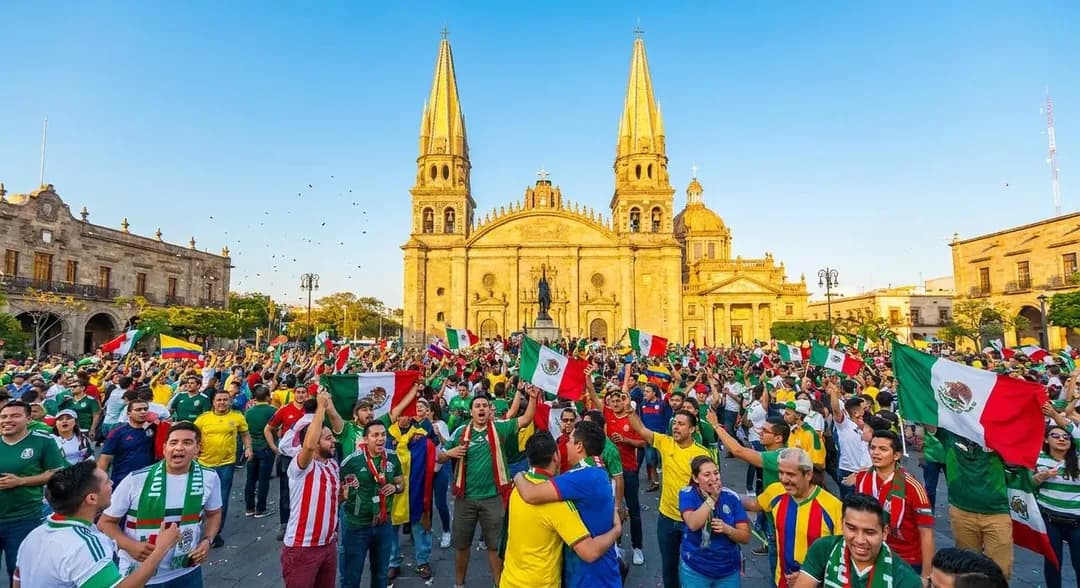
Mariachi, mezcal, and the plaza at night
Plaza de los Mariachis, a small square southeast of the cathedral, is the genre's spiritual home and a slightly touristy but undeniably authentic evening destination. Bands in full charro regalia—embroidered jackets, wide sombreros—gather at dusk, playing for tips, for each other, and for anyone willing to pay for a song. The scene is loud, sentimental, and exactly what you came for.
Order a tequila or mezcal at one of the surrounding cantinas—they're interchangeable in quality, so pick the one with the best sight lines—and settle in. You'll hear 'Cielito Lindo,' 'El Rey,' 'La Negra,' and a dozen others you half-recognize from weddings and car commercials. If you're traveling with someone, this is the moment to overpay for a private serenade; if you're alone, the ambient music is free and just as good.
The plaza empties by eleven, but Chapultepec and the blocks around Avenida México stay open later. Mezcal bars here stock bottles from Oaxaca, Guerrero, and Durango; bartenders will walk you through tasting notes if you ask, though the real education is simply drinking enough to understand the difference between smoky, earthy, and floral. Pace yourself—you have a match tomorrow or the day after, and stadium seats are unforgiving.
Practical rhythm: match days, transport, and where to eat near Akron
Estadio Akron sits in Zapopan, a municipality that bleeds into Guadalajara proper but requires a deliberate trip. Uber or taxi from Centro Histórico takes thirty to forty minutes depending on traffic; budget an hour before kickoff. The stadium neighborhood is modern, car-oriented, and light on pre-match atmosphere—this isn't a historic ground with corner pubs. Eat before you go or accept the concession reality.
If you're staying near the stadium for convenience, you're trading walkability for proximity. Most visitors lodge downtown or in Chapultepec and treat Akron as an excursion. The metro system doesn't reach the stadium, so ride-sharing is your best bet. After the final whistle, expect surge pricing and a twenty-minute wait; walking a few blocks away from the main gates often speeds things up.
For meals beyond birria and tacos, Guadalajara's food scene leans traditional but isn't stuck. Tortas ahogadas—crusty rolls drowned in spicy tomato sauce—are the other local specialty, best eaten at lunch counters where the sauce is made fresh. Carne en su jugo, a beef and bacon soup with beans and tomatillo, is another tapatío staple worth ordering at least once. The city doesn't do fusion or tasting menus as aggressively as Mexico City, and that's a feature, not a bug.
What the tournament window means for the city
Guadalajara hosts three group-stage matches in mid-June, which means the city will be crowded but not overwhelmed. The 48-team format spreads the load, and by the time the knockout rounds begin, most fans will have moved on to other host cities. The final on July 19 at MetLife Stadium in East Rutherford, New Jersey, is a world away—literally and logistically—so if you're chasing the trophy, you'll leave Guadalajara well before the tournament's climax.
That's fine. The city's appeal has nothing to do with semifinals or finals. It's in the morning light on the cathedral, the smell of birria at noon, the first sip of a well-made blanco, the mariachi trumpet echoing off colonial walls. These things don't scale or schedule neatly, and they don't care whether you're here for soccer or something else.
Two days gives you enough time to move beyond the stadium perimeter and into the city's actual rhythm. You'll still see plenty of jerseys, hear plenty of accents, and share tables with fans from countries you couldn't place on a map. But you'll also taste why Guadalajara insists on its own identity, and you'll leave understanding that the match was the excuse, not the reason.
Practical notes
- Fly into Guadalajara (GDL); the airport is thirty minutes from Centro Histórico and forty-five from Estadio Akron.
- Book distillery tours at least a week ahead during the tournament window; small producers fill quickly.
- Carry small bills for mariachi tips, market purchases, and taco stands—many vendors don't take cards.
- Uber works reliably citywide; download the app and add a payment method before you arrive.
- Pack sunscreen and a hat for daytime agave-field visits; the Jalisco sun is unforgiving in June.
Guadalajara rewards the visitor who treats the World Cup as a starting point rather than the whole story. The matches will be loud, colorful, and over in ninety minutes; the birria, the tequila, the mariachi, and the quiet morning plazas will still be there the next day, indifferent to the score. Spend two days beyond the stadium, and you'll leave with a taste of why tapatíos are so certain their city matters—not because it hosted a tournament, but because it never needed one to prove the point.
Tags: #GuadalajaraTravel #WorldCup2026 #TequilaTasting #BirriaLovers #MariachiCulture #TlaquepaqueMexico #EstadioAkron #JaliscoFood #MezcalBars #CentroHistorico #AgaveFields #TapatíoLife #MexicoTravel #FIFAWorldCup #CulturalTravel
Please drink responsibly. Must be of legal drinking age.
All trademarks are the property of their respective owners.
Ask Karpo first
Planning a World Cup swing through Guadalajara and wondering which distillery takes walk-ins, where the best birria hides, or how to time your Tlaquepaque afternoon around a match at Akron? Ask Karpo first—we'll help you build a two-day itinerary that respects the city's rhythm and your kickoff schedule, so you leave with more than a ticket stub and a sunburn.
Ask Karpo for more information.
Keep reading
- Haaland Has Seven Goals and Norway Runs Entirely Through Him
 World Cup Trophy Ceremony Timing Medals and Postmatch Celebrations
 Olise and France's Attack: The Semifinal Tactical Question