gta6 may be the phrase getting passed around group chats this week, but in San Francisco it should be treated as a research prompt, not a local promise. A smart back-to-school plan starts by separating curiosity from evidence: What is actually being claimed? Who published it? Where can a student check it without building a day around an unsupported assumption? This guide uses the buzz as a practical route through official public information, library resources, transit planning pages, and backup decisions. It does not claim a San Francisco appearance, event, affiliation, release, screening, price, reservation rule, broadcast option, or guaranteed schedule. Instead, it gives students, parents, and caregivers a way to turn a noisy topic into a useful after-school or weekend information trip based only on pages they can verify.
Want a quick reality check before you go? Text Karpo to help review official SFPL, SFMTA, and SF.gov pages, then decide whether this San Francisco plan still makes sense today.

Turn curiosity into a research question
Start by making the topic smaller. If a student says they want to research gta6, the useful question is not “Is everything online true?” It is “What can we verify from official public sources, and what still needs confirmation?” That keeps the assignment grounded and avoids treating a popular search phrase as proof of a San Francisco connection.
For a back-to-school project, the cleanest frame is media literacy. Ask who made the claim, whether the claim names a date or place, and whether a public institution or primary source confirms it. If no official local page says there is an event, do not build the day around one. Build the day around learning how to check.
A practical student method is simple: write the claim in one sentence, underline every factual part, and match each part to a source. A library address, a listed service category, a trip-planning page, or a city contact page can be verified. Rumor, commentary, and screenshots should stay in the “not confirmed” column unless an official source supports them.
Start with a reliable public resource
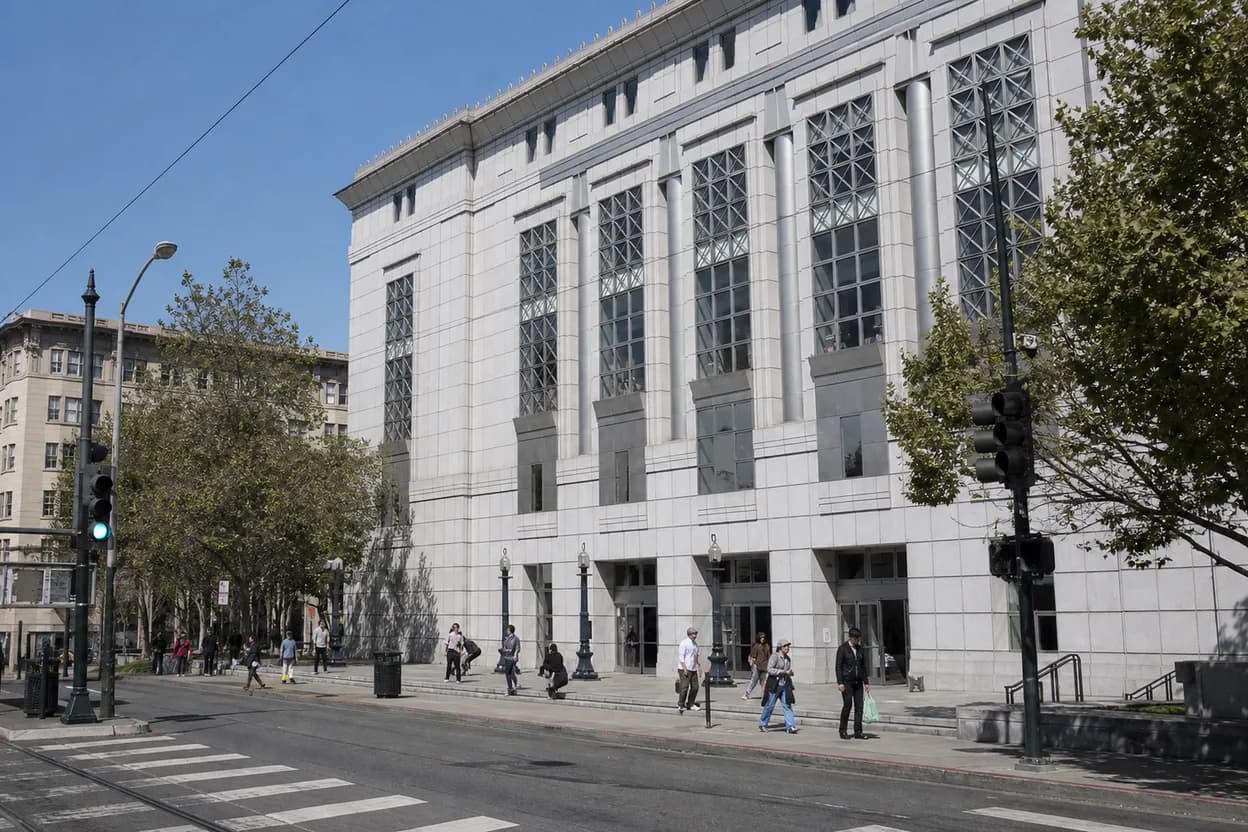
The strongest first stop is San Francisco Public Library’s Main Library, which SFPL lists at 100 Larkin Street, San Francisco, CA 94102. SFPL lists the Main Library contact telephone as 415-557-4400. Its posted Main location hours in the supplied extract are Sunday 12-6, Monday 9-6, Tuesday 9-8, Wednesday 9-8, Thursday 9-8, Friday 12-6, and Saturday 10-6. Treat those as page-listed hours to confirm on SFPL before leaving, not as a permanent promise.
Use the library’s research flow instead of opening random commentary first. SFPL highlights Research & Learn, Articles & Databases, SF Digital Collections, Exhibits, eLearning, Literacy Programs, and Research Tools. For students, that menu creates a better path: define the topic, search library resources, compare sources, and only then read reactions.
If someone in the group needs extra support, SFPL also lists Support & Services areas including Accessibility Services, Borrowing FAQ, Citizenship Resources, Business and Finance Resources, Homework Help, Job Resources, and Print from Home. Those are practical back-to-school details, especially if the trip has to produce notes, citations, or a printed worksheet.
Compare primary reporting before opinions
Once the basic research question is set, separate official pages from interpretation. SFPL can help with library research and learning resources, while SF.gov is the city’s broad public-services hub. The supplied SF.gov extract lists services and pages such as Search for jobs, Marriage and partnerships, Visit City Hall, Information for City staff, Find a meeting or event, Permitting, Business, Housing, and Government.
That matters because a viral topic can easily blur into unrelated local assumptions. A post mentioning San Francisco is not the same as an official city notice. A fan theory is not a school resource. A calendar item is not a guarantee unless the official page says what, where, when, and who is responsible.
For students, this is the useful habit: capture the claim in one sentence, then write down which public source confirms each part. If the source only confirms library hours, library services, transit planning categories, city-service categories, or contact paths, say that plainly. Good research is allowed to conclude, “I could not verify the local claim.”
Choose a study stop that fits the task
Pick the stop based on the work, not the hype. If the assignment needs databases, citations, or a focused block of research time, the Main Library is a reasonable anchor because SFPL lists research tools and learning resources there on its site. If the task is a shorter family check-in, a branch may be more realistic; the supplied SFPL extract lists options including Anza, Bayview, Bernal Heights, Chinatown, Excelsior, Glen Park, Mission, Mission Bay, Noe Valley, North Beach, Richmond, Sunset, West Portal, and Western Addition, among others.
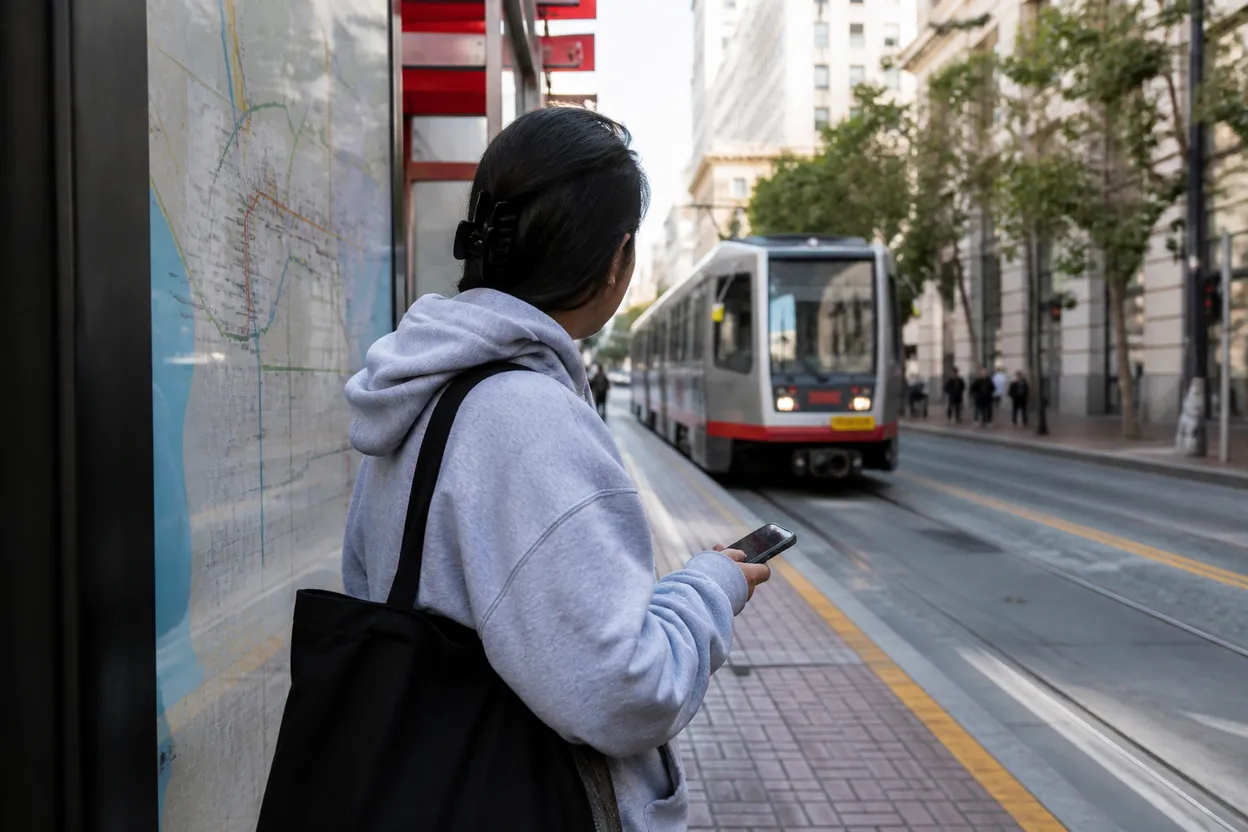
For transit planning, use SFMTA’s trip-planner information before choosing the stop. The supplied SFMTA extract shows a Trip Planner with starting location, ending location, and travel choices including Muni, Bike, Walk, Drive, and Drive & Park. It also groups useful information under Muni Routes & Stops, For Visitors, Neighborhoods, Projects, Permits, Citations, Taxi, Accessibility, and Travel Maps & Guides.
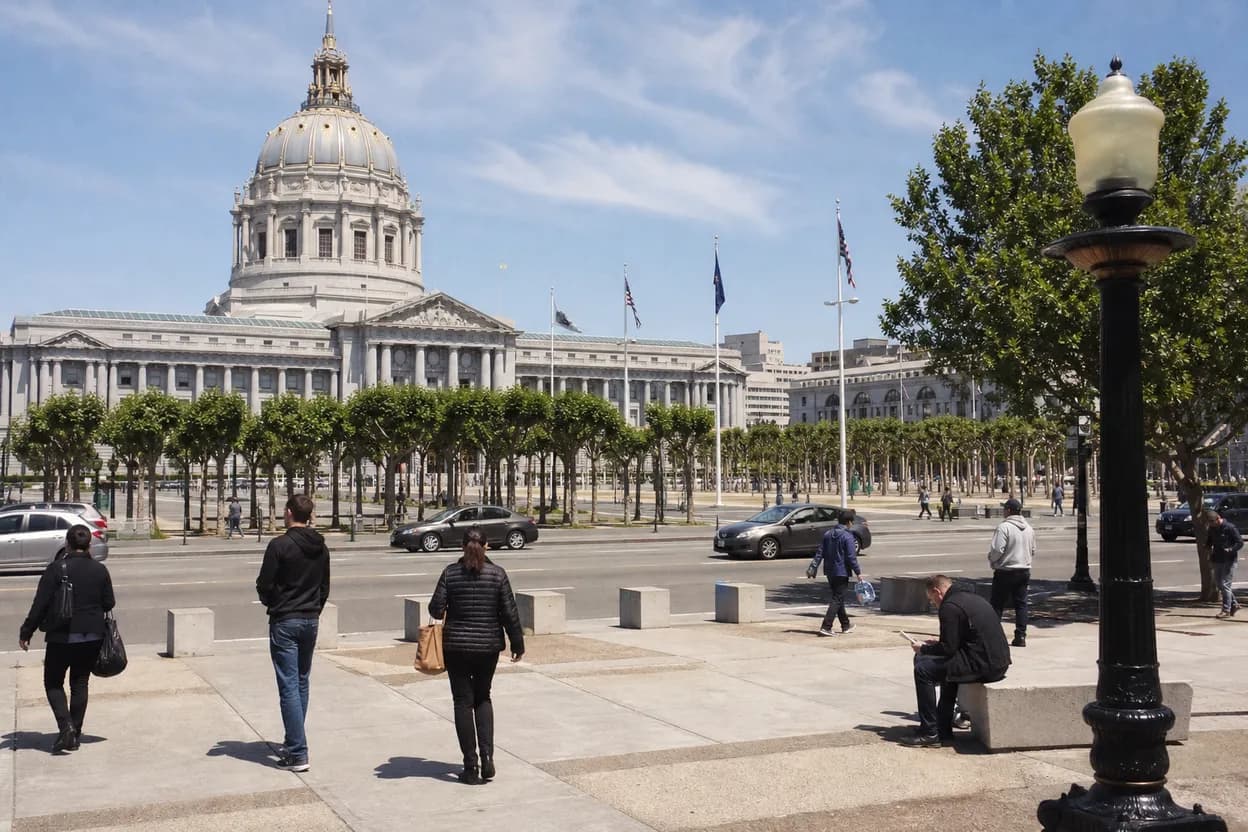
A practical sequence for a Civic Center-focused trip is: check the SFPL Main page, review SFMTA trip-planning and alert information, map the route, then decide whether the library or a nearby city-service page is the real destination. If the student only needs an hour of source comparison, avoid overbuilding the day. The goal is a verified research process, not a scavenger hunt for an unsupported local tie.
Add one low-cost reset nearby
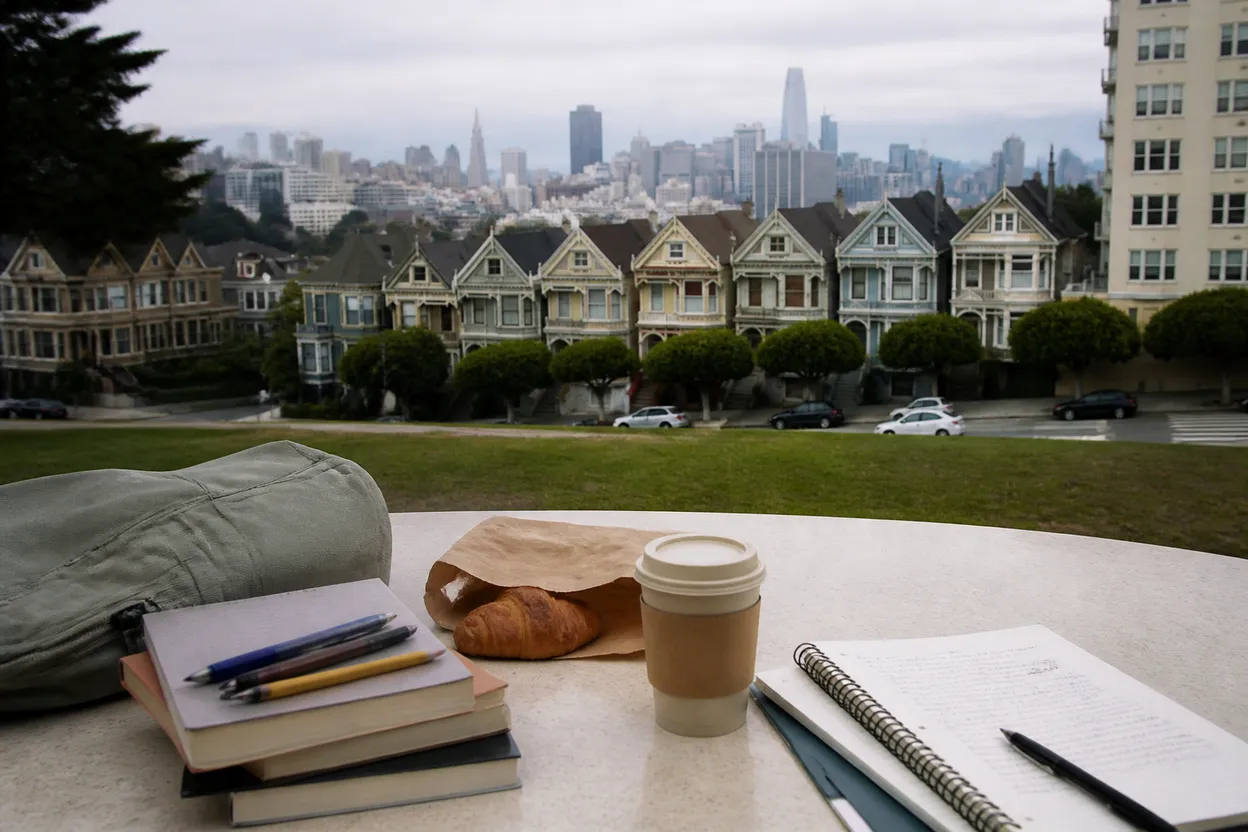
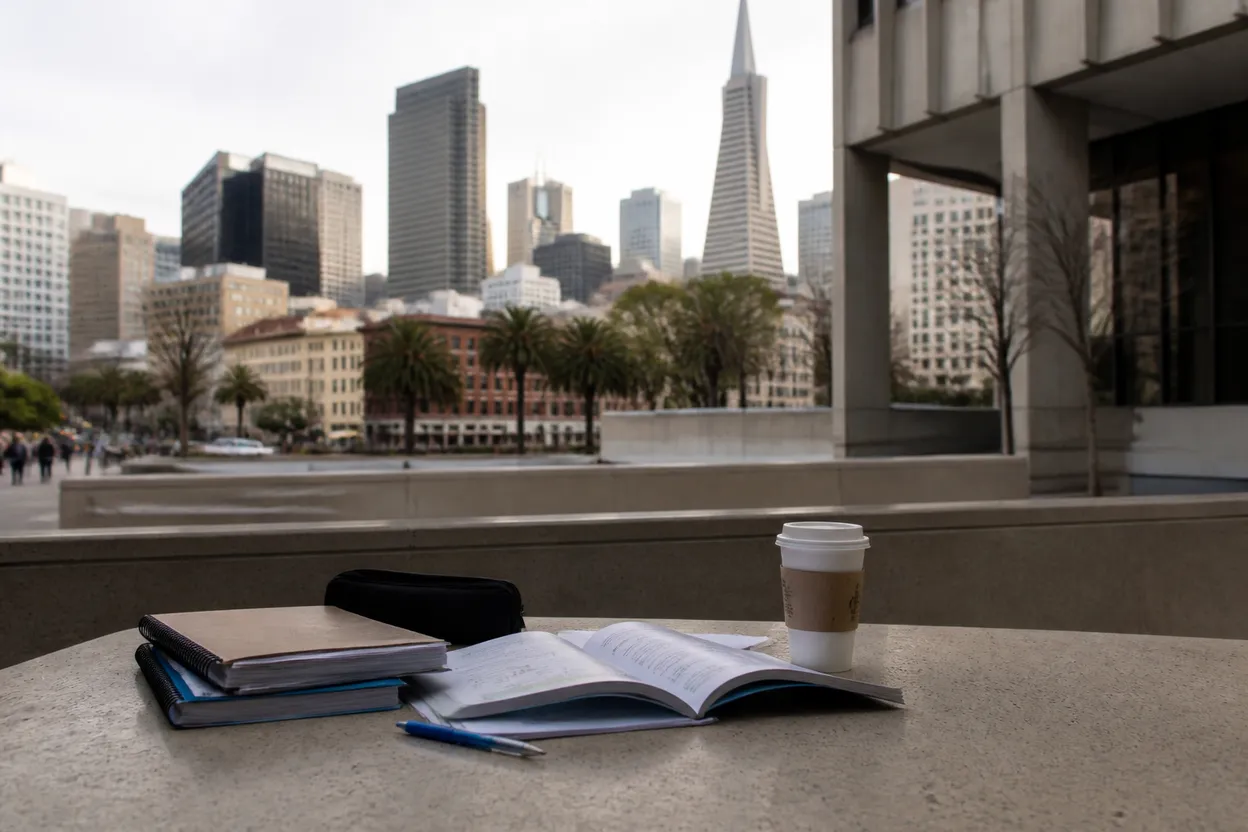
A good study route includes a reset, especially during back-to-school season when students are switching from summer rhythm to deadlines. Keep it simple: after the library block, choose one public-information pause or civic errand that does not depend on a ticketed event, special access, or a reservation rule not shown in the official extracts.
SF.gov lists Visit City Hall and Find a meeting or event among city services, which makes the Civic Center area useful for students learning how public institutions present information. Do not assume a meeting, tour, or special access is available. Use those pages as verification points, then decide whether the reset is observation, a short walk, or heading home.
The point is to leave with something concrete: three checked facts, one unanswered question, and a plan for where to verify next. For example, a student could confirm the Main Library address, identify SFPL’s Articles & Databases area, and note SFMTA’s trip-planner categories. That is a stronger back-to-school outcome than chasing a rumor attached to gta6 and ending the afternoon with screenshots but no sources.
Verify hours and access before leaving
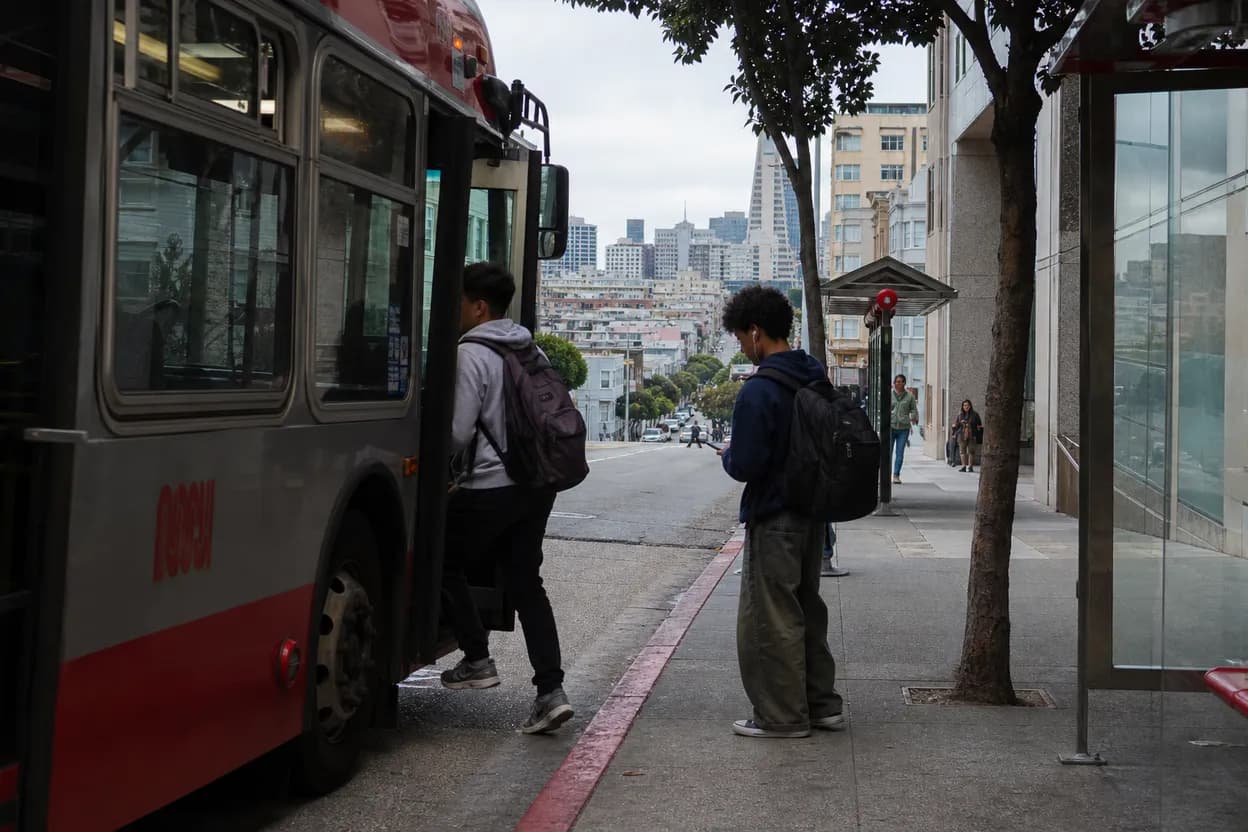
Make the final check boring on purpose. Confirm the relevant SFPL location page, look for current SFMTA alerts, and check whether your route is affected by travel updates. The supplied SFMTA extract surfaces alerts and travel information, including an alert about M Ocean View service having resumed after a delay, a note about Outside Lands Aug. 7-9, and Travel & Transit Updates such as Hayes Valley Shared Spaces, 40-foot Bus Service Substitutions, and Chinatown Construction dated within the extract.
If Muni is the plan, save a backup route before leaving. SFMTA points riders to Muni Routes & Stops, Travel Maps & Guides, Accessibility, SF 311, and 511 Regional Info. The supplied extract also lists 311, Outside SF 415.701.2311, and TTY 415.701.2323 for help. For a school-night trip, that backup matters more than squeezing in one extra stop.
Use the same verification rule for every claim connected to the trending phrase: no official source, no assumption. If a detail is not confirmed by SFPL, SFMTA, SF.gov, or another primary source your assignment allows, keep it out of the plan and out of the assignment. The cleanest conclusion may be that the public pages support a research trip, a library stop, and transit planning, but not the viral claim itself.
Tags: #gta6 #SanFrancisco #BackToSchool #SFPL #Muni #CivicCenter #StudentResearch #MediaLiteracy #PublicLibrary #TransitPlanning #FamilyPlanning #AskKarpo #BeforeYouGo #CityResources
Sources consulted: sfpl.org · sfmta.com · sf.gov
All trademarks are the property of their respective owners.
Ask Karpo first
Ask Karpo first before turning gta6 buzz into a San Francisco outing. Use it as a prompt to review official SFPL, SFMTA, and SF.gov pages, then decide whether the plan is supported enough for the trip today.