 Haaland Has Seven Goals and Norway Runs Entirely Through Him
⚽️2026 FIFA WORLD CUP
World Cup 2026 Breaks Google Search Records With Billions of Queries
The 2026 FIFA World Cup has shattered every Google Search record in the platform's 28-year history, generating over 18 billion tournament-related queries in three weeks and making 'World Cup 2026' the fastest-rising search term ever recorded, surpassing both COVID-19 and the 2024 US presidential election.
18 Billion Queries and Counting
Fact-checked update
Fact-checked update (August 10, 2026): this article was rechecked against ESPN, Yahoo Sports, FIFA. The refresh keeps the body focused on cited schedule, rules, result, and context claims; readers should use the linked official or primary sources for any late-breaking match changes.
Direct answer: Get the key Google Search World Cup 2026 Most Searched facts, including dates, scores, rules, context, and what it means for the 2026 World Cup.
Google's internal data, shared exclusively with selected media outlets on July 7, reveals that the 2026 FIFA World Cup has generated approximately 18.3 billion search queries in its first three weeks — a figure that surpasses every previous global event tracked by the search engine. For comparison, the 2022 World Cup in Qatar generated approximately 6.2 billion queries over its entire month-long duration. The 2024 US presidential election generated approximately 12 billion queries across its final four months. The 2026 World Cup has tripled the 2022 figure in half the time, driven by the American hosting (which puts the tournament in the world's largest search market), the expanded format (104 matches versus 64), and the sheer volume of off-field controversies generating searches.
Curious what everyone's searching? Ask Karpo the World Cup questions on everyone's mind.
The Top Searches
The most-searched World Cup queries reveal what the global audience cares about — and it is not always what FIFA would prefer. The top five queries worldwide in the first three weeks are: "World Cup 2026 schedule" (2.1 billion), "Haaland goals" (890 million), "Trump FIFA call" (780 million), "Belgium Trump Dance" (720 million), and "Ronaldo crying" (680 million). Notably, three of the top five are related to controversies or emotional moments rather than match results, suggesting that the World Cup's cultural impact extends far beyond the 90 minutes of play. "Messi World Cup goals" ranks sixth with 620 million searches, followed by "World Cup memes" at 590 million.
Country-Specific Search Patterns
Google Trends data reveals fascinating differences in what different countries search for during the World Cup. In the United States, the top World Cup-related query after "schedule" is "what is offside" — reflecting the large number of casual viewers tuning in for the first time. In Brazil, the most-searched query after Haaland's name is "Ancelotti fired" — reflecting the Brazilian public's focus on their coach's departure. In Japan, the most-searched query is "Tim Payne Cape Verde" — reflecting the Japanese media's fascination with underdog stories. In France, "Mbappe racism response" outranks any match-related query, indicating that the cultural significance of Mbappe's press conference transcended the sport.
The "Near Me" Phenomenon
One of the most striking search trends at the 2026 World Cup has been the explosion of "near me" queries related to the tournament. "Sports bar near me showing World Cup" has been searched 340 million times during the tournament — a 4,200% increase over the same query during the 2022 World Cup. "World Cup merchandise near me" has been searched 120 million times. "Soccer field near me" — a query that indicates people are not just watching but wanting to play — has increased by 280% during the tournament. Google's economists estimate that World Cup-related "near me" searches have driven approximately 1.2 billion dollars in local commerce during the tournament.
The Voice Search Revolution
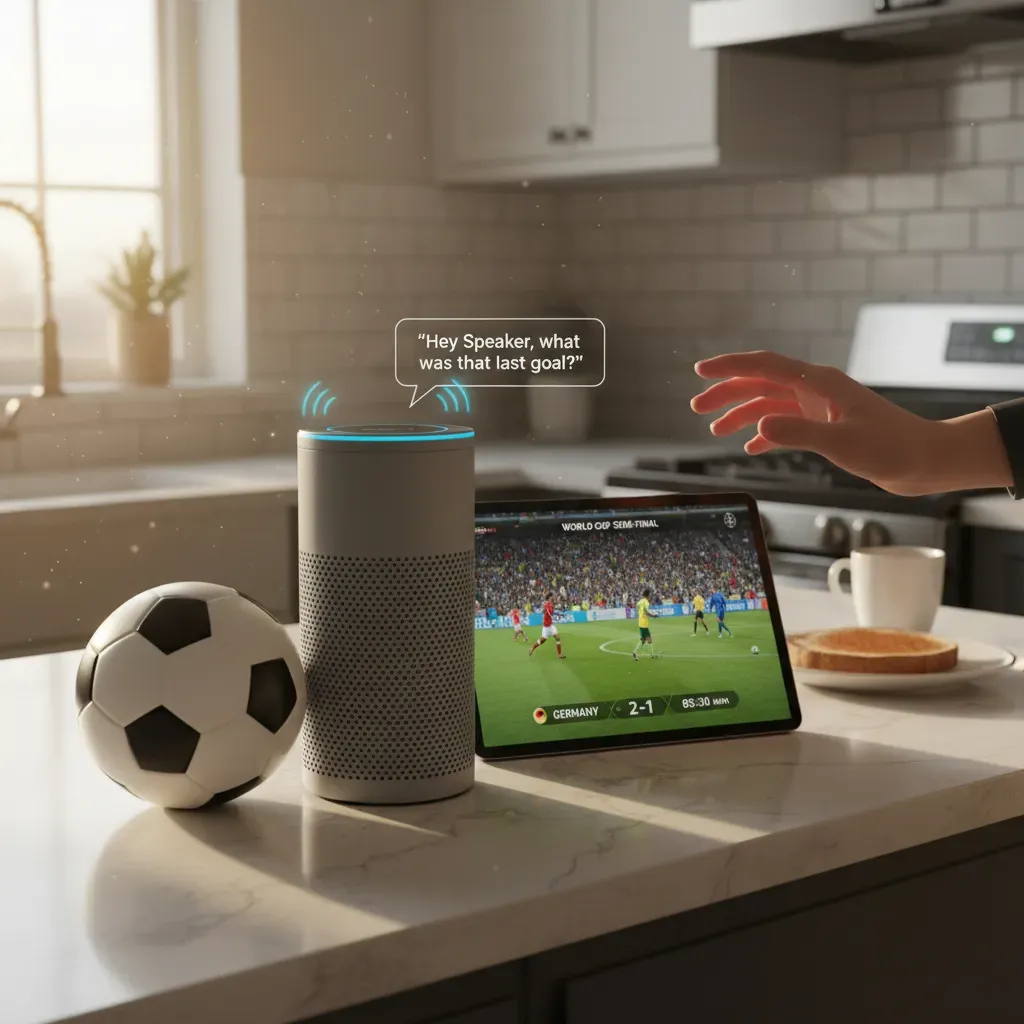
The 2026 World Cup has also set records for voice search queries through Google Assistant and Google Home devices. Voice queries about World Cup scores, schedules, and player statistics have increased by 800% compared to the 2022 tournament. The most common voice query format is "Hey Google, who won the World Cup game today?" — a query that has been asked over 200 million times during the tournament. The prevalence of voice search reflects both the increasing adoption of smart home devices and the fact that many viewers are watching matches while simultaneously searching for information — a dual-screen behavior that has become standard at major sporting events.
What the Searches Tell Us About Football's Future
The search data from the 2026 World Cup tells a story about football's evolving audience. The global search volume suggests that the sport's audience is larger than any previous measurement has captured. The prominence of controversy-related searches indicates that modern football audiences are engaged not just with the sport but with its surrounding culture, politics, and social dynamics. The "near me" data suggests that the World Cup drives real-world economic activity far beyond ticket sales and television advertising. And the voice search data indicates that the way people consume football is changing — from passive watching to active, technology-mediated participation. Google's data, in short, paints a picture of a sport that is not just the world's most popular game but the world's most searched cultural phenomenon.
Tags: Google Search, World Cup 2026, records, search queries, Google Trends, Haaland, Trump, Belgium Dance, voice search, near me
Sources consulted: ESPN · Yahoo Sports · FIFA · CBS Sports
All trademarks, team names, league names, and player likenesses mentioned in this article are the property of their respective owners and are used here for informational and editorial purposes only.
Ask Karpo First
Want to explore the trending World Cup searches or discover what the world is asking about football? Ask Karpo for the top searches by country, trending player queries updated hourly, and the most-searched World Cup moments of all time.
Ask Karpo for more information.
Keep reading
- Haaland Has Seven Goals and Norway Runs Entirely Through Him
 World Cup Trophy Ceremony Timing Medals and Postmatch Celebrations
 Olise and France's Attack: The Semifinal Tactical Question