Most visitors treat Golden Gate Park as a two-hour errand: park near the museums, snap the Conservatory, leave. That's like reading the first chapter of a very good book. The park is three miles long, half a mile wide, and bigger than Central Park — it holds two world-class museums, three formal gardens, a lake with an island in the middle, a herd of actual bison, and two windmills staring down the Pacific. You cannot do that in an afternoon, and you shouldn't try.
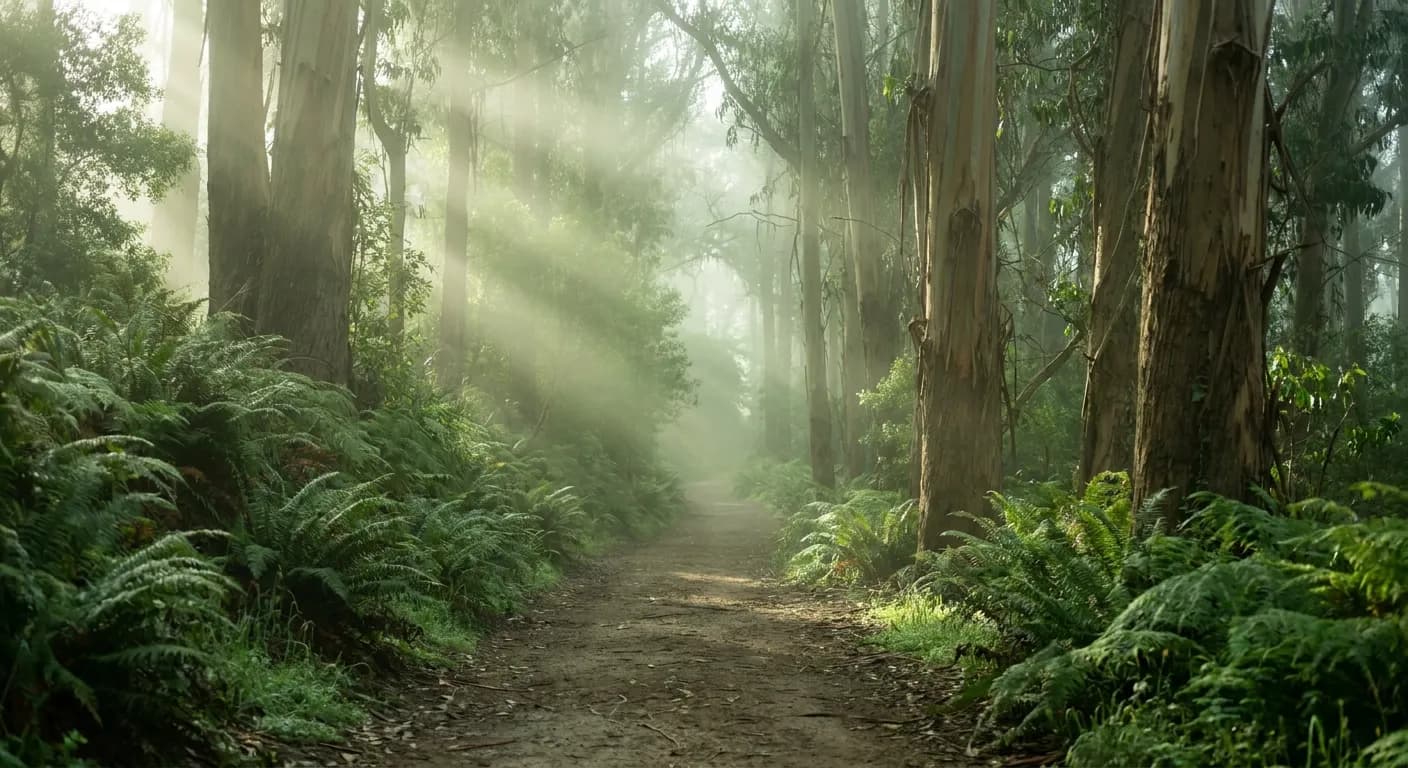
So give it the whole weekend. The park splits naturally into two personalities: a cultured east end where the museums and gardens cluster, and a wild west end where the eucalyptus thickens and the city noise drops away until you hit ocean. Here's the two-day version, with a food plan for each side.
First, Understand the Shape of the Park
Everything east of Blue Heron Lake is dense with destinations; everything west is long, green, and best covered on wheels or with comfortable shoes. JFK Promenade — the park's main east-side artery — is permanently car-free, which makes a rented bike or your own two feet the right way to move. Day one barely requires you to walk a mile; day two rewards covering ground. Dress for fog both days: the west end can sit under a marine layer while the Music Concourse bakes in sun.
Day One Morning: The Music Concourse Museums
Start at the Music Concourse, where the de Young Museum and the California Academy of Sciences face each other across a plaza of pollarded trees. The de Young's copper-clad building holds American art and blockbuster special exhibitions, but the free move is the Hamon Observation Tower — no ticket required, and the ninth-floor view runs from the park's treetops to the Golden Gate Bridge. Better still: through the end of 2026, the de Young's permanent collection is free on Saturdays for residents of the nine Bay Area counties. Reserve online ahead of time and bring ID; special exhibits still cost extra.
Across the plaza, the Academy of Sciences is an aquarium, planetarium, rainforest dome, and natural history museum stacked under one living roof. It's the bigger time commitment of the two — budget three hours if you want the planetarium show. If your weekend starts early, the Academy also runs NightLife on most Thursday evenings, a 21-plus run of the whole building with cocktails; check the calendar before counting on it.
Day One Afternoon: Three Gardens, One Strategy
The park's three formal gardens — the Conservatory of Flowers, the Japanese Tea Garden, and the San Francisco Botanical Garden — now operate together as the Gardens of Golden Gate Park, and all three are free for San Francisco residents. The Victorian glass Conservatory is the quick hit: an 1879 greenhouse packed with orchids, carnivorous plants, and giant water lilies. The Japanese Tea Garden, the oldest public Japanese garden in the country, earns a slower lap — timed tickets are required, and weekday early birds can catch a free hour on Monday, Wednesday, and Friday mornings. The Botanical Garden is the sleeper: 55 acres where you can walk from a California redwood grove into a cloud forest in ten minutes.
Day One Refuel: Ninth and Irving
The corner of Ninth Avenue and Irving Street, one block south of the park, is the museum crowd's cafeteria and the Inner Sunset's heart. Arizmendi Bakery, a worker-owned co-op on Ninth, does a rotating vegetarian pizza of the day on thin sourdough crust plus pastries worth ruining dinner for. Nopalito, a few doors down, serves organic regional Mexican cooking that locals pack in for. And San Tung's dry-fried chicken wings — crisp, sticky, garlicky — remain one of the city's great cheap thrills; note the restaurant takes a midweek break, so weekend timing works in your favor.
Day Two: Start on the Water at Blue Heron Lake
Day two belongs to the wild half. Begin at Blue Heron Lake — renamed from Stow Lake in 2024, and yes, the herons are real. The boathouse rents pedal boats (some electric-assisted, which is cheating, but pleasant cheating) for a lap around Strawberry Hill, the forested island at the lake's center. Climb the island's spiral path past the waterfall to one of the park's best quiet viewpoints, then point yourself west along the car-free promenade.
Bison, Windmills, and the Ocean
The western miles are where the park stops performing and just exists. Roll past Spreckels Lake, where model-boat racers have held court for a century, to the Bison Paddock — home to a small all-female herd, a park institution since 1892, tended by San Francisco Zoo staff. They roam a big meadow, so views range from majestic to a distant brown smudge; bring patience or binoculars. Keep going and the trees part for the Dutch Windmill and the Queen Wilhelmina Tulip Garden at the park's northwest corner, with the Murphy Windmill anchoring the southwest. Then cross to the sand: Ocean Beach is your finish line.
- Blue Heron Lake boathouse: pedal boat, then the Strawberry Hill loop on foot.
- Spreckels Lake: pause for the model boats if the racers are out.
- Bison Paddock: viewing is free, along JFK Drive just west of Spreckels Lake.
- Dutch Windmill and tulip garden: best bloom is late winter into spring, photogenic year-round.
- Ocean Beach: sunset here ends the weekend properly — bring a real jacket.
Along the shoreline, the former Great Highway has been reborn as Sunset Dunes, a coastal park approved by voters in 2024 and opened in 2025 — worth a wander south if your legs have anything left.
Day Two Refuel: The Ocean End
The west end feeds you better than it has any right to. The Beach Chalet, a 1925 Willis Polk building facing the ocean, pairs house-brewed beer with Depression-era frescoes in the lobby; the Park Chalet hides behind it with a lawn, a glass ceiling, and a more relaxed vibe when the fog burns off. For coffee, Andytown Coffee Roasters near Ocean Beach is the local ritual. And Hook Fish Co. on Irving Street does sustainably sourced fish tacos and poke that taste like a reward for crossing the whole park under your own power.
Golden Gate Park Weekend FAQs
Do I need a car to do this weekend?
No, and you're happier without one. Muni's 5 and N lines skirt the park's north and south edges, JFK Promenade is car-free, and bike or surrey rentals near the east end cover the westward miles. If you drive, park once and leave it — crossing the park by car misses the entire point.
How much does a museum-and-gardens day cost?
It ranges from nearly free to real money. San Francisco residents get the three gardens free, Bay Area residents get de Young permanent-collection Saturdays free through 2026, and the Hamon Tower, bison, and windmills cost nothing. The Academy of Sciences is the big ticket — book online and check current prices before you go.
Which day should be which if rain is coming?
Put the museum day on the wet day — the de Young, the Academy, and the Conservatory are all indoors, and the gardens are moody rather than miserable in drizzle. Save the west end for the clearer window, since bison, windmills, and Ocean Beach are strictly open-air. Ask Karpo for the fog forecast before you commit.