Historic Nightly Illumination Debuts on the George Washington Bridge
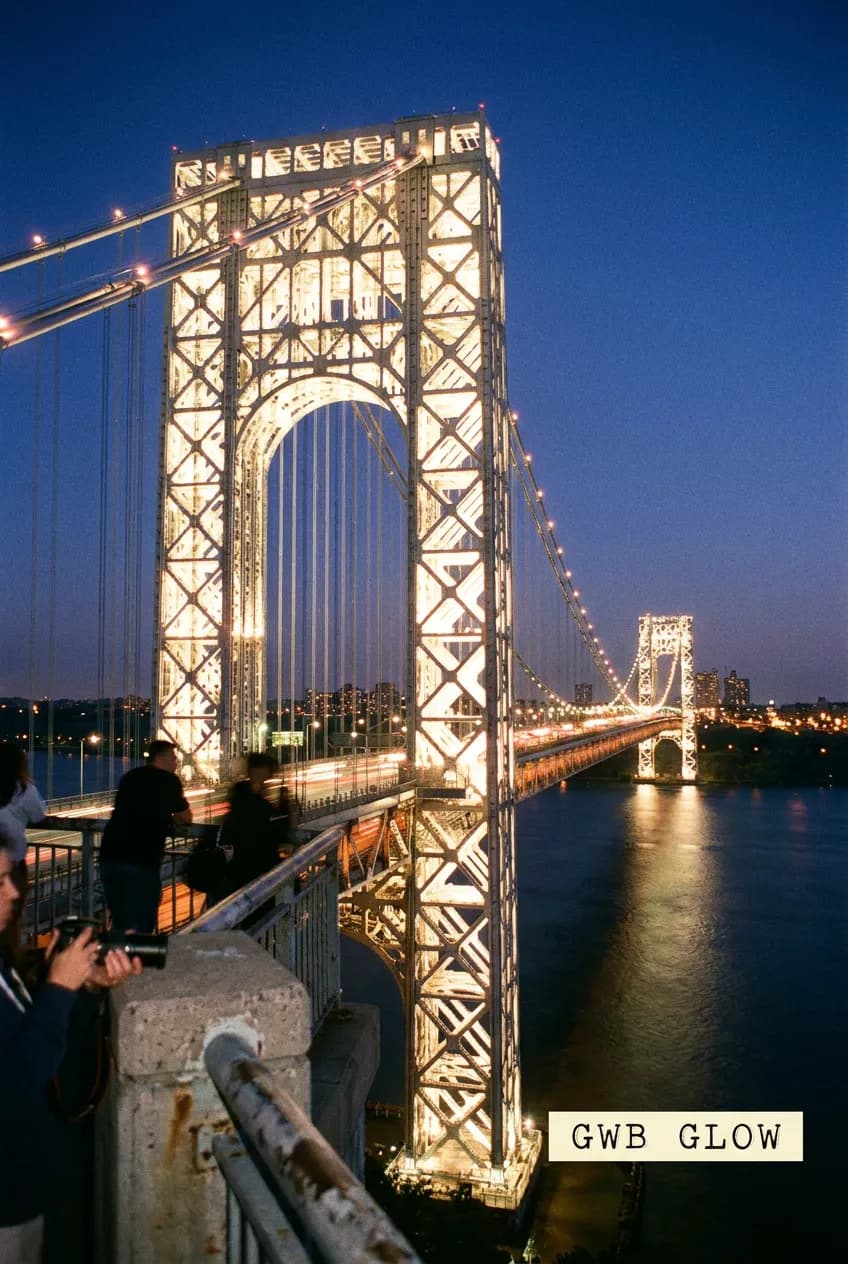
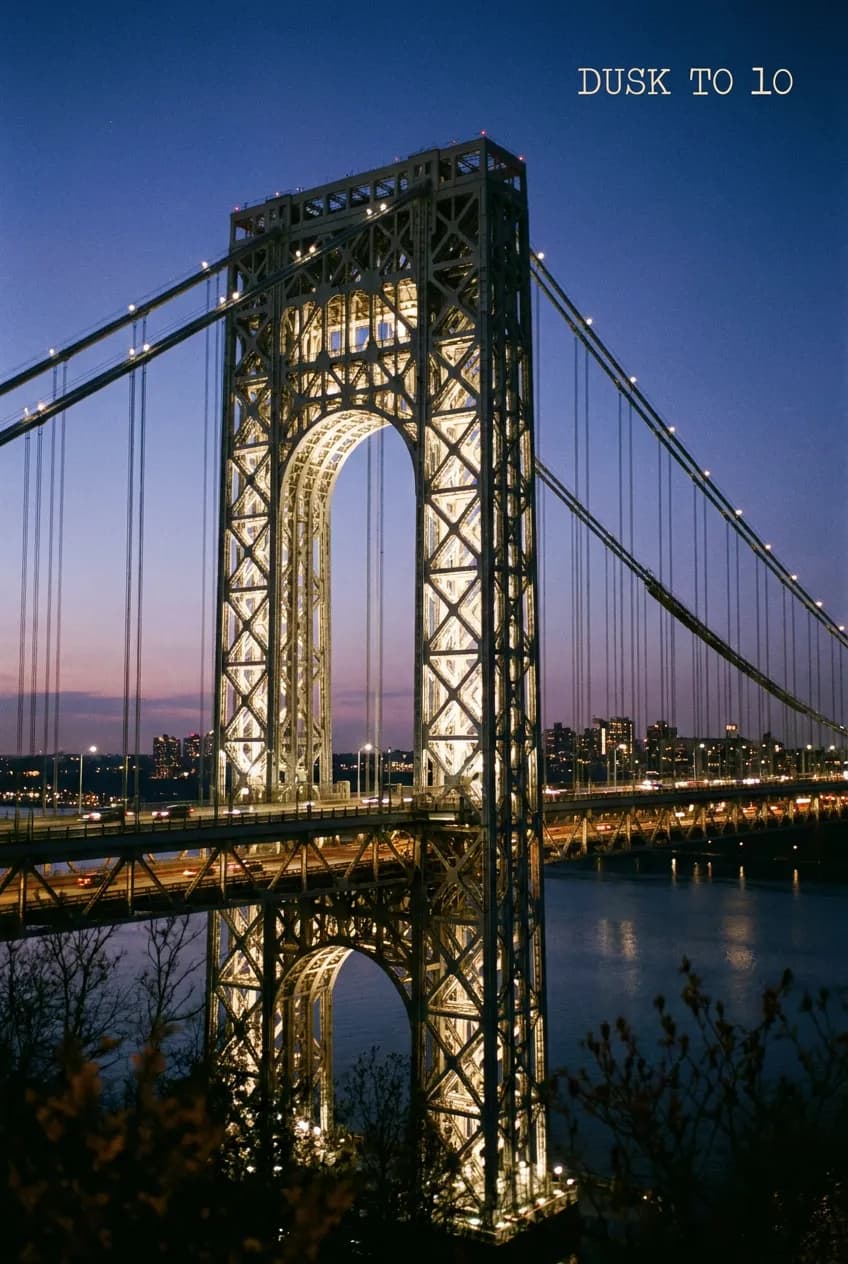
The Port Authority has announced new nightly tower lighting for the George Washington Bridge, marking the first time in the span's 94-year history that its iconic steel towers will glow consistently after dark. The illumination, timed to celebrate the nation's 250th birthday, transforms the bridge into a visible landmark from dusk until 10 PM each evening, creating fresh opportunities for night photography and skyline appreciation from public vantage points in upper Manhattan and Fort Lee.
The lighting initiative connects to the Port Authority's Restoring the George program, which includes LED upgrades and infrastructure improvements across the bridge that opened in 1931. While the towers have been lit for special occasions in the past, this marks the first sustained nightly schedule, reshaping the visual character of the Hudson River corridor for residents and visitors who view the bridge from parks, waterfronts, and overlooks on both sides of the river.
When the Towers Go Dark for Migratory Birds
The Port Authority has built bird-safe protocols into the lighting schedule, turning off the tower illumination during peak migratory seasons when artificial light can disorient nocturnal fliers. The lights will remain dark from mid-March to mid-April and again from late August to mid-November, aligning with spring and fall migration windows when millions of birds pass through the Hudson flyway on their way to breeding and wintering grounds.
These seasonal blackouts reflect growing awareness of light pollution's impact on wildlife, particularly in urban corridors where skyscrapers and bridges create obstacles for disoriented birds. Visitors planning a trip specifically to photograph the illuminated towers should confirm the current schedule before heading out, as the migratory blackout periods mean the lights will not appear during significant portions of spring and autumn.
Manhattan Viewing Spots Along the Hudson Greenway
Fort Washington Park and the Hudson River Greenway in upper Manhattan offer unobstructed sightlines to the bridge's eastern tower and suspension cables. The greenway runs continuously from Battery Park to the George Washington Bridge, with dedicated pedestrian and bicycle paths that remain accessible after dark, though lighting conditions vary by segment and visitors should exercise standard urban park caution during evening hours.
The promenade near the Little Red Lighthouse, officially Jeffrey's Hook Light, sits directly beneath the bridge's Manhattan anchorage and provides a close perspective on the tower structure. This area can be reached on foot from the 181st Street subway station or via the greenway path. Check current park hours and lighting conditions before planning an evening visit, as access rules and maintenance schedules can shift seasonally.
New Jersey Overlooks in Fort Lee and Palisades Interstate Park
Fort Lee Historic Park, managed by the Palisades Interstate Park Commission, sits on the bluffs immediately south of the bridge's New Jersey tower and offers elevated views across the Hudson. The park includes walking paths and interpretive sites related to Revolutionary War fortifications, though evening access and parking availability should be verified in advance as hours may be limited outside peak visitor seasons.
Ross Dock and other Palisades Interstate Park access points along the New Jersey shoreline provide river-level perspectives looking back toward the bridge and Manhattan skyline. These locations require a car to reach and have specific parking regulations and closure times that vary by season. Confirm current public access rules and lot hours before driving out, as enforcement is active and alternative parking is scarce in this residential and parkland area.
Photography Considerations and Equipment
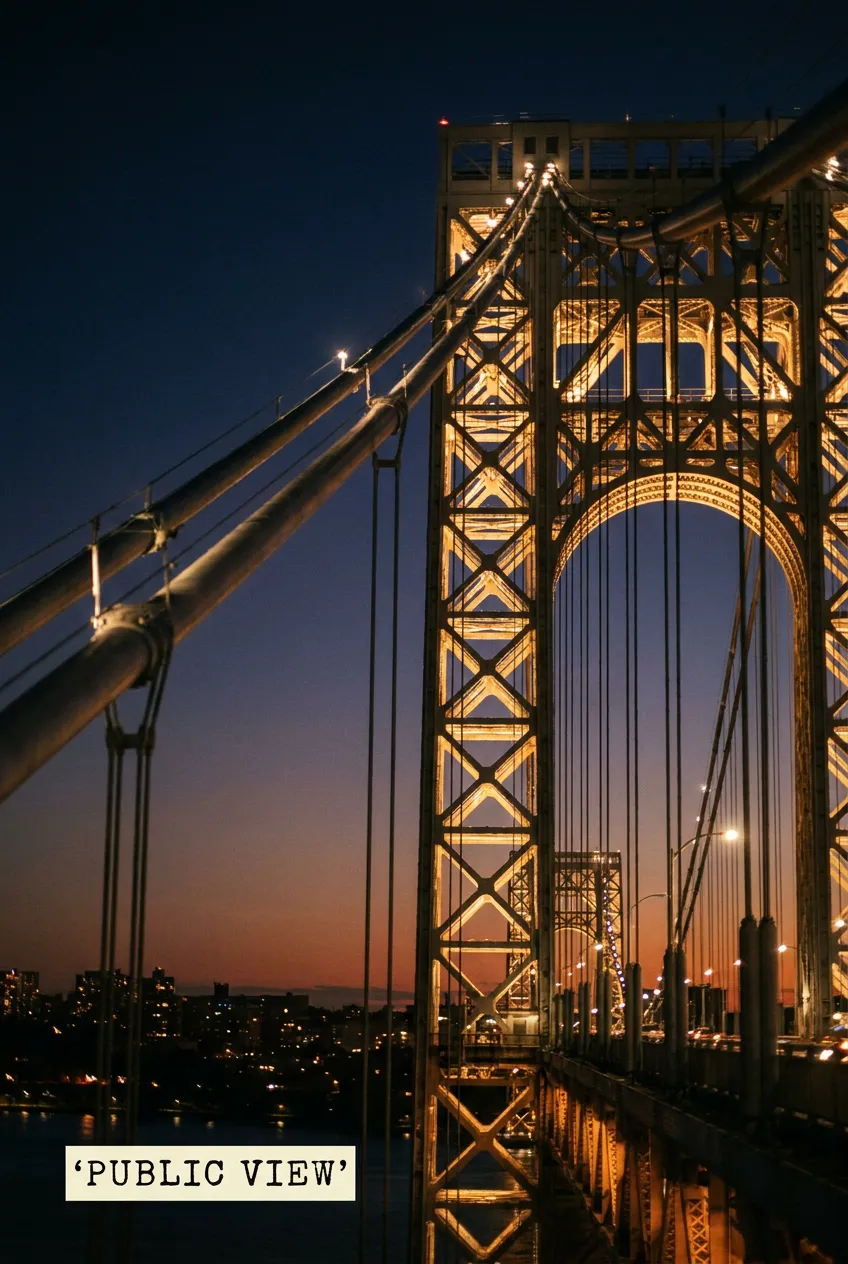
Capturing the illuminated towers requires basic long-exposure technique, as the LED lights and surrounding city glow create high-contrast scenes that challenge automatic camera settings. A tripod or stable surface is essential for exposures longer than a fraction of a second, and manual mode allows control over how much of the bridge structure and background skyline appear in the frame versus washing out or falling into shadow.
Smartphone cameras with night mode can produce usable images, though dedicated cameras with manual controls offer more flexibility in balancing the bright tower lights against the darker sky and water. Scout locations during daylight to identify safe, legal shooting positions and to gauge foreground elements like railings, trees, or lampposts that might obstruct the view after dark. Arrive before the lights activate at dusk to set up and test compositions while ambient light remains.
Planning Your Visit Around the Lighting Schedule
The dusk-to-10-PM window means the towers will be visible for several hours each evening, with the exact duration shifting as sunset times change through the year. Winter months offer the longest viewing periods, with dusk arriving as early as 4:30 PM, while summer sunsets push the start time past 8 PM and compress the illuminated window to less than two hours before the lights shut off.
Weeknight visits typically encounter lighter foot and vehicle traffic at public overlooks compared to weekends, when photographers and sightseers cluster at popular vantage points. If traveling by car to New Jersey viewing areas, factor in bridge toll costs and the likelihood of congestion during evening rush hours, which can extend well past 7 PM on weekdays. Public transit access to Manhattan-side viewing spots via the A train to 181st Street avoids toll and parking complications but requires a walk of several blocks to reach waterfront positions.
Practical notes
- Confirm current park hours and public access rules for specific overlooks before traveling, as seasonal schedules and maintenance closures affect evening availability.
- The tower lights will be dark during migratory bird seasons from mid-March to mid-April and late August to mid-November each year.
- Illumination runs from dusk until 10 PM nightly, with the viewing window varying significantly by season as sunset times shift throughout the year.
- Manhattan-side viewing locations are accessible via the A train to 181st Street, while New Jersey overlooks generally require a car and incur bridge toll costs.
- Bring a tripod or stable camera support for long-exposure photography, as handheld shots of the illuminated towers will likely show motion blur.
Tags: #GeorgeWashingtonBridge #GWB #NYCnightview #HudsonRiver #FortLee #upperManhattan #bridgephotography #NYCskyline #PalisadesInterstatepark #FortWashingtonPark #nightphotography #PortAuthority #RestoringTheGeorge #America250 #NYCoverlook
Sources consulted: Port Authority press room · Secret NYC · The Local Girl · Restoring the George
All trademarks are the property of their respective owners.
Ask Karpo first
Need the latest on George Washington Bridge tower lighting schedules, current park access hours at Fort Washington Park or Fort Lee Historic Park, or recommendations for the best public vantage points for night photography? Ask Karpo to check real-time conditions, confirm whether the lights are active outside migratory blackout periods, and get walking or driving directions to legal viewing spots on either side of the Hudson.