 Marshall Chess Club, Greenwich Village: Tuesday Class $30
Hidden Gems & Odd Finds
10 Hidden Spots in Central Park Most NYC Tourists Miss
Escape the crowds with these 10 hidden spots in Central Park, from historic war ruins and secret sanctuaries to whispering stone benches.
For most visitors, a trip to central park begins and ends with the crowded pathways of the Mall, the Bethesda Fountain, and the Sheep Meadow. But if you look past the standard tourist routes, this 843-acre urban oasis hides secrets that even lifelong New Yorkers frequently overlook. From forgotten war ruins and secret sanctuaries to whispering stone benches and rushing waterfalls, exploring these lesser-known central park locations nyc offers a serene escape from the midtown rush. You just need to know which path to choose.
Text Karpo to get a custom, crowd-free walking route through Central Park's northern wilderness, complete with real-time weather and opening hours.
The Northern Cascades and the War of 1812 Relic
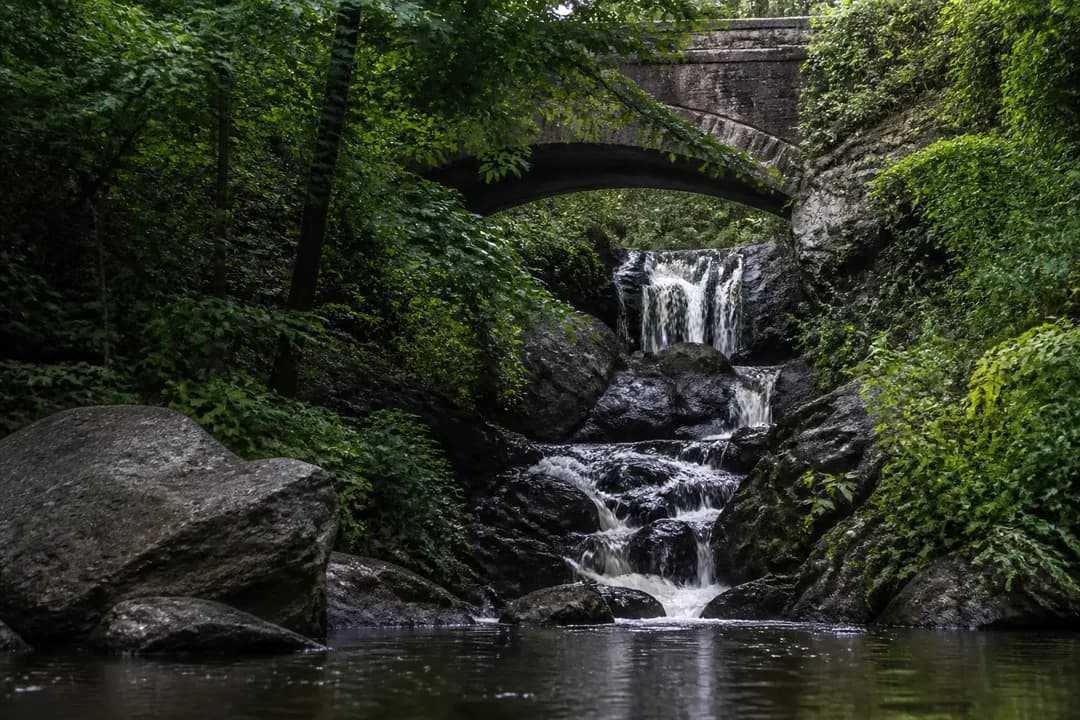
To experience the park's wilder side, bypass the southern loop entirely and head to the North Woods. For those wondering where to find central park’s most tranquil, untouched corners, the Ravine is the ultimate escape. Here, the Loch—a stream designed to mimic a rustic Adirondack river—flows past Glen Span Arch, cascading over hidden waterfalls that completely drown out the roar of city traffic. The best entrance to this area is the West 106th Street gate, which places you directly on the wood-chip paths without the long walk from the south. Walk this route early in the morning, ideally before 9:00 AM, when the only other souls around are local birdwatchers tracking migrating warblers.
Just uphill from the Ravine sits the Blockhouse, the oldest remaining structure inside the park. Built as a fortification during the War of 1812, this rugged, vine-covered stone fort sits atop a steep rocky outcrop. While tourists flock to Belvedere Castle, the Blockhouse remains delightfully uncrowded and offers a raw, historical view of the Harlem Meer below. The surrounding woodland path is steep and uneven, so wear sturdy shoes, and note that this area is best visited during full daylight hours.
Curated Flora and Restricted Sanctuaries
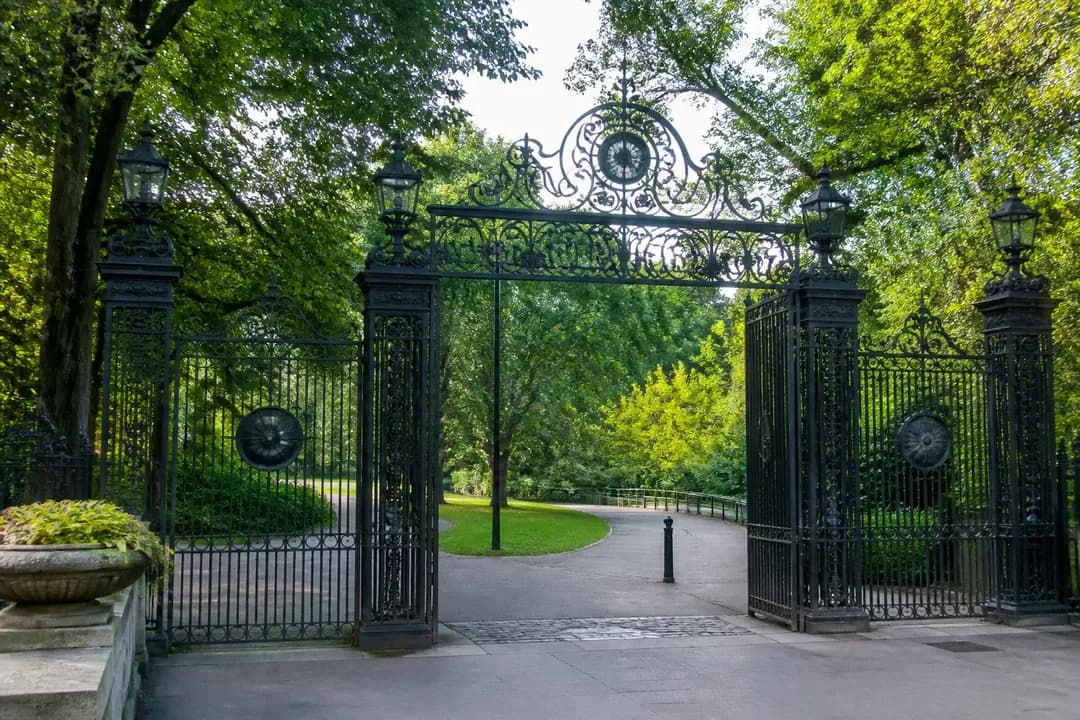
On the northeastern edge of the park sits the Conservatory Garden, a formal six-acre garden divided into three distinct styles: French, Italian, and English. Enter through the massive, ornate Vanderbilt Gate at 105th Street and Fifth Avenue—a structure that originally fronted the Vanderbilt mansion further downtown. Because this is a designated quiet zone where jogging and bicycling are strictly prohibited, it remains one of the most peaceful spots in Manhattan. If you want to capture the wisteria pergola in full bloom or read a book in silence, visit between 8:00 AM and 11:00 AM on a Tuesday or Wednesday. This avoids the weekend rush and the flock of wedding photographers who dominate the lawns on Saturday afternoons.
At the polar opposite end of the park, just steps from the bustling Wollman Rink, lies the Hallett Nature Sanctuary. Originally closed off in 1934 to serve as a wild bird sanctuary, it was only reopened to the public on a limited basis in 2016. Because of its delicate ecosystem, access is restricted; you must check the daily schedule as it operates on narrower windows than standard central park hours. The gate is located near the corner of Central Park South and 6th Avenue. Inside, woodchip trails wind up a rocky promontory overlooking the Pond, offering a surreal vantage point where native wildflowers sit in the foreground of massive midtown skyscrapers.
Rustic Shelters and Hidden Stone Bridges
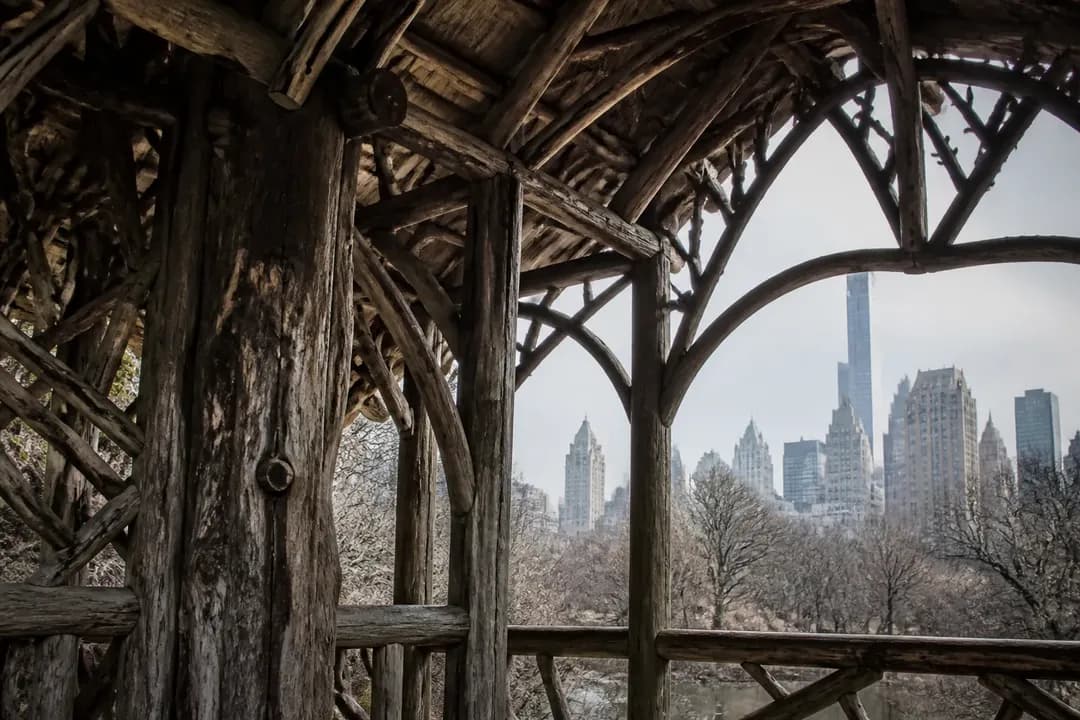
While tourists gather at the Bethesda Terrace, those seeking the best central park nyc views of the southern skyline head to Cop Cot. Located on a high rocky knoll near the Sixth Avenue entrance around 60th Street, this is the park's largest surviving rustic wooden structure. Made from natural tree branches, its name translates to 'little cottage on the hill' in Scottish Gaelic. It provides a naturally shaded, circular wooden bench canopy that frames the Central Park South skyline beautifully. Locals know to grab a coffee from one of the carts on 59th Street early in the morning and head up here before the mid-day dog walkers and tour groups arrive.
Deep within the 38-acre woodland known as the Ramble, it is incredibly easy to lose your bearings. This was entirely intentional by design. Follow the babbling sounds of The Gill, a tiny, man-made stream that feeds into the Lake. If you follow this stream to its northernmost source, you will find Bank Rock Bridge, also known as Cabinet Bridge. While Bow Bridge gets all the fame and photoshoots, this narrow wooden bridge offers a far more intimate, framed view of the lake's northern inlet. The path leading here is narrow and overgrown, offering a perfect, quiet alcove to sit on a rustic wooden bench without being jostled by crowds.
Whispering Stones and the Secret Herbarium
Directly below Belvedere Castle lies the Shakespeare Garden, a lush four-acre hillside filled with plants and flowers mentioned in the playwright's works. Winding stone steps and narrow dirt paths make it feel like an English cottage garden. Tucked away at the top of the garden is the Charles B. Stover Bench, commonly known as the Whispering Bench. Made of curved granite, if you sit at one end and whisper into the stone, someone sitting at the far opposite end can hear you clearly. To test this, visit during a quiet weekday afternoon when the ambient city noise is at its lowest.
A short walk from the garden brings you to the Swedish Cottage Marionette Theatre, a model schoolhouse imported from Sweden in 1876. While it hosts puppet shows for kids during the day, the exterior porch is a quiet, shaded spot to sit. Further west, right on the edge of the Lake, is the Ladies Pavilion. This ornate, blue-and-gold cast-iron structure was originally a shelter for trolley passengers in the 19th century. Located off West 72nd Street, it faces west, making it one of the absolute best, least-congested spots in the park to watch the sunset over the Upper West Side skyline. Skip the crowded Bethesda Fountain steps and bring a light jacket here for a quiet sunset view.
Planning Your Off-the-Beaten-Path Route
To maximize your experience, plan your route geographically. Trying to see the Hallett Nature Sanctuary at 59th Street and the Blockhouse at 109th Street in one afternoon requires a three-mile uphill walk. Instead, divide your exploration. Focus on the north end (the Ravine, the Blockhouse, and the Conservatory Garden) for a morning of quiet nature and historical structures. If you are starting from the south, stick to Cop Cot, the Hallett Sanctuary, and the southern edge of the Ramble. Keep in mind that while central park hours run from 6:00 AM to 1:00 AM daily, the internal nature sanctuaries like Hallett close much earlier, usually by dusk.
To beat the crowds, timing is everything. Weekends bring street performers, bicycle tours, and thousands of runners to the main paved loops. If you must visit on a weekend, stick to the unpaved paths of the Ramble or the North Woods, where the dense canopy and rugged terrain naturally deter casual tourists. Pack a bottle of water and download an offline map of the park, as cellular service can become spotty down in the ravines and deep wooded valleys.
Practical notes
- Best time for Hallett Sanctuary: Weekdays before 2:00 PM (hours are limited and seasonal).
- Best entrance for North Woods/Ravine: West 106th Street gate to skip the long southern walk.
- Conservatory Garden rules: Designated quiet zone; no jogging, bicycling, or active sports allowed.
- Park hours: Central Park is open daily from 6:00 AM to 1:00 AM, but sanctuaries close at dusk.
- Cellular tip: Download offline maps; signal can drop in the Ravine and deep Ramble valleys.
Tags: #centralpark #nychiddengems #manhattantips #nycwalks #centralparklocations #newyorkcity #localnyc #explorenyc #nycguide #parkwalks #nycnature #centralparkhours #nyctravel
Please drink responsibly. Must be of legal drinking age.
All trademarks are the property of their respective owners.
Ask Karpo first
Heading to Central Park today? Text Karpo to check current opening hours for the Hallett Nature Sanctuary, get a step-by-step route to the hidden waterfalls of the Ravine, or find the nearest quiet entrance away from the weekend crowds.
Ask Karpo for more information.
Keep reading
- Marshall Chess Club, Greenwich Village: Tuesday Class $30
 Chess Forum Chess Club in Greenwich Village: $5 an Hour
 Rolex Watch Repair Shop on Fifth Avenue: Rolex USA New York