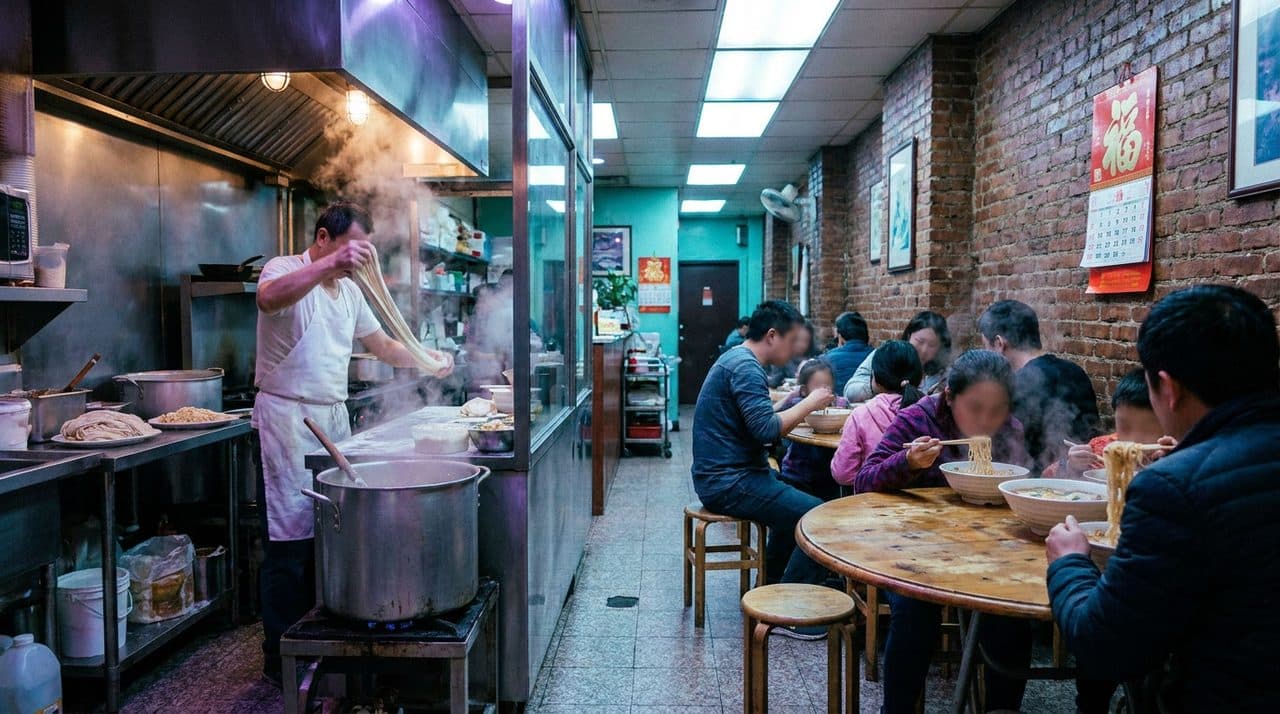
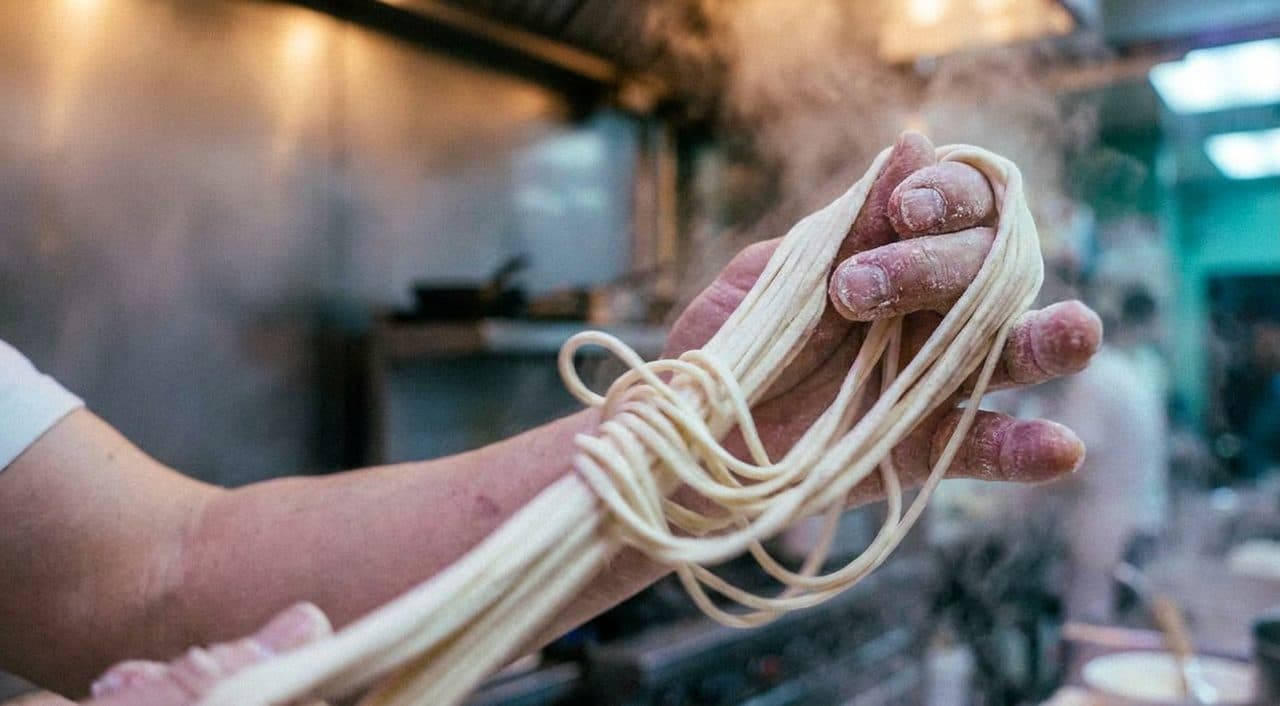
The noodle maker stands behind a glass partition pulling dough into strands that stretch the length of his arms, then fold back on themselves in a rhythm that never breaks. This storefront in Gravesend operates on a different clock than the rest of Brooklyn—lunch service starts before noon and the tables fill with Fujianese families who speak in rapid Mindong dialect while waiting for bowls that arrive steaming and substantial. The menu runs long on hand-pulled variations, but the regulars barely glance at it.
Dough That Stretches in Real Time
The open kitchen sits front and center, impossible to miss from any seat in the narrow dining room. A single practitioner works the dough station throughout service, slapping and stretching flour-dusted ropes that transform into noodles thin enough to tangle around chopsticks or thick enough to require a bite and pull. The technique comes from Fuzhou, where hand-pulled noodles carry a different texture than their knife-cut or extruded counterparts—more spring, less uniformity, a chew that registers as unmistakably made by hand. Flour dust settles on the counter. The rhythm never speeds up or slows down regardless of how many tickets hang above the line. Each portion gets pulled to order, dropped into boiling water, and lifted out with a spider skimmer before the next batch starts. The process takes minutes, not seconds, and the dining room adjusts its expectations accordingly.
Tables That Seat Entire Households
Weekend lunch brings multigenerational groups who claim the larger tables near the back. Grandmothers in quilted jackets sit beside teenagers scrolling phones while waiting for the first round of bowls. Conversations overlap in Fujianese, Mandarin, and occasional English, creating a acoustic layer that marks this place as deeply embedded in the neighborhood's Chinese community. The tables themselves are basic—laminate tops, metal-legged chairs—but they accommodate the kind of drawn-out meals where people order in waves, adding wontons or a plate of stir-fried greens after the noodles arrive. Solo diners take the counter seats facing the kitchen, close enough to feel the heat from the wok station. The staff moves between tables with a practiced efficiency that comes from knowing most faces, remembering who takes extra vinegar and who wants their broth on the side.
Broth That Builds From Pork Bones and Time
The soup base here follows a Fujianese template—pork bone stock simmered long enough to turn milky, seasoned with a restrained hand that lets the natural sweetness come through. It arrives in bowls deep enough to require two hands, the surface slicked with a thin layer of fat that holds the heat. Some variations add pickled greens for acidity, others come topped with braised pork belly that collapses under chopstick pressure. The noodles themselves soak up the broth without turning mushy, maintaining that hand-pulled texture even as they sit. A caddy of condiments lives on every table—black vinegar, chili oil, white pepper—and the regulars doctor their bowls without hesitation, building flavor in layers. The broth never tastes aggressively seasoned on its own. It needs the additions, the customization, the personal adjustments that turn each bowl into something specific to the person eating it.
A Neighborhood Pulse That Runs on Fujianese Time
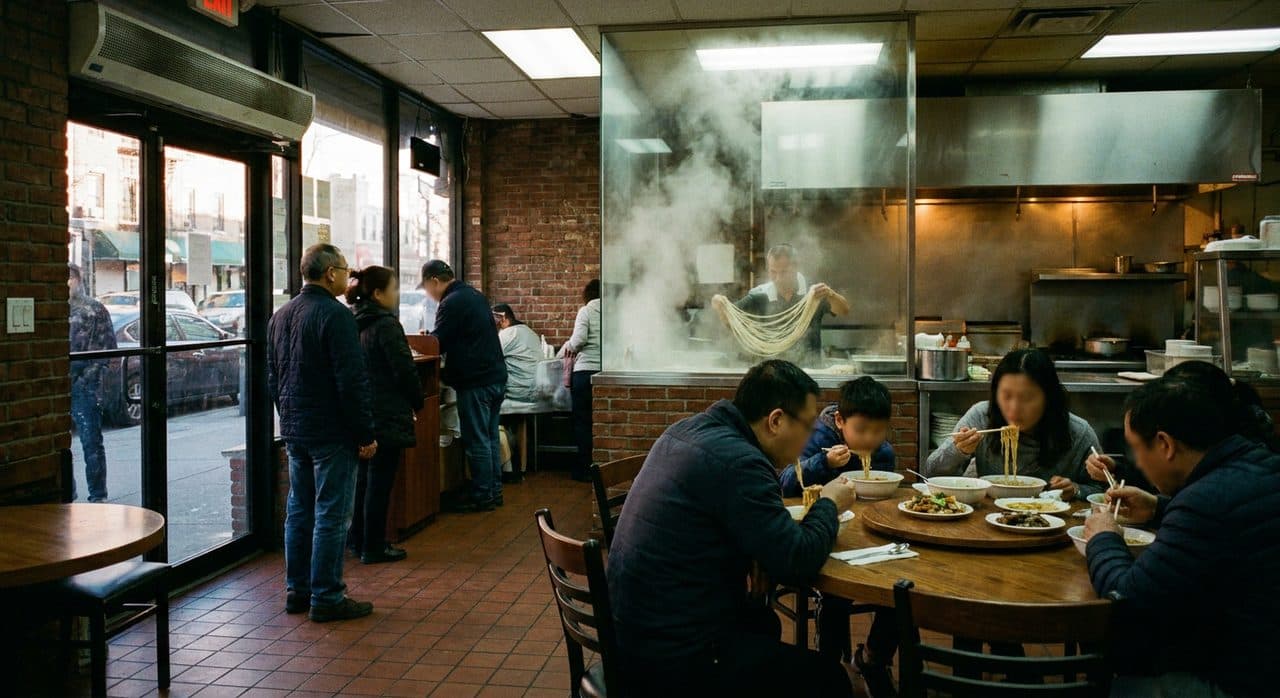
Gravesend operates as one of Brooklyn's densest Fujianese enclaves, and this noodle shop sits squarely in the middle of that community's daily rhythm. The lunch rush peaks earlier than in Manhattan, driven by shift workers and families whose schedules don't align with the standard nine-to-five. By early afternoon, the dining room has already turned over twice. The clientele skews heavily toward Chinese speakers, though the occasional outsider wanders in, drawn by reputation or proximity. Those newcomers get the same service as everyone else—efficient, functional, unbothered by language barriers. The menu includes English translations, though the descriptions stay minimal. The kitchen doesn't adjust preparations for unfamiliar palates. What arrives is what the regulars eat, prepared the way it's always been prepared, and the place operates with the confidence of a spot that doesn't need to explain itself.
Wontons That Arrive as an Afterthought Worth Having
The wonton soup functions as a secondary draw, though it deserves its own attention. The wrappers get made in-house, thin enough to see the pork filling through the translucent dough. They arrive in the same pork bone broth as the noodles, bobbing in clusters of six or eight, their edges crimped in the quick, irregular pattern of hand-folding. The filling carries a coarser grind than Cantonese versions, studded with bits of water chestnut that add a subtle crunch. Some tables order a combination bowl—noodles and wontons together—which creates a textural conversation between the two. The wontons cook faster than the hand-pulled noodles, so they tend to arrive first when ordered separately, a starter that wasn't technically ordered as one. The kitchen's timing follows its own logic, and the dining room has learned not to question it.
Greens That Cut Through the Richness
A short list of vegetable dishes runs along the bottom of the menu, easy to overlook but regularly ordered by tables who understand the value of something bitter or mineral alongside all that pork fat. The water spinach comes stir-fried with garlic, still crisp, carrying a slight char from the wok. Pickled mustard greens arrive cold, their funk and salt providing a palate reset between bites of noodles. These aren't elaborate preparations—the kitchen treats vegetables as functional components of a meal rather than showcase items—but they serve a purpose. The regulars build their orders around this balance, noodles and broth and something green, a structure that repeats across tables. The vegetables also tend to arrive quickly, sometimes before the noodles, giving early arrivals something to occupy the wait.
Practical Notes
The shop operates daily with lunch service starting late morning and running into mid-afternoon, then reopening for dinner. Weekend afternoons see the heaviest crowds, though turnover stays steady enough that waits rarely stretch beyond fifteen minutes. The nearest subway station requires a walk of several blocks—this is deep residential Brooklyn, where transit connections thin out. Street parking exists but fills quickly during peak hours. No reservations, no phone-ahead ordering for dine-in. Cash is accepted and preferred, though card payments work. The menu stays consistent year-round with minimal seasonal variation. Expect to spend less than what Midtown charges for a mediocre lunch, and expect to leave full.
Tags: #PullUpAChair #Gravesend #Brooklyn #FujianeseCuisine #HandPulledNoodles #NoodleShop #NYCEats #OuterBoroughDining #AuthenticChinese #NeighborhoodSpots #FuzhouFood #BrooklynFood #NYCNoodles #LocalsOnly #ChineseNoodles
Sources consulted: eater.com · timeout.com · infatuation.com
All trademarks are the property of their respective owners.
Ask Karpo first
Want to know which noodle dishes they're known for, or if they make dumplings too?
Ask Karpo for noodle recommendations and the full menu before you head out.