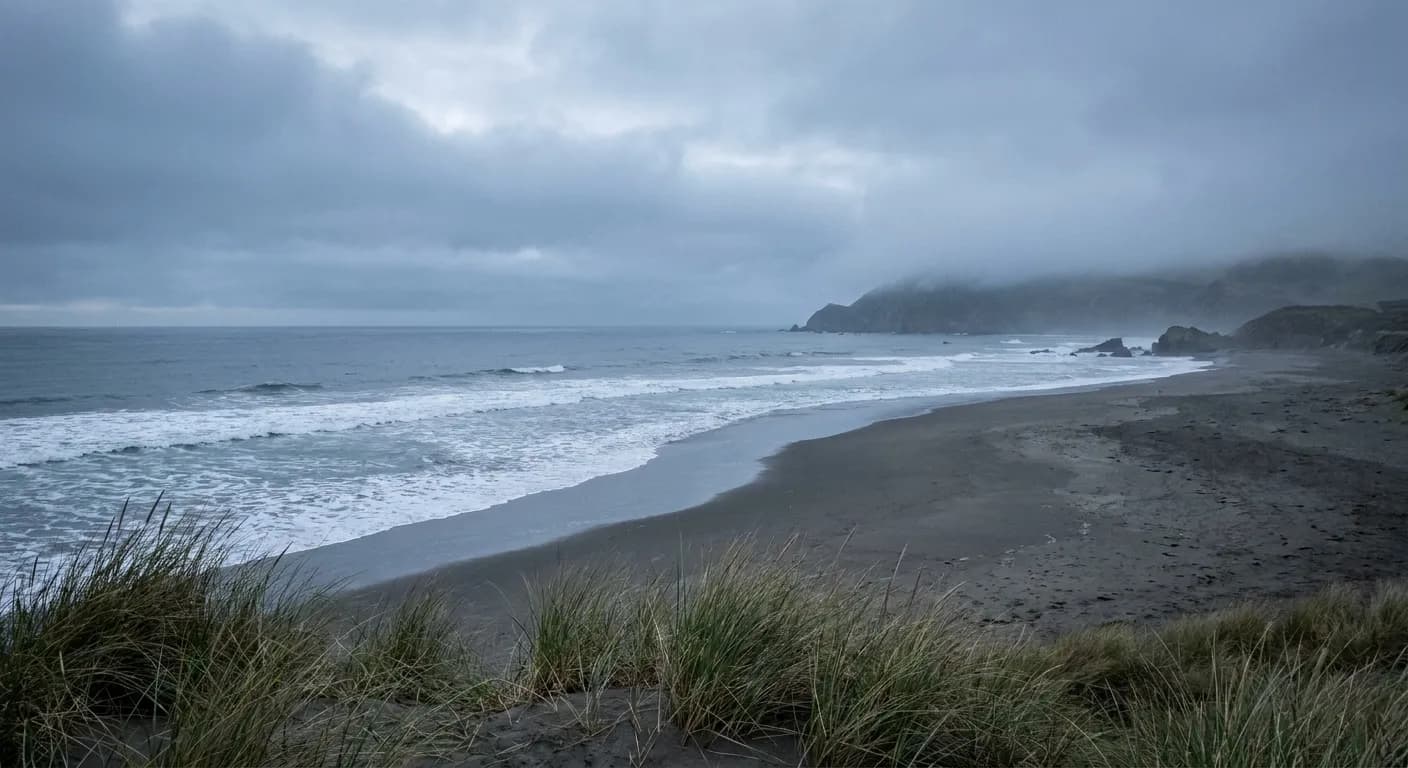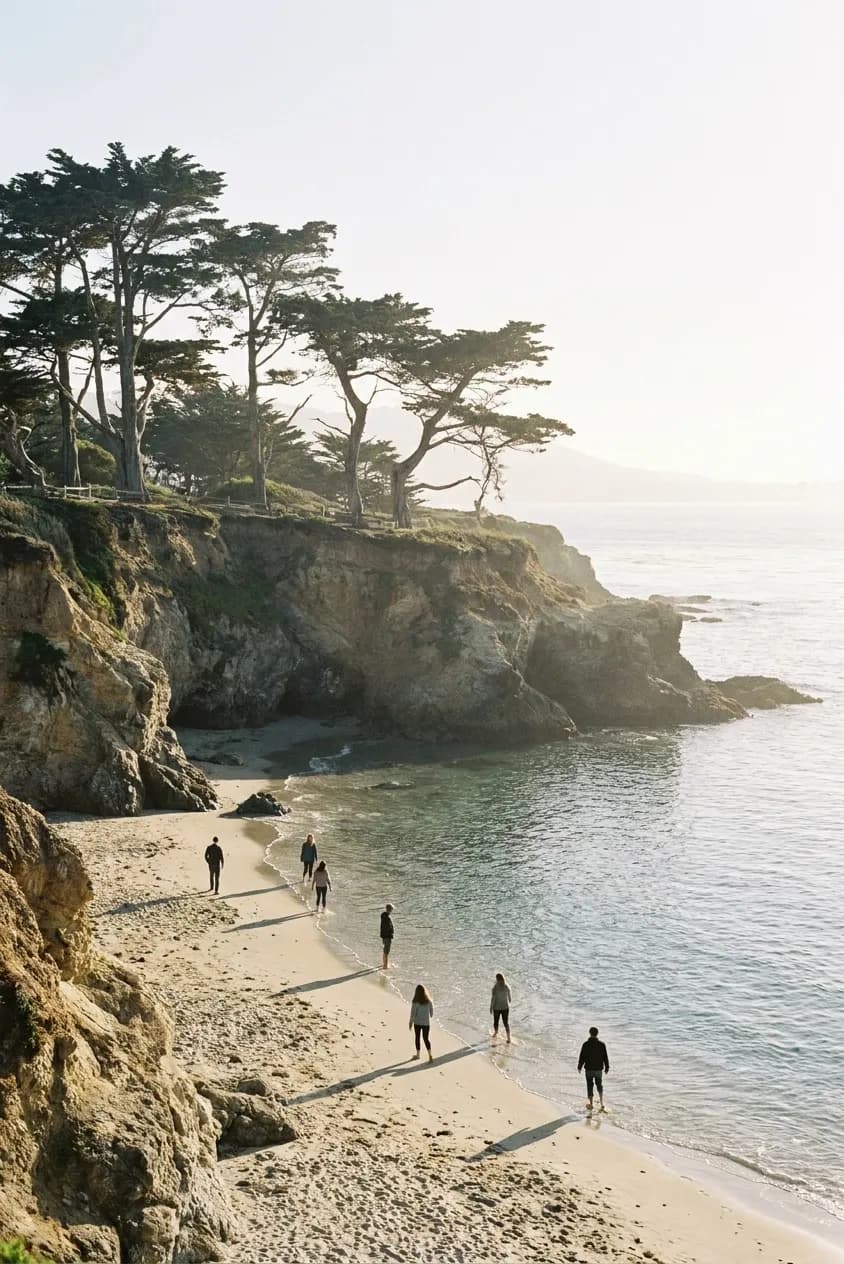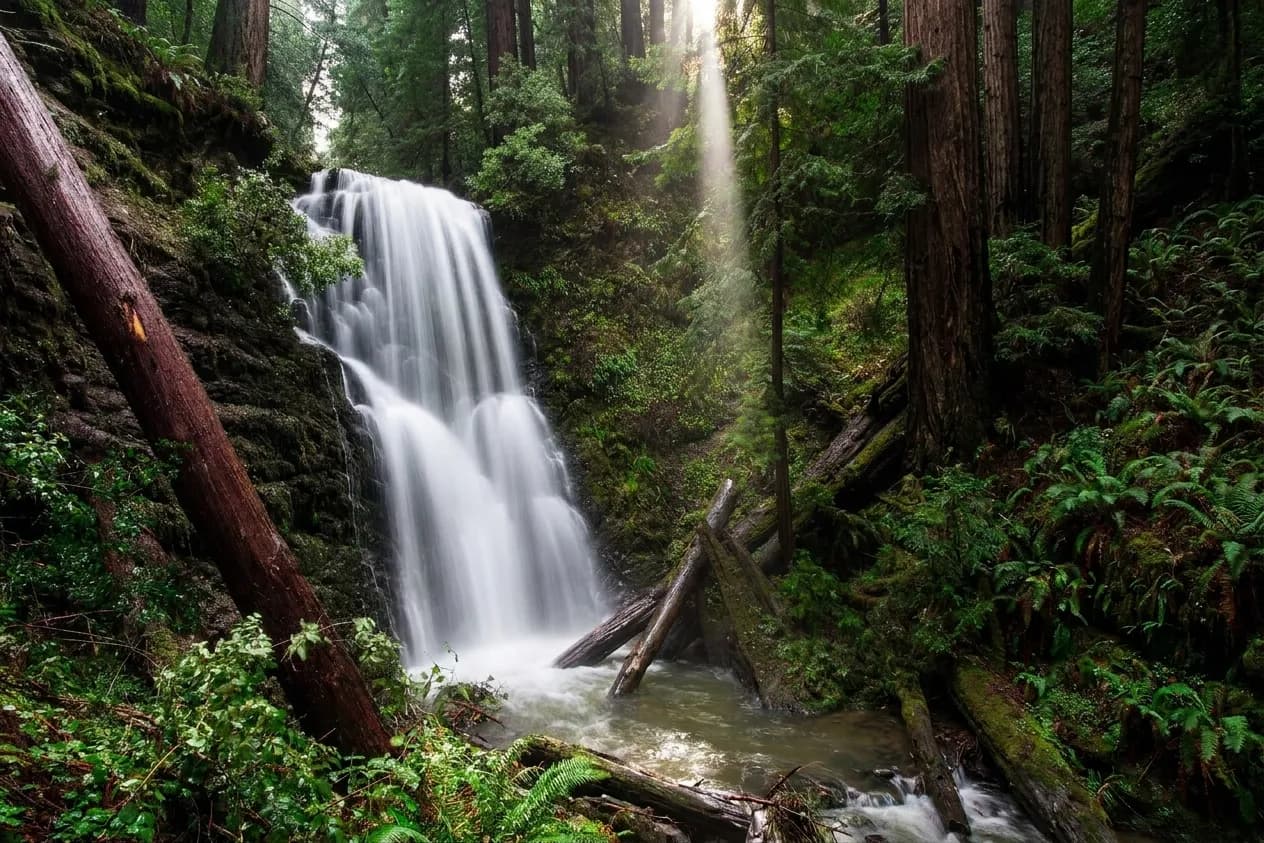
There are more waterfalls within an hour of San Francisco than most people who live here realise, and a fair number of them cost nothing to visit. The catch is not access, it is water. Nearly every fall in this region is seasonal, running hard from the first serious rains through spring and dwindling to a damp rock face by late summer. A free waterfall hike in October is usually a free walk to a dry cliff, which is why timing matters more here than the destination does.
A waterfall you drive two hours to find dry is a bad Saturday. Tell Karpo when you want to go and how far you will drive, and it will tell you what has been running lately, what the access costs, and whether the road is open.
The season is the whole story
Northern California has a Mediterranean climate: effectively all the rain arrives between November and April, and almost none falls in summer. Creek-fed waterfalls follow that curve directly. The best window runs from about January through April, peaking a day or two after a substantial storm and staying good for a few weeks after a wet spell. By June most of the smaller falls are down to a trickle, and by August many have stopped entirely.
The exceptions are the falls fed by springs or by larger drainages, which hold something year-round, and the coastal falls that drop straight onto a beach, where the walk is worth doing even in a dry month. Knowing which category you are driving to is the single most useful thing on this list.
Inside the city: free and almost unknown
San Francisco itself has running water in a few places, and none of them charge anything. Glen Canyon holds Islais Creek in a genuine canyon in the middle of the city, with a rocky drop that runs after rain. Stern Grove has a small cascade in its eucalyptus bowl. The Lands End and Sutro Baths area has seasonal seepage and cliffside streams after a storm, with the best coastal walk in the city attached.
These will never be dramatic. What they are is fifteen minutes from home, entirely free, and easy to do on the morning after rain when everything is running and the light through the eucalyptus is at its best. For most people that beats a two-hour drive by a wide margin.
Marin and the Peninsula: the real ones
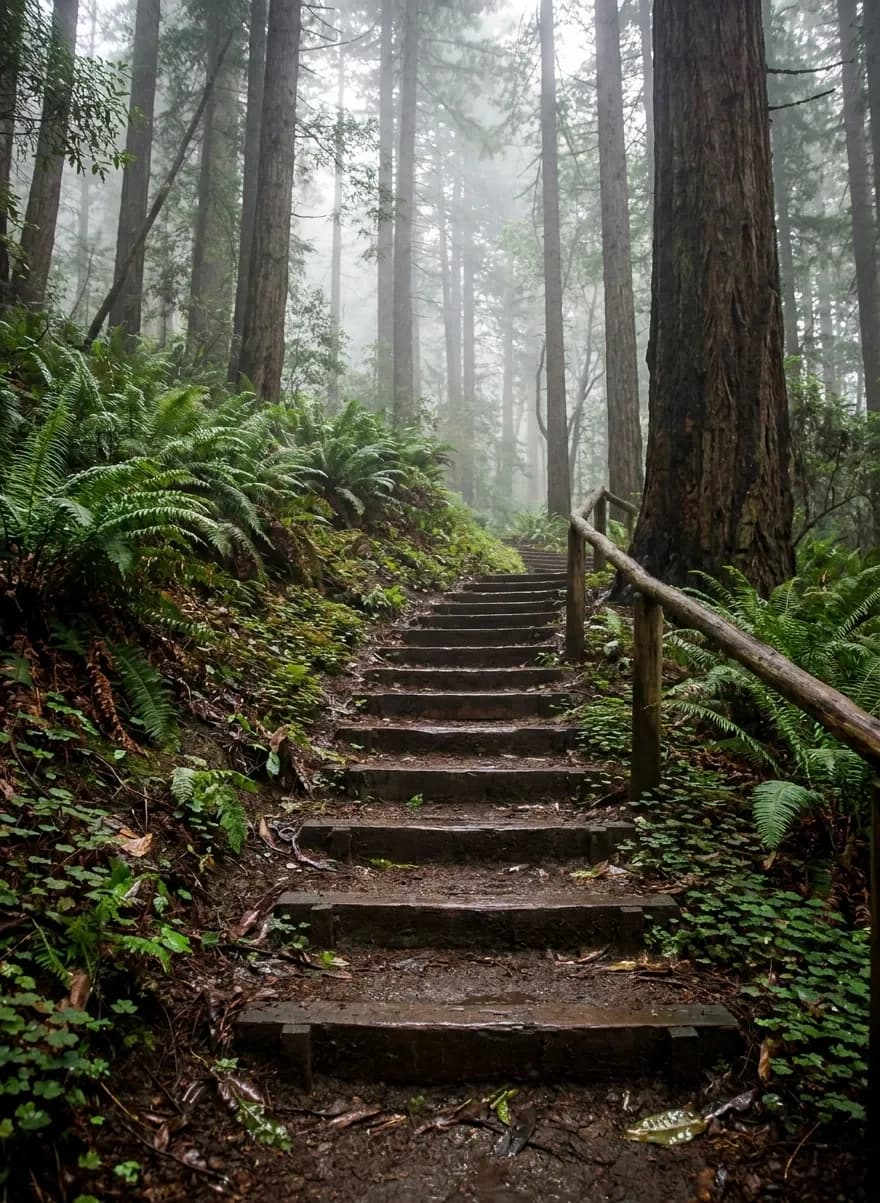
Across the bridge, the Marin headlands and Mount Tamalpais hold the region's best accessible falls, and much of the access is free if you park thoughtfully. Cataract Falls on the Mount Tam watershed is the classic — a stepped run of cascades through mossy forest, spectacular in late winter, unremarkable in September. The watershed lands and the open space districts around them generally do not charge for trail access, though a few of the marquee state park lots do.
South of the city, the Peninsula's open space preserves are free and hold several seasonal creek falls in redwood canyons. The pattern in both directions is the same: the county and district open space lands are free, and the state and national park units are where the fees and reservations appear. If your priority is no fee and no permit, aim for the open space preserves rather than the famous names.
Reading the conditions before you drive
Three checks save most wasted trips. First, look at recent rainfall for the specific watershed rather than for San Francisco — a storm that soaks Marin can miss the Peninsula entirely. Second, check whether the access road is open, since winter storms close mountain roads in this region regularly and the closure often outlasts the weather by weeks. Third, check the parking situation, because free trailheads have small lots that fill by nine on a clear Saturday after rain.
The corollary to the third point is that the best time to visit a free waterfall here is a weekday morning in February, ideally two days after a storm. It is cold, it is damp, the trail is muddy, and you will have the place almost to yourself.
What the trail actually asks of you
These are wet-season walks, which means mud, slick rock and creek crossings without bridges. Shoes with grip matter more than anything else you bring. Poison oak is abundant across all of these watersheds and is at its least recognisable in winter when it has dropped its leaves, so staying on the trail is both a conservation point and a self-interested one.
Standing under or climbing beside a running fall is where people get hurt in this region. The rock is slick, the moss hides the edges, and rescues in these canyons are slow. Look at it from the trail, take the photograph from the trail, and keep the scramble for dry rock in a dry month.
Tags: #SanFrancisco #BayArea #Waterfalls #FreeThingsToDo #GlenCanyon #MountTam #MarinCounty #HikingSF #WinterHikes #NorCalNature #SFOutdoors #WeekendPlans #RainySeason #TrailDay
Sources consulted: parks.ca.gov · nps.gov · water.ca.gov
All trademarks are the property of their respective owners.
Ask Karpo first
Flow, road closures and trailhead parking change with every storm, and last year's photograph tells you nothing about this weekend. Ask Karpo whether a fall has been running lately, what the access actually costs, and how full the lot gets — it answers in iMessage before you commit an hour of driving.