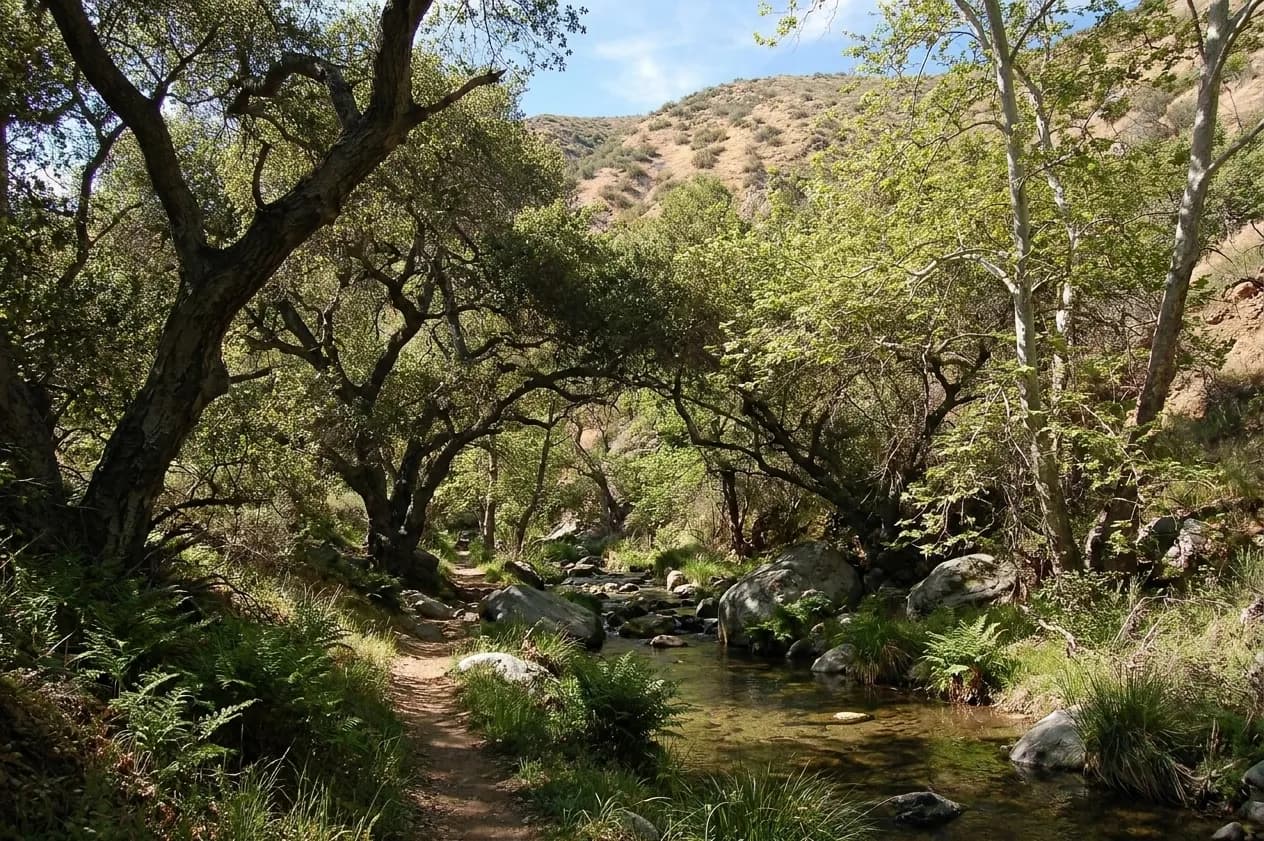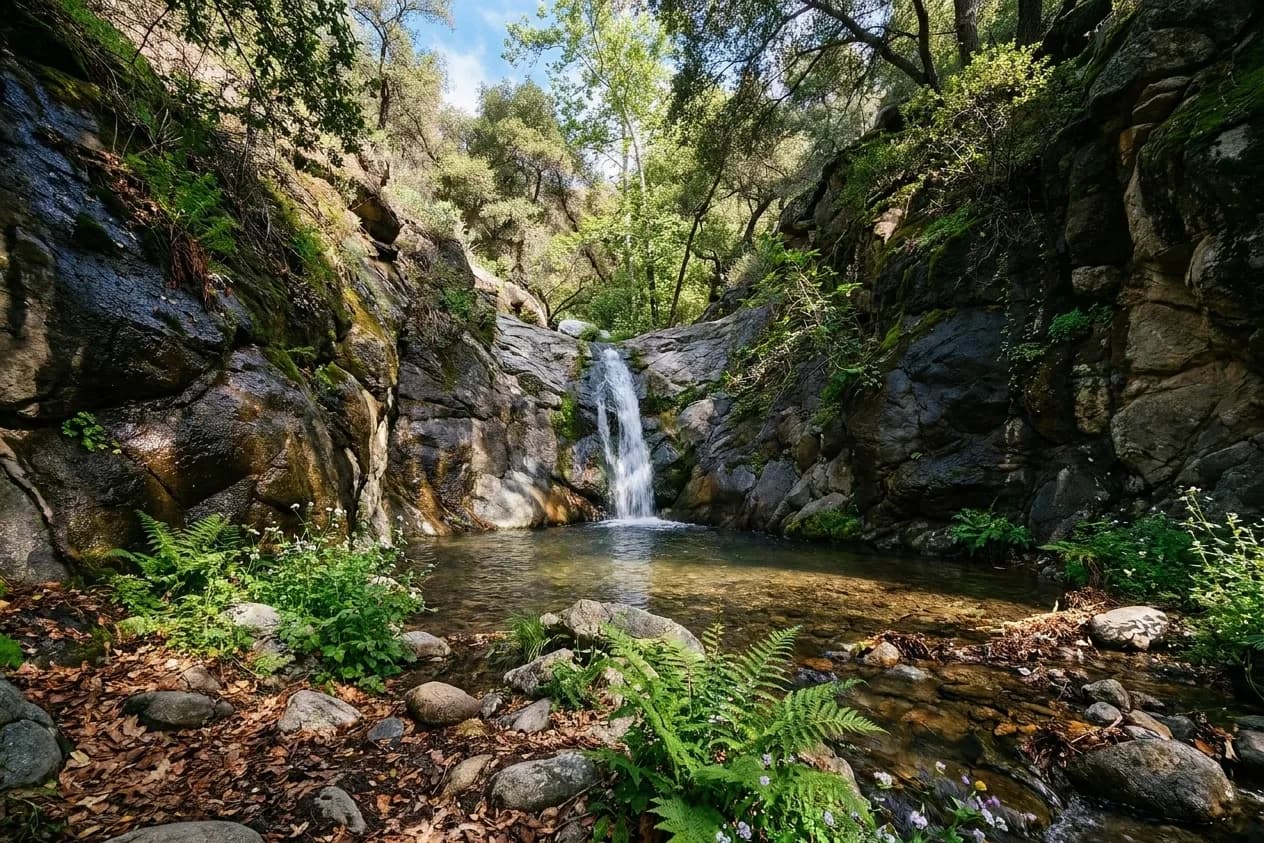
Search for free waterfalls near me from Los Angeles and you will get a list of trails that are, in the strict sense, free to walk. What the lists usually leave out is that reaching most of them means parking somewhere that charges, or displaying a pass you have to buy in advance, or entering a park with a gate fee. The hike is free; the day is not. Understanding who manages the land you are heading to tells you the cost before you are standing at the trailhead working it out.
The word free does a lot of quiet work in trail listings, and the surprise usually arrives at the parking lot rather than the trail. Tell Karpo which direction you can drive and how long you have, and it will sort out what is actually free.
Four landowners, four different fee logics
Almost every waterfall within reach of Los Angeles sits on one of four kinds of land, and each has its own rules. National forest land is free to walk but frequently requires a paid parking pass displayed in the vehicle at developed trailheads. State parks generally charge per vehicle at an entry station or an honour-box lot, with the trail itself free once you are in. County and city parkland is often genuinely free including parking. And a handful of canyons sit on land held by conservancies or water districts, where access may be free, permitted, or closed outright depending on the season.
So the useful question is never is this hike free — it is who manages this trailhead. That single question resolves the cost, the parking rules and usually the seasonal closure risk in one go, and the managing agency's own website is the only source worth trusting for it.
Where the genuinely free options are
The reliably no-cost end of the spectrum is city and county parkland and the undeveloped forest trailheads that have no formal lot. In practice that means smaller falls, shorter approaches and roadside parking rather than a paved lot with a restroom. That is a fair trade for a morning walk, and these are the places to go when the point is a couple of hours outdoors rather than a destination photograph.
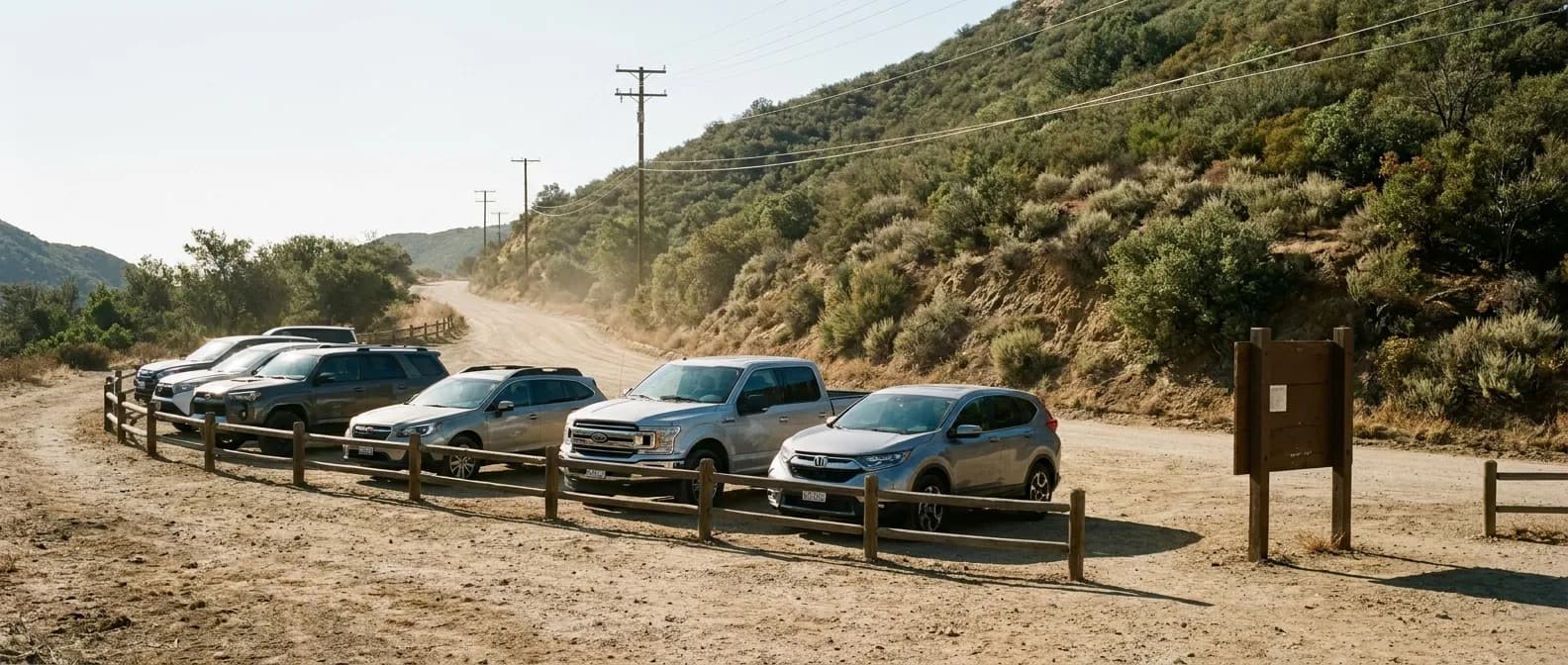
The catch with undeveloped trailheads is capacity. Ten cars fit, and on a warm weekend morning they are gone by eight. Roadside parking near canyon mouths is also heavily signed and enforced, and a ticket costs multiples of the parking pass you were avoiding. Arriving early is not just about crowds here — it is the whole plan.
Season decides whether there is any water
The uncomfortable truth about waterfalls in Southern California is that most of them are seasonal. These are rain-fed canyons, not snow-fed ones, and a fall that is photogenic in March can be a damp streak on a rock in September. Going in the wrong month is the most common way this trip disappoints, and no amount of fee planning fixes it.
The window that reliably works is the weeks after sustained winter rain through mid spring. Outside it, choose canyons with a spring source or a dammed pool upstream, or reframe the trip as a shaded canyon walk and treat any water as a bonus. Recent conditions posted by the managing agency are worth more than any photograph from a previous year.
The other costs that are not fees
Fire closures, storm damage and road washouts close canyon access above Los Angeles regularly, sometimes for years at a time, and a trail described in an old article may simply not be reachable. Burn-scar areas carry real debris-flow risk after rain, which is the one hazard in this region worth taking seriously rather than treating as boiler-plate. Check the current status the week you go.
Bring more water than the distance suggests, because these canyons are hot and the climb is usually on the way out. Cell coverage is unreliable in most of them, so download the map before you leave the valley floor rather than expecting to load it at the trailhead.
A plan that works most weekends
Pick the agency first and the waterfall second. If you want zero cost, aim at county or city land and go early enough to get one of the few roadside spaces. If you are willing to pay a small parking charge, the developed forest and state park trailheads open up, with restrooms and a lot that will still have space at ten. Either way, confirm current access and conditions with the managing agency the day before — that is the step that actually protects the morning.
Passes, and whether you need one
Parking passes for national forest land come in daily and annual forms, and the annual one pays for itself in a handful of visits if canyon walking is going to be a habit. The federal interagency annual pass covers the same trailheads and a great deal more besides, which makes it the better buy for anyone who also visits national parks. Neither is required everywhere — plenty of trailheads need nothing at all.
Where people get caught is buying nothing and assuming enforcement is theoretical. It is not, particularly at the popular canyon trailheads on weekend mornings. The pass costs a few dollars a day; the citation does not. Buy it online before you leave, because the vendors near the trailheads keep short hours and cell service thins out as you climb.
Tags: #LosAngeles #LA #SoCal #WeekendPlans #ThingsToDo #DayTrip #Waterfalls #LAEats #LAGuide #ExploreLA #LALocal #LAWeekend #LANights #LAFood
Sources consulted: fs.usda.gov · parks.ca.gov · lamountains.com
All trademarks are the property of their respective owners.
Ask Karpo first
Karpo is a proactive AI assistant that lives in iMessage. Ask what is flowing and what it costs before you drive.