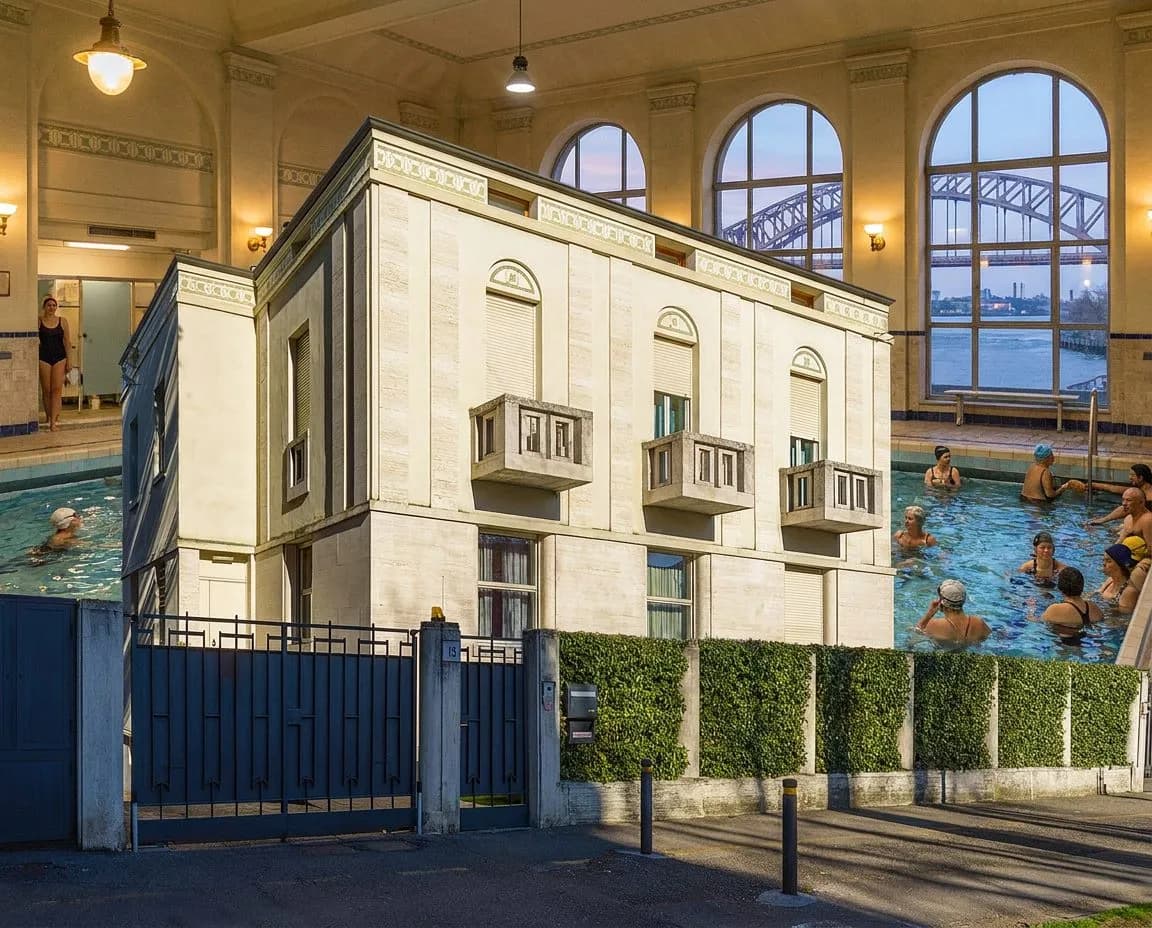
Most New Yorkers assume the best pools cost money or membership. They're wrong. Tucked along the Queens waterfront, Astoria Park's Olympic-sized pool has been free since the WPA built it in 1936, and it remains the city's largest public swim. The concrete basin stretches 330 feet, flanked by art deco bathhouses and shaded by London plane trees. On a hot summer afternoon, the water gleams turquoise under the Triborough Bridge, and the shrieks of cannonballing kids echo off the tile. After your swim, a promenade winds south along the East River, where Hell Gate's churning currents and tugboat traffic offer a masterclass in why sailors once feared this stretch of water.
Updated August 2026: hours, prices, reservations, event dates, transit details, and venue policies can change. Use the linked official venue, city, or operator sources in the Sources section as the final reference before you go.
Fact-checked update
Fact-checked update (August 10, 2026): this article was rechecked against Astoria Park - Wikipedia, NYC Parks - Astoria Park, Hell Gate Bridge - Wikipedia, NYC Parks - Public Pools. The refresh keeps the body grounded in official venue, agency, transit, or city sources and flags time-sensitive planning details that readers should confirm before leaving.
Direct answer: Use this Swimming Pools Astoria Park Summer 2026 guide to plan timing, transit, costs, crowd tradeoffs, and nearby stops before you go.
The Last of the WPA Giants
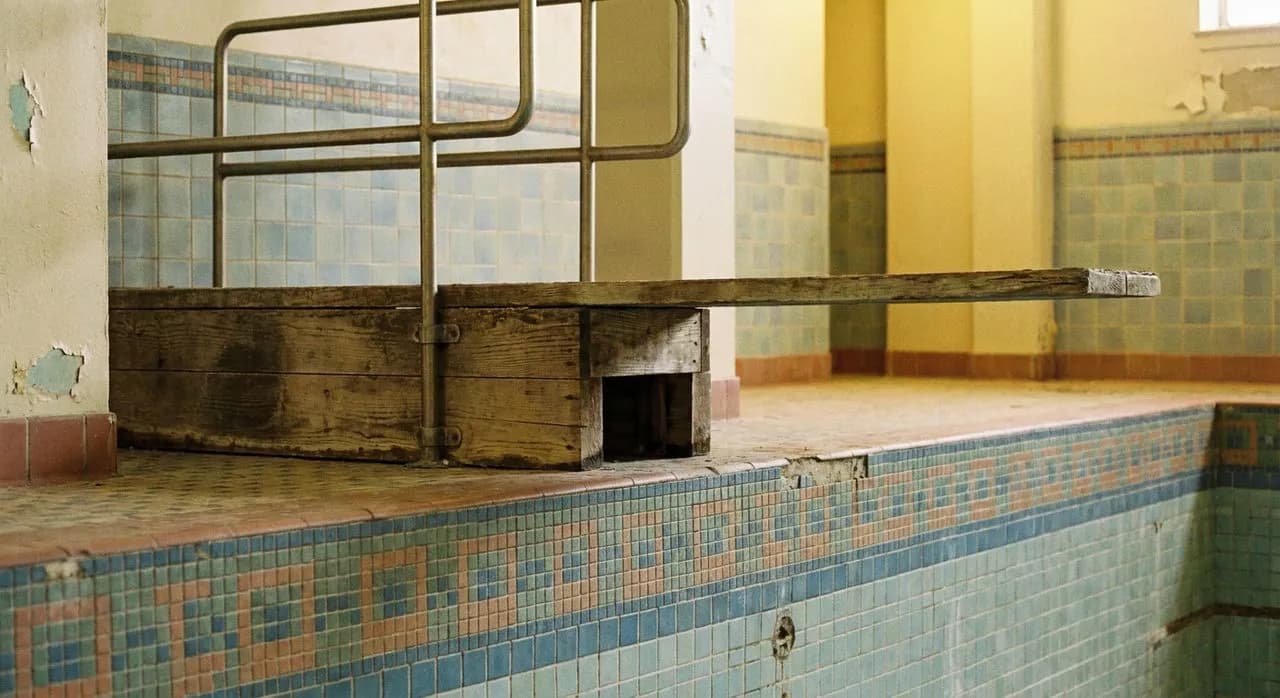
When Robert Moses commissioned Astoria Pool in the mid-1930s, he wanted spectacle. The result seated 3,000 spectators for swim meets and held enough water to float a small yacht. Nearly ninety years later, the pool still operates on its original bones—mosaic tile, terrazzo decks, and twin bathhouses with green copper trim. The grandeur feels earned rather than performative, a reminder that public works once meant public pride.
The facility underwent a major renovation in the early 2000s, replacing filtration systems and accessibility ramps while preserving the bones. Today it ranks among the finest examples of civic aquatic architecture in North America, though most visitors simply know it as one of the better free pools NYC has to offer. Summer 2026 marks nine decades of continuous operation, a quiet miracle in a city that routinely demolishes its past.
Lap Lanes and Local Legends
Serious swimmers know to claim the deep-end northeast corner lane between 11 a.m. and 1 p.m. on weekdays, when it's reserved exclusively for lap swimmers. The rule is enforced by longtime lifeguard Big Mike, who's patrolled these decks since 2003 and has zero patience for splashers drifting into the lane. He'll blow his whistle once as a courtesy. The second time, you're swimming elsewhere.
Big Mike also knows which regulars can handle the deep end's twelve-foot depth and which summer visitors overestimate their stamina. He's pulled out more than a few overconfident swimmers who thought an Olympic pool meant Olympic ability. If you're not a strong swimmer, stick to the shallow lanes. The pool's sheer size—330 by 165 feet—means you're a long way from the edge if you cramp up mid-lap.
Admission Rules and the NYC ID
Here's the catch: free pool admission is generally free and does not require an NYC ID or proof of city residency. The Parks Department takes the rule seriously, and guards at the entrance check every time. Visitors are admitted under the same public pool rules as other guests. It's a hyperlocal perk, the kind of small-bore civic benefit that reminds you public pools were built for neighbors, not tourists.
If you're visiting friends in Queens, ask them to meet you at the entrance rather than inside. Once you're vouched for, you're in for the day, with full access to lockers, showers, and lifeguarded swim. The policy can feel exclusionary until you remember that Astoria Park serves a dense residential neighborhood where pool capacity maxes out on the hottest weekends. Better a local residency rule than a pool too crowded to swim.
Hell Gate and the Charybdis Memory
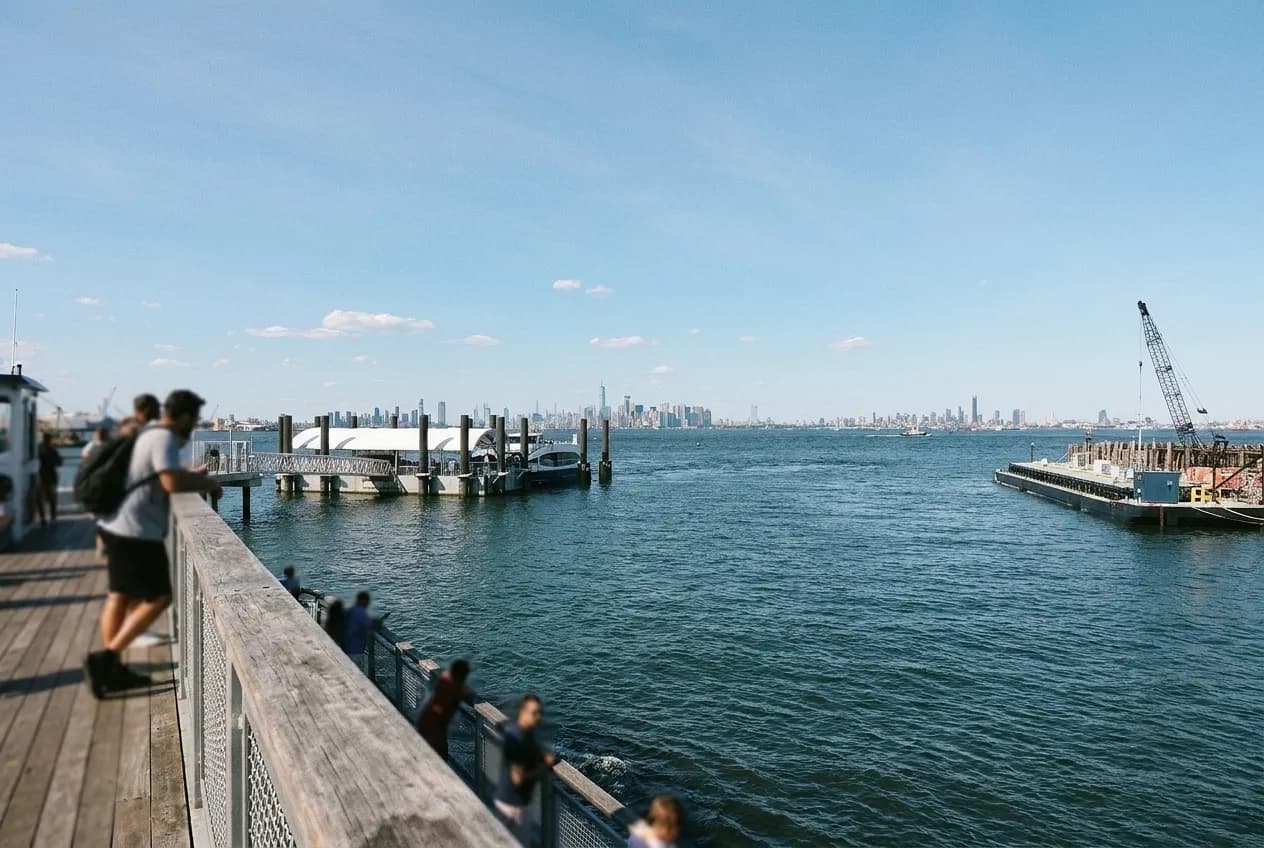
After your swim, walk south along the promenade toward the Hell Gate Bridge. The path hugs the shoreline, offering unobstructed views of the East River's most treacherous currents. At the southern tip, look for the Charybdis Rock marker—a small plaque commemorating the whirlpool that once made this channel one of the most dangerous stretches of navigable water on the Eastern Seaboard. The East River's whirlpool was most dangerous before the 1930s channel dredging smoothed the bottom and widened the passage.
Even today, the currents run fast and unpredictable. Watch the tugboats work their way upriver, engines straining against the churn. The water boils and eddies, especially during tidal shifts, when the Hell Gate earns its name all over again. It's a humbling counterpoint to the placid Olympic pool just behind you—proof that the East River remains a working waterway, indifferent to recreational swimmers and pleasure craft alike.
The Promenade's Other Rewards
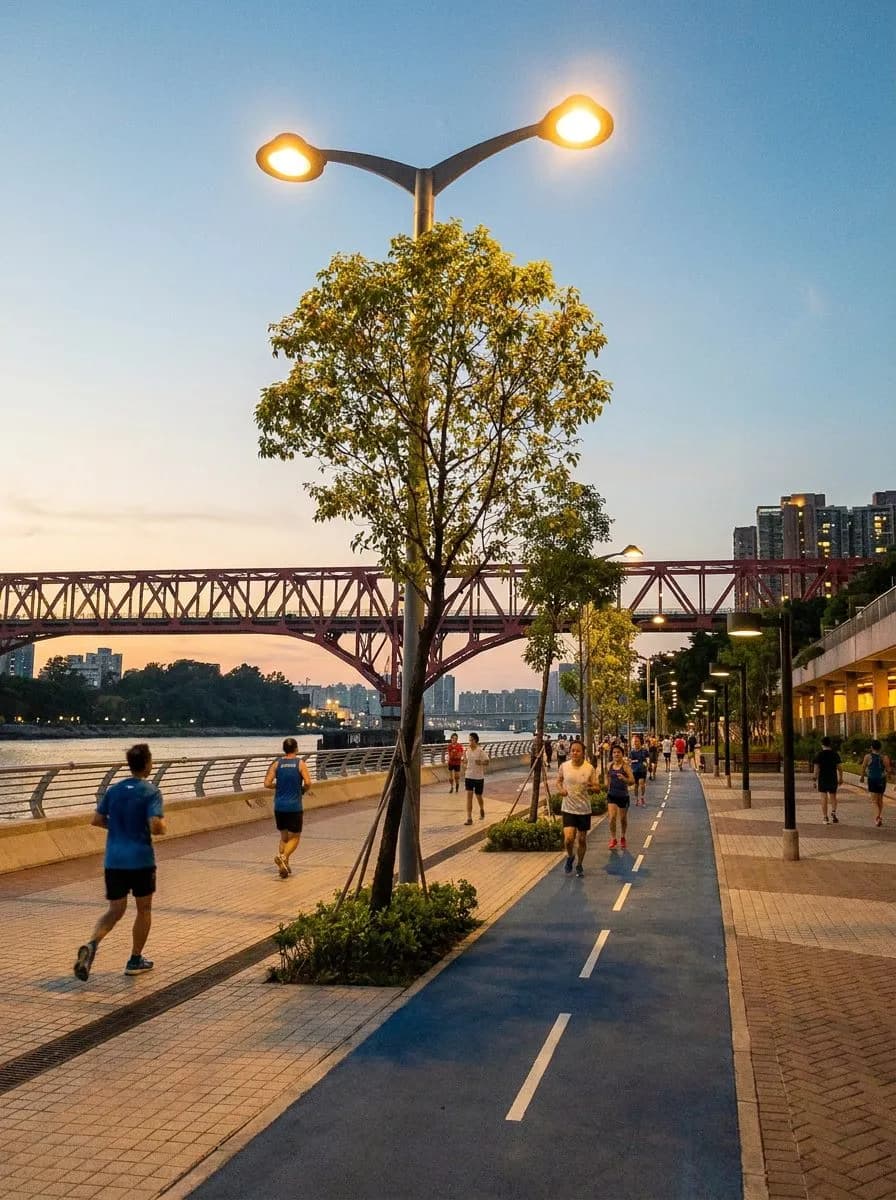
The waterfront path stretches nearly a mile, lined with benches and fitness equipment. Runners favor the early-morning light, when the low sun gilds the Hell Gate's steel arch and the air still holds a trace of coolness. By late afternoon, families claim the picnic tables near Shore Boulevard, grilling on portable hibachis and watching the Roosevelt Island tram glide overhead.
Birdwatchers bring binoculars to scan for cormorants and the occasional heron picking through the rocks at low tide. The park's green expanse—60 acres in all—includes soccer fields, tennis courts, and a running track, but the promenade remains the soul of the place. It's where the neighborhood comes to watch the water and remember that Queens touches three rivers, even if Manhattan hogs the skyline credit.
What Summer 2026 Brings
Astoria Park enters its ninth decade with a fresh coat of paint on the bathhouse railings and upgraded LED lighting around the pool deck. The Parks Department has hinted at extended evening hours on weekends, though official schedules won't be posted until late spring. What won't change: the free admission, the lifeguards, the sprawling blue rectangle that turns a sweltering July afternoon into something bearable. In a city where so much costs so much, the fact that one of the finest public pools in America remains free feels like a minor miracle—or at least a reminder that some New Deal promises still hold.
Practical notes
Astoria Park is located along Shore Boulevard and 19th Street in Astoria, Queens. The nearest subway is a short walk from the 30th Avenue or Astoria Boulevard N/W stations, depending on the entrance. Limited metered parking is available along Shore Boulevard. The pool typically operates daily from late June through Labor Day; hours vary but generally run 11 a.m. to 7 p.m. Bring a lock for the lockers, a towel, and proof of NYC residency. The pool is ADA-accessible with ramps and designated seating. Verify seasonal hours and any capacity limits at nyc.gov/parks before your visit.
Tags: #AstoriaPark #FreeAndFine #QueensNYC #NYCPools #HellGateBridge #PublicPools #SummerInTheCity #WPAArchitecture #EastRiver #FreeNYC #OutdoorSwimming #NYCSummer2026 #HiddenQueens #WaterfrontWalks #OlympicPool
Sources consulted: Astoria Park - Wikipedia · NYC Parks - Astoria Park · Hell Gate Bridge - Wikipedia · NYC Parks Outdoor Pools · NYC Parks - Public Pools
All trademarks are the property of their respective owners.