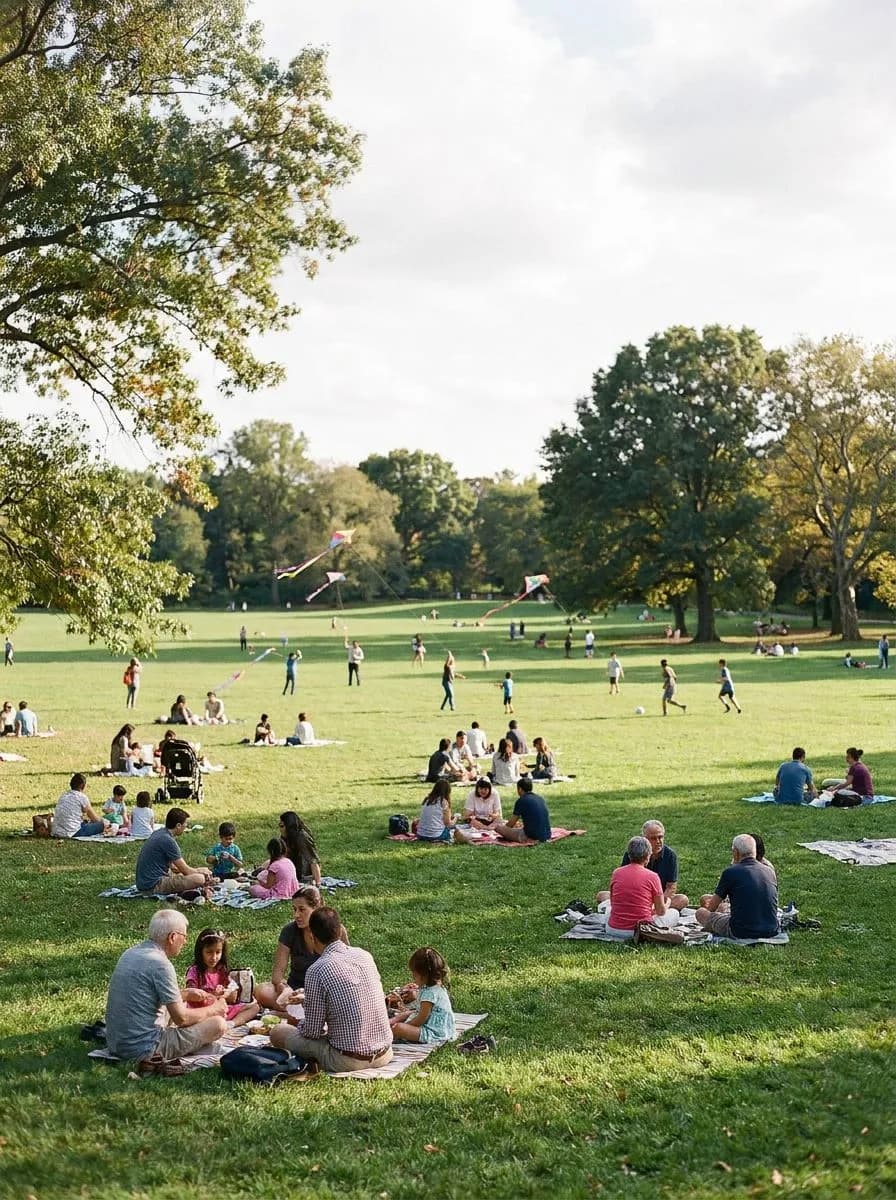
Prospect Park's Long Meadow unfurls like a green lung across 90 acres—the longest uninterrupted meadow in any American city park. Frederick Law Olmsted and Calvert Vaux designed it as democratic pastoral theater, and in summer 2026 it remains exactly that: a place where picnic blankets, kite strings, and the shade patterns of century-old trees matter more than any reservation system. The park's free infrastructure—its ravines, wooden footbridges, lake perimeters, and carefully graded sight lines—rewards the observant walker who treats landscape as both destination and teacher. Every slope and sightline was engineered for surprise and revelation, the land itself serving as curriculum for those willing to read it slowly.
Updated August 2026: hours, prices, reservations, event dates, transit details, and venue policies can change. Use the linked official venue, city, or operator sources in the Sources section as the final reference before you go.
The Long Meadow's shifting shade geometry
Arrive mid-morning and the great sweep of grass is all sun, no mercy. By early afternoon the elm grove on Long Meadow's western edge begins its daily shadow migration. Locals call the cluster near the ballfields 'the umbrellas,' a nickname earned by the canopy's broad, cooling reach that arrives reliably by 2 p.m. The name is apt—each tree fans out overhead like ribs of silk, dropping the temperature a clean ten degrees.
Blanket etiquette here is unspoken but legible. Space your setup a frisbee-toss from your neighbor. Bring a cloth tote for trash. The meadow absorbs picnics, pick-up soccer, and the occasional yoga cohort without friction, provided no one anchors a Bluetooth speaker to the landscape. The grass smells faintly of clover and sun-warmed earth; by late afternoon the light slants gold and long, turning every reader and napper into a Hopper painting.
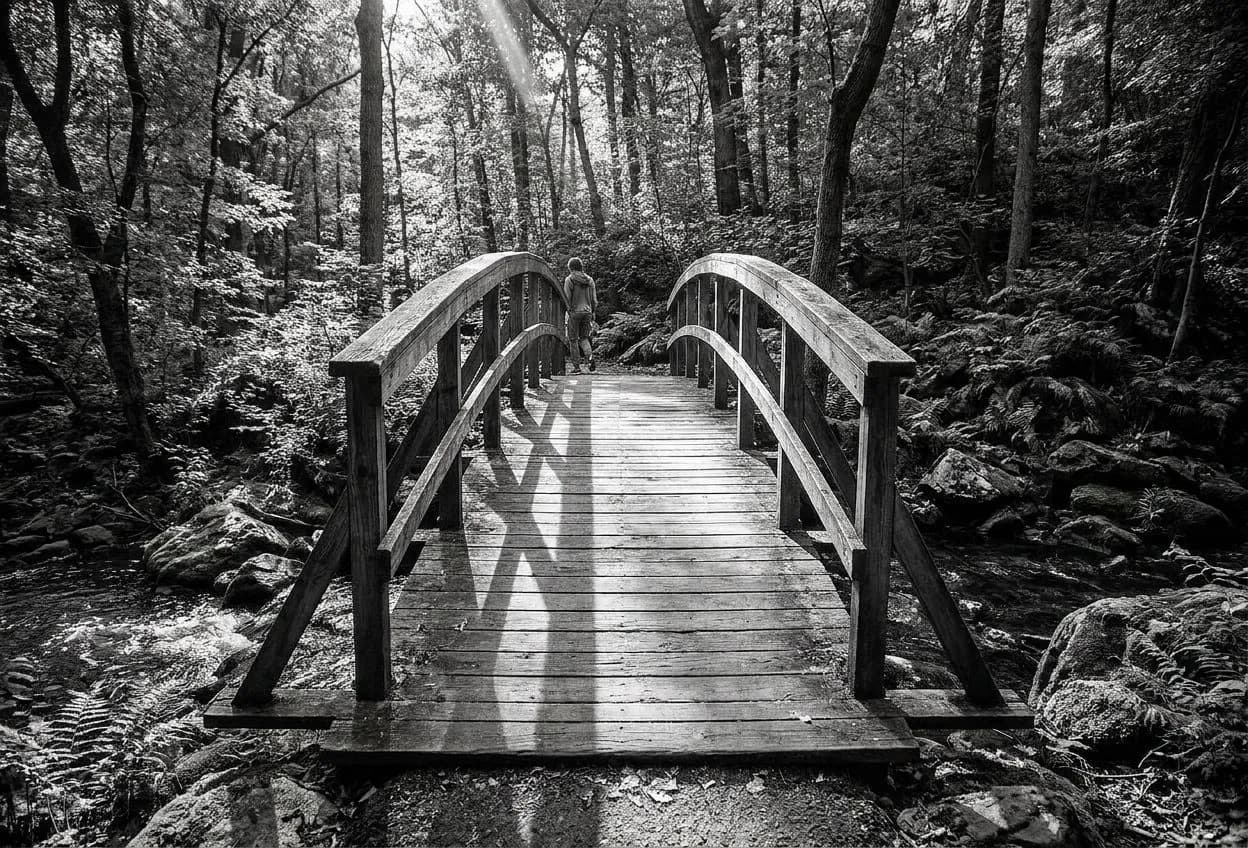
The Ravine's waterfall and wooden crossings
The Ravine trail—Prospect Park's forested heart—braids water, stone, and footpath into Brooklyn's least likely landscape. Wooden bridges span the stream at intervals, each one a small theater of moss and shadow. On weekends the trail can feel like a procession, but arrive before 9 a.m. and the bridges are yours. Early runners stop between 8 and 8:30 a.m. to photograph the waterfall, phones angled to catch the way light filters through sycamore and oak.
The waterfall itself is modest—a constructed cascade that nonetheless sounds convincing, burbling over stratified stone. Olmsted wanted visitors to forget the city entirely, and here the illusion holds. The air is cooler, damp with the smell of leaf rot and moving water. Follow the trail uphill and you'll emerge near Lookout Hill, blinking into daylight like a theatergoer after a matinee. The Ravine's microclimate can run fifteen degrees cooler than the sun-drenched meadow, a natural air conditioning system that predates the grid by decades.
Nethermead meadow versus Lookout Hill vantage
The Nethermead is Long Meadow's quieter cousin—smaller, more enclosed, ringed by mature trees. It holds a different kind of privacy, less about the sweep of sky and more about the bowl of grass and leaves. Families with very young children gravitate here; the scale is gentler, the foot traffic lighter. The meadow's depression creates a natural amphitheater effect, where sounds from the surrounding park soften and distant traffic becomes little more than white noise.
Lookout Hill, by contrast, offers the park's best elevation—a modest climb rewarded with views across the meadows toward the lake and, on clear days, slivers of the Manhattan skyline. It's the park's highest natural point, crowned by a grove and the occasional red-tailed hawk circling lazy thermals. In late afternoon the hill becomes a magnet for kite-fliers and couples nursing bodega iced coffees, watching the light change. The elevation shift is only sixty feet, but it reframes the entire landscape.
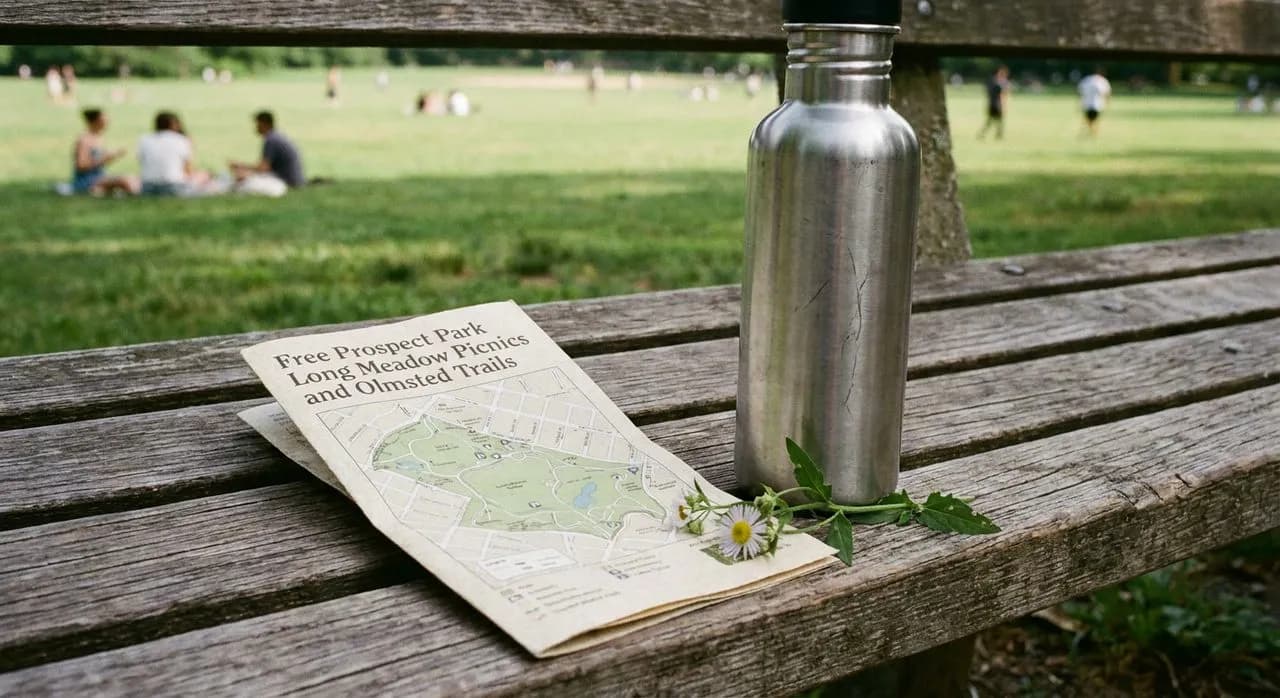
Bird-watching the Lake perimeter
The Lake's shoreline path threads through willows and cattails, a slow loop that attracts herons, cormorants, and migratory warblers depending on the season. Free Audubon bird walks are offered seasonally at Prospect Park; check the current park calendar for dates, times, and registration details. The guides are patient and encyclopedic, willing to stand still for minutes while a warbler decides whether to show itself.
Even without a group, the Lake's western bank near the Peninsula offers reliable sightings. Bring field guides or a birding app; the rhythm of watching—scan, wait, notice—becomes its own form of forest bathing. The water reflects the sky in broken silver, and the path is wide enough to walk two abreast without crowding the joggers. It's one of the city's finest free things to do that costs nothing but early morning discipline and a willingness to stand very, very still.
Seasonal rituals and the meadow's calendar
By summer 2026, certain rhythms have calcified into ritual. Kite-flying peaks on breezy weekends when the meadow becomes a patchwork of nylon diamonds and box kites. Pickup volleyball games may appear in open meadow areas, but exact locations and start times vary. Sunset picnics cluster near the Picnic House, where the western light is longest and the crowd thins just enough to feel like discovery rather than real estate negotiation.
Fall brings different textures—crisper air, the elm grove turning butter yellow, fewer crowds. Winter offers stark beauty and solitude; the meadow under snow is a study in negative space. Spring is mud season and daffodils, the ground soft underfoot, the willows along the Lake going green overnight. The park's free infrastructure remains constant; only the light and the leaves change the terms of engagement.
Park Slope's provisions and pre-picnic fueling
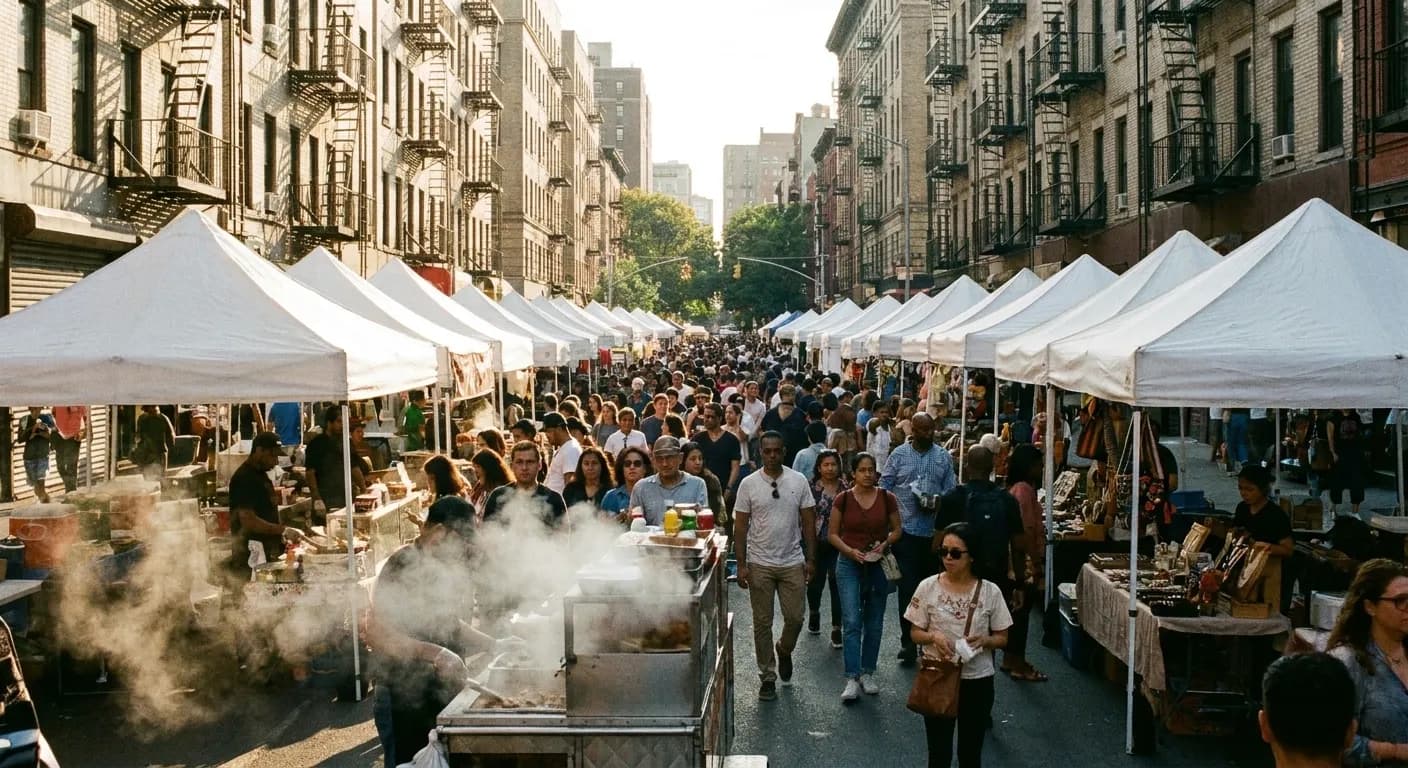
The park's western edge bleeds into Park Slope, where Seventh Avenue provides picnic provisions within a five-minute walk of most meadow entry points. The stretch between 9th Street and Garfield Place clusters bakeries, cheese shops, and corner delis that understand the assignment. Grab sandwiches at the Italian markets near 5th Street, or assemble your own spread from fruit vendors who set up carts along Flatbush Avenue on weekends. The neighborhood's proximity means you can pack light from home and provision en route, carrying only a blanket and water bottle until the last possible moment. Coffee shops near the Grand Army Plaza entrance open early, fueling the dawn bird-watchers and trail runners who treat the park as morning office. By mid-morning these same cafés serve as staging grounds for families loading up on pastries and cold drinks before claiming their patch of grass for the day.
What to bring and how to move
Travel light but prepared. A blanket, a book, water in a reusable bottle. Sunscreen in summer, layers in shoulder seasons. If you're walking the Ravine, wear shoes with grip—the wooden bridges can be slick after rain. A small backpack holds snacks, a field guide, maybe a thermos of cold brew. Leave the Bluetooth speaker at home. The park's soundscape—birdsong, wind through leaves, the distant shouts of a soccer game—is composition enough.
Practical notes
Prospect Park spans Grand Army Plaza to Parkside Avenue, Brooklyn. Nearest subway: Grand Army Plaza (2, 3), Prospect Park (B, Q, S), Parkside Avenue (Q), and other nearby entrances vary by location. Limited metered street parking along perimeter. Park open year-round, dawn to 1 a.m.; Ravine trail best navigated in daylight. Bathrooms near Boathouse and Picnic House. Surfaces range from paved paths (wheelchair accessible) to dirt trails; the Ravine includes steps and uneven terrain. Bring water, sun protection, and a blanket. Dogs allowed on leash. Free maps at park entrances and online. Verify seasonal hours and any construction closures before visiting.
Tags: #ProspectPark #LongMeadow #Brooklyn #FreeAndFine #OlmstedDesign #UrbanForestBathing #BirdWatchingNYC #PicnicCulture #RavineTrail #NYC2026 #FreeThingsToDo #BrooklynParks #OutdoorNYC #LandscapeArchitecture #CityNature
Please drink responsibly. Must be of legal drinking age.
Sources consulted: Prospect Park - Wikipedia · Frederick Law Olmsted - Wikipedia · Prospect Park Alliance · NYC Parks - Prospect Park · Prospect Park Alliance
All trademarks are the property of their respective owners.