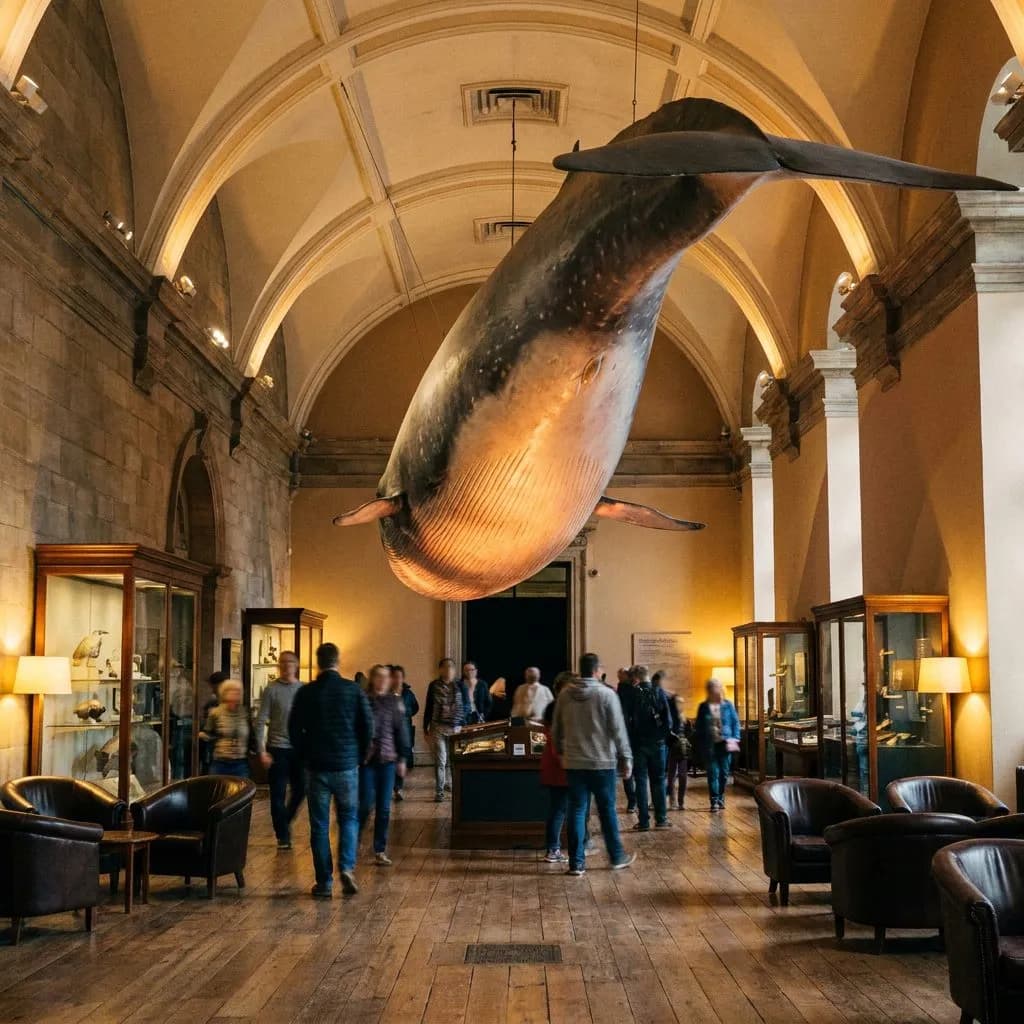
The American Museum of Natural History draws five million visitors a year, most of them clustering around the T. rex and the blue whale. But New York State residents with proof of address pay what they wish—and the ones who've been coming for decades know the building unfolds differently after three o'clock on a summer afternoon, when school groups thin out and light slants low through the Theodore Roosevelt Rotunda. This is the museum as neighborhood amenity: a place to duck into for an hour, catch the fluorescent minerals in their darkened grotto, check the earthquake monitor, then slip back out to Central Park or a late lunch along Columbus Avenue.
The Pay-What-You-Wish Window (and Its Hard Stop)
General admission is $28 for adults, but New York State residents can bypass that entirely by showing a current driver's license, utility bill, or any official document displaying a New York address. You name your price—one dollar, five, whatever feels right—and walk in with the same privileges as anyone else. The catch: the pay-what-you-wish window closes at 4:45 p.m. sharp. Arriving after means full-price admission even for residents, no exceptions. Guards switch the desk placards over at closing time with the efficiency of stagehands between acts.
The policy isn't advertised on banners or blown up in subway cars, which keeps it feeling less like a promotion and more like a quiet civic perk. Summer evenings in 2026 will bring late hours on certain days—check ahead—but the pay-what-you-wish cutoff doesn't flex. Arrive by four-thirty if you want a cushion.
The Hall of Minerals and Its Glowing Dark Room
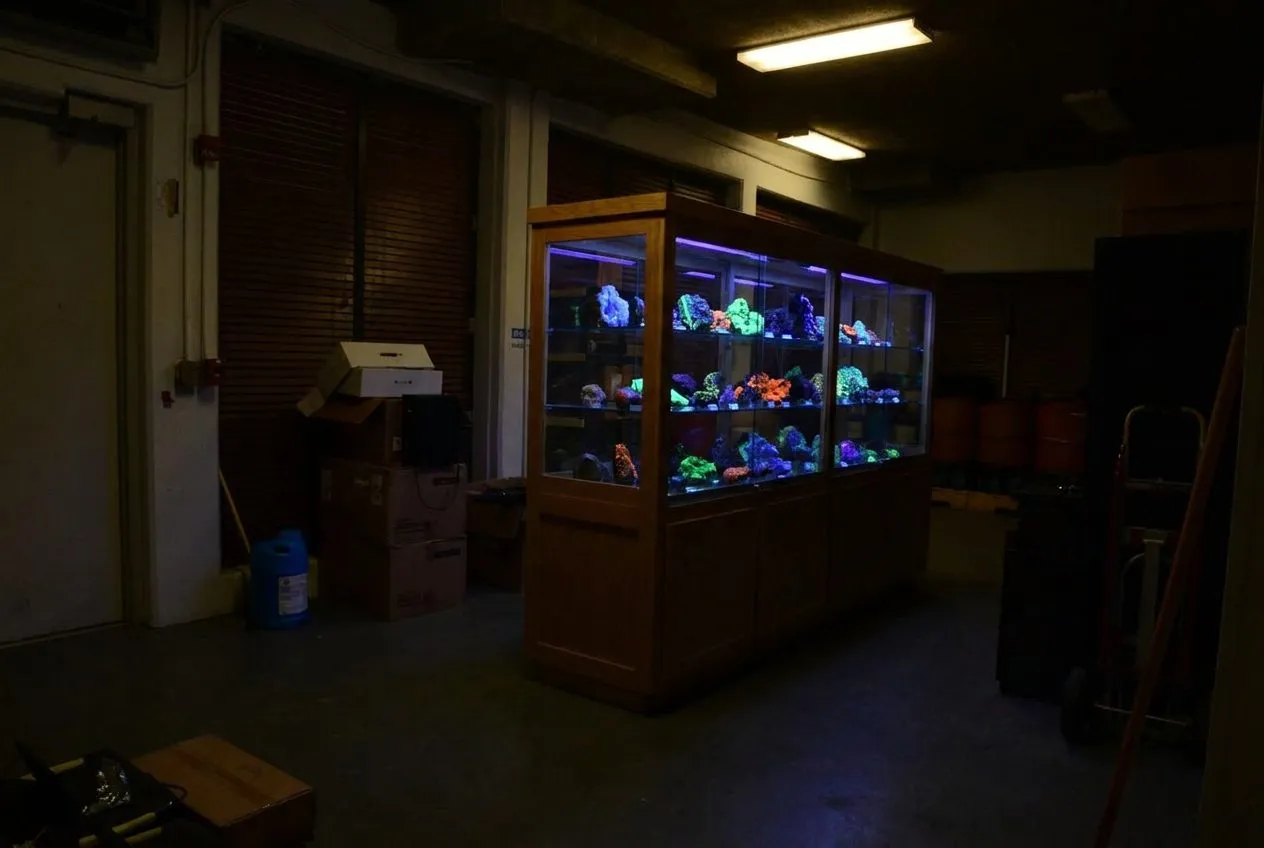
Most visitors blow through the Hall of Minerals on their way to something larger, but the collection spans four thousand specimens across a first-floor warren that smells faintly of polished stone and old wood. Halfway through, you step into a small chamber lit only by ultraviolet bulbs. Rocks that looked dull under daylight erupt in neon greens, hot pinks, acid yellows—willemite from New Jersey, calcite from Mexico, fluorite that glows violet like a nightclub stamp. The darkness is absolute except for the minerals themselves, and the effect is both scientific and oddly devotional.
The room draws a strange cross-section: gemology students sketching in notebooks, parents trying to coax toddlers away from the glass, older Upper West Side regulars who duck in on rainy weekdays because this free museum nyc perk also happens to be one of the most transporting ten square feet in the five boroughs. Stay long enough and your eyes adjust. The minerals begin to look less like objects and more like captured light.
The Dzanga-Sangha Diorama and the Biodiversity Hall
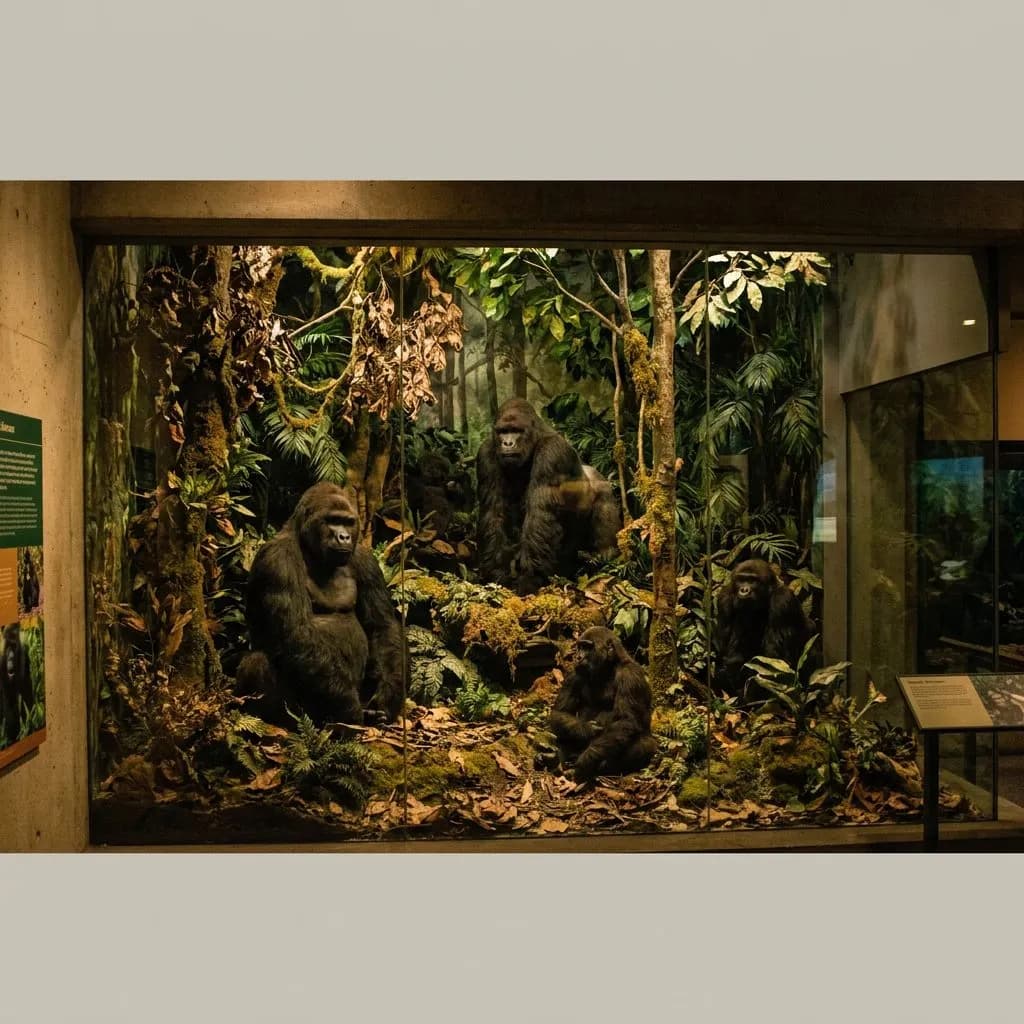
The Hall of Biodiversity anchors the first floor's west side, a long gallery that wrestles with extinction, ecosystem collapse, and the sheer teeming abundance of life on Earth. The centerpiece is a walk-through diorama of the Dzanga-Sangha rainforest in the Central African Republic: life-size trees, a waterfall trickling over resin rocks, recorded bird calls layered into an ambient soundscape that shifts every few minutes. Taxidermied gorillas crouch in the understory. The humidity, of course, is fake, but the scale and the acoustic design trick your senses long enough to forget you're standing in a climate-controlled hall on the Upper West Side.
It's quieter here than in the dinosaur halls, and the light is gentler—filtered through green scrims to mimic canopy shade. In late afternoon, when the crowds thin, you might have the diorama to yourself for five or ten minutes. The museum built it in the late nineties, and it still holds up as immersive design, the kind of thing that justifies a visit even if you never make it past the first floor.
The Titanosaur's Femur and the Fourth-Floor Signal Sweet Spot
The Titanosaur's cast skeleton stretches so long its neck pokes out of the fourth-floor fossil halls into the elevator alcove, a feat of exhibition carpentry that photographs better than it reads on a map. But the real insider secret sits in the Vertebrate Origins hall just beyond: a single leather bench beneath the Titanosaur's femur where cell signal inexplicably works better than anywhere else in the museum. No one knows if it's a fluke of the building's 1930s steel frame or a nearby repeater mounted in the ceiling, but regulars know the spot, and on weekday afternoons you'll sometimes see someone camped there, laptop balanced, earbuds in, treating the museum like a co-working space with better fossils.
The bench itself is worn smooth, the leather cracked at the seams in a way that suggests decades of use. It faces a vitrine of early vertebrate skulls—jawless fish, proto-amphibians—and if you sit long enough, you start to notice the details the label copy skips: the grain of fossilized bone, the places where ancient cartilage left ghost impressions in stone.
The Earthquake Monitor and the Gottesman Hall of Planet Earth
The Gottesman Hall of Planet Earth spirals down from the first floor like a geological layer cake, each ramp dropping you deeper into Earth's history. In the northwest corner of the main level, a monitor displays live seismic data from stations around the globe—squiggly lines tracing tremors in real time. It's easy to miss, tucked behind a case of metamorphic rock samples, but regulars check it before descending to the subway, a quiet ritual that doubles as a reality check: the ground beneath New York shifts, too, just rarely enough that we forget.
The hall itself is a triumph of early-2000s exhibition design, all polished stone and backlit slabs of agate, and it holds up better than much of what came after. The earthquake monitor adds a live-data edge that feels almost anachronistic now, in an era when we expect everything to update in our pockets. Here, you have to walk over and look. The information is public, global, humbling—and free.
Timing, Crowds, and the Rhythm of Late Afternoons
Summer 2026 will bring the usual crush of tourists, but the museum's size absorbs crowds unevenly. Dinosaurs and the Milstein Hall of Ocean Life stay packed until closing; the upper floors and the Hall of Asian Peoples empty out by four. If you're working the pay-what-you-wish angle, aim to arrive between two and four-thirty—you'll have time to cover three or four halls without the scrum, and the light through the western windows turns gold in a way that flatters even the taxidermy.
The museum sprawls across four city blocks and twenty-eight interconnected buildings, so even a two-hour visit requires triage. Pick a floor, pick a theme, let yourself get a little lost. The signage is better than it used to be, but the pleasure of the place still lies in the unexpected hallways, the staircases that dump you out near a totem pole or a meteorite you didn't know you needed to see.
Practical notes
American Museum of Natural History, 200 Central Park West (at 79th Street), New York, NY 10024. Subway: B, C to 81st Street–Museum of Natural History; 1 to 79th Street. Parking is scarce; the museum's garage charges premium rates. Open daily; hours vary seasonally, so verify ahead. Pay-what-you-wish admission for New York State residents with ID, until 4:30 p.m. Fully accessible via elevators; wheelchairs available at coat check. Bring a light layer—halls swing between warm and over-air-conditioned. Bags larger than carry-on size require check-in.
Tags: #FreeAndFine #FreeMuseumNYC #AMNH #UpperWestSide #NYCInsiders #MuseumSecrets #CentralParkWest #NYCCulture #HiddenNYC #PayWhatYouWish #SummerInNYC #KarposFinds #NaturalHistory #NYCMuseums #UWSLife
Sources consulted: American Museum of Natural History - Wikipedia · American Museum of Natural History Official Site · Time Out New York Museums · NYC Tourism - Upper West Side · MTA Transit Information
All trademarks are the property of their respective owners.