The High Line proves that New York's best design can also be its most democratic. This reclaimed freight rail turned linear park floats thirty feet above street level, threading 1.45 miles from the Meatpacking District through Chelsea to Hudson Yards. No ticket, no reservation, no velvet rope—just open-air promenades, ornamental grasses swaying against glass towers, and one of the city's most thoughtful planting schemes in full summer glory. By late 2026, the High Line has become the template every city wants to copy, inspiring elevated parks from Philadelphia to Seoul, but the original still delivers quiet astonishments if you know where to look. The park welcomed over eight million visitors last year, yet somehow still manages to offer pockets of genuine solitude for those willing to wander beyond the most photographed spots.
The Oudolf Effect in Full Bloom
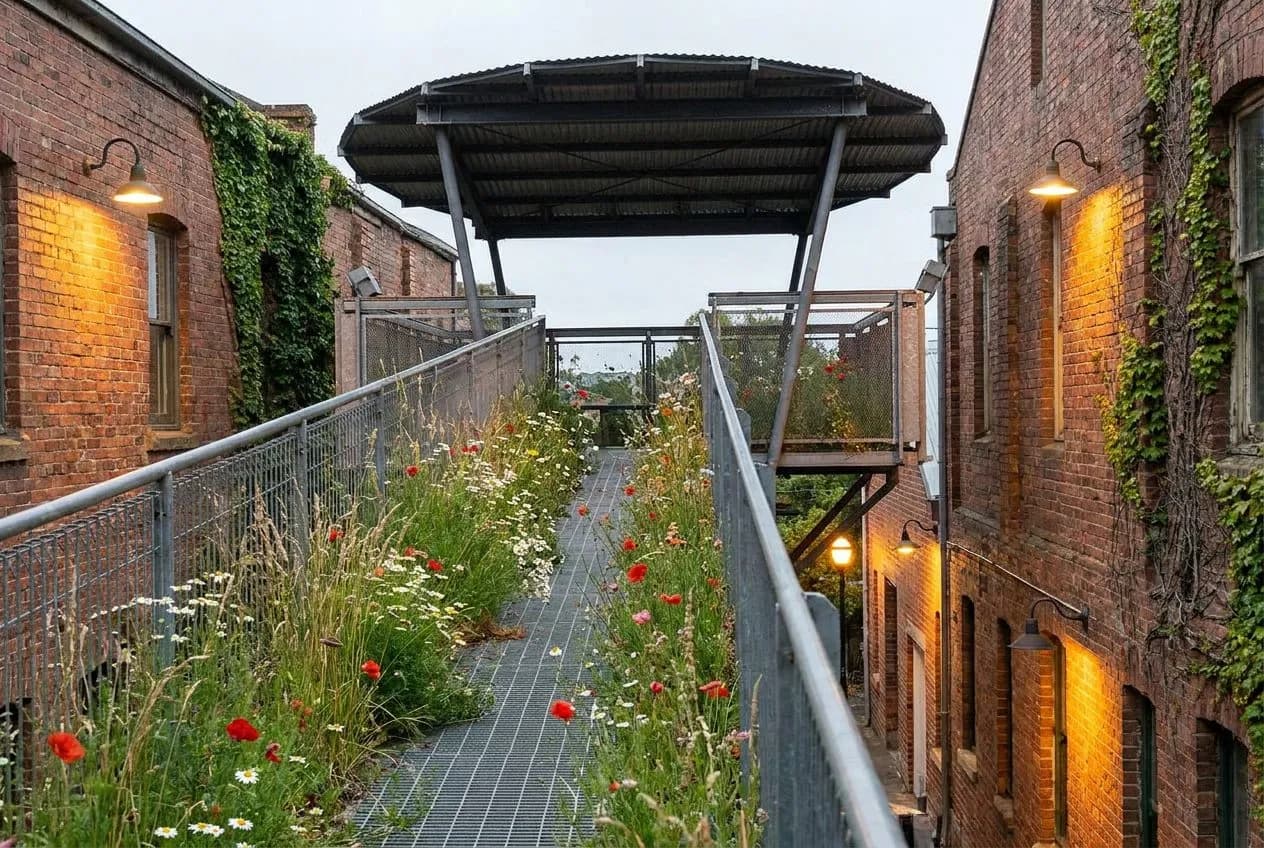
Dutch garden designer Piet Oudolf choreographed the High Line's plant palette with a prairie sensibility: layers of perennials that shift texture and color week by week. Come June, purple allium spheres bob above drifts of yellow coreopsis, salvia spikes rise through feather reed grass, and Russian sage hazens the air with a faint herbal sweetness. The effect is purposefully wild, a studied naturalism that asks you to slow down. Unlike traditional urban gardens that prize formal hedges and manicured beds, Oudolf embraced a looser aesthetic—one that celebrates seedheads alongside blooms and allows grasses to move in the wind like living sculpture.
Oudolf's genius lies in how he framed views. Plantings are low near the 10th Avenue overlook so you catch the street grid below, then chest-high where steel and concrete deserve softening. Walk these chelsea walking paths in early morning light, when dew still clings to seedheads and the traffic hum hasn't yet built to its midday roar, and you'll understand why landscape architects make pilgrimages here. The designer selected over 210 species of perennials, grasses, shrubs, and trees—plants chosen not just for peak bloom but for four-season interest, ensuring that even winter visits reveal sculptural dried stems and architectural forms beneath light snow.
The Sundeck's Secret Lounger
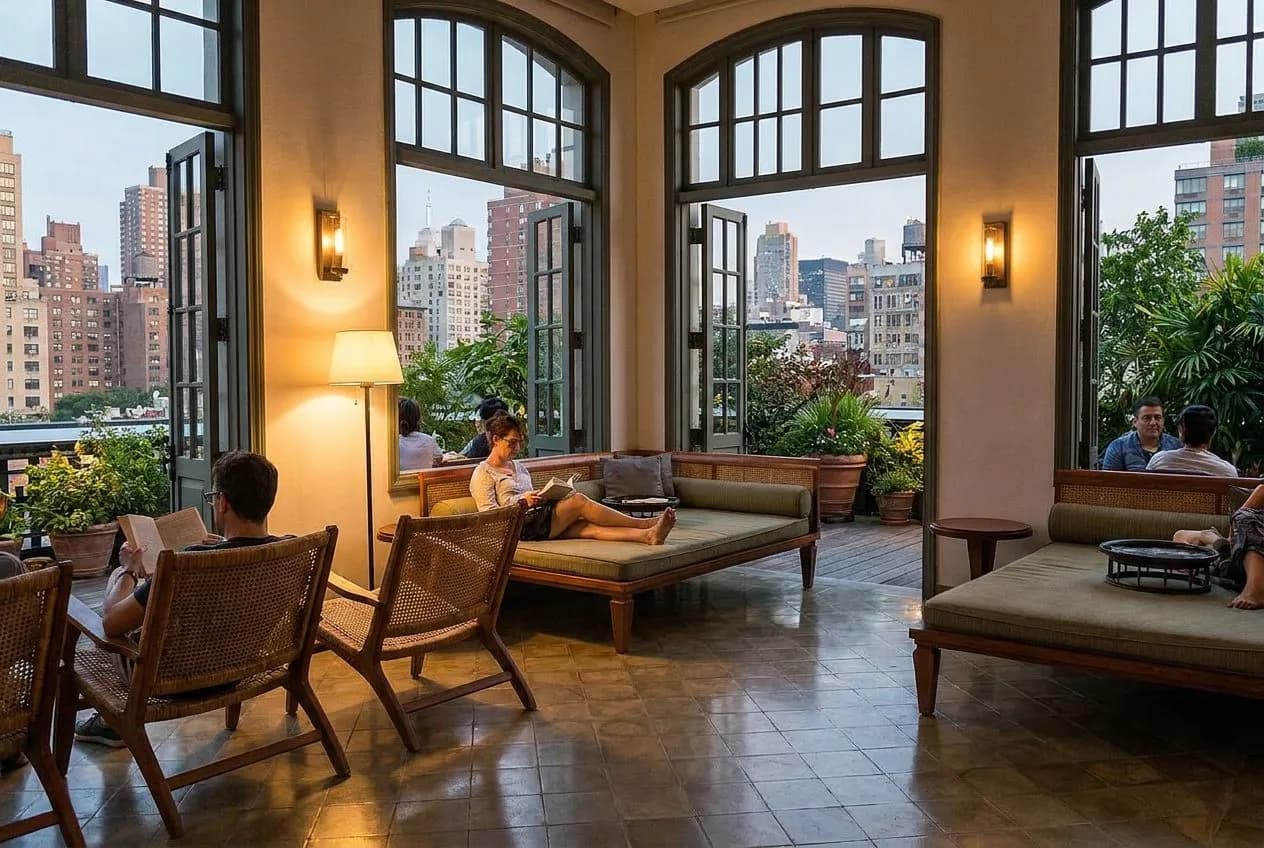
Most visitors breeze past the Diller-von Furstenberg Sundeck at 14th Street, a wide wooden plaza dotted with café tables and reclining chairs. But regulars know to claim a lounger near the southern railing. Thanks to a quirk of building alignment, this single spot catches afternoon sun until 4:45 p.m. even in December, long after the rest of the deck has fallen into shadow.
The lounger itself is teak, weathered to silver-gray, with a slight recline that lets you tilt your face to the light while the city hums below. Bring a paperback, settle in, and watch the parade of sneakers and loafers drift past. It's the kind of small, repeatable luxury that costs nothing and feels like insider knowledge. On weekday afternoons, you might share the deck with freelancers balancing laptops on their knees or art students sketching the surrounding architecture, all drawn to this democratic sliver of leisure suspended above the urban grid.
The Northern Spur's Emptiness
Once you cross 30th Street, the High Line changes character. The northern Spur section—the rail line's original turn toward the Hudson Yards freight terminal—sees sixty percent fewer visitors than the southern stretches. Weekday mornings, it's nearly empty. The plantings thin out, the views open up to train yards and low industrial rooflines, and the whole experience shifts from curated garden to atmospheric ruin-in-recovery. Here, the High Line feels less like a destination and more like an observation deck for the city's working infrastructure—a place where you're aware of being suspended between past and present, freight history and residential future.
This is where the high line nyc reveals its bones: the original rail tracks embedded in the concrete walkway, rusted orange and honest. Benches face west toward the river, and if you time it right on a June morning, you'll have entire sections to yourself. The solitude isn't lonely—it's clarifying, a reminder that even in the densest borough on earth, you can find breathing room thirty feet up. Bird-watchers favor this stretch during spring migration, when warblers and thrushes stop to rest in the scrubby plantings, treating the elevated park as an urban oasis along the Atlantic Flyway.
Art Installations and Hidden Benches
The High Line rotates contemporary art along its length, and near the northern terminus, the "Pershing Square Beams" installation commands attention—massive steel beams cantilevered over the path like frozen industrial gestures. Most visitors photograph them and move on. But beneath the westernmost beam sits a hidden bench, easy to miss if you're not looking, where the original rail tracks remain visible in the concrete underfoot.
It's a quiet spot, shaded and contemplative, with a view north toward the final staircase. The bench itself is simple steel and wood, worn smooth by years of sitters. This is where you come to think, to let the city recede for five minutes, to trace the ghost of the freight trains that once rumbled overhead carrying beef and dairy from the Meatpacking District piers. The art program changes seasonally, so return visits often reveal new installations—from billboard-scale photography to sound pieces that respond to wind and footfall.
The Urban Window at 10th Avenue Square
Near 17th Street, the High Line widens into a grassy amphitheater that frames 10th Avenue through a tall glass panel—the so-called urban window. It's pure theater: the traffic below becomes a moving tableau, taxis and delivery trucks framed like a live-feed art piece. Sit on the tiered seating, watch the light shift across glass and asphalt, and the ordinary becomes strangely mesmerizing. The design transforms the street into a stage, pedestrians and vehicles moving through the frame like actors unaware of their audience.
The amphitheater fills up on warm evenings when people sprawl on the turf with takeout and rosé, but midday it's often half-empty. The design is simple—wood steps, artificial turf, steel railing—but the framing does all the work, turning the everyday geometry of the city into something worth pausing for. On summer evenings, the space occasionally hosts free performances and talks, though most days it simply functions as a gathering place where strangers share the same unusual view, silently acknowledging the pleasure of seeing the familiar from an unfamiliar angle.
Chelsea's Gallery District Below
The High Line hovers directly above one of the world's densest concentrations of contemporary art galleries. Between 20th and 27th Streets, the blocks flanking 10th and 11th Avenues house over 200 exhibition spaces—Gagosian, Hauser & Wirth, David Zwirner, Pace, and dozens of smaller galleries occupying former warehouses and garage buildings. Most galleries maintain free admission and Thursday evening hours, making them a natural pairing with a High Line walk.
Descend any of the mid-park staircases and you're immediately in gallery territory. The juxtaposition is deliberate: the High Line's creation in 2009 accelerated Chelsea's transformation from industrial district to cultural corridor. Now the relationship feels symbiotic—elevated gardens above, white-cube galleries below, both committed to public access and aesthetic experience. On a June afternoon, you can easily combine a High Line walk with gallery-hopping, moving between Oudolf's perennial borders and cutting-edge video installations without ever leaving a four-block radius.
The galleries operate on their own schedules, typically Tuesday through Saturday, 10 a.m. to 6 p.m., with some extending hours on Thursday evenings. Most welcome walk-ins; the hushed, white-walled spaces offer air-conditioned respite during summer heat. Even if contemporary art isn't your primary draw, the architecture alone—soaring ceilings, polished concrete floors, walls of north-facing glass—rewards a quick detour. And unlike museums, there's no admission fee, no suggested donation, just open doors and the assumption that art should be approachable.
What to Bring, When to Go
Summer means sunscreen and a hat; there's limited shade once you leave the tree-canopied southern entrance. A water bottle is non-negotiable. If you're settling in on the Sundeck or northern Spur, bring something to read—the High Line rewards slow movement. Early morning delivers the best light and the fewest crowds, though late afternoon in June, when the wildflowers glow amber in slanting sun, runs a close second. Weekday visits between 9 and 11 a.m. offer the most breathing room; weekends draw neighborhood families, tourists, and dedicated plant enthusiasts in equal measure.
Practical notes
The High Line stretches from Gansevoort Street (Meatpacking District) north to 34th Street at Hudson Yards, with access staircases and elevators roughly every two blocks. All access points are ADA-compliant. Nearest subway lines include the A/C/E at 14th or 23rd Street, and the 7 at 34th–Hudson Yards. Street parking in Chelsea is metered and fiercely competitive; public garages cluster near 10th Avenue. The park is open daily, dawn to dusk (hours shift seasonally; verify at thehighline.org before heading out). Bring sun protection, water, and comfortable shoes; the entire walk is paved but long. Restrooms are available at 16th Street and near the northern terminus.
Tags: #HighLineNYC #ChelseaWalkingPaths #FreeAndFine #NYCParks #PietOudolf #HudsonYards #MeatpackingDistrict #UrbanGardens #SummerInNYC #NYCHiddenGems #ElevatedPark #WildflowerWalks #NYCFreeActivities #ChelseaNeighborhood #NYCSummer2026
Sources consulted: High Line Wikipedia · Official High Line Site · Piet Oudolf Wikipedia · Time Out New York High Line Guide · NYC Tourism - Chelsea
All trademarks are the property of their respective owners.