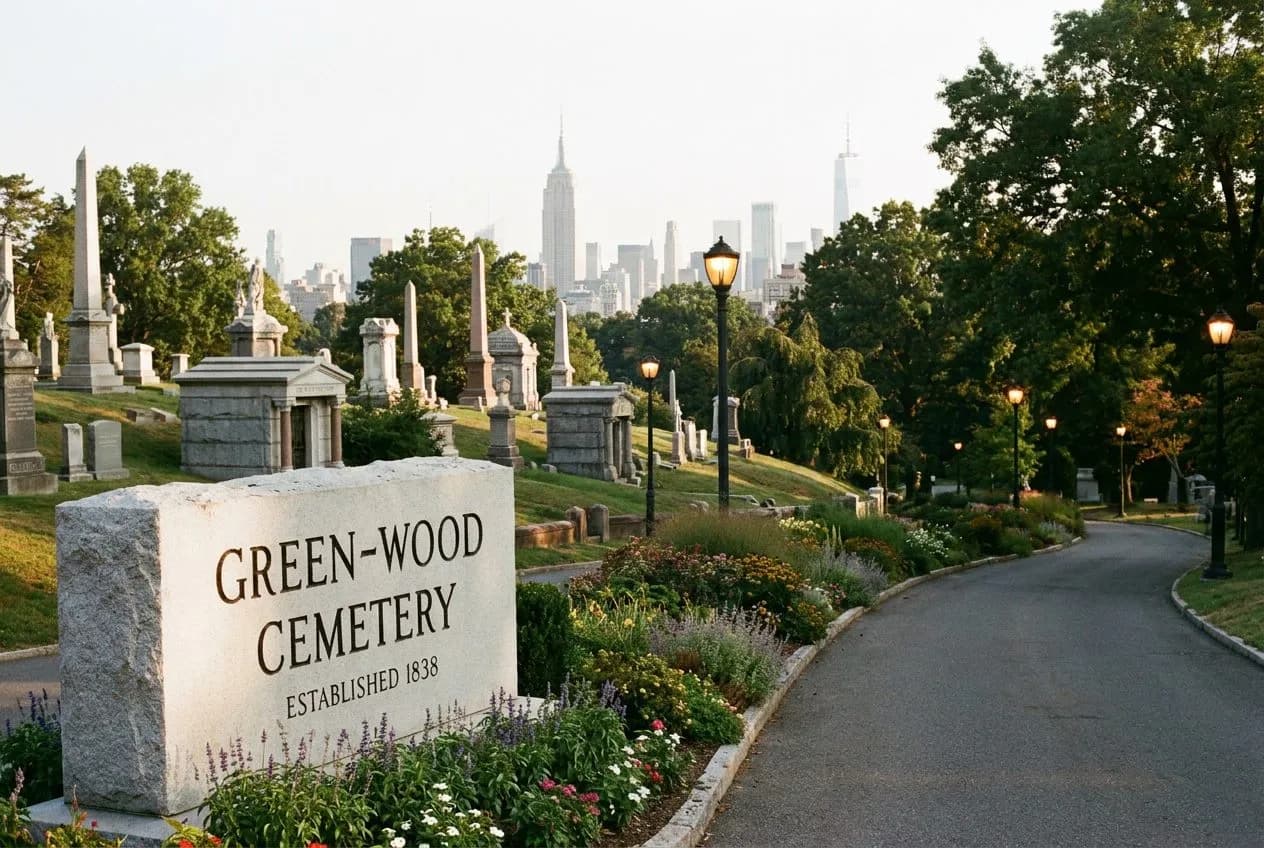
Most New Yorkers know Green-Wood Cemetery exists—the Gothic Revival gates alone command that much attention—but fewer realize you can wander its 478 acres for free, threading past glacial kettle ponds and Civil War generals without ever joining a tour. This isn't a pocket park with a few notable headstones. It's a landscape designed to rival rural English estates, complete with twenty miles of paths, hills steep enough to make your calves complain, and enough sculptural marble to furnish a small museum. By late 2026, as Brooklyn continues its relentless upward creep in both density and price, green-wood cemetery brooklyn remains a rare free-access sanctuary where the only cost is your attention.
The View From Battle Hill
Brooklyn's highest natural point isn't in Prospect Park—it's here, 200 feet above sea level, marked by the Altar to Liberty monument commemorating the Revolutionary War's Battle of Brooklyn. The summit marker stands at the intersection of Battle Avenue and Landscape Avenue, a bronze plaque ringed by cannons that most visitors photograph and move past. But the real prize sits twenty paces west: a bench positioned to catch the sunset perfectly framed by a copper beech planted in 1867. The tree's canopy has grown dense enough to create a natural proscenium, filtering late-afternoon light into amber streaks across New York Harbor.
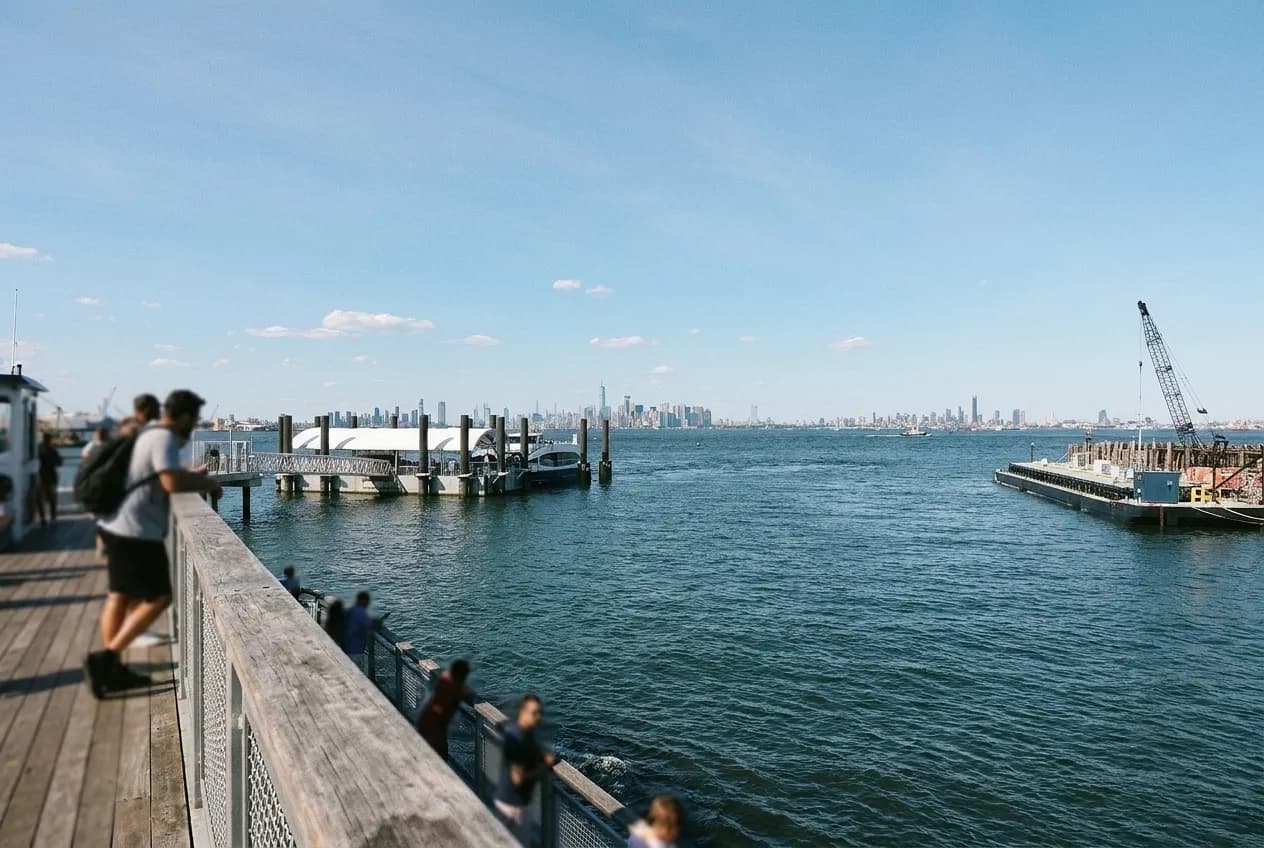
Time it right—May through August offer the longest golden hours—and you'll catch container ships gliding toward the Verrazzano, the Statue of Liberty reduced to a distant silhouette, and the kind of sky gradient that makes people pull out their phones and then, occasionally, put them back down. The bench itself is plain iron, no plaque, no name. It just happens to be the best free seat in South Brooklyn.
The Parakeet Colony Nobody Expects
Green-Wood's most improbable residents are also its loudest. A colony of monk parakeets—bright green, Argentinian expats whose ancestors likely escaped a JFK cargo shipment decades ago—nests in the main chapel's southwest gable from April to September. Their twig fortresses cling to the Gothic stonework like outsider architecture, chaotic and structurally improbable. The birds have zero interest in blending in. They squawk, they bicker, they launch into the air in neon streaks that look Photoshopped against the grey chapel facade.
Best viewing is from the path behind the Hillside Mausoleum at 7:15 a.m. when they're loudest, staging their morning exodus to forage across Brooklyn. Bring coffee. The acoustic experience alone—tropical screeches bouncing off neoclassical marble—is worth the early alarm. By mid-morning the colony quiets, and you'd never know they were there unless you looked up and spotted the massive communal nests wedged into the eaves.
Victorian Symbolism in Stone
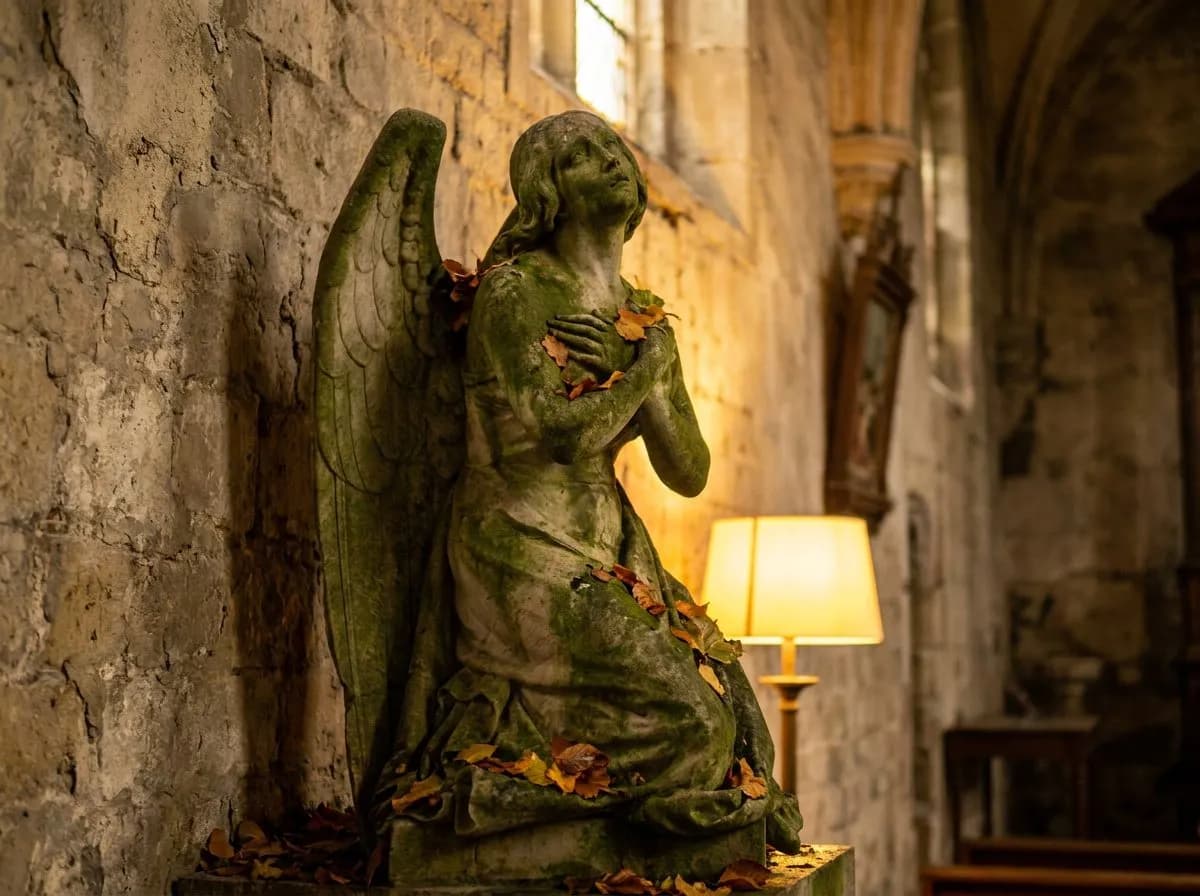
Green-Wood's 19th-century monuments form an open-air seminar in funerary symbolism, and once you learn the vocabulary, every stroll becomes a decoding exercise. Inverted torches signal life extinguished. Draped urns indicate mourning. Ivy means memory and fidelity; oak leaves, strength and endurance. A broken column marks a life cut short, while a hand pointing upward gestures toward heaven—or at least the Victorian conception of it.
The craftsmanship ranges from workmanlike to astonishing. Some monuments are pure white Carrara marble that seems to glow at dusk; others have weathered into soft grey abstractions, inscriptions barely legible. Look for the Steinway family plot, the Tiffany monuments, the industrialists who built Brooklyn and wanted everyone to remember it. The wealth gap persists even in death: modest granite slabs huddle near the perimeter while the robber barons claimed hilltop real estate with obelisks and angels.
Guided Trolley Tours Worth the Effort
While the cemetery is free to explore on foot, the guided trolley tours offer context you won't get from wandering alone. Free cemetery tours nyc are rare enough; ones led by historians who can rattle off Civil War regiments and Gilded Age gossip are rarer still. These run Sundays at 1 p.m., but there's a catch: online registration opens Thursdays at noon and fills within two hours. Set a calendar reminder. The trolleys seat about twenty, cover three miles, and stop at highlights you might otherwise miss—hidden mausoleums, the catacombs, the spot where Louis Comfort Tiffany is buried beneath a simple ledger stone.
If you miss the registration window, don't despair. The self-guided experience has its own merits: no schedule, no crowd, no microphone cutting out halfway through an anecdote. Download the cemetery's free app for the audio tour, or simply pick a path and follow it until the pavement ends and you're standing in front of a glacial pond wondering how this entire landscape exists fifteen minutes from downtown Brooklyn.
The Gothic Revival Gates
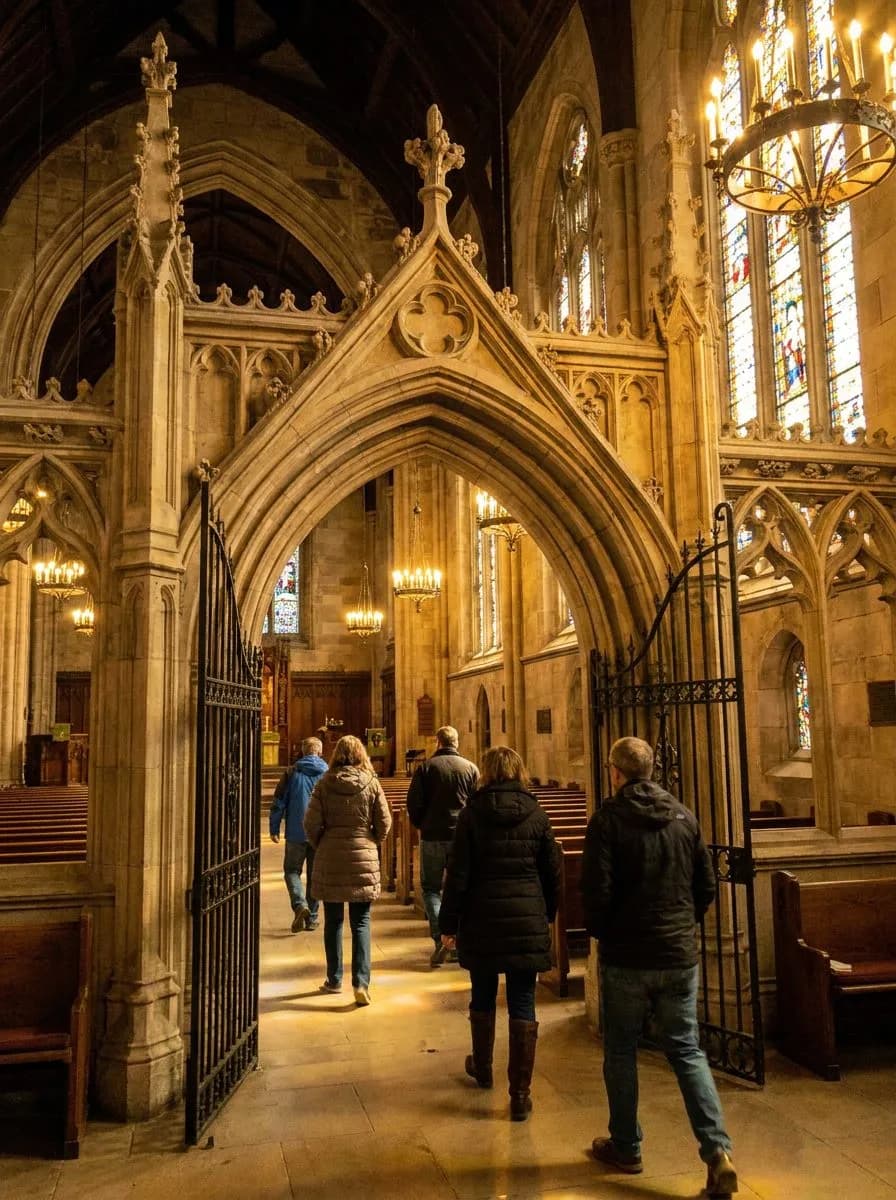
Richard Upjohn's entrance gates, completed in 1861, are worth the visit even if you never step inside. They're a full-blown architectural statement: pointed arches, clustered columns, polychrome stonework in shades of cream and rust. The detailing includes carved foliage, heraldic shields, and a level of ornamentation that makes most contemporary construction look anemic by comparison. The gates were designed to announce that Green-Wood wasn't just a burial ground—it was a public garden, a cultural institution, a place where Brooklyn's emerging middle class could promenade on Sundays.
They succeeded. By the 1860s, Green-Wood was the second-most-visited site in America after Niagara Falls. The crowds have thinned since then, but the gates remain, photogenic and faintly surreal against the backdrop of Sunset Park's rowhouses and bodegas. Stand beneath the central archway on a quiet morning and you'll understand why the Victorians thought cemeteries could be uplifting.
What to Bring, What to Skip
Comfortable shoes are non-negotiable—the hills are legitimately steep, and the paths are mostly paved but occasionally rutted. Water, especially in summer, when shade is sparse on the higher elevations. Binoculars if you're interested in the parakeets or the harbor views. A printed map from the entrance office helps, though the signage is decent and getting mildly lost is part of the charm. Skip the picnic supplies; eating is prohibited out of respect for the setting. And leave the drone at home—this is still consecrated ground, however Instagrammable.
Practical notes
Green-Wood Cemetery, Fifth Avenue and 25th Street, Brooklyn. Nearest subway: R to 25th Street; D, N, R to 36th Street. Street parking available along Fifth Avenue, though summer weekends fill quickly. Gates open daily 7 a.m. to 7 p.m. (hours vary seasonally; verify before visiting). Paved paths are accessible, though hills may challenge some mobility devices. Free admission, free map at entrance. Restrooms near the main entrance and Historic Chapel. Trolley tour registration at green-wood.com beginning Thursdays at noon. Dress in layers; exposed hilltops catch wind even in August.
Tags: #GreenWoodCemetery #FreeBrooklyn #SunsetPark #HiddenNYC #FreeAndFine #BrooklynWalks #NYCHistory #GothicRevival #BattleHill #MonkParakeets #CemeteryTour #VictorianArchitecture #NYCParks #SummerInBrooklyn #ExploreNYC
Sources consulted: Green-Wood Cemetery - Wikipedia · Official Green-Wood Cemetery Site · NYC Parks · Monk Parakeets - Wikipedia · Time Out New York
All trademarks are the property of their respective owners.