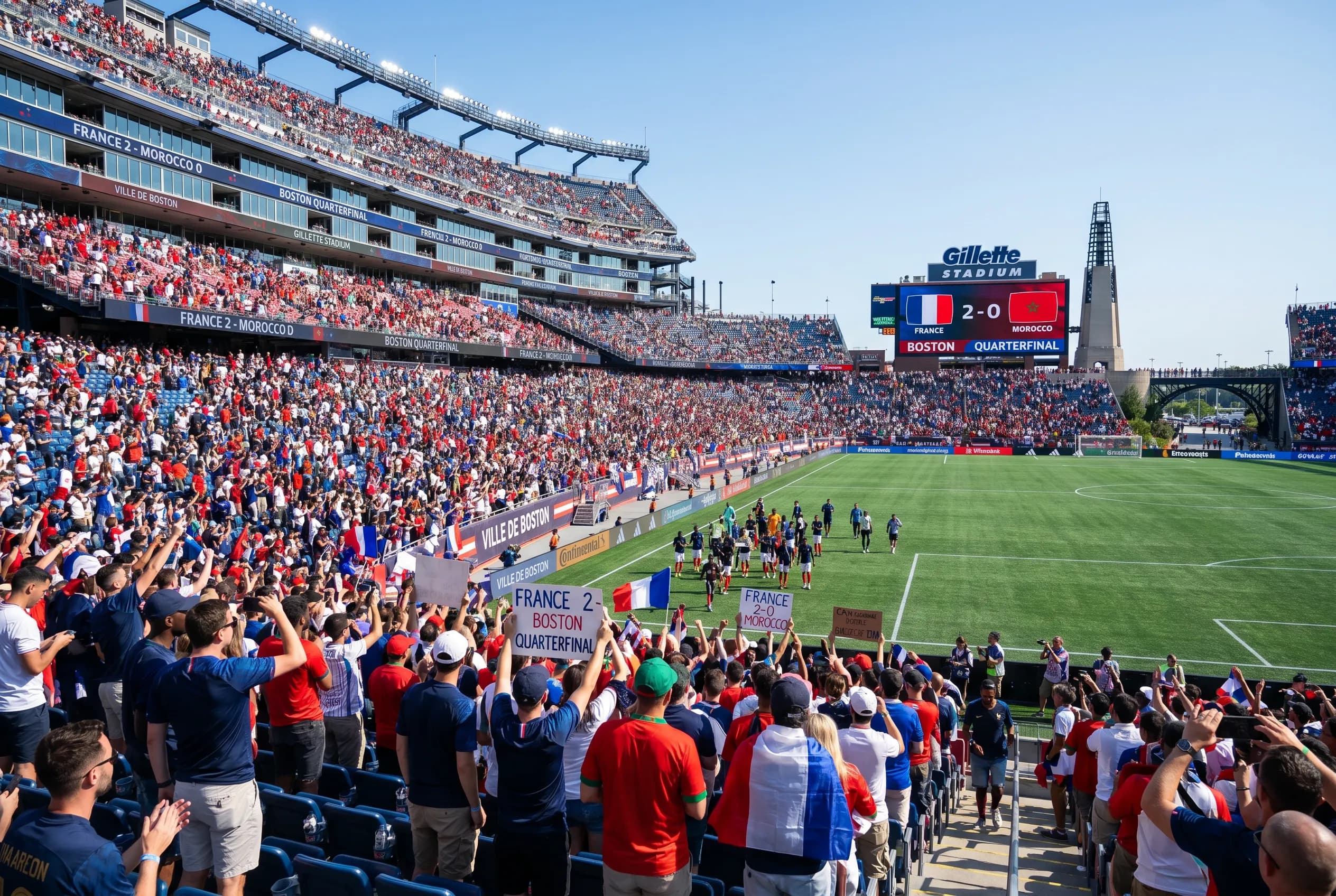
The 2026 FIFA World Cup quarterfinal between France and Morocco at Gillette Stadium delivered the drama expected from two nations with intertwined football histories. France's 2-0 victory in Foxborough sent Les Bleus into the semifinals while ending Morocco's remarkable tournament run. The match unfolded before a passionate crowd split between French supporters and a vocal Moroccan contingent that had traveled from across North America to witness their team's historic campaign. Gillette Stadium, home to the New England Patriots and Revolution, provided a fitting stage for this high-stakes encounter that carried both sporting significance and deeper cultural resonance.
Planning your World Cup 2026 experience in the Boston area? Text Karpo for a personalized match-day plan that covers everything from stadium access and parking strategies to pre-game dining spots in Foxborough and Patriot Place. Whether you're catching the next quarterfinal or planning ahead for knockout rounds, Karpo builds custom itineraries based on your schedule, budget, and whether you're traveling solo or with a group. Get real-time recommendations that go beyond generic advice.
First Half Control Sets the Tone
France established territorial dominance early, controlling possession and limiting Morocco's ability to build attacks from the back. The European champions demonstrated the tactical discipline that has defined their tournament, pressing intelligently and forcing Morocco into hurried clearances. Morocco's defensive shape remained compact through the opening twenty minutes, with their backline showing the organizational strength that had carried them through earlier rounds. The Atlas Lions looked to counter when opportunities arose, but France's midfield coverage consistently snuffed out transitions before they could develop into dangerous situations.
The opening goal arrived as a reward for France's patient buildup play, breaking the deadlock and shifting the psychological balance. Morocco responded by pushing higher up the pitch, accepting greater risk in search of an equalizer before halftime. The final fifteen minutes of the first half saw end-to-end action, with both teams creating half-chances that tested the goalkeepers. France took their one-goal advantage into the break having demonstrated superior control without fully putting the match beyond reach, leaving the outcome genuinely uncertain as the teams returned to their dressing rooms.
Second Half Adjustments and the Decisive Moment
Morocco emerged from halftime with renewed urgency, pressing higher and committing more players forward in search of the equalizer that would change the match's complexion. France absorbed this pressure with composure, content to defend their lead while looking for opportunities to exploit the spaces opening behind Morocco's advanced defensive line. The tactical chess match intensified as both coaches made substitutions designed to shift momentum, introducing fresh legs and altering formations to gain advantage in specific areas of the pitch.
The second French goal proved decisive, arriving at a moment when Morocco had committed resources forward and left themselves vulnerable to the counterattack. The strike effectively ended the contest as a competitive affair, forcing Morocco to chase two goals in the remaining time while managing their energy levels. France's ability to find that crucial second goal demonstrated their clinical efficiency in knockout football, capitalizing on the brief windows of opportunity that separate tournament winners from nearly-great teams. Morocco continued to push forward with pride, but the two-goal deficit proved insurmountable against opponents of France's defensive quality.
Gillette Stadium Atmosphere and Crowd Dynamics
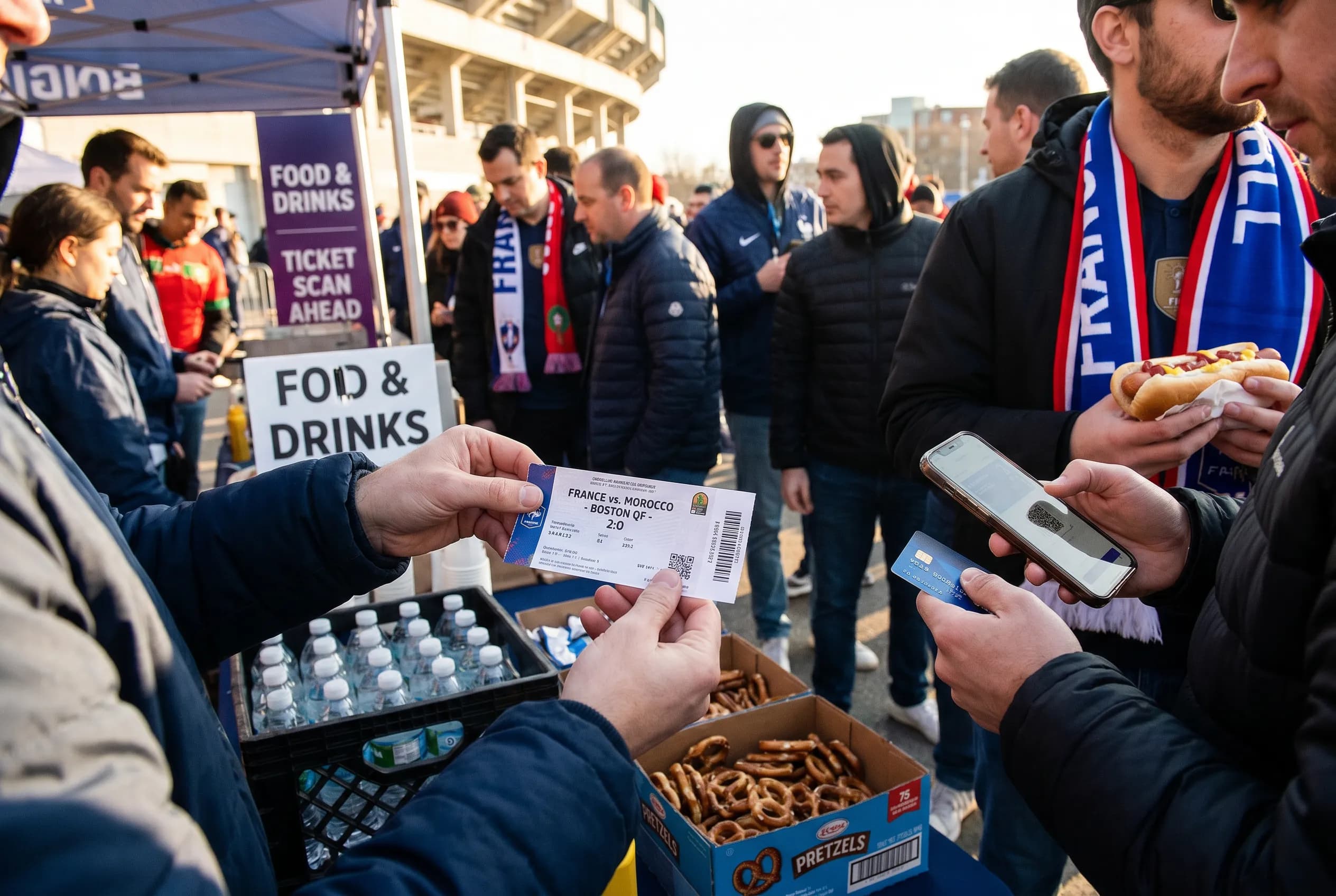
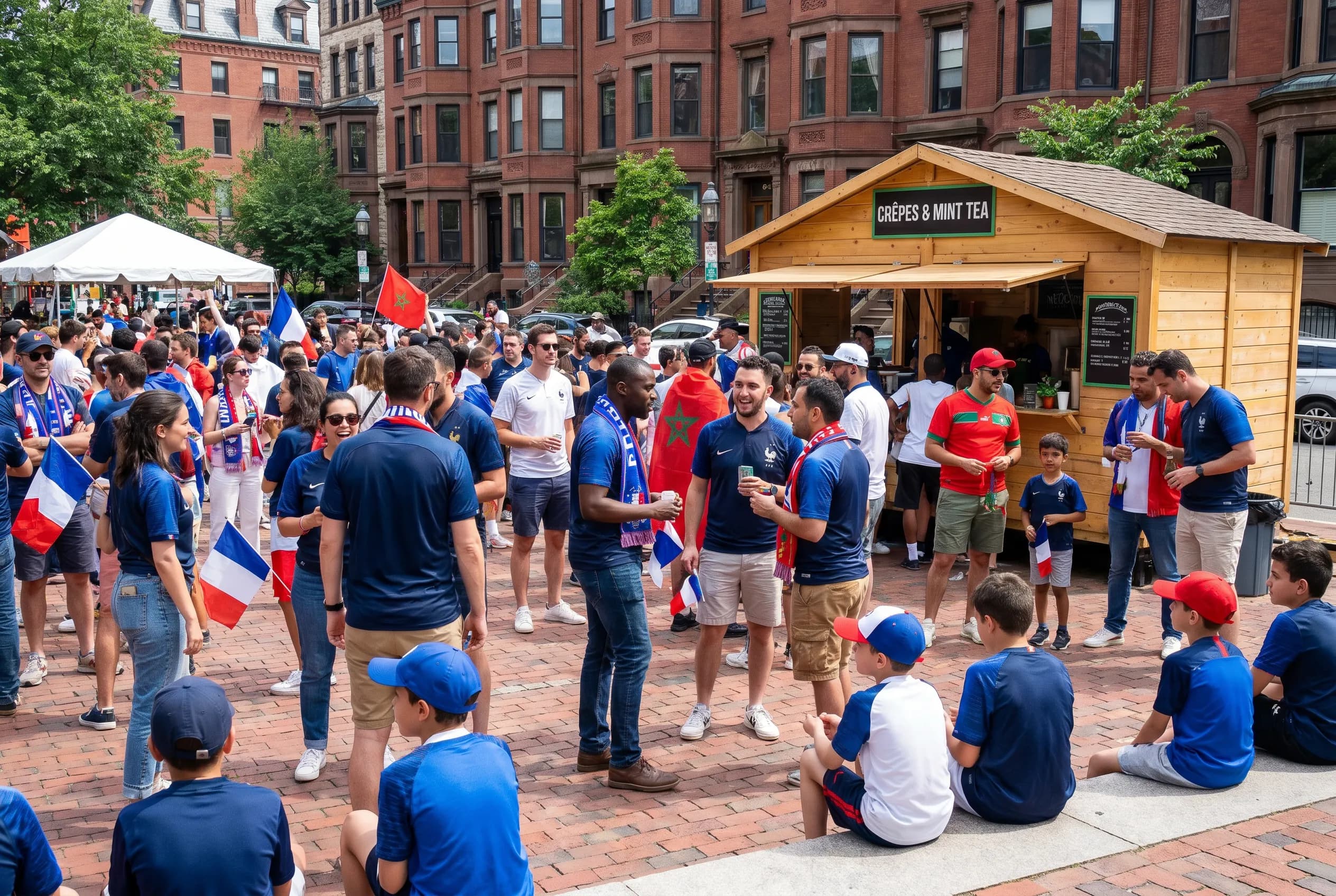
The Foxborough venue created a unique atmosphere for this quarterfinal, with Moroccan supporters generating sustained noise that rivaled any home crowd advantage. Drums, chants, and coordinated displays transformed sections of Gillette Stadium into a North African cauldron of support, providing their team with genuine encouragement despite playing thousands of miles from home. French supporters countered with their own songs and celebrations, particularly after each goal, creating the kind of acoustic battle that defines major tournament football. The crowd split reflected the global nature of World Cup 2026, with fans from both nations having made significant journeys to witness this moment.
Gillette Stadium's infrastructure handled the capacity crowd smoothly, with concourse flow and facility access meeting the demands of a major international event. The venue's experience hosting NFL games and previous international soccer matches proved valuable in managing the unique requirements of World Cup football. Patriot Place, the entertainment complex adjacent to the stadium, served as a gathering point before and after the match, with restaurants and bars filled with supporters from both nations. The Boston area's transportation networks faced their expected test, with fans arriving via various routes to reach the Foxborough location situated between Boston and Providence.
Tactical Approaches and Key Battles
France's tactical setup prioritized control over spectacle, maintaining defensive solidity while creating selective attacking opportunities through quick transitions. Their midfield structure denied Morocco the space to play through central areas, forcing the Atlas Lions wide where France's fullbacks could contain threats and limit crossing opportunities. Morocco's approach required balancing defensive responsibility with attacking ambition, a difficult equation when trailing against opponents comfortable sitting deeper and absorbing pressure. The individual battles across the pitch often determined which team could execute their preferred style, with France generally winning these crucial duels.
Set pieces provided Morocco with their best opportunities to threaten France's goal, given the difficulty of breaking down a well-organized defense through open play. France defended these situations with discipline, clearing their lines effectively and preventing the kind of scramble that might have offered Morocco a route back into the match. The tactical adjustments made by both coaching staffs reflected their reading of the game's flow, with substitutions designed to either protect the lead or chase the deficit. France's experience in navigating knockout rounds showed throughout, as they managed the game's tempo and prevented Morocco from establishing sustained attacking rhythm.
Tournament Context and Historical Significance
This quarterfinal carried echoes of the 2022 World Cup semifinal between these nations, adding historical weight to an already significant encounter. Morocco's tournament run had again captured global attention, representing African and Arab football on the world's biggest stage with performances that exceeded many pre-tournament expectations. France's progression continued their status as perennial contenders, with the depth and quality in their squad allowing them to navigate the knockout rounds with confidence. The match represented more than ninety minutes of football, serving as a meeting point for different football cultures and approaches to the game.
The result sends France into the semifinals with momentum, though the physical and mental demands of tournament football mean nothing can be taken for granted in the remaining rounds. Morocco exits with pride despite the defeat, having contributed to another memorable World Cup chapter and further elevated African football's reputation. The 2026 tournament's expanded format and North American setting created the conditions for this quarterfinal to take place in Foxborough, bringing world-class football to a region with deep soccer roots and growing enthusiasm for the sport. The match will be remembered as part of both nations' World Cup stories, a quarterfinal that delivered quality if not surprise.
Looking Ahead to Semifinal Preparations
France now turns attention to semifinal preparations, with their coaching staff analyzing potential opponents and managing player fitness after the physical demands of the quarterfinal. The quick turnaround between knockout matches requires careful squad rotation and recovery protocols, balancing the need to field the strongest team with the reality of accumulated fatigue. Their tactical flexibility and squad depth provide options for managing these challenges, though injuries and suspensions can quickly alter calculations. The semifinal represents another step toward the ultimate goal, with France knowing that two more victories would secure the World Cup trophy.
The Boston area's role in hosting this quarterfinal concludes, but the region's World Cup 2026 involvement continues with other matches scheduled throughout the tournament. Gillette Stadium demonstrated its capability to host football at the highest level, adding to its resume of major sporting events. For fans who witnessed this match in person, the experience becomes part of their personal World Cup story, a quarterfinal attended and remembered regardless of which team they supported. The tournament moves forward with France among the final four, while Morocco's players and supporters begin the journey home carrying memories of another impressive World Cup campaign that fell just short of the ultimate prize.
Tags: #WorldCup2026 #France #Morocco #GilletteStadium #Foxborough #Boston #QuarterFinal #SoccerMatch
Sources consulted: FIFA World Cup 26 results · Gillette Stadium
All trademarks are the property of their respective owners.
Ask Karpo First
Whether you're in Boston for the remaining World Cup matches or planning a visit to Foxborough for any event at Gillette Stadium, text Karpo for guidance tailored to your specific needs. Get recommendations for pre-game restaurants in Patriot Place, the smartest parking options based on your arrival time, or backup plans if weather or crowds create complications. Karpo builds itineraries that account for your preferences and constraints, turning generic stadium advice into actionable plans that actually work for your situation.