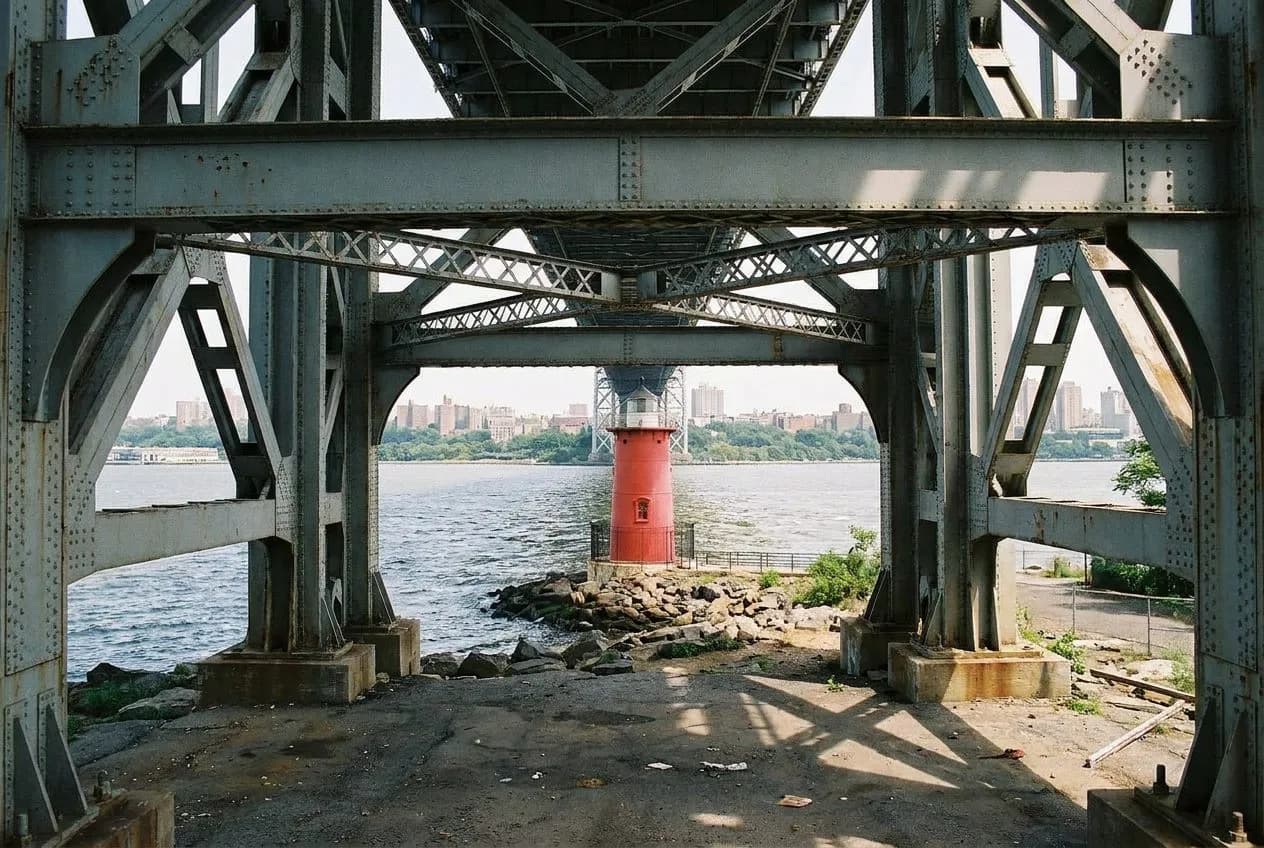
Most Manhattanites glance at the George Washington Bridge from above—crossing it, photographing it, cursing traffic beneath it—but few drop through the canopy to meet the waterline it towers over. Fort Washington Park's Little Red Lighthouse Trail is one of those city routes that feels accidentally preserved, a steep wooded pitch from Fort Washington Avenue down to a pocket of granite riprap, driftwood, and the small 1880 beacon that anchored a children's book and then quietly stayed. It's not dramatic in the way New York usually rewards ambition, but it is clarifying: a quick escape that trades elevation for stillness and reveals the Hudson as a working tidal river, not a scenic backdrop.
The descent
The trailhead sits just south of the bridge approach on Fort Washington Avenue, marked by a narrow asphalt path that switchbacks through oak and sycamore. The park's maintenance staff call it 'the drop' for good reason—100 feet of elevation shed in a quarter mile, tight enough that you feel the pressure in your knees and notice the temperature cool as the canopy thickens. The Parks Department has repaved the steepest sections and added a railing, concessions to the trail's popularity without erasing its slightly feral quality.
In summer the descent is shaded and damp; in winter, when leaves are gone, you catch flashes of bridge steel and river light through the branches. The sound shifts as you drop: car hum fades, replaced by the sharper acoustics of water against stone and the occasional barge horn. It's a short walk, five minutes at most, but the gradient makes it feel like a threshold.
The lighthouse and its clearing
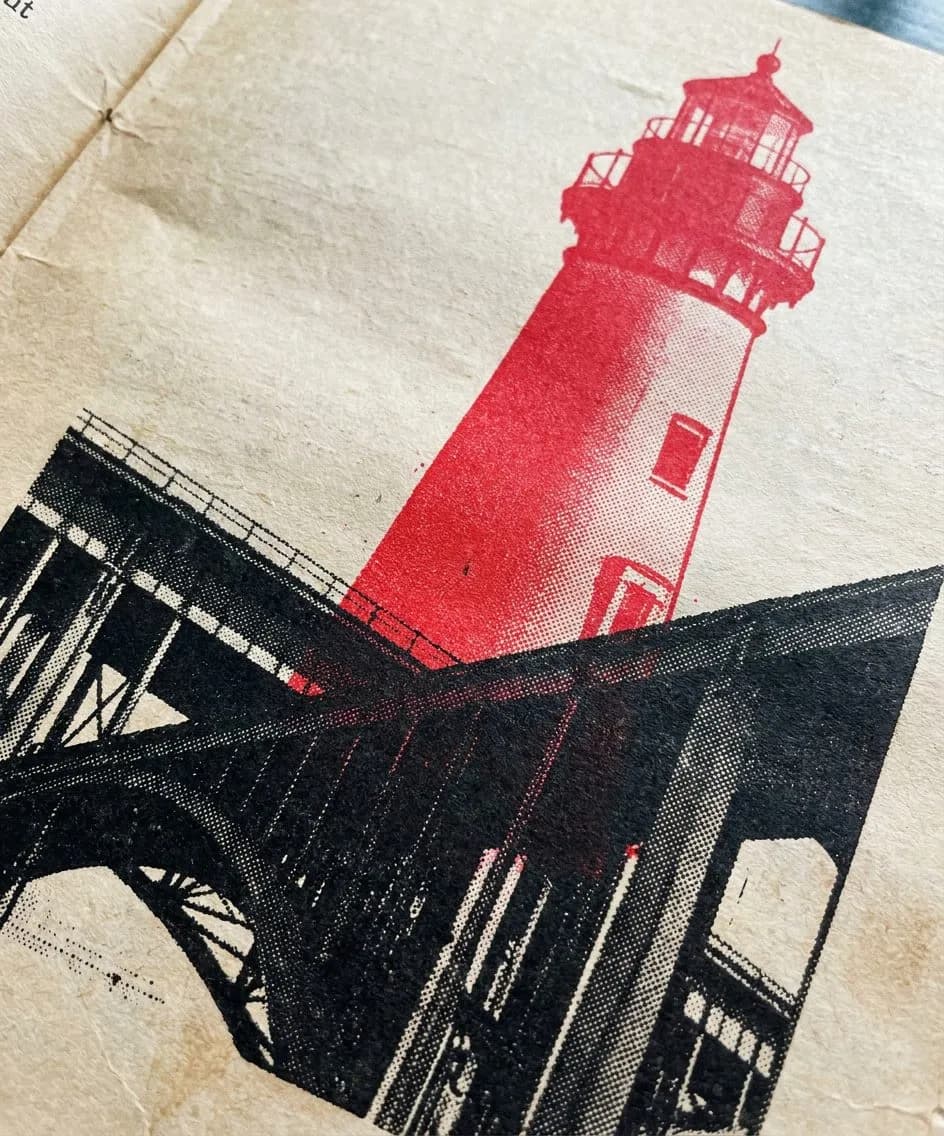
The Little Red Lighthouse—officially Jeffrey's Hook Light—sits at the trail's end, a 40-foot cast-iron tower painted a cheerful industrial red. It has not been in regular navigational service since 1948, but it remains structurally intact, a public landmark maintained by the Parks Department and occasionally opened for tours. The lighthouse keeper's door faces the river, and regulars know that the western side catches full afternoon sun, making it the warmest spot to sit in early spring when the breeze off the water still carries a chill. A stretch of flat granite riprap extends from the tower to the water's edge, interrupted by driftwood and the occasional rusted mooring ring.
The clearing around the lighthouse is larger than the trail suggests—a crescent of open shore where the bridge shadow and tree cover give way to sky. It's quiet in a specific way: not silent, but insulated, the bridge overhead absorbing the city's ambient noise while allowing the river's rhythms through. On weekdays, especially in the hour before mid-morning when weekend family groups begin to arrive, you might have the site to yourself.
The light window and the Palisades
Timing matters here more than at most city parks. The George Washington Bridge casts a long shadow across the lighthouse and shore for much of the day, but between roughly 11am and 2pm—depending on season—the sun lifts above the span and floods the clearing. That's when the view across the Hudson sharpens: the Palisades cliffs, 300 feet of columnar basalt, emerge in full detail, their ridgeline softened by oak and sumac that shift through green, bronze, and bare gray depending on the calendar.
The light changes the mood entirely. What was a cool, shadowed pocket becomes warm and open, the kind of river overlook that makes you understand why early surveyors and painters obsessed over this stretch of the Hudson. It's also the best window for spotting peregrine falcons, which nest on the bridge's Manhattan tower each spring; their silhouettes are easiest to track when the sun backlights the steelwork. This isn't ambitious weekend plans territory requiring hours of commitment—it's a targeted visit that rewards attention to the clock.
The shoreline and tidal details
The Hudson here is brackish and tidal, rising and falling several feet through the day. At high tide the water nudges close to the riprap; at low tide, the river pulls back to reveal a ribbon of mudflat, driftwood tangles, and—if you look closely—a cobblestone ship ballast dump from the 19th century. The ballast is visible roughly two hours before and after slack water, when the current stalls and the stones emerge in uneven rows, rounded and dark, remnants of the merchant traffic that once crowded this stretch. It's an easy detail to miss, but once you know to look for it the shoreline reads differently: layered, industrial, still shaped by centuries of use.
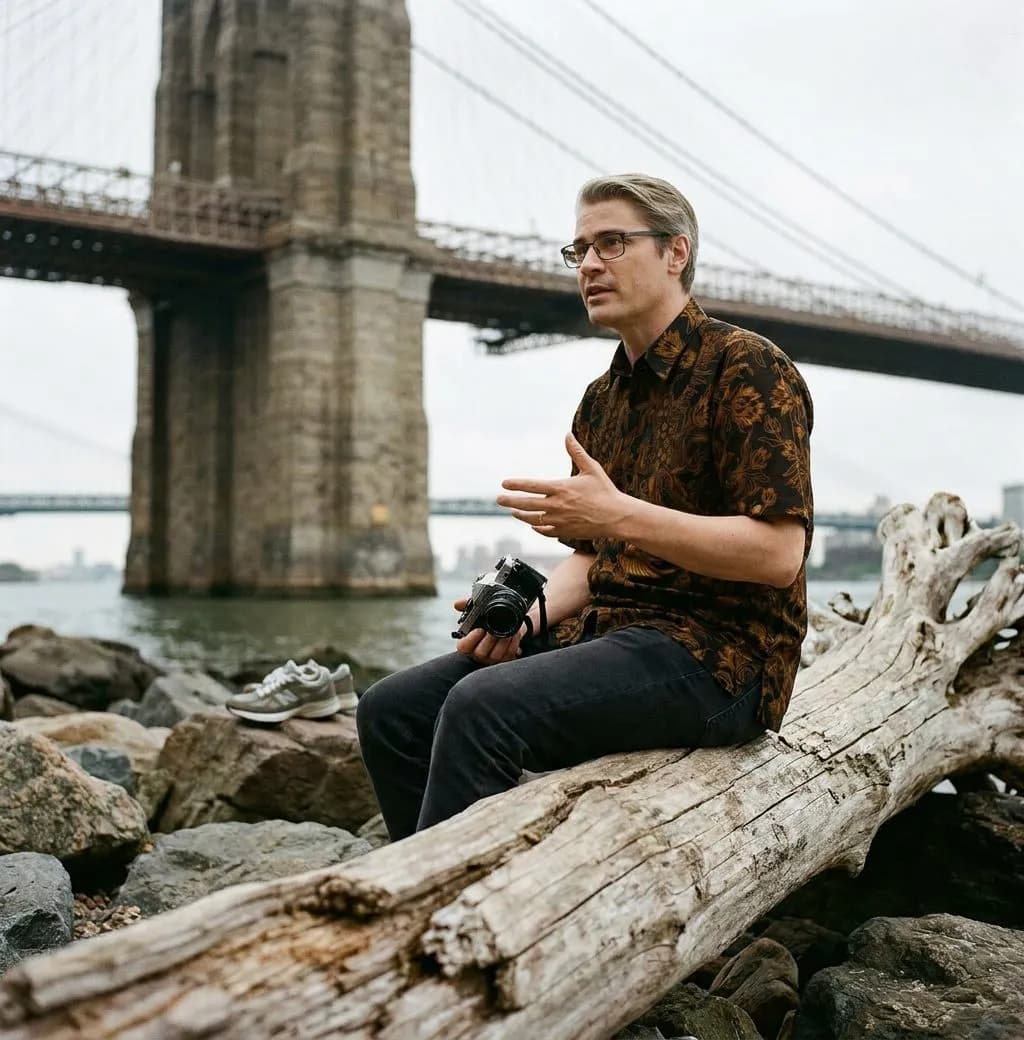
An unofficial driftwood bench has taken shape near the lighthouse, assembled and reassembled by visitors from the larger logs that wash ashore. It's not permanent—storms and high tides rearrange it—but it's usually there in some form, a collaborative folk sculpture that doubles as seating. The wood is pale and weathered, soft enough to sit on, sturdy enough to stay put through a season.
Why it works
Fort Washington Park and the Little Red Lighthouse don't ask much of you—no reservation, no cover, no optimal season that renders all other visits second-rate. It's among the city's most reliable free things to do, a route you can walk in twenty minutes round-trip or linger at for an hour if the light and tide align. The trail's steepness and the bridge's shadow keep crowds manageable, even on weekends, and the site rewards return visits: different tides expose different shorelines, different hours change the light, different seasons shift the falcon activity and canopy density.
It's also a useful reminder that Manhattan still has edges—places where the grid gives way to geography, where the city's infrastructure (the bridge, the old lighthouse, the riprap shore) sits in uneasy collaboration with the river's older rhythms. The clearing beneath the George Washington Bridge is one of those edges, a small field note in the city's larger composition.
Practical notes
Fort Washington Park, west of Fort Washington Avenue between 181st Street and the George Washington Bridge, Manhattan. Nearest subway: A to 181st Street (ten-minute walk west). Limited street parking on Fort Washington Avenue. The trail and lighthouse clearing are open dawn to dusk year-round, though the lighthouse interior is locked except during occasional Parks Department tours (check nyc.gov/parks for updates). The trail is paved but steep; the shore is uneven granite riprap. Bring water, sun protection for the clearing's open hours, and footwear with grip. Accessibility: the trail's grade is challenging for wheelchairs; the clearing itself is relatively flat once you reach it.
Tags: #FortWashingtonPark #LittleRedLighthouse #HudsonRiver #GeorgeWashingtonBridge #NYCParks #WashingtonHeights #HiddenNYC #FreeAndFine #RiverOverlook #UrbanTrail #NYCNature #WeekendWalks #ManhattanWaterfront #TidalHudson #PalisadesView
Sources consulted: Fort Washington Park · NYC Parks – Fort Washington Park · George Washington Bridge · MTA Subway Access
All trademarks are the property of their respective owners.