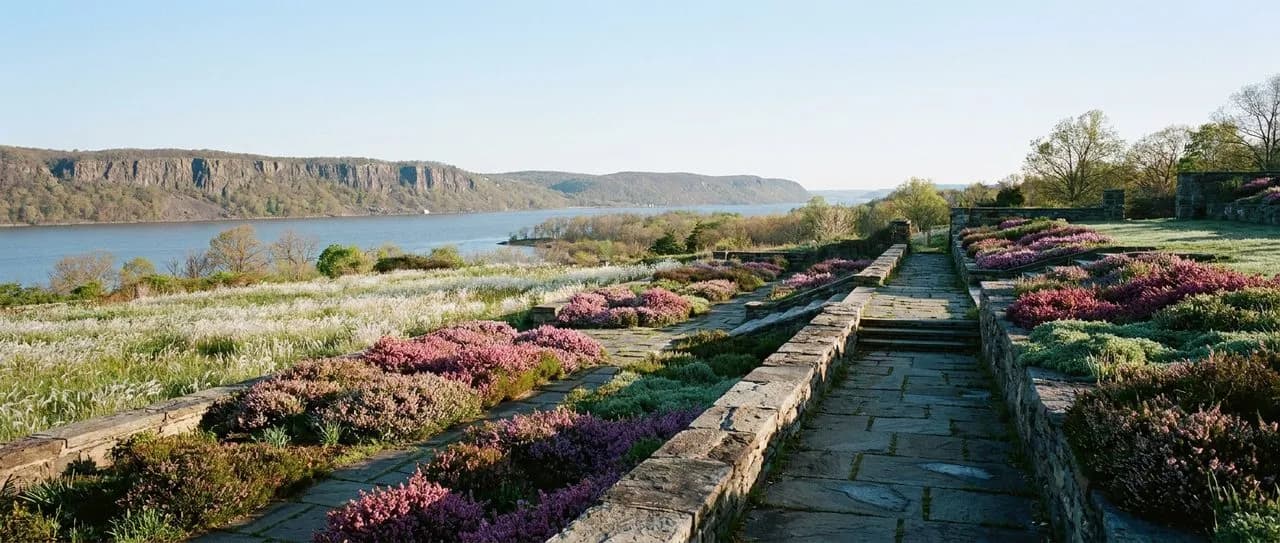
Fort Tryon Park occupies a high ridge in upper Manhattan, and tucked into its southern slope is the Heather Garden—a tiered, stone-edged landscape that feels quietly European in ambition. Built during the WPA era, the garden unfolds in a series of terraces connected by flagstone steps, each level planted with heather, perennials, and flowering shrubs that bloom in waves from early spring through late autumn. At the summit sits Linden Terrace, a pergola-shaded overlook with stone benches facing the Hudson River and the sheer Palisades cliffs beyond. It's one of the city's most generous free things to do, and in spring 2026 it remains as unhurried as ever.
The lower entrance and early bloom
The Heather Garden's lower entrance lies just off Margaret Corbin Circle, marked by a simple stone arch that frames the first terrace. In spring the beds nearest this entry arch wake up early—crocuses, minor bulbs, then early perennials—blooming a full two weeks ahead of the upper terrace thanks to a sheltered microclimate and southern exposure. The difference is subtle but real: while the summit still holds onto late-winter chill, the lower beds are already flushed with color by mid-spring.
The flagstone path ascends gently, bordered by low retaining walls in rough-cut stone. Moss fills the joints. The air smells faintly of damp earth and crushed thyme where the path edges blur into planting beds. It's quiet here—occasional dog walkers, a runner or two—but the garden never feels crowded, even on fair weekends.
Climbing through the terraces
Each terrace is distinct. Some are wide and open, planted in broad sweeps of heather and ornamental grasses; others are narrow and intimate, edged with flowering shrubs and late-season bulbs. The heather itself blooms in waves—late April through May is peak season, when the beds flush purple, pink, and white. The plant palette leans traditional: lavender, catmint, salvia, alliums rising on tall stems. There's no interpretive signage to speak of, which feels appropriate. The garden doesn't explain itself.
The climb is gradual but sustained, and by the third or fourth terrace the views begin to open. Through gaps in the lindens and Norway maples you catch glimpses of the river below, steel-bright in morning light. The stone steps are worn smooth in the center, evidence of decades of foot traffic. Benches appear at intervals, most facing inward toward the beds, a few turned outward toward the view.
First light on the upper terrace
The Heather Garden opens at dawn year-round, and the upper terrace rewards an early arrival. In spring, arriving by seven-thirty in the morning means catching the summit in full sun before the linden canopy overhead leafs out and casts afternoon shade across the beds. The light at that hour is clean and low-angled, raking across the stone pergola and illuminating the river beyond with a clarity that softens by mid-morning.
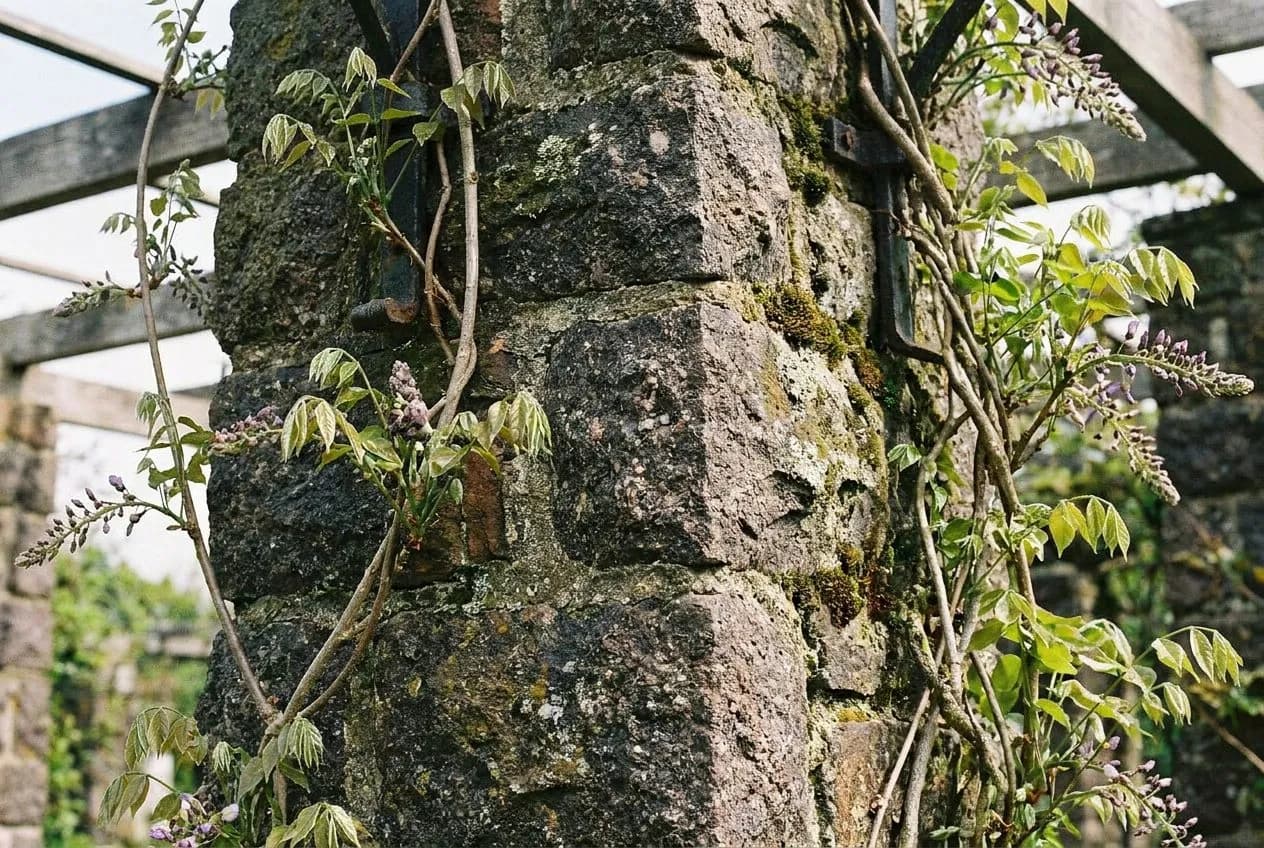
The transition from the lower terraces to the summit feels abrupt—one moment you're climbing through planted beds, the next you emerge onto a broad flagstone platform beneath the pergola's columns. The structure is simple: rough stone pillars supporting heavy timber beams, wisteria vines trained along the crosspieces. In late spring the wisteria blooms in cascading purple racemes, scenting the air with something sweet and faintly grape-like. By summer the canopy is dense enough to provide real shade.
The Linden Terrace overlook
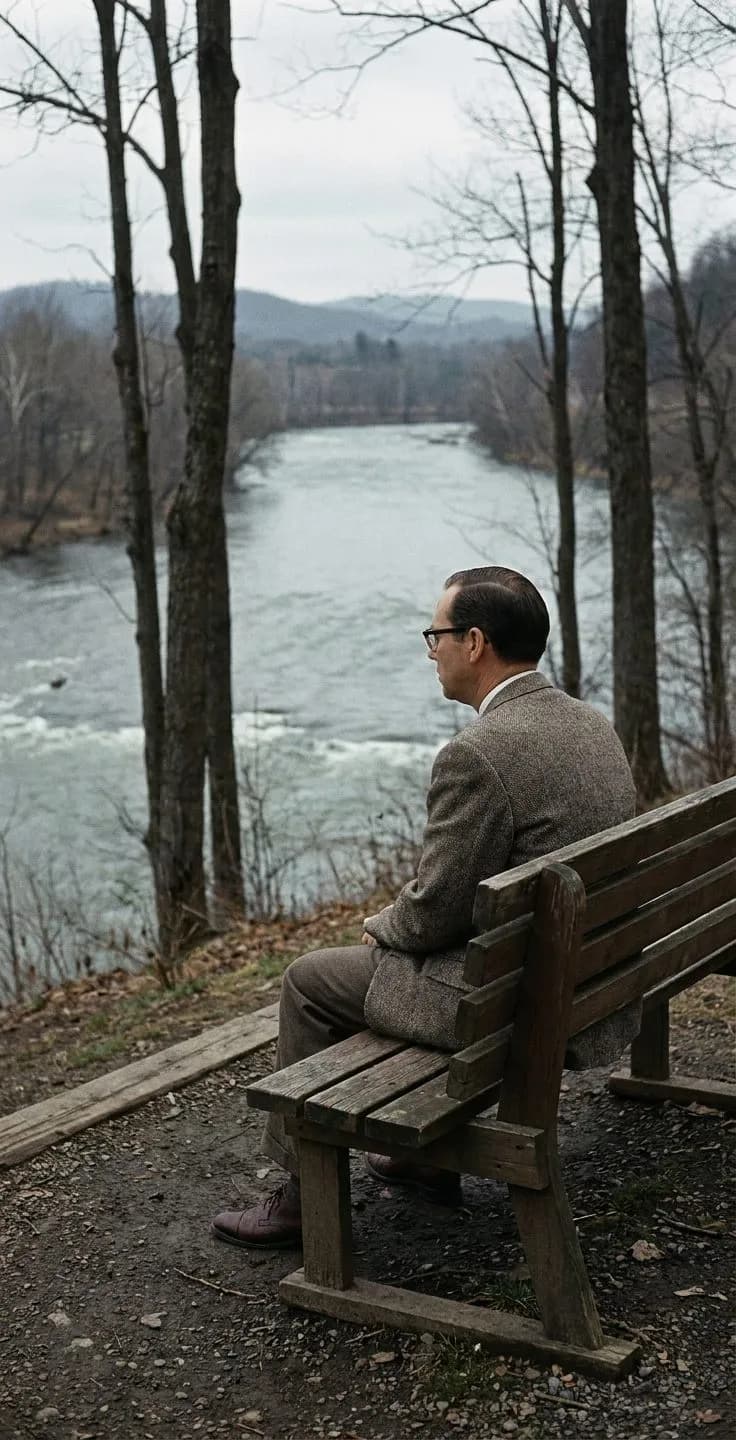
Linden Terrace extends north from the pergola, a stone-paved viewing platform lined with benches and young linden trees. Most benches offer broad Hudson River views, but sightlines vary depending on foliage and railing placement. The stone bench at the terrace's east corner is the only seat with simultaneous views of the George Washington Bridge to the south and the full sweep of the Palisades cliffs to the north, with no metal railing to break the frame. It's an unobstructed panorama—river, cliffs, bridge suspension cables catching the light—and worth the short walk from the pergola to claim it.
The Palisades rise sheer and dark green across the water, their columnar basalt faces striped with shadow. Barges and small pleasure craft move slowly upriver. The George Washington Bridge arcs silver to the south, its towers just visible through the trees when the canopy is thin. In spring 2026 the view remains remarkably clear—no new high-rises interrupt the sightline, a rarity this far north in the city.
The overlook is never silent. You hear traffic hum from the Henry Hudson Parkway below, the occasional horn from the river, birdsong layered over everything. It's urban quiet, not wilderness quiet, but the scale of the view makes the city feel distant.
What else grows here
Beyond the heather, the garden's plant palette shifts with the seasons. Spring brings drifts of daffodils and species tulips, then azaleas and rhododendrons in the shadier pockets. Summer shifts toward perennials—daylilies, coneflowers, black-eyed Susans—and ornamental grasses that bleach pale gold by autumn. The garden feels lived-in, not manicured. Some beds are impeccable; others show gaps where plants have failed or spread beyond their bounds. It's horticultural realism, and it works.
The trees are as important as the flowers. Mature lindens, Norway maples, and a few towering tulip trees provide structure and shade. In spring their emerging leaves glow yellow-green against the darker evergreens. By midsummer the canopy is dense, filtering the light into dappled patterns on the stone paths.
Practical notes
Fort Tryon Park, Fort Washington Avenue / Margaret Corbin Drive area, New York, NY 10040. Nearest subway: A train to 190th Street, then a walk north through Fort Tryon Park. Limited street parking along Margaret Corbin Drive and Fort Washington Avenue. The Heather Garden is open dawn to dusk year-round; verify seasonal hours directly with NYC Parks. The terraced paths involve stairs and uneven flagstone; mobility access is limited. Bring water, sun protection in warmer months, and layers—the hilltop can be breezy even on calm days. The Cloisters museum sits at the park's northern end, worth combining if you have the time.
Tags: #FortTryonPark #HeatherGarden #LindenTerrace #FreeAndFine #NYCParks #HudsonRiver #UpperManhattan #WPAGardens #PalisadesViews #SpringInNYC #NYCOverlooks #HiddenGardens #FreeThingsToDo #GeorgeWashingtonBridge #InwoodNYC
Sources consulted: Fort Tryon Park - Wikipedia · Fort Tryon Park - NYC Parks · Works Progress Administration - Wikipedia · Fort Tryon Park - National Park Service · 190 St Station - MTA
All trademarks are the property of their respective owners.