Los Angeles is genuinely good at late-night food in a way that most American cities are not, but the abundance is unevenly distributed. Searching for food open now in Los Angeles at midnight from the wrong neighbourhood returns a gas station and a chain. From the right neighbourhood it returns forty restaurants. The difference is about four miles and knowing which four.
Posted closing times and actual last orders are different numbers after eleven. Ask Karpo what is really open near you.
Koreatown is the answer more often than not
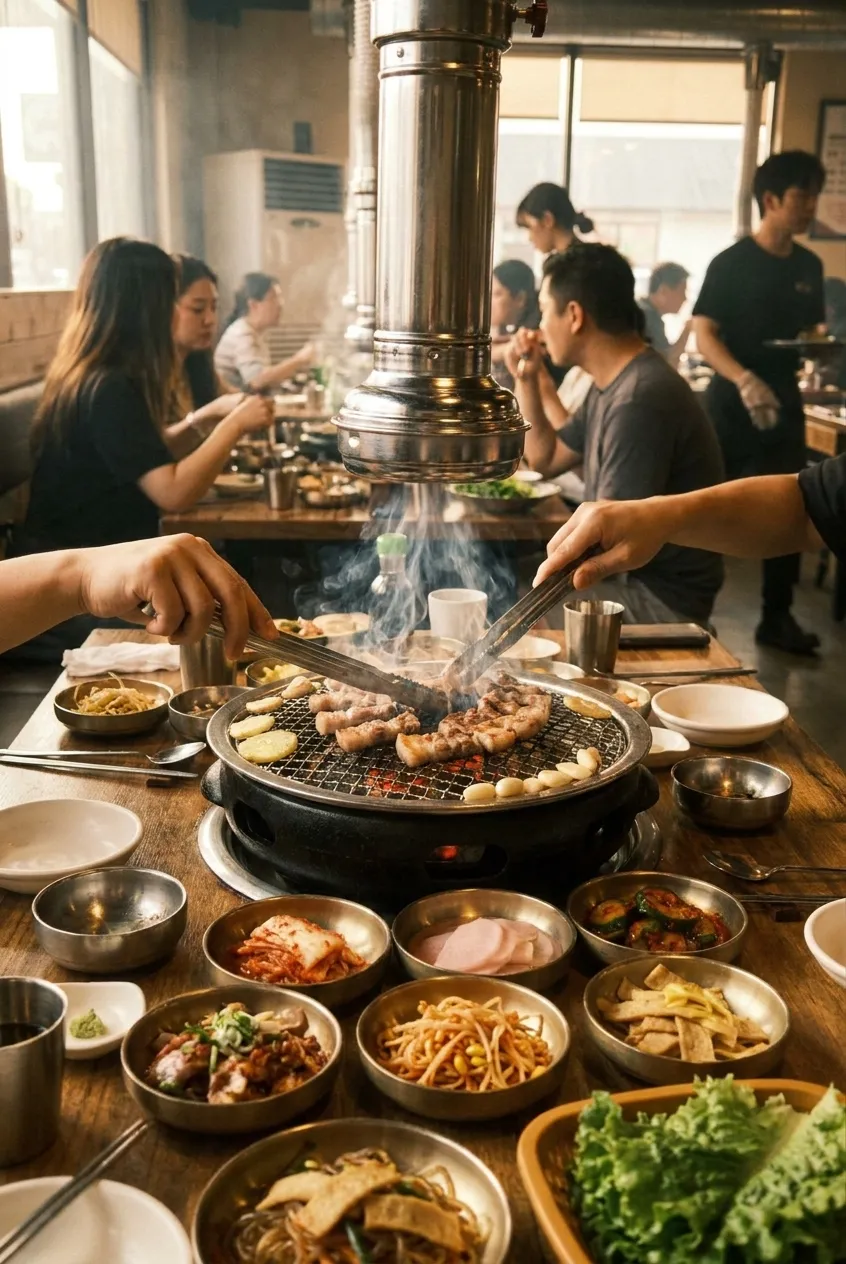
Koreatown runs on a schedule that has no equivalent elsewhere in the county. Restaurants are full at eleven, plenty are serving at one in the morning, and a meaningful number never close at all. The food is not late-night food in the compromised sense — it is the full menu, cooked properly, at prices that are the same as they are at seven in the evening.
Under fifteen dollars specifically: soondubu, the bubbling soft tofu stew that arrives with rice and banchan, is the archetypal cheap late meal here and is served at multiple places around the clock. Gukbap and other rice soups are the same. Korean barbecue is a different and more expensive proposition, but the soup and stew houses are the late-night backbone and they are inexpensive.
The taco economy after dark
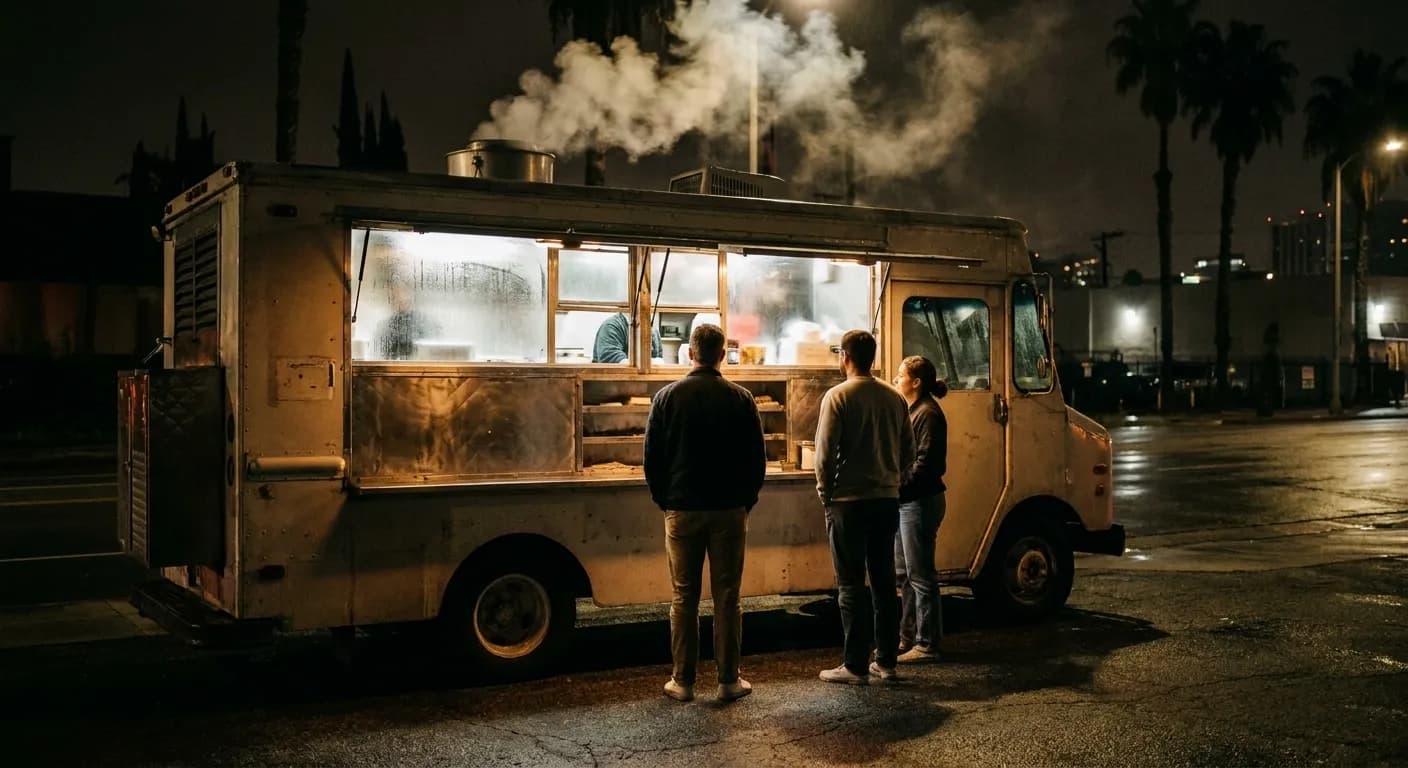
Taco trucks and stands are the other citywide late-night infrastructure, and they operate on a different geography — they follow bar closing times and residential density rather than clustering in one district. Boyle Heights, East LA, the Valley along Van Nuys and Sepulveda, and the streets around any nightlife strip will have something running past midnight.
The al pastor trompo is the thing to look for. A vertical spit of marinated pork with a pineapple on top means someone has committed to a full night of service, because that spit takes hours to set up and has to be sold before it goes. A truck with a trompo still turning at one in the morning is not closing soon, and the meat coming off it at that hour has had the longest time on the heat, which is exactly when al pastor is at its best.
The diner tradition, diminished but alive
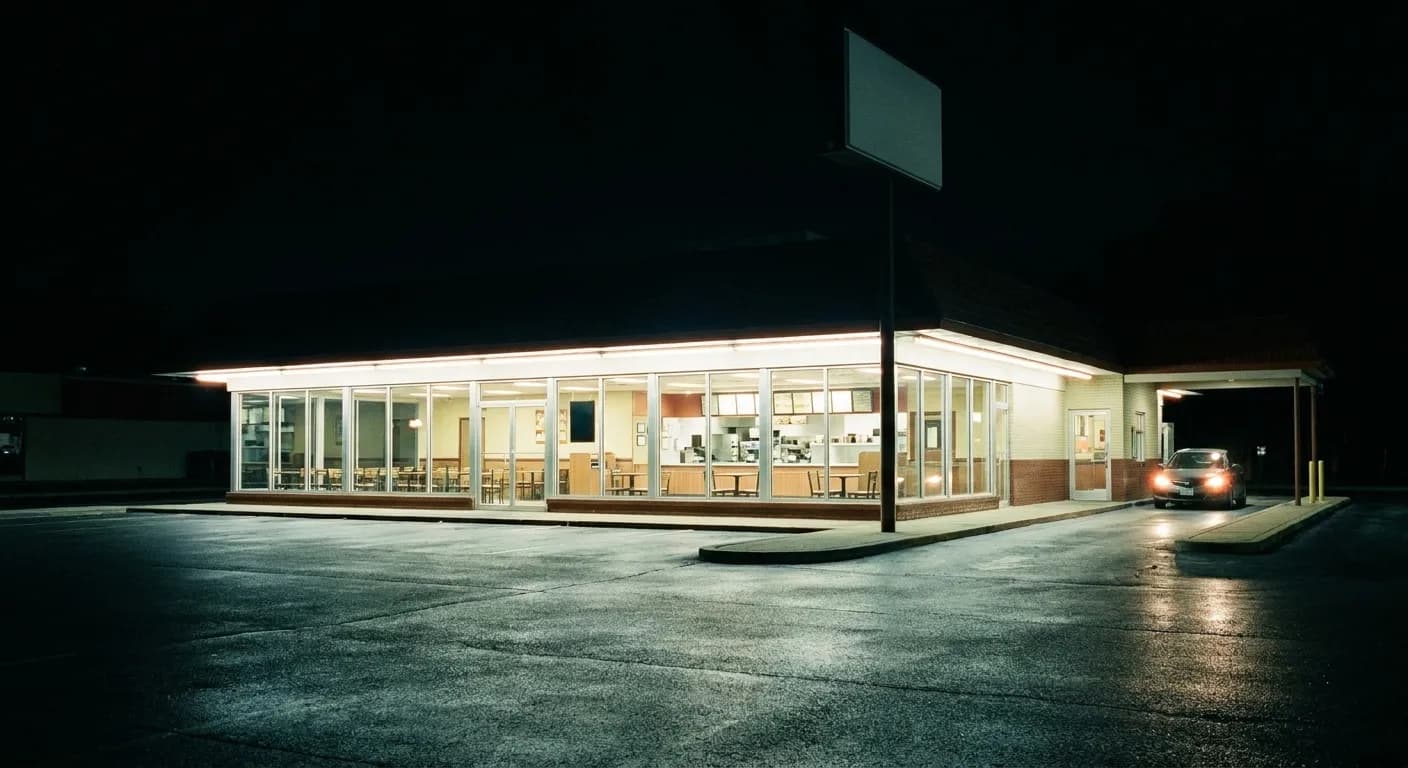
Los Angeles retains a handful of genuine twenty-four-hour diners and coffee shops, several of them with real architectural and cultural history behind them. The number has fallen considerably over the last decade and several long-running institutions have closed, so anything you read about this category more than a couple of years old should be checked before you drive there.
What still works reliably is the late-night counter attached to something else — the diner in a bowling alley, the coffee shop in a hotel, the twenty-four-hour deli. These survive because they are subsidised by another business, which makes them more durable than a standalone diner trying to make the overnight shift pay for itself.
Downtown, Hollywood and the Valley
Downtown has improved substantially for late food, with Little Tokyo and Chinatown both running later than they used to and a scattering of bars with real kitchens. Hollywood is dense but skews toward the drunk-and-expensive end, with the honourable exception of Thai Town, which stays open late and is cheap.
The Valley is the underrated one. Ventura and Sherman Way have late counters, Sepulveda has trucks, and the Armenian and Persian places in Glendale and North Hollywood run later than their equivalents elsewhere. If you live over the hill you are better served after midnight than you probably realise.
The convenience-store and supermarket tier
Worth naming because it genuinely solves the problem some nights. Several supermarket chains here have hot food counters that run late, and the Asian and Latin American supermarkets in particular have prepared-food sections that are substantially better than the format implies — carnitas by weight, rotisserie chicken, banh mi counters, sushi made on site. All of it is well under fifteen dollars.
The twenty-four-hour donut shops are the other institution, and they are more culturally significant here than anywhere else in the country. Most are family-run, most have been in the same corner lot for decades, and a lot of them serve breakfast food around the clock alongside the donuts. At three in the morning they are frequently the only lit window on the block.
What actually closes, and when
The honest timeline: most conventional restaurants stop seating at ten on weeknights and eleven at weekends. Bar kitchens go until midnight or one. Koreatown, the trucks and the twenty-four-hour holdouts carry everything after that. Last call for alcohol is two in the morning statewide, and a lot of places that serve food close when the bar does even if the kitchen could keep going.
The practical advice is to treat published hours after eleven as optimistic and to check. A restaurant listing a two o'clock close will stop taking orders at half past one at the latest, frequently earlier if the room is empty, and driving twenty minutes to arrive at ten past one is a gamble. Anywhere in Koreatown is the safe bet if you do not want to make that call, and the density there means that if the first place has stopped, the second one on the same block almost certainly has not. That redundancy is the real reason the district is the default answer, more than any individual restaurant in it.
Tags: #LosAngeles #LateNightLA #FoodOpenNow #Koreatown #TacoTruck #AlPastor #ThaiTown #LittleTokyo #ValleyEats #CheapEatsLA #LAEats #SoCal #AfterHours
All trademarks are the property of their respective owners.
Ask Karpo first
Ask Karpo which places near you in Los Angeles are actually still serving right now, when their kitchen stops, and whether Koreatown is a shorter drive than you think.