Every guide to eating in Los Angeles is a list of restaurants, and every list of restaurants is wrong within about eighteen months. A more durable way to approach a city this large is to organise around dishes instead. What Los Angeles actually is, gastronomically, is a set of immigrant food traditions that arrived at different times and settled in different valleys, and each one left a signature dish that dozens of kitchens now make. Learn the twelve dishes and you can find a good version anywhere in the county, forever, without needing anybody's current list.
Twelve dishes across a county this size is a driving problem as much as an eating one, and they are not evenly distributed. Tell Karpo which of these you want and where you are starting from, and it will find the closest good version rather than the most famous one across town.
The three tacos that are not the same dish
Al pastor from a trompo, carne asada chopped on a board in the Tijuana style, and birria - beef, griddled, with consomme - are three separate traditions that happen to share a tortilla. Eating all three in one week is the fastest education in Mexican regional cooking available anywhere in the United States.
The fourth taco worth counting is the breakfast one, which comes out of groceries and carts on the Eastside before nine in the morning and is a different meal entirely.
Korean barbecue and soondubu
Koreatown is the largest Korean community outside Korea and the two dishes that define it locally are barbecue - which is a table format rather than a dish - and soondubu jjigae, the soft tofu stew that arrives at the table still boiling.
The stew is the more revealing of the two. It is cheap, it is fast, it is eaten alone at lunch as often as in company, and the quality of the broth is unhideable. If you only do one, do that one.
Hand-torn noodles and the San Gabriel Valley
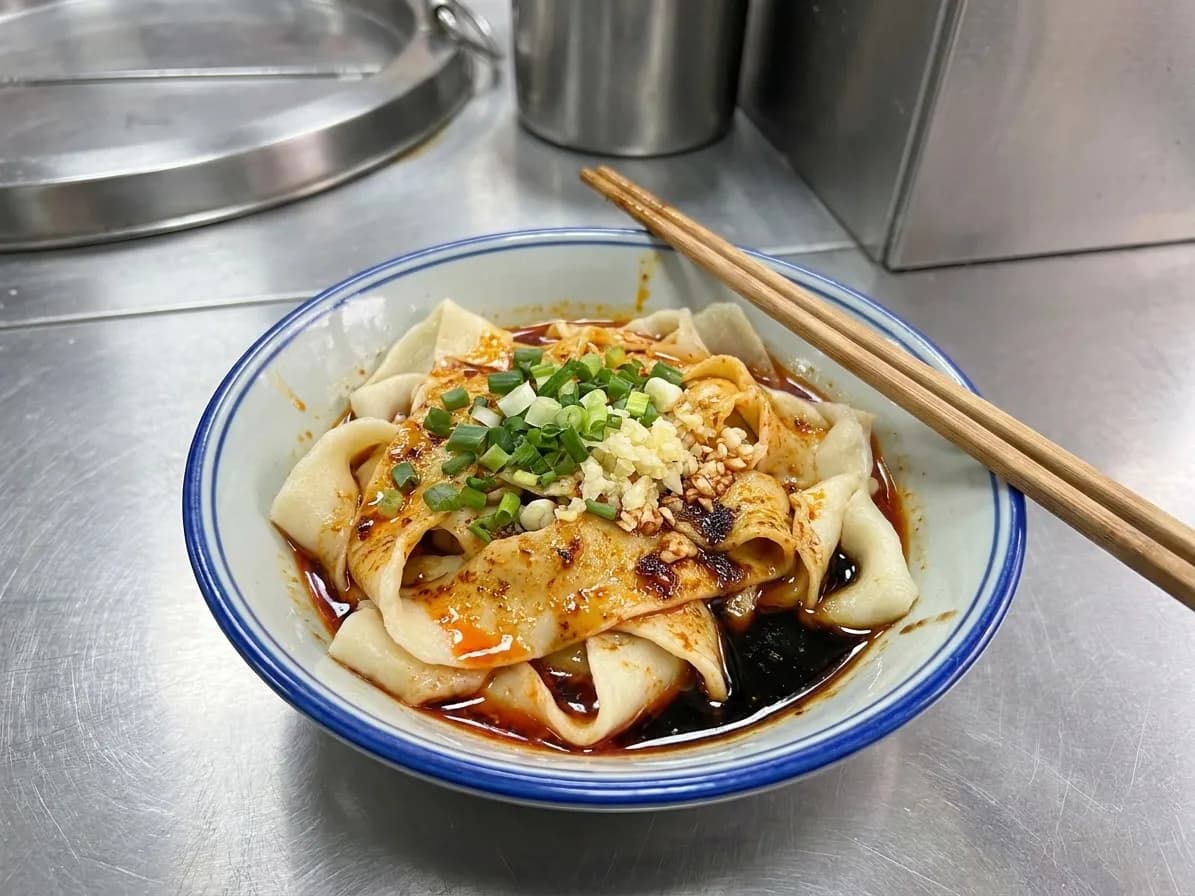
The SGV holds the deepest concentration of Chinese regional cooking in North America, and the dish that best represents it is not any single one - but hand-pulled or hand-torn noodles in chilli oil come closest, because you can watch the technique happen and taste the difference immediately.
Alongside it, the soup dumpling and the Cantonese roast meats counter make up the trio. Any of the three can be found within a mile of Valley Boulevard at a level that most American cities do not have at all.
The Oaxacan plate and the Salvadoran one
Los Angeles has the largest Oaxacan population outside Mexico, and mole - black, red or the pale coloradito - is the dish that carries it. It is a sauce with twenty-odd ingredients and it is the single most labour-intensive thing on this list.
The Salvadoran contribution is the pupusa: a thick griddled corn cake stuffed with cheese, beans or pork, served with curtido and a thin tomato sauce. It costs a few dollars, it is available across the Westlake and Pico-Union corridor, and it is one of the great cheap meals anywhere.
Persian, Armenian and Thai in three plates
Kabab koobideh with saffron rice and grilled tomato, from the Persian kitchens around Westwood. Lahmajoun, the thin Armenian flatbread with spiced lamb, from Glendale. And boat noodles - a small bowl of dark, intense broth - from Thai Town on Hollywood Boulevard.
These three exist in Los Angeles at a depth that is genuinely rare outside their home countries, and each is anchored to a specific neighbourhood rather than scattered across the city.
The two dishes people forget to count
Sushi and the Japanese-American diner tradition belong on any honest list of Los Angeles, and not only because of the high-end counters. The city's Japanese food runs from Little Tokyo through Sawtelle and out into Torrance, and the everyday version - a bowl of ramen, a set lunch, a plate of curry rice - is the part that actually shapes how people here eat.
The other omission is the fruit. Los Angeles has the best produce economy of any large American city and a bag of stone fruit from a farmers' market in August, or a mango with chilli and lime from a street cart, is as characteristic of eating here as anything cooked.
The Filipino skewer and the French dip
Historic Filipinotown and the surrounding blocks give you grilled skewers - pork, chicken, isaw - marinated sweet and charred over coals, eaten with vinegar and rice, usually standing up.
The French dip is the local outlier: a century-old Los Angeles invention involving a roast beef sandwich and a bowl of jus, claimed by two downtown restaurants that have argued about the origin since the 1900s. It belongs on the list because it is the one dish on it that Los Angeles invented rather than inherited.
How to actually eat twelve dishes
Not in a weekend. The realistic version is to group them by geography and do four trips: an Eastside day for the tacos and the mole, a Koreatown evening, an SGV lunch, and a Westside-to-Glendale run for the Persian and Armenian plates.
Order the dish, not the restaurant's signature. Almost every place on this route has a crowd-pleasing item designed for visitors sitting next to the thing it actually does well, and the second one is nearly always cheaper.
Tags: #FoodNearMe #LosAngeles #LAFood #WhatToEatInLA #Tacos #Koreatown #SanGabrielValley #WeekendPlans #LAEats #FoodGuide
All trademarks are the property of their respective owners.
Ask Karpo first
Twelve dishes will teach you more about Los Angeles than fifty restaurant names. Ask Karpo where the closest good version of any of them is tonight.