San Francisco has the highest delivery-app penetration of any American city, which is a polite way of saying a very large number of people here regularly pay a forty per cent premium to eat food that has been sitting in an insulated bag on the back of a scooter. Sometimes that is a good trade. Often it is not, and the difference has almost nothing to do with the restaurant's quality and almost everything to do with the physics of the dish.
Whether a dish survives the trip depends on the dish, the distance and the hill in between. Ask Karpo what is worth ordering in tonight and what you should walk to.
What survives the bag
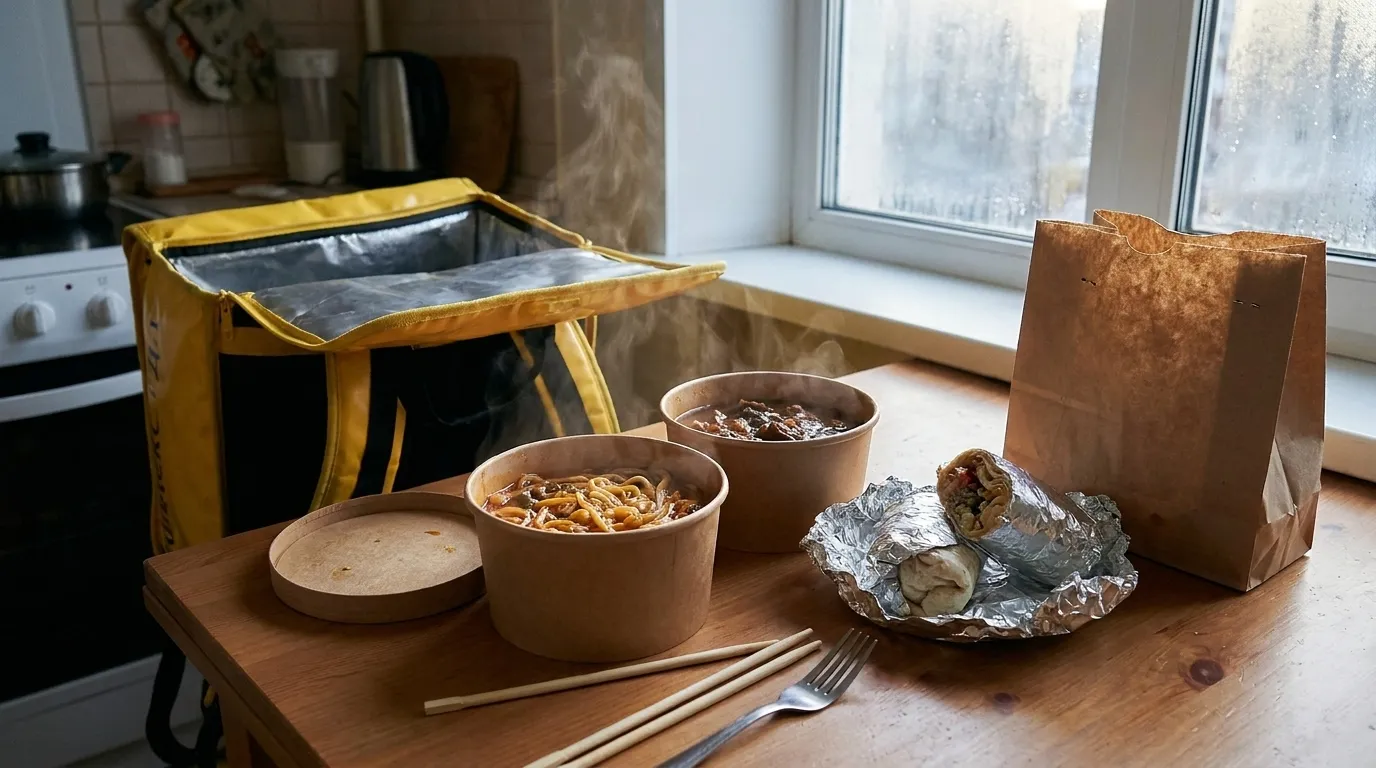
The rule is moisture management. Food that is already wet arrives fine, because there is nothing left to lose: curries, stews, braises, soups carried separately from their noodles, rice plates, most Sichuan and Cantonese braised dishes, Indian and Thai curries, and anything that was designed to be reheated the following day. Burritos travel unusually well because they are sealed and insulated by their own construction, which is one reason the Mission burrito became the city's default takeaway before delivery apps existed.
Food that is dry and hot is where the trouble starts. Anything fried loses its texture in about eight minutes inside a closed container, because the steam it generates has nowhere to go and condenses back onto the crust. Pizza softens. Tempura is effectively a different dish by the time it arrives. Roast chicken skin goes from crisp to leathery. Sushi is the worst case in the other direction, degrading through temperature rather than moisture, and rice that has been chilled below about twelve degrees will not recover.
The San Francisco variables
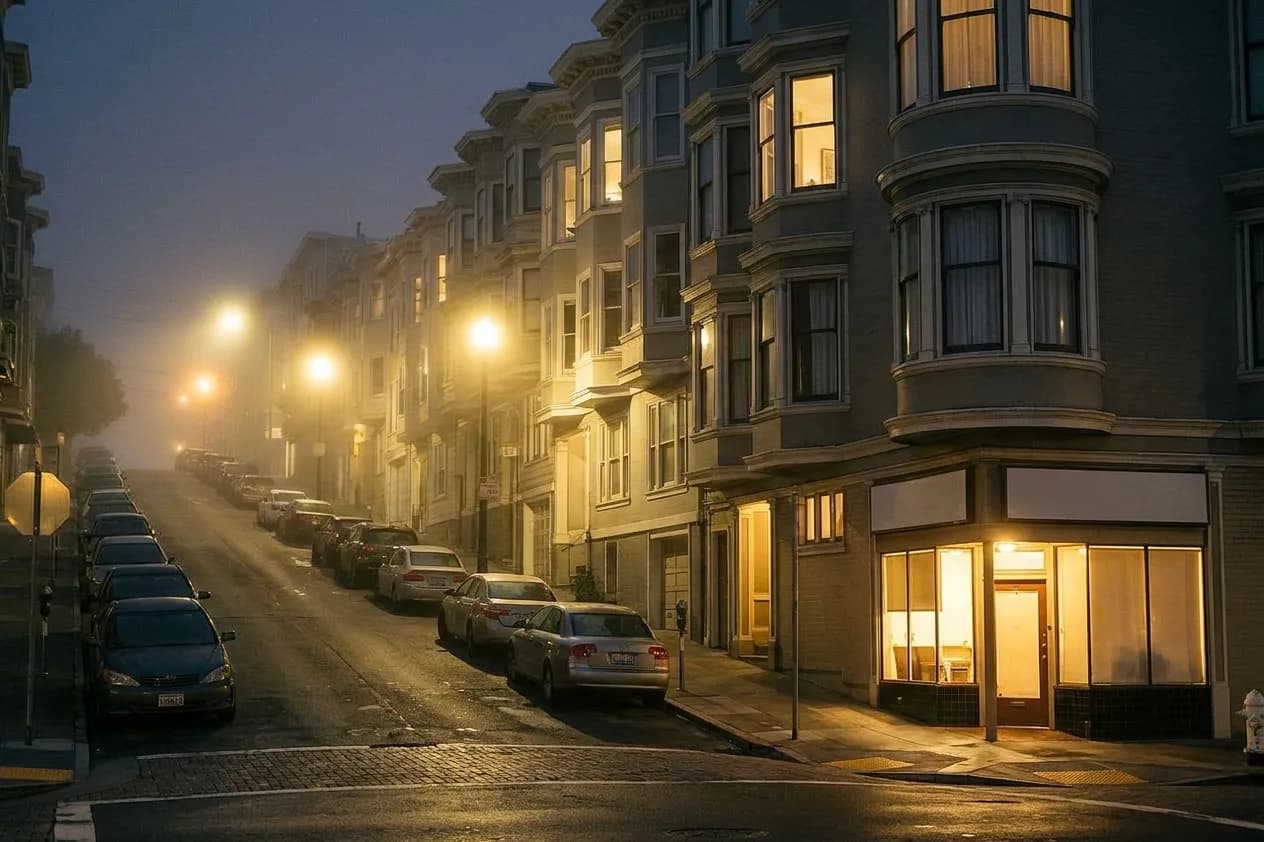
Two local factors change the maths here more than in most cities. The first is the hills. A delivery that looks like a mile on a map can involve a two-hundred-metre climb, and couriers route around gradient rather than through it; the same distance in the Sunset and in Russian Hill are not the same delivery. The second is the fog, which is a genuine temperature variable — a summer evening in the Richmond can be ten degrees colder than the same evening in the Mission, and food arriving in the outer neighbourhoods on a foggy night is measurably colder.
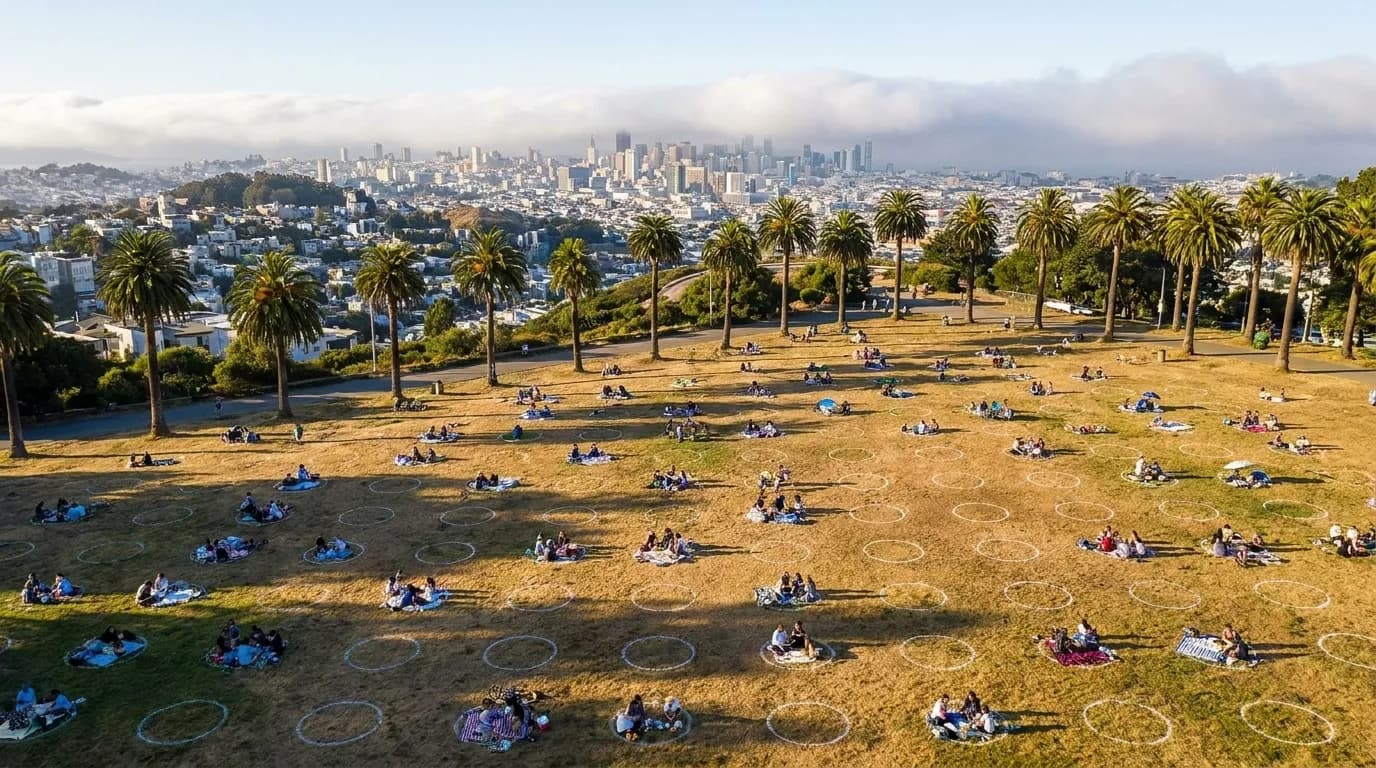
The third factor is density. San Francisco is seven miles by seven miles and unusually dense by American standards, which means an enormous number of people live within a fifteen-minute walk of good food and order it delivered anyway. In most of the city the walk is the better version of the transaction, and it is worth calculating occasionally rather than assuming.
What the apps actually cost
The visible fees are the delivery fee and the service fee. The invisible one is menu inflation: restaurants commonly list higher prices on delivery platforms than in the dining room, because the platform takes a percentage commission on each order and a restaurant that absorbed it entirely would be selling at a loss. San Francisco has capped delivery commissions on third-party platforms, a rule that grew out of the pandemic-era emergency caps, but the ordering economics still make direct ordering better for both parties.
The practical consequence is that phoning the restaurant, or ordering through its own website, is usually cheaper for you and substantially better for the restaurant. Many independent kitchens here now run their own pickup ordering precisely for this reason, and some offer a discount for it that is never advertised on the platform. If you are ordering from the same place more than once a month, it is worth finding out.
When to go instead
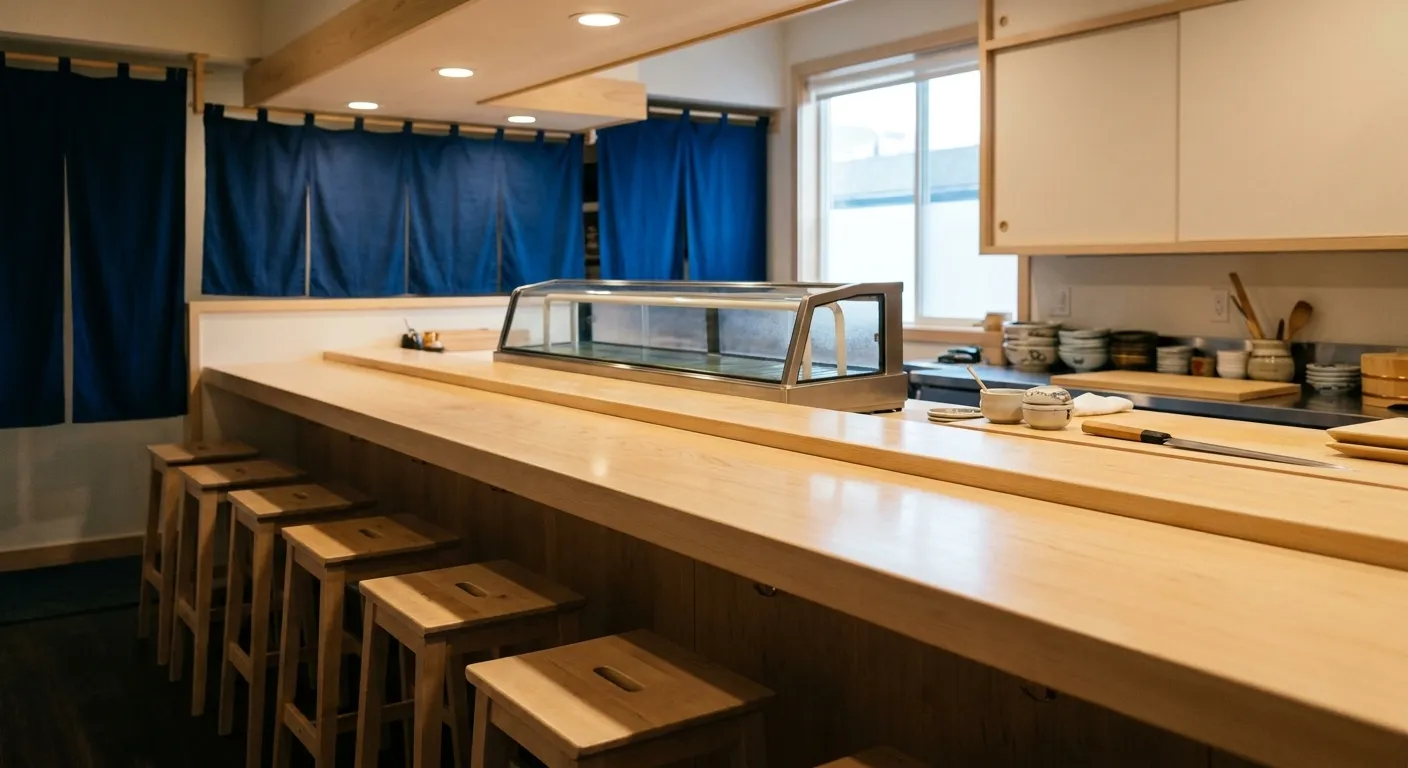
Go for anything fried, anything with a crust, anything that arrives on a hot stone or a griddle, and anything where the room is part of the dish — a counter with six seats, an omakase, a taqueria at the moment the trompo is carved. Go when the restaurant is within about a fifteen-minute walk, because the walk costs you less than the fees and the food is better at the other end. Go on a weeknight, when the tables that are impossible on Saturday are available at seven.
Order in for a wet-food cuisine, for a group that cannot agree, when it is genuinely raining, or when the alternative is not eating. Those are good reasons and the food will be fine. What is worth avoiding is the default — the habit of ordering because the app is open, from a restaurant four blocks away, of a dish that is worse for having travelled.
Pickup, the overlooked middle
Between delivery and dining in sits the option most people forget: ordering ahead and walking over to collect. It removes the courier fee entirely, it removes the twenty minutes the food spends in a bag waiting to be collected from the kitchen, and it lets you get the fried things you were told not to order in. In a city as compact as San Francisco, a fifteen-minute round trip is often shorter than the delivery estimate. Most restaurants here now take pickup orders directly through their own site, and several quietly price those lower than the platform listing.
Practical notes
Ask for sauces and fried elements packed separately; almost every kitchen will do it and almost nobody asks. Order noodle soups with the broth apart from the noodles, which most Vietnamese and Chinese restaurants here do as standard if you request it. Tip in the app before delivery rather than after — couriers see the offered total when deciding whether to accept, so a tip added afterwards does not speed anything up. Check whether the restaurant has its own pickup ordering before defaulting to a platform. And if you live at the top of a hill, expect a longer wait than the estimate regardless of what the map says.
Tags: #SanFrancisco #SFFood #FoodDelivery #Takeout #FoodNearMe #SFEats #MissionDistrict #RichmondDistrict #SunsetDistrict #BurritoSF #DeliveryApps #EatLocal #SupportLocal #SFRestaurants
All trademarks are the property of their respective owners.
Ask Karpo first
Want to know whether the thing you are craving will survive the trip, which nearby kitchens take direct orders, and what the walk actually looks like from your door? Ask Karpo before you open a delivery app.