Most food guides to this city hand you restaurants, which is the wrong unit. Miami is a city of dishes - things a particular community brought here and then perfected across dozens of unglamorous counters, so that the question is rarely which restaurant is best and almost always which version of the dish you want and where you happen to be. What follows is twelve plates, each with the neighbourhood it belongs to and the hour it is actually good at, arranged so a weekend can pick them up in geographic clusters instead of criss-crossing the county.
Twelve dishes across five neighbourhoods is a routing problem before it is a food problem. Tell Karpo which two days you have and where you are sleeping, and get these grouped into runs that do not put you on a causeway at rush hour.
The Calle Ocho cluster: four things, one walk
Start with the cortadito, because it sets the clock for everything else. It is a small, aggressively sweet espresso cut with steamed milk, drunk standing at a window, and it costs about the price of nothing. Follow it with a pastelito - flaky, glazed, filled with guava and cheese or with meat - which is the standard Miami breakfast and is at its best before nine, when the trays have just come out.
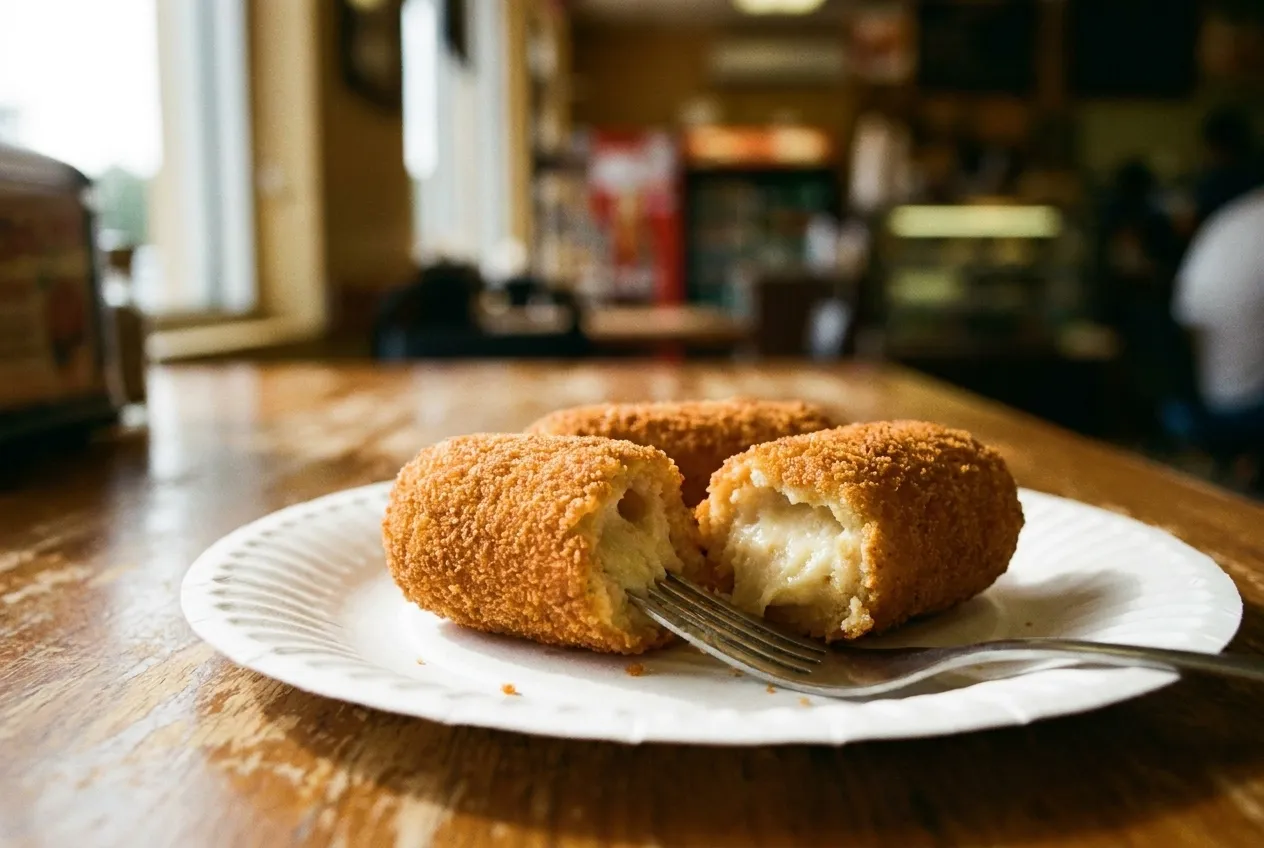
By late morning, switch to croquetas de jamon: small, bechamel-heavy, fried to a shell, eaten three at a time off a paper plate. Then, for lunch, the pan con lechon - roast pork, raw onion, mojo, pressed bread, no cheese - which is the sandwich this neighbourhood actually eats, as opposed to the Cuban sandwich the rest of the country thinks it eats. All four of these live within a few blocks of each other on and around SW 8th Street, which makes this the single most efficient food hour in Miami.
The frita, which deserves its own paragraph
A frita cubana is a thin, spiced beef patty on a soft roll, topped with a nest of shoestring potatoes and, at the good places, a little raw onion and a smear of ketchup-based sauce that is much better than that description suggests. It is Miami's most under-exported dish - almost nobody outside South Florida sells one - and the shoestring potatoes are not a garnish, they are structural.
Eat it as a late-afternoon thing rather than a meal. One frita is a snack, two is dinner, and the whole appeal collapses if the potatoes have been sitting, so this is a dish to eat at the counter rather than to carry home. El Rey de las Fritas has been the reference point for decades and has locations on Calle Ocho and in Coral Gables.
Little Haiti: griot, and what goes with it
Griot is pork shoulder marinated in citrus and epice, boiled down, then fried until the outside crackles and the inside stays soft. It comes with pikliz - a fierce pickled cabbage, carrot and scotch bonnet slaw - and the two are a single dish pretending to be two. If you eat one thing in Little Haiti, eat this, and do not skip the pikliz because it looks like garnish; it is the acid the pork is built around.
Beside it, order legim, a long-cooked vegetable stew that is deeper and smokier than it sounds, and if you see diri ak djon djon on the board - rice cooked with black Haitian mushrooms until it turns almost slate grey - order that instead of white rice without thinking about it. Little Haiti kitchens generally run lunch through early evening; this is not a late-night neighbourhood.
The water: stone crab and ceviche
Florida stone crab is a seasonal dish and the season is the point: it runs from mid-October to early May, the claws are harvested and the crab returned to the water, and outside those months anything you are served has been frozen. It is eaten cold, cracked, with mustard sauce, and it is expensive in a way that is worth doing exactly once. Joe's Stone Crab on Washington Avenue in South Beach is the institution and does not take bookings for most of the dining room.
The cheaper, year-round water dish is ceviche, which arrived here via Miami's Peruvian community and is now everywhere. The version worth seeking is the plain one - white fish, lime, red onion, chilli, sweet potato, corn - rather than the mayonnaise-heavy variants. Look for it around Brickell and Coral Gables, and eat it at lunch, when the fish has come in that morning.
Wynwood and Edgewater: tacos and the fish sandwich
Wynwood's contribution is the al pastor taco, cut from a vertical spit with a slice of pineapple, and it is best after ten at night when the taquerias are the only kitchens still running. Take three, take them standing, and do not order them at lunchtime when the spit has just been loaded - a trompo needs hours to get good.
The other dish here is the fried fish sandwich, a Miami staple that gets almost no attention: fried snapper or mahi, tartare, lettuce, soft bun, ideally eaten within sight of water. It is the most reliable ten-dollar lunch in the city and it exists in some form in every coastal neighbourhood.
Two sweets and one drink to finish
Key lime pie is the dish most often done badly here. The test is colour: real key lime custard is pale yellow, not green, and the good versions are sharp enough to make you blink. It should be served cold and it should not be foamy. The other sweet is flan, which every Cuban counter makes and which varies enormously - dense and caramel-dark at the good places, wobbly and pale at the rest.
The drink is a batido, a tropical fruit milkshake, usually mamey or trigo. Mamey tastes roughly like sweet potato crossed with apricot and is the most Miami flavour there is. Order it at a juice stand in the middle of the afternoon when the heat has become a physical problem, which is the exact moment it was invented for.
Practical notes
Clustering that works: Calle Ocho covers coffee, pastelito, croqueta, sandwich and frita in one morning on foot. Little Haiti and the Design District edge are a single afternoon. South Beach handles stone crab and the fish sandwich in one trip. Wynwood is a night. Seasons: stone crab is mid-October to early May and nothing else in this list is seasonal. Hours: the Cuban counters peak between eleven and one, Haitian kitchens close early evening, taquerias are the only reliable late option. Budget: everything here except stone crab is under fifteen dollars a plate, and most of it is under ten.
Tags: #FoodNearMe #Miami #Croquetas #FritaCubana #PanConLechon #Griot #Pikliz #StoneCrab #Ceviche #AlPastor #KeyLimePie #Batido #MiamiEats #WeekendPlans
All trademarks are the property of their respective owners.
Ask Karpo first
A dish list is only useful once it becomes an order of operations. Ask Karpo to turn these twelve into two days that fit where you are staying, which counters will be open at the hours you are free, and whether stone crab is even in season the week you are here - that last one changes the whole shape of the trip.