A group of eight in Miami on a Saturday night is a genuinely hard problem, and it is hard for a structural reason: the restaurants that market themselves hardest here are designed around four-tops and turn them twice a night. A party of eight breaks that model, which is why the answer is usually no. The restaurants that can absorb a group easily are a different category altogether, and once you know which category you are looking for the problem mostly disappears.
Group availability changes hour by hour and almost never appears on a booking platform. Ask Karpo which rooms near you can take your number tonight.
The formats that seat groups without trying
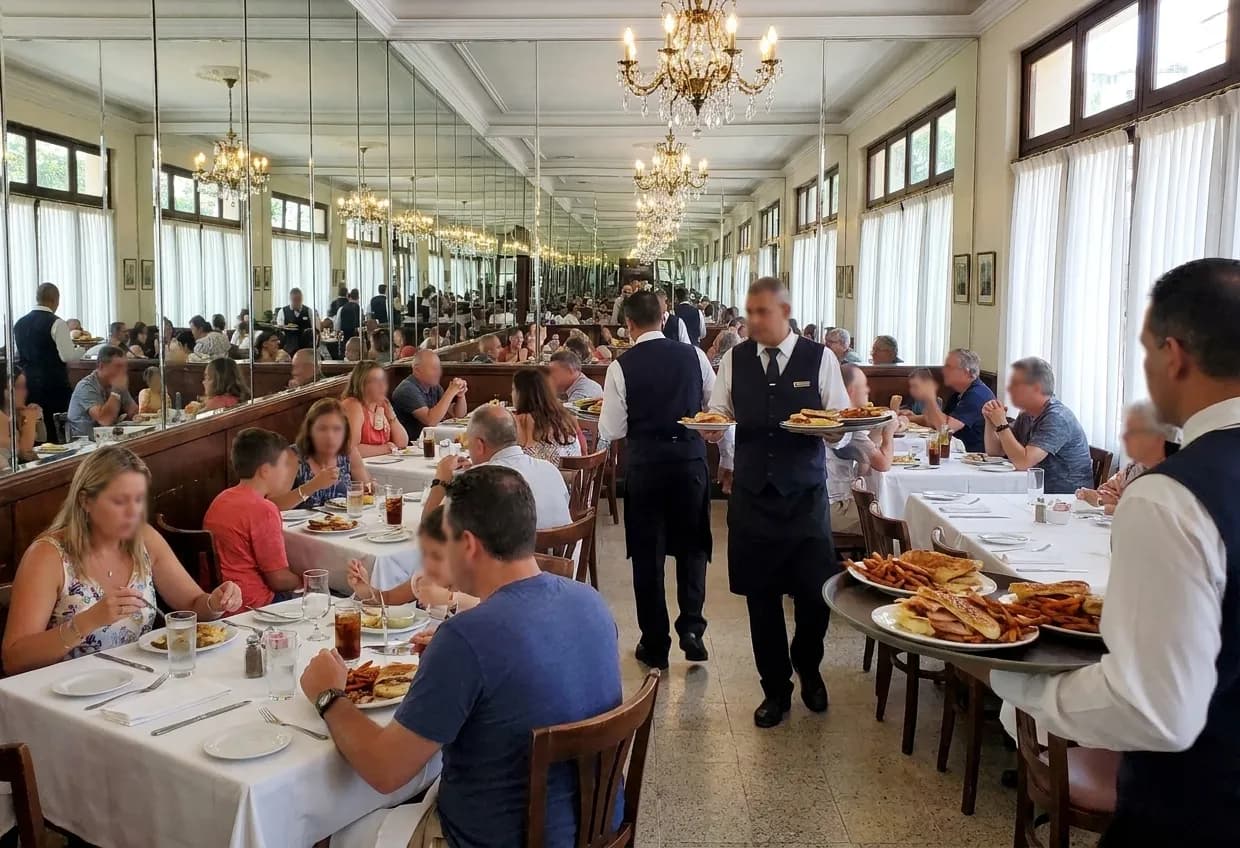
Three restaurant types in Miami are built for volume rather than turnover. The Cuban cafeteria, which has a large dining room, a fast kitchen and a menu of dishes that come out in ten minutes. The Brazilian or Argentine churrascaria, where the service model is a rolling parade of meat and the table size is almost irrelevant. And the Nicaraguan fritanga, a counter where you point at what you want and carry it to a table, which scales to any number because nobody is waiting on you.
What these share is that the kitchen is not plating individually composed dishes. A room that can send twelve plates of ropa vieja in the same twelve minutes it sends four is a room that does not care how many of you there are. A room built around a tasting sequence cares enormously. The single most useful signal when you are scanning options for a group is menu length and dish complexity — long menu, simple dishes, big room.
Where to look, by neighbourhood
Little Havana and Coral Way have the highest density of large Cuban dining rooms in the city. Versailles on Southwest Eighth Street seats several hundred and has been doing so since 1971; La Carreta down the block does the same. Both take walk-in groups routinely and the wait, even at peak, is measured in a normal number of minutes rather than hours.
Sweetwater and West Miami are where the fritanga counters cluster, and they are the cheapest way to feed a large group well in the county — you pay by weight, everyone eats what they want, and the total for eight people is frequently less than a single main course on the Beach. Hialeah has the same economics with a Cuban rather than Nicaraguan menu. Doral, west of the airport, is the centre of the Venezuelan community and its arepa and parrilla rooms handle groups comfortably.
The seafood option
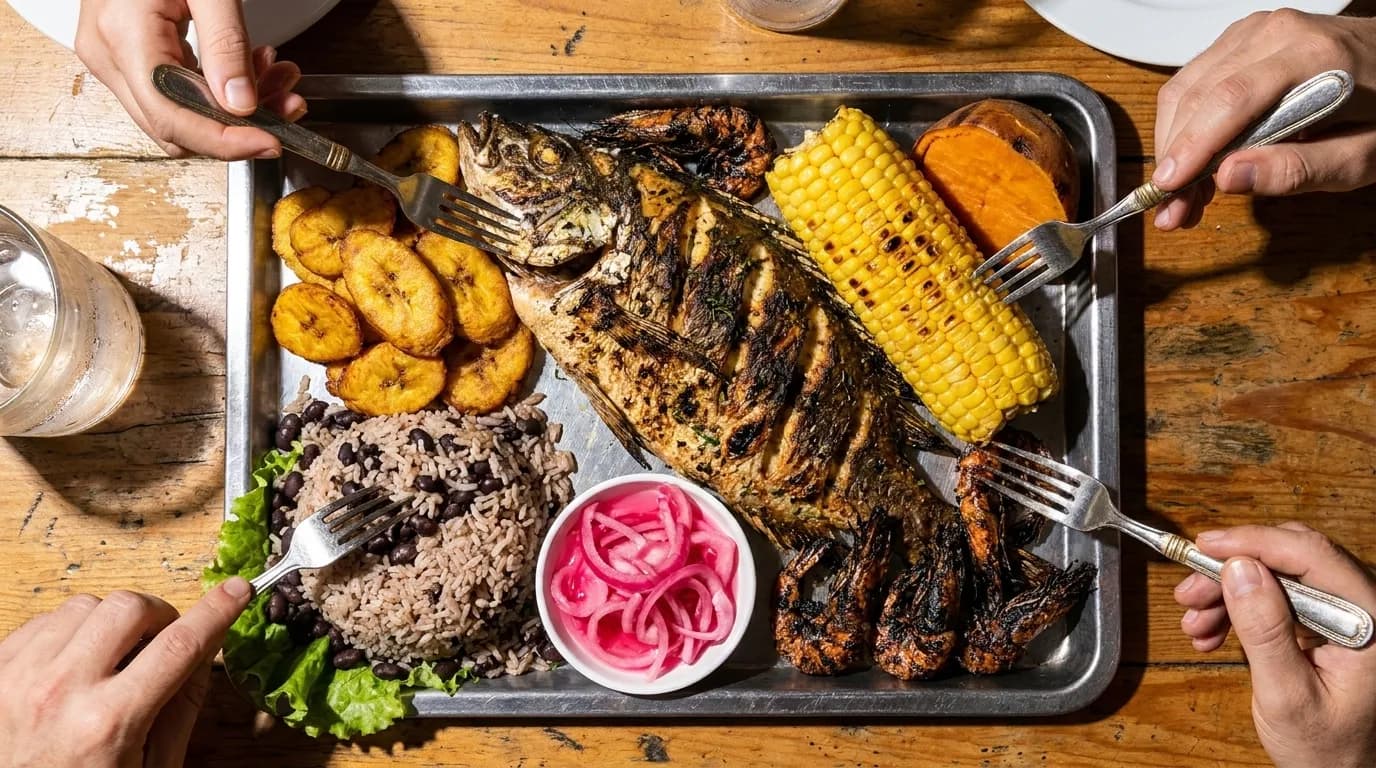
Miami's other natural group format is the seafood shack, where the food arrives on trays for the table rather than as individual plates. Stone crab is the local speciality and it is strictly seasonal — the Florida stone crab season runs from mid-October to the beginning of May, and any claw sold outside those months was frozen at some point. Joe's Stone Crab on Miami Beach, trading since 1913, is the famous one and does not take reservations, which sounds bad for a group but in practice means the wait is honest and the list moves.
The less famous version of the same idea sits along the Miami River, where a handful of dockside rooms serve whole fried fish and shellfish at long outdoor tables. These are loud, cheap relative to the Beach, and structurally suited to a group, and they are one of the few genuinely local waterfront experiences left in the city centre.
The food-hall workaround
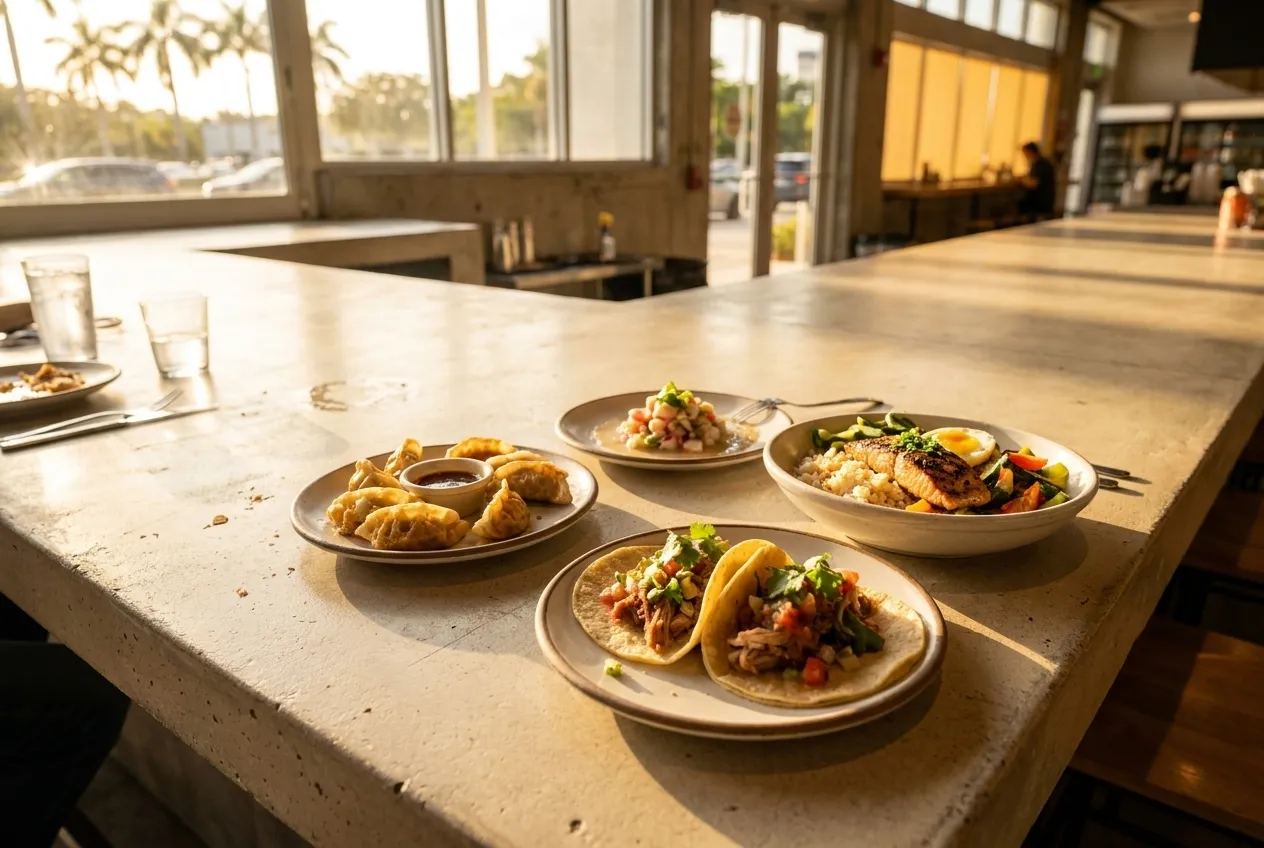
When a group cannot agree, a food hall solves the argument by refusing to have it. Miami has several, with the largest concentrations in Wynwood, downtown and along the Beach, and the model is the same everywhere: a dozen independent counters around shared seating, so eight people order eight different things and still sit together. The trade-off is that you claim the table first and order second, which needs one person to stay put while everyone else queues. For a group with children, a group with a vegetarian, or a group that has already spent twenty minutes failing to choose, it is comfortably the fastest route to everyone eating.
If you do want to book
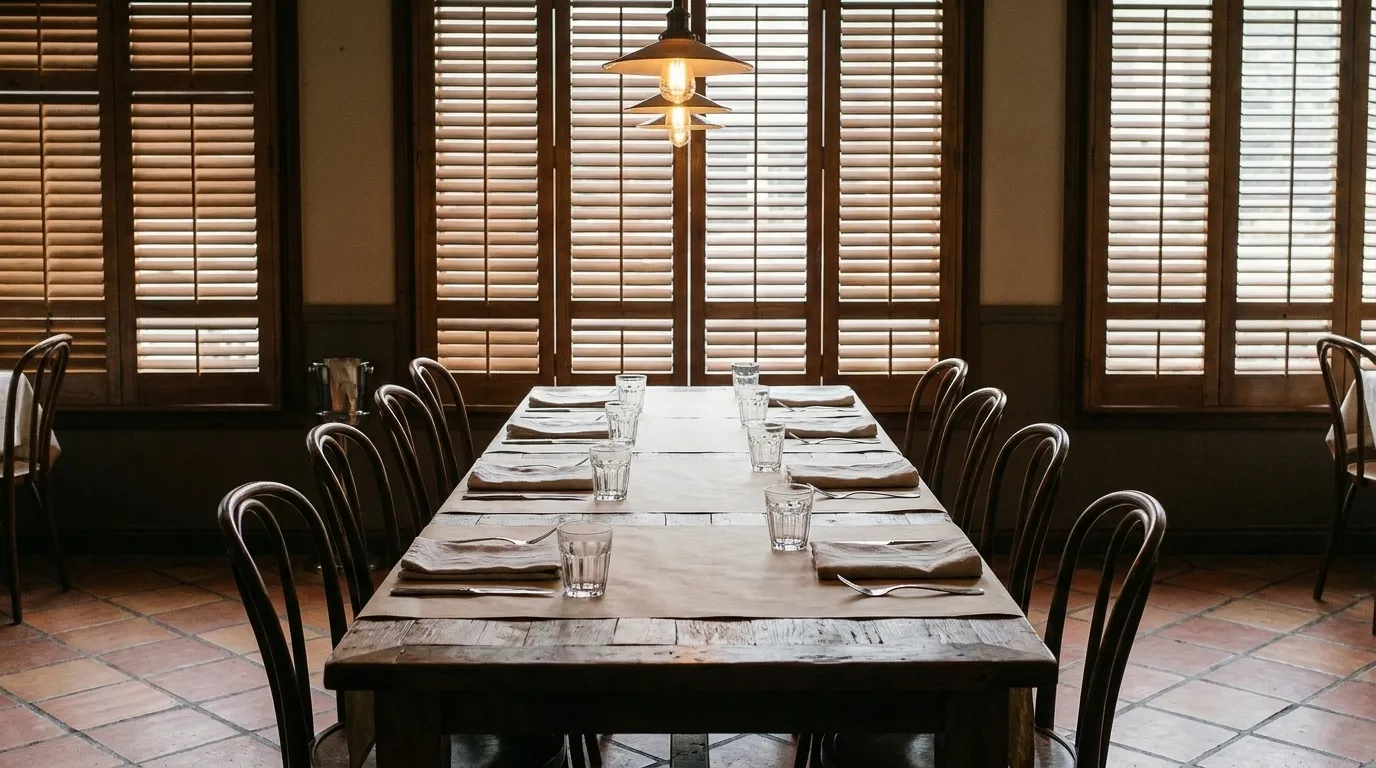
For anything above six people, the booking platforms are the wrong tool — most restaurants cap online party size at six specifically so a human handles the rest. Call, and call in the afternoon rather than during service. Ask three questions: whether they can seat your number at one table or will split you, whether a set menu is required above a certain size, and whether gratuity is added automatically. Miami adds an automatic service charge for large parties more often than most American cities, and it is frequently the source of an argument at the end of a good evening.
Timing helps more than anything else. A group at six-thirty is easy almost everywhere; the same group at eight-thirty is difficult in half the city. If your people can be persuaded to eat early, the whole problem changes shape, and in Miami eating early also means you finish in time to do something else.
Practical notes
Confirm on the day for anything booked more than a week out; large-party bookings are the first thing a restaurant loses track of. Split the bill before you order rather than after — many kitchens here will not split a cheque above a certain number of ways, and asking at the start is far easier than negotiating at the end. Parking is the hidden cost of a group evening on the Beach or in Wynwood, so agree on a garage in advance or carpool. And if your group includes children, the cafeteria and fritanga formats are dramatically more forgiving than anywhere with a tasting menu — nobody in a room that loud will notice.
Tags: #Miami #MiamiFood #GroupDining #BigTables #LittleHavana #Sweetwater #Hialeah #Doral #StoneCrab #MiamiRiver #CubanFood #FoodNearMe #MiamiEats #WeekendPlans
All trademarks are the property of their respective owners.
Ask Karpo first
Want to know which Miami rooms can actually take your number tonight, what the real wait is at the walk-in places, and whether a service charge is added for your party size? Ask Karpo before you drive everyone across the causeway.