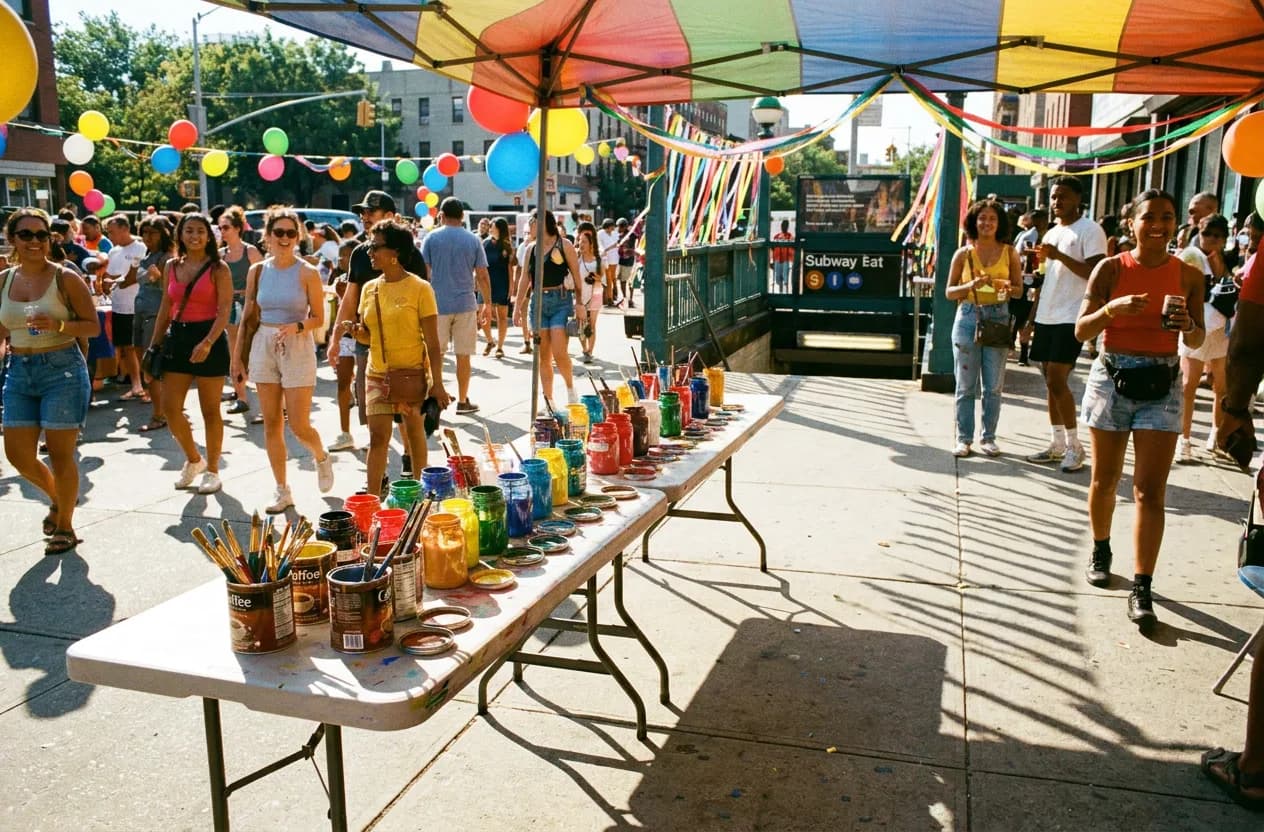
The smell hits you before you see the queue: acrylic paint mixing with the steam from a halal cart's griddle, creating an oddly patriotic perfume that clings to the humid subway air. By 11:47 AM, seventeen people wait in a zigzag line outside the Steinway Street exit, faces tilted toward a woman with a folding table who dips her brush into small cups of red, white, and blue. The first painted cheek emerges into daylight looking like a walking advertisement for devotion, the Colombian flag still wet enough to catch the light.
Want the full fan experience? Ask Karpo where the Steinway Street crowd celebrates match day.
The Silent Artist's Breakfast Rush Rhythm
She works without conversation, this painter who has turned the sidewalk into her studio. The folding table holds twelve paint cups arranged by color families—the reds bleeding from Morocco to Poland to Switzerland, the blues spanning from France to Argentina to Greece. Her only words: "Which country?" followed by a practiced nod toward the small mirror propped against her water bottle.
The breakfast crowd learns her rhythm quickly. Coffee-clutching commuters approach with screenshots of their chosen flag already pulled up on phones, saving precious seconds in the morning rush. Steam rises from nearby food carts while she works, the scent of scrambled eggs and grilled onions mixing with the chemical tang of face paint. A man emerges with Portugal's green and red painted across his forehead, stopping at the halal cart for a breakfast sandwich that he'll eat carefully, protecting his painted allegiance from errant hot sauce drips.
By the second match day, the line forms before her table is even unfolded. Regulars recognize each other by yesterday's faint paint traces still visible behind their ears, creating an unspoken community of the previously painted.
Lunchtime Amplification and Arepa Negotiations
The noon wave transforms everything. Office workers on lunch breaks join the morning commuters, creating a bottleneck that spills into the arepa vendor's space three feet away. The Venezuelan woman slinging corn cakes stuffs them with black beans and cheese while keeping one eye on the flag painting line, occasionally calling out lunch specials to the captive audience.
"Pollo guisado, fresh batch!" she announces as someone emerges with Venezuela's yellow, blue, and red stripes painted across both cheeks. The newly painted customer immediately joins her line, creating a perfect circuit of patriotic decoration followed by carbohydrate celebration. The arepa vendor has learned to wrap everything in extra foil—painted hands aren't reliable for neat eating.
The painter never looks up during lunch rush, her brush moving in efficient strokes while people negotiate trades: "I'll hold your spot if you grab me a chicken arepa." The folding table becomes the hub of a small economy built on flag painting and hunger, where painted faces serve as proof of commitment worthy of food-line solidarity.
Subway Cartography Written in Smears
The paint smears tell the real story underground. Fresh flags gradually transfer onto subway poles and handrails, creating an accidental map of which trains carry World Cup crowds toward MetLife Stadium. The 7 train shows the heaviest concentration—green and orange Dutch stripes on the grab bars, Brazilian yellow fingerprints on the door frames, fragments of the Croatian checkerboard pattern marking the seats.
Platform vendors have adapted their offerings accordingly. The pretzel cart near the Roosevelt Avenue transfer stocks napkins in team colors, while the churro stand prints small flags on toothpicks, creating edible nationalism that pairs perfectly with the painted faces streaming past. Commuters compare their painted flags while waiting for trains, the shared experience breaking down the typical subway silence into animated discussions about group stages and penalty predictions.
These food vendors become accidental documentarians, watching the painted faces flow past and tracking which countries dominate each morning's crowd. "Lots of Mexico today," the churro vendor notes, pointing to the green, white, and red smears decorating every surface within reach of painted hands.
The Afternoon Fade and Comfort Food Cravings
By 3 PM, the morning's pristine flags have softened into abstract patriotism. Paint mixes with sweat and subway grime, transforming crisp national symbols into impressionist suggestions of loyalty. This is when the comfort food cravings hit hardest, and the neighborhood responds accordingly.
The Salvadoran pupusa truck parks deliberately close to the subway exit, its driver understanding that fading face paint corresponds directly with desires for melted cheese wrapped in corn masa. Painted faces lean over paper plates, careful not to drip salsa verde onto their work shirts, creating a careful dance between maintaining professional appearance and satisfying World Cup hunger.
The painter continues her work through the afternoon fade, unbothered by the evidence of her morning labor washing away on distant faces. Each new customer receives the same silent attention, the same efficient brush strokes, contributing to the growing ecosystem of painted supporters who carry their temporary nationalism into every corner of the city.
Evening Reinforcement and Victory Laps
The after-work crowd brings different energy—more deliberate, more social. Groups coordinate their flag painting, creating matching sets that will photograph well during evening viewing parties. The painter adapts her technique for group efficiency, setting up assembly-line style decoration that turns friends into synchronized supporters.
Food trucks multiply during evening hours, recognizing the connection between fresh face paint and celebratory appetite. The Bangladeshi momo vendor sets up within perfect sight lines of the painting table, her steamed dumplings becoming the preferred post-painting snack for their neat, contained nature—no risk of sauce splashing onto wet paint.
Evening customers linger longer, admiring their painted flags in phone cameras and planning their night's viewing strategy around maintaining their artistic investment. The neighborhood transforms into a launching pad for painted loyalty, each freshly decorated face heading toward bars, restaurants, and watch parties across the city.
Practical Notes
Arrive before 11:30 AM or after 2 PM to avoid the longest lines. Bring cash—most nearby food vendors prefer it, and you'll want provisions while waiting. The paint takes about ten minutes to fully set, making the adjacent food carts perfect timing for careful snacking. Subway poles will be slippery with paint residue during peak hours—plan accordingly for your commute to stadium viewing locations. The painter works regardless of light rain but packs up during heavy weather, so check conditions before making the trip specifically for flag painting.
Tags: #WorldCup2026 #FIFA2026 #FlagPainting #Astoria #NewYork #SteinwayStreet #MetLifeStadium #WorldCupFood #StreetArt #NYC #QueensEats #Soccer #FanExperience #MatchDay #CommunitySports
Sources consulted: fifa.com · espn.com
All trademarks are the property of their respective owners.
Ask Karpo first
Want the best spot near you to catch every World Cup 2026 match, plus live scores and a matchday plan? Ask Karpo for personalized viewing recommendations, the nearest fan-friendly bars, and real-time bracket updates wherever you are.