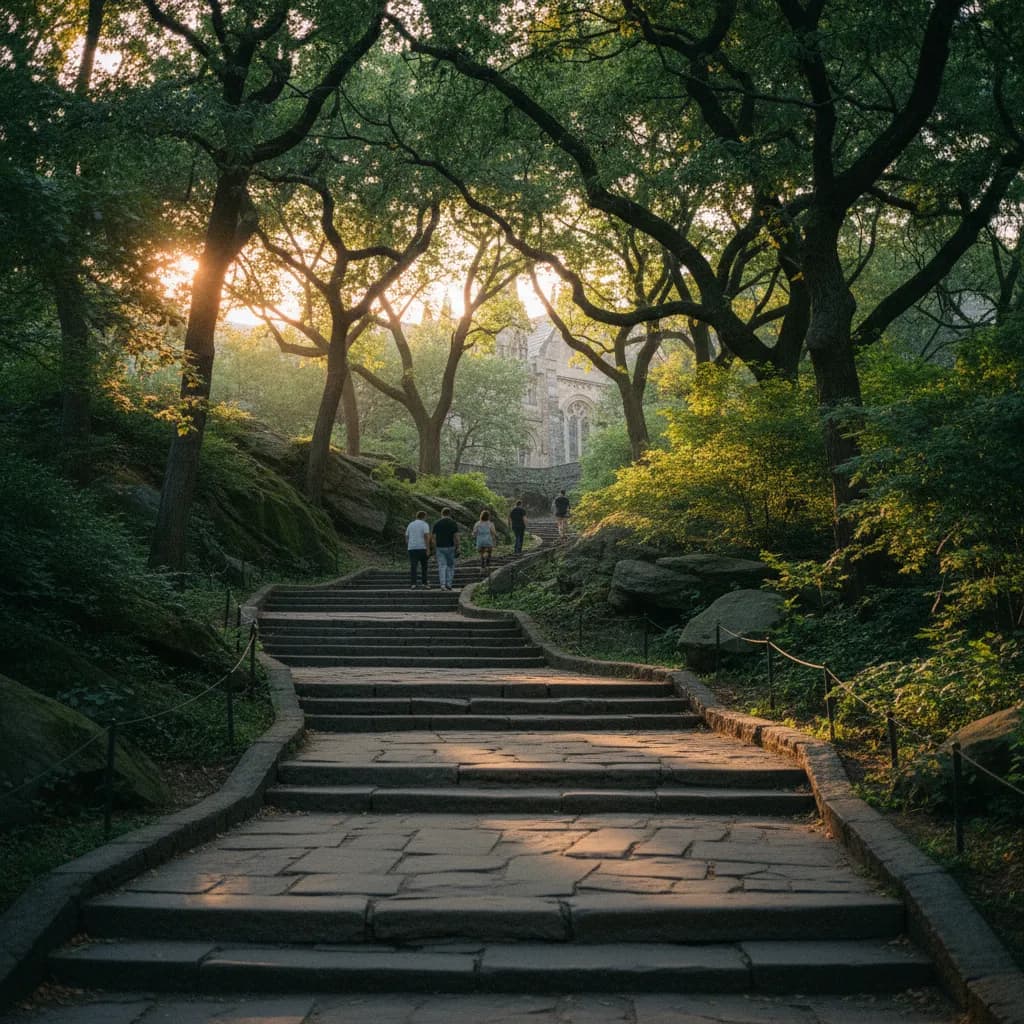
The Route That Earns Its View
Fort Tryon Park sits in Upper Manhattan, a 67-acre landscape designed for elevation changes and deliberate sight lines. The walk from the lower entrances up to the Cloisters follows stone paths that wind through terraced gardens and wooded sections, gaining altitude gradually enough that the effort feels distributed rather than punishing. The park was designed with these uphill approaches in mind, using switchbacks and planted slopes to soften the grade.
On the first day of summer 2026, the route benefits from long daylight and the kind of weather that makes stone cool to the touch in shaded sections. The path moves through areas where the Hudson River becomes visible between trees, then disappears again as the trail curves inland. The Cloisters sits at the northern end of the park, a museum built to resemble a medieval monastery, and the final approach delivers it as a logical conclusion to the climb rather than a surprise.
Billings Lawn and the Heather Garden
Billings Lawn recently reopened following a restoration project managed by the Fort Tryon Park Conservancy, which works to preserve and enhance the park for the surrounding community and all visitors. The lawn occupies a central position in the park's layout and serves as a gathering space for events, including the Scandinavian Music Festival scheduled for June 7, 2026, with performances by the New York Scandia Symphony. The open expanse provides a midpoint pause on the uphill walk, with benches positioned along the perimeter.
The Heather Garden lies nearby, a planted area that the Conservancy maintains with a plant finder tool available online. The garden uses terraced beds to manage the slope, and the Conservancy publishes bloom lists that track seasonal changes. Walking through the Heather Garden adds a few minutes to the route but offers a different texture underfoot and a concentration of color that shifts depending on the month. The paths here are narrower, and the elevation gain continues but feels less direct.
Stone Paths and Designed Elevation
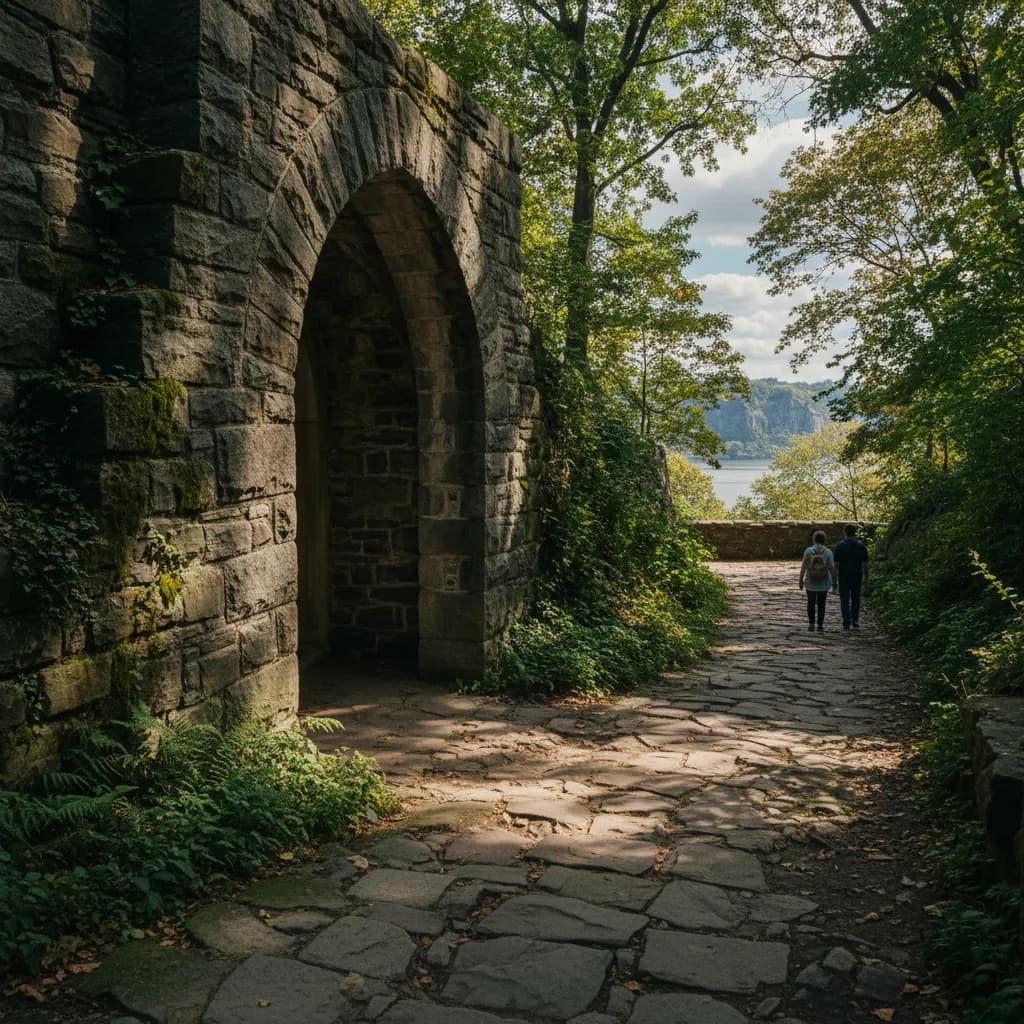
The park's stone pathways were part of the original design, intended to guide visitors through a sequence of landscapes that feel distinct but connected. The surfaces vary from wide promenades to narrower trails, and the stonework includes steps in some sections where the grade becomes steeper. The Fort Tryon Park Conservancy oversees preservation of these paths, balancing historical integrity with accessibility needs.
The uphill sections alternate with flatter stretches, a rhythm that makes the walk feel manageable even when the total elevation gain is significant. The paths pass through wooded areas where the canopy provides shade, then open onto overlooks where the river and the Palisades across the water become the dominant visual elements. The design uses these transitions to break up the climb, so the effort registers as a series of smaller pushes rather than one sustained ascent.
River Air and Overlook Points
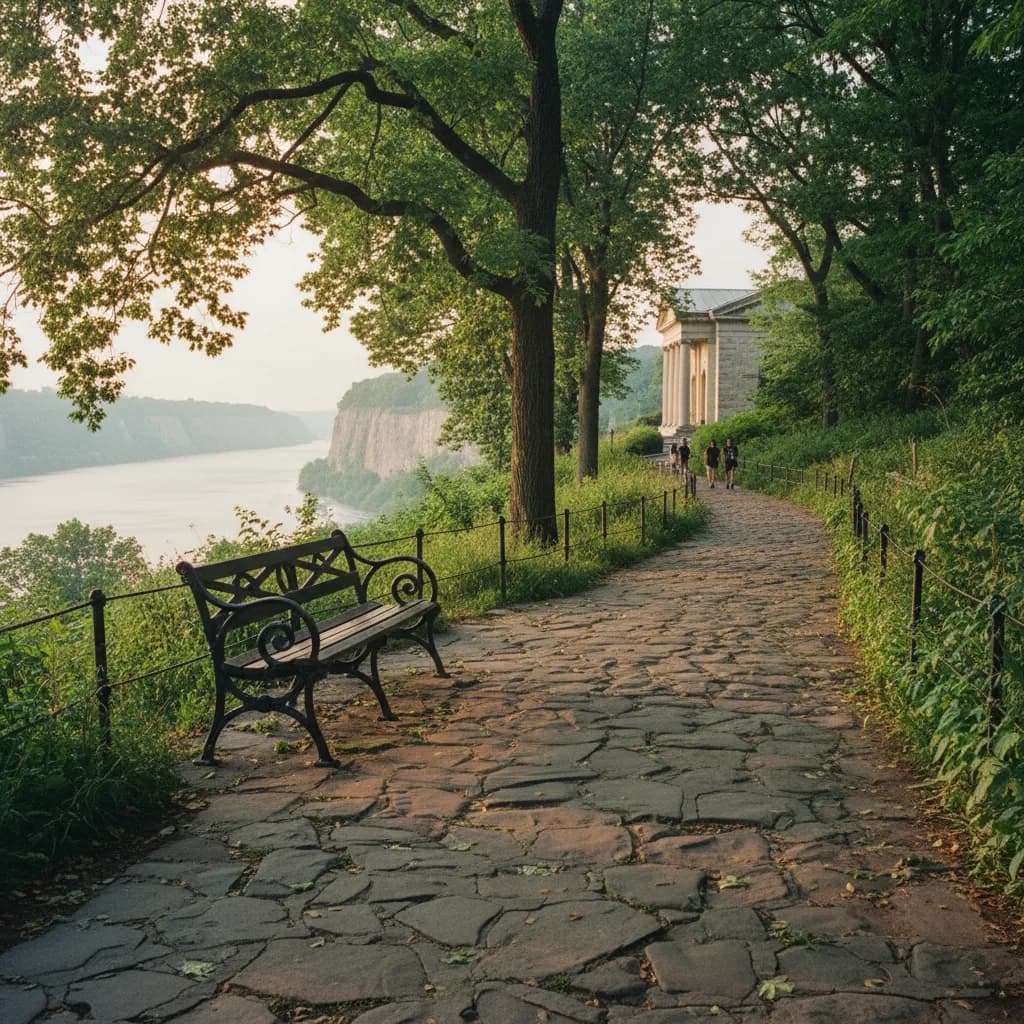
The Hudson River runs along the western edge of the park, and the elevation of Fort Tryon Park places many of its paths and overlooks above the waterline. The air near these viewpoints carries the coolness and movement typical of river corridors, a microclimate that becomes noticeable on warm days. The overlooks are positioned at intervals along the route, each offering a slightly different angle on the river and the cliffs of the Palisades.
These pauses serve a practical function on an uphill walk, providing natural stopping points where the view justifies the break. The benches at these spots face west, and the sight lines extend far enough that the river traffic and the opposite shore remain visible even when haze softens the details. The first day of summer brings extended evening light, which changes the quality of these views as the day progresses and the sun moves lower over New Jersey.
The Cloisters as Destination
The Cloisters is a branch of the Metropolitan Museum of Art, built in the 1930s to house the museum's medieval art collection. The building incorporates architectural elements from European monasteries, and its location at the northern tip of Fort Tryon Park was chosen for the way the elevated site would frame the structure. The museum's galleries and cloistered courtyards provide a cool, quiet interior that contrasts with the open-air walk that precedes it.
Reaching the Cloisters gives the uphill route a clear endpoint, a place where the effort translates into a shift in environment and activity. The museum's courtyards include planted gardens that echo some of the horticultural themes visible in the park itself, and the stone architecture continues the material palette of the paths. The transition from park to museum feels continuous rather than abrupt, a designed relationship that makes the walk and the destination feel like parts of a single experience.
Year-Round Programming and Park Use
The Fort Tryon Park Conservancy supports free, public programs throughout the year, including fitness programs, garden tours, cultural events, and educational programs for all ages. The organization hosts nature and wildlife programs, art installations, birding tours, concerts, dance and performance festivals, film screenings, and an annual Battle of Fort Washington reenactment. These programs use different areas of the park, and some, like the Scandinavian Music Festival, draw large crowds to spaces like Billings Lawn.
The park functions as what the Conservancy describes as a natural classroom, green gym, performance space, and sanctuary. This range of uses means the uphill walk to the Cloisters can intersect with other activities, from organized fitness sessions to informal gatherings on the lawns. The Conservancy's programming calendar is available online, and joining the email list provides updates on upcoming events. The variety of ways people use the park adds layers of activity to the landscape, so the walk rarely feels isolated even on less crowded days.
Practical notes
Fort Tryon Park has multiple entrances, and the lower access points on the east side provide the most pronounced uphill walk to the Cloisters at the northern end. The Fort Tryon Park Conservancy maintains the park and publishes event schedules, bloom lists for the Heather Garden, and a plant finder tool on its website. Billings Lawn recently reopened after restoration work. The Scandinavian Music Festival is scheduled for June 7, 2026, with performances by the New York Scandia Symphony. The Cloisters is part of the Metropolitan Museum of Art and houses medieval art collections. Stone paths vary in width and grade, with some sections including steps. Overlooks along the western edge face the Hudson River and the Palisades. The Conservancy offers free public programs year-round, including fitness, tours, and cultural events. Check the Conservancy's website for current program details and to join the email list for updates.
Tags: #FirstDayOfSummer2026 #FortTryonPark #TheCloisters #UphillWalk #TheLongWayHome #UpperManhattan #HudsonRiver #HeatherGarden #NYCParks #MedievalArt #StonePaths #RiverViews #FortTryonParkConservancy #WalkingNYC #ParkWalks
Sources consulted: NYC Parks Fort Tryon · The Met Cloisters · Fort Tryon Park Trust
All trademarks are the property of their respective owners.


