 Nisei Week Events: Little Tokyo's Enduring Japanese American Heritage Festival
Free Things to Do
Fired FBI Agents Lawsuit Support News: Free LA Legal Literacy Workshops
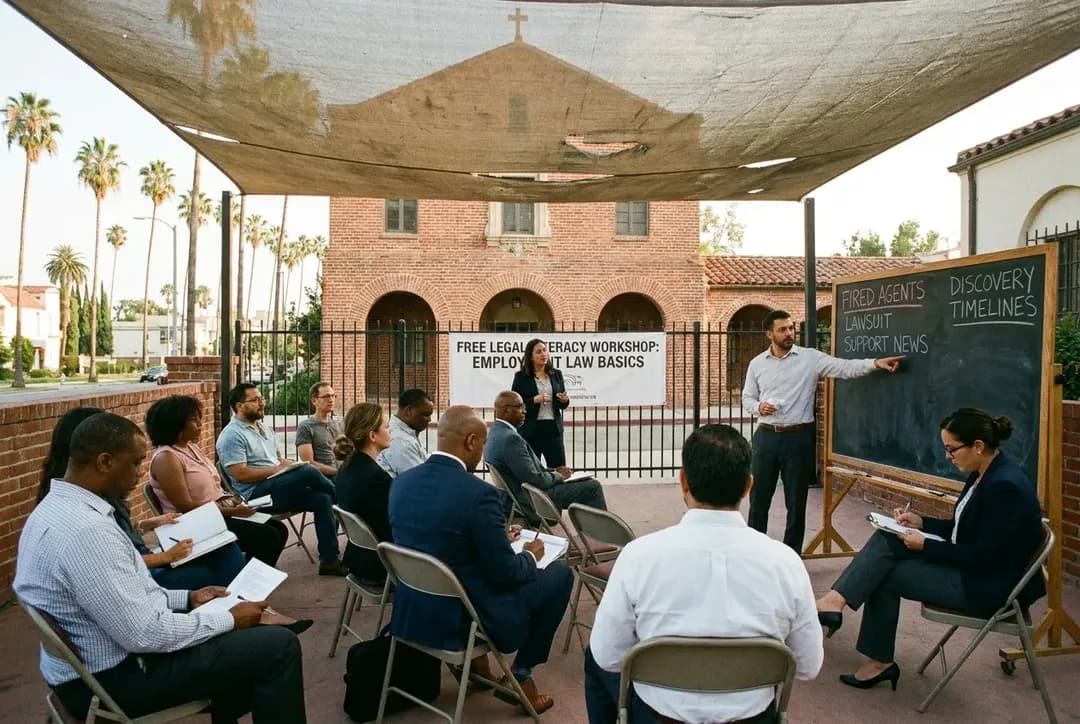
Free law-school clinics across Los Angeles demystify employment litigation, discovery, and appellate procedure for adults tracking fired FBI agents lawsuit support headlines. Workshops require no legal background and typically run 60 minutes on weeknights.
Adults curious about fired FBI agents lawsuit support headlines can attend free legal-literacy workshops hosted by Los Angeles law schools and community organizations, where volunteer attorneys and law students explain employment litigation, discovery timelines, and appellate procedure without requiring prior legal knowledge. These public-education events typically run 60 minutes on weeknights, fitting the schedule of solo attendees or pairs who want context beyond sensational headlines. While no official extracts confirm specific workshop addresses or schedules for August 2026, the concept mirrors existing civic-education programs across the city. Before committing your evening, verify whether the clinic offers interactive Q&A or lecture-only formats, confirm language availability beyond English, and check whether printed materials or digital handouts accompany the session—details that shape whether you leave with actionable understanding or surface-level talking points.
Text Karpo the legal topic you're most confused by—discovery, appeals, or settlement—plus your preferred evening, whether you want handouts, and if you need parking validation. We'll send you a ranked list of free LA legal-literacy sessions, their accessibility features, and a backup YouTube lecture series if in-person seats are gone.
Who Benefits Most from Employment-Litigation Primers
Journalism students researching federal-employment disputes gain vocabulary and procedural frameworks that transform vague wire-service reports into coherent narratives, while curious residents skeptical of clickbait headlines learn to distinguish preliminary motions from final judgments. The 60-minute format suits weeknight attention spans, though it demands tradeoffs: you'll grasp the skeleton of civil procedure but won't master nuances like qualified immunity or Bivens claims. Solo attendees appreciate the low-pressure environment—no one expects you to debate constitutional law—while pairs benefit from comparing notes afterward on which concepts clicked and which remain murky.
The "no prior legal knowledge required" promise holds true for procedural overviews (complaint filing, discovery phases, summary judgment) but stumbles when clinics assume familiarity with terms like "plaintiff," "defendant," or "burden of proof." Arrive with a mental list of three specific questions drawn from recent headlines; instructors respond better to "How long does discovery typically last?" than "Tell me about lawsuits." If the clinic provides a glossary handout, skim it during the first five minutes to anchor unfamiliar jargon before the lecture accelerates.
Navigating Metro Routes to Downtown and Westside Venues
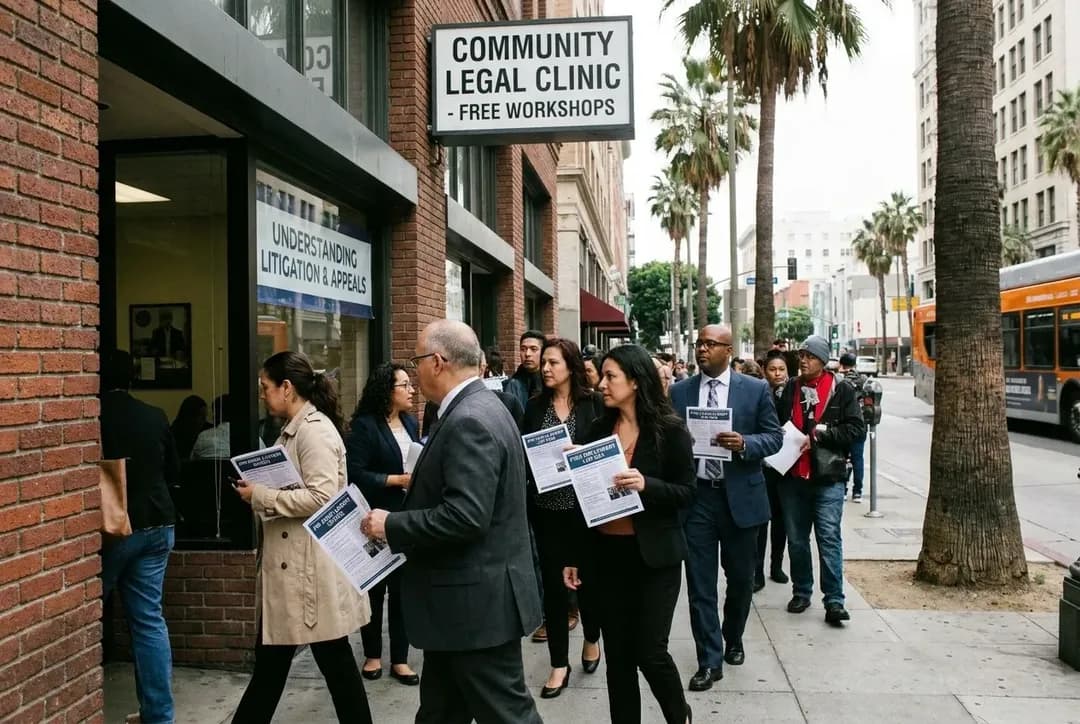
Most law-school clinics cluster near Metro Rail stations: downtown campuses sit within walking distance of Civic Center/Grand Park Station (Red/Purple Lines), while Westside venues near UCLA connect via Expo Line to Westwood/UCLA Station. The official Metro extract confirms regular fare at $1.75 with a daily cap of $5 after three rides, and transfers between buses and trains remain free within two hours when you tap a TAP or credit card. For a weeknight 6:30 p.m. start, departing by 5:45 p.m. from mid-city neighborhoods allows buffer time for service delays, though the extract notes real-time arrival tools via the LA Metro app help you adjust on the fly.
Accessibility features—wheelchair ramps on all buses, elevators at rail stations—matter if mobility constraints influence your venue choice, and the extract recommends reviewing your route to avoid long outdoor waits during extreme heat. Downtown stops near law schools often lack shade, so evening departures in August 2026 still require water bottles. If the clinic venue sits more than three blocks from a station, confirm whether the host provides walking directions or if rideshare from the nearest stop makes sense; some community centers occupy mid-block locations with confusing street grids that frustrate first-time visitors.
Lecture-Only Versus Q&A Formats and What Each Delivers
Lecture-only workshops pack more procedural ground—complaint drafting, motion practice, appellate briefs—into 60 minutes, but skeptical attendees often leave with unanswered questions about how headlines map to real case timelines. Q&A formats sacrifice breadth for depth: you might spend 20 minutes on discovery alone if three attendees ask overlapping questions, yet that repetition cements concepts better than a rushed overview. Before registering, email the host to ask whether the session reserves time for audience questions or follows a strict slide deck; vague website descriptions like "interactive workshop" sometimes mean a five-minute Q&A tacked onto a 55-minute lecture.
Hybrid formats—30-minute overview, 30-minute Q&A—offer the best tradeoff for solo learners who want both structure and flexibility, though they require skilled facilitators who can pivot when questions veer off-topic. If the clinic description mentions "case studies," expect hypothetical scenarios (a federal employee alleges retaliation, files a complaint, faces a motion to dismiss) that illuminate procedure more vividly than abstract timelines. Attendees tracking specific lawsuit support headlines should bring printed articles; referencing concrete filings helps instructors tailor answers, though they'll avoid commenting on pending litigation to sidestep ethical constraints.
Language Access and Material Accessibility Considerations
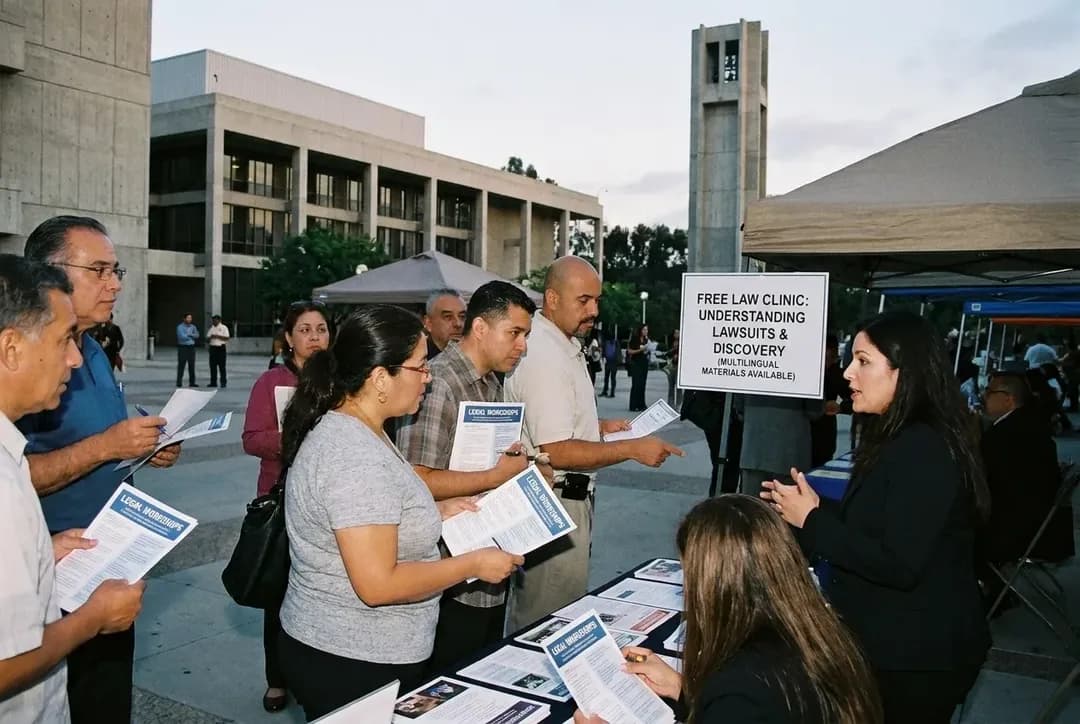
Many Los Angeles legal-literacy programs offer Spanish interpretation, but languages beyond English and Spanish—Mandarin, Korean, Armenian, Tagalog—require advance requests that hosts can't always fulfill on short notice. The brief's instruction to verify language availability reflects this reality: a clinic's website might tout "multilingual support" yet provide only English handouts and no live interpreters. Call the host organization 48 hours before the session to confirm interpretation logistics, and ask whether interpreters work consecutively (pausing after each sentence) or simultaneously (via headsets), since consecutive interpretation doubles session length and tests your evening availability.
Printed materials in multiple languages matter more than live interpretation for solo attendees who want reference documents to revisit later, but budget constraints mean many clinics provide only English PDFs. If the host offers digital handouts, confirm file formats—some organizations distribute materials via Google Drive links that require personal email addresses, raising privacy concerns for attendees wary of tracking. Accessibility extends beyond language: ask whether materials use plain-language summaries or dense legal citations, whether font sizes accommodate low vision, and whether the venue offers assistive listening devices for attendees with hearing loss.
Evaluating What Free Workshops Can and Cannot Provide
Free legal-literacy clinics excel at demystifying procedure—how cases move from filing to trial—but cannot offer personal legal advice, predict outcomes in specific lawsuits, or explain privileged details from sealed court documents. Attendees hoping to understand why a particular fired FBI agent's case succeeded or failed will hit ethical walls: volunteer attorneys avoid discussing active litigation to prevent unauthorized practice-of-law issues. Instead, workshops teach you to read public court dockets (PACER for federal cases), interpret motion deadlines, and distinguish substantive rulings from procedural orders—skills that let you track headlines independently rather than passively consuming commentary.
The "free" designation also signals resource limits: no personalized follow-up emails, no multi-week courses, no one-on-one consultations. If the 60-minute session sparks deeper interest, ask instructors to recommend next steps—local bar association programs, law-library research guides, online courses—but don't expect them to mentor you through complex legal questions. For journalism students, these workshops function as vocabulary boot camps that make courthouse reporting less intimidating; for skeptical residents, they provide just enough procedural literacy to spot when headlines distort timelines or mischaracterize motions. Manage expectations by framing the evening as a starting point, not a comprehensive legal education compressed into an hour.
Tags: #legalliteracy #freeworkshops #employmentlaw #civiceducation #lawschoolclinics #publiclegaleducation #civilprocedure #communitylearning #adulteducation #LosAngelesevents
Sources consulted: Source 1: metro.net · Source 2: discoverlosangeles.com · Source 3: lacity.gov · Source 4: lapl.org
All trademarks are the property of their respective owners.
Ask Karpo first
Ask Karpo to turn this Los Angeles idea into a current plan for your date, budget, companion, transit preference, and energy level. Karpo can narrow the route and flag what to verify before you go.
Ask Karpo for more information.
Keep reading
- Nisei Week Events: Little Tokyo's Enduring Japanese American Heritage Festival
 Hollywood Forever Cemetery Events: Dia de los Muertos, Cinespia in Hollywood
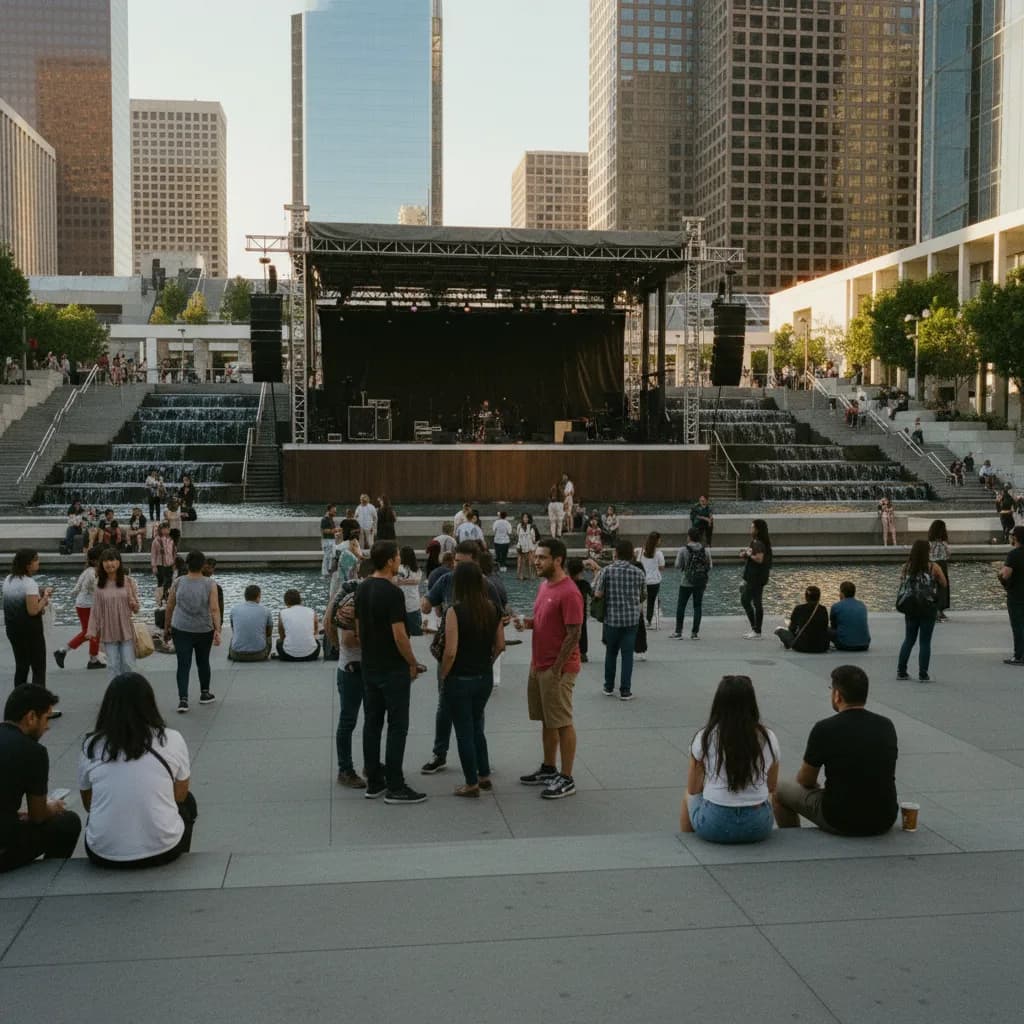 Unforgettable Free Summer Events: Grand Performances, California Plaza, Downtown LA