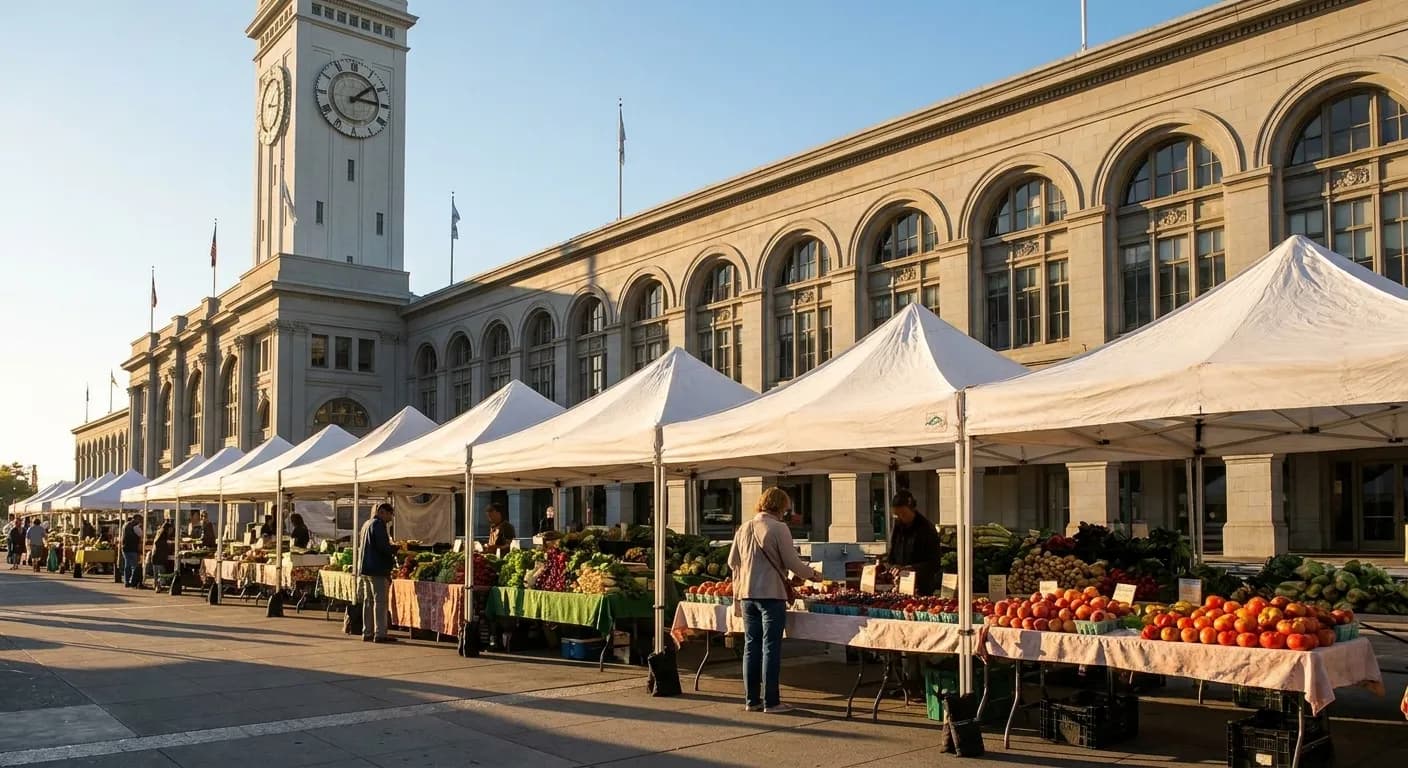
The blueberry recall that swept through grocery stores earlier this year exposed a problem most shoppers don't think about until something goes wrong: once produce enters the industrial supply chain, tracing it back to a specific farm—or even a specific state—becomes a multi-day investigation involving distributors, packing houses, and regional hubs. By the time a recall notice goes out, contaminated berries have already been eaten or thrown away. At Ferry Plaza Farmers Market on San Francisco's Embarcadero, the supply chain is a farmer standing behind a table of fruit they picked yesterday. You can ask their name, the name of their ranch, and which field the strawberries came from. They'll tell you, because they were there.
Karpo tracks every Ferry Plaza vendor's farm location and product lineup—so you can plan your Saturday morning route by what's in season this week.
Why farm-direct matters right now
When a blueberry recall hits the news, the industrial food chain becomes visible in an uncomfortable way: berries picked in one state, packed in another, distributed through regional hubs, and stocked on supermarket shelves with origin information that stops at a distributor's name. Tracing a contaminated batch backward takes days, sometimes weeks, and by then the recalled product has already moved through dozens of retail locations.
Ferry Plaza Farmers Market operates under California's Direct Marketing Program, which means every vendor selling produce must be the person—or employee of the farm—that grew it. The farmer at the stall can tell you which field the strawberries came from, when they were picked (usually yesterday or this morning), and whether they use organic certification or practice organic methods without paying for the label. If there's ever a problem, you know exactly who to ask. No distribution chain, no packing-house middleman, no mystery.
This isn't a new-age luxury. It's how food markets worked before industrial agriculture, and it's particularly reassuring in 2026 when supply-chain opacity has led to multiple high-profile recalls. At Ferry Plaza, traceability isn't a buzzword—it's structural. The market is a California Certified Farmers Market, which requires documentation proving the farm grew what it's selling. Inspectors verify this. It's not an honor system.
Three-day cycle, different purposes
Saturday from 8am to 2pm is the flagship: more than 100 vendors surround the Ferry Building on all sides, from the Embarcadero roadway to the rear plaza facing the bay. You'll find two dozen berry farms in summer, root-vegetable specialists in winter, stone-fruit growers in late spring, and year-round staples like citrus, greens, and herbs. The crowd peaks between 9:30am and 11am. Arrive at 8am for the best selection and elbow room, or come after 1pm when vendors start marking down what they don't want to haul back to the farm.
Tuesday runs 10am to 2pm with about 20 vendors—enough to do a full weekly produce shop but without the weekend crush. Several farms bring items they don't have volume for on Saturday: a small batch of heirloom melons, a single bin of early-season figs, experimental pepper varieties they're trialing. If you want to have an actual conversation with a grower about soil amendments or varietal differences, Tuesday is the day. The lunch-truck selection is smaller but the produce quality is identical.
Thursday, also 10am to 2pm, scales down to 10–15 vendors and leans heavily on prepared food—Thai street snacks, tamales, wood-fired pizza, Vietnamese bánh mì—with a handful of farms selling whatever didn't move earlier in the week. It's the least tourist-heavy day, and if you work downtown, it's a efficient way to grab lunch and pick up enough greens and tomatoes to get through the weekend.
How to ask the right questions
Most Ferry Plaza farmers are happy to talk about their methods, but there's an art to asking questions that get useful answers rather than marketing slogans. Instead of "Is this organic?" try "What do you spray for?" or "How do you handle pests on these?" You'll learn whether they use any inputs at all, and if so, which ones. Some small farms practice organic methods but can't afford certification; others are certified organic but still use approved sprays you might want to know about.
When berries are in season—typically April through September in coastal California—ask which field or ranch block the fruit came from. Many farms have multiple locations with different microclimates, and a grower who can answer that question is someone who knows their inventory. If you're concerned about a specific recall, ask what packing house they use, or whether they pack on-farm. Most Ferry Plaza vendors pack their own fruit, which eliminates the cross-contamination risk that happens when multiple farms share a facility.
For root vegetables, stone fruit, and anything with a longer shelf life, ask when it was picked. "Yesterday afternoon" or "this morning" means the farmer planned their harvest around market day, which is a good sign. If the answer is vague, the produce might have been in cold storage for a week—still safe, but not the just-picked premium you're paying farmers-market prices for.
Payment and logistics that actually work
Most Ferry Plaza vendors take credit cards and contactless payments now; look for the "We Take Credit Cards" signs posted at stalls, or just ask. Two ATMs are inside the Ferry Building (north and south ends), but lines get long on Saturday mornings. The Info Booth in front of the Ferry Building sells wooden market coins that work at any stall—you can load them with a card and skip the ATM wait, though there's a small service fee.
The Veggie Valet service is legitimately useful if you're shopping the full Saturday market. Drop your bags curbside south of the clocktower (the service runs 8am to 1pm), keep shopping, and either pick everything up when you're done or arrange curbside pickup if you're parked nearby. On Tuesday and Thursday, the Info Booth handles the same service from 10am to 2pm. It's free, and it's staffed by Foodwise volunteers who've been doing this for years.
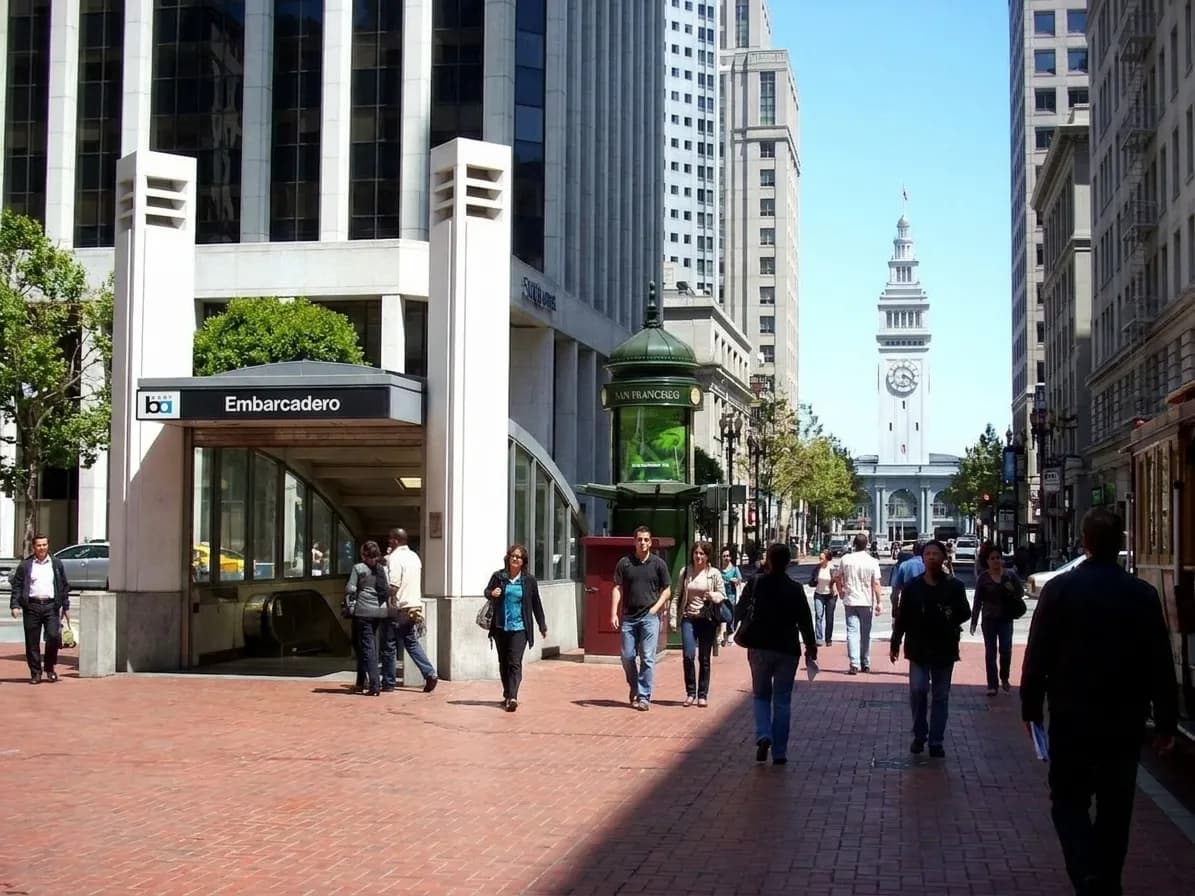
For parking, Golden Gateway Garage at 250 Clay Street (between Battery and Davis) is the Saturday deal: $10 flat rate, no validation required, open from 7am. Get there before 8:30am and you'll have no trouble. Weekday parking is pricier—the ProPark lot at Embarcadero and Washington is $5 for the first hour with Info Booth validation, then $9 for the second hour. Honestly, take BART. Embarcadero Station is one block east on Market Street, served by every San Francisco line.
What traceability looks like in practice
A blueberry recall at a supermarket means pulling product from shelves and hoping the batch numbers match what's in the distribution records. At Ferry Plaza, if there's ever a problem with a specific farm's produce, Foodwise (the nonprofit that runs the market) has the grower's contact information, farm address, and documentation of what they brought to market that day. Shoppers who bought from that stall can be contacted directly if needed. The loop is closed.
This system also means accountability runs both ways. Farms that show up with substandard produce or misrepresent their growing practices get flagged by inspectors and, more effectively, by regular shoppers who know what to expect. The market's reputation depends on maintaining standards, and vendors who cut corners don't get invited back. It's not a perfect system—no inspection regime is—but it's transparent in a way that supermarket supply chains are structurally incapable of being.
For shoppers, the practical upshot is simple: you can ask where your food came from and get a real answer, not a customer-service script. In 2026, after a year of overlapping recalls affecting everything from berries to bagged lettuce, that's worth the trip to the Embarcadero.
Practical notes
Ferry Plaza Farmers Market operates year-round at the Ferry Building, Embarcadero at Market Street. Saturday 8am–2pm (100+ vendors), Tuesday 10am–2pm (about 20 vendors), Thursday 10am–2pm (10–15 vendors). Embarcadero BART is one block away; Muni lines 1, 2, 6, 9, 14, 14R, F, and N all stop nearby. Saturday parking: Golden Gateway Garage, 250 Clay Street, $10 flat rate. Weekday parking: ProPark at Embarcadero and Washington, $5 first hour with Info Booth validation. Free Veggie Valet curbside service available all market days. Most vendors take cards; two ATMs inside Ferry Building. Bring reusable bags. Public restrooms (ADA-accessible) inside Ferry Building, north and south pass-throughs. Rain or shine, no cancellations.
Tags: #FerryPlazaFarmersMarket #SanFranciscoFarmersMarket #FarmDirectProduce #FoodTraceability #MeetYourFarmer #CaliforniaCertifiedFarmersMarket #EmbarcaderoMarket #FerryBuildingSF #SustainableAgriculture #LocalFoodSF #WeekendPlansSF #FarmToTable #KnowYourGrower #FreshProduceSF #SanFranciscoWeekend
All trademarks are the property of their respective owners.
Ask Karpo first
Looking for other farmers markets in the city, or need to map the fastest BART-to-Embarcadero route from your neighborhood? Ask Karpo which Tuesday or Thursday markets carry the same farms, or which Ferry Building Marketplace shops inside stay open past 2pm when the outdoor stalls close.