The farmers almanac winter weather forecast is useful in New York City only after you translate it into decisions you can verify. On Monday, August 10, 2026, the smarter move is a rainy-day indoor loop: check the long-range claim, compare it with official city preparedness guidance, and build a small apartment list before back-to-school routines crowd the calendar. This is not a storm prediction plan. It is a low-effort Midtown errand route for solo renters, roommates, parents, and students who want one calm afternoon to handle alerts, documents, batteries, library resources, and transit choices before winter weather makes every simple trip take longer.
Want the route without rebuilding every tab yourself? Text Karpo for a click-ready NYC winter-prep plan with library stops, MTA checks, and verification links before you leave.

Stephen A. Schwarzman Building at Fifth Avenue and 42nd Street
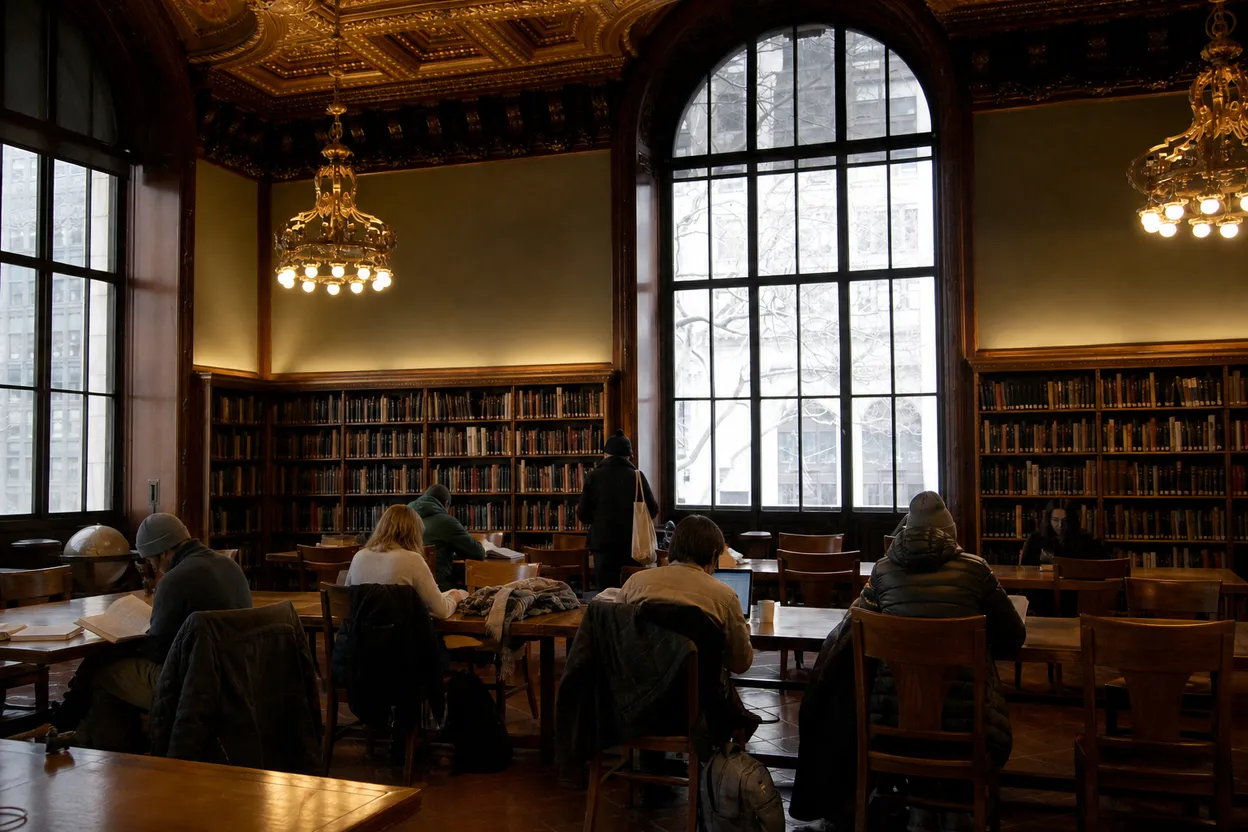
Start at the Stephen A. Schwarzman Building because it turns weather curiosity into a seated planning session. NYPL lists the flagship library at Fifth Avenue and 42nd Street, with accessible entrances on 40th Street and 42nd Street and wheelchair-accessible public service units. That location works for a weekday afternoon because Grand Central, Bryant Park, and multiple subway lines are close enough to keep the route compact if rain returns.
Use the building for research discipline, not atmosphere. Read the Farmers’ Almanac forecast as a long-range outlook, then write down what would actually change for your apartment, commute, or school routine if New York gets cold rain, mixed snow, or a January cold snap. The failure mode is treating a seasonal headline like a local alert. Keep the plan conditional: city alerts and National Weather Service updates override any almanac-style forecast when dates get close.
Stavros Niarchos Foundation Library at 455 Fifth Avenue
Walk south to the Stavros Niarchos Foundation Library if you need a more everyday branch setup. NYPL’s current listing places SNFL at 455 Fifth Avenue and describes it as fully accessible, with broad weekday hours and public services such as seating, browsing, computer access, and resources across the building. For roommates or families, this is the better place to split tasks: one person checks school supplies, another checks household documents, another handles alerts.
The tradeoff is that SNFL can feel easier to use but easier to linger in. Set a 45-minute cap and leave with one list: batteries, portable charger, flashlight, prescription copies, waterproof document bags, and any school items that become annoying during slush weeks. If a room, terrace, or floor is closed for an event or maintenance, do not improvise around it. Check the branch page again and use another open seating area or a nearby branch.
MTA Accessible Trip Planner Before the Hardware Stop
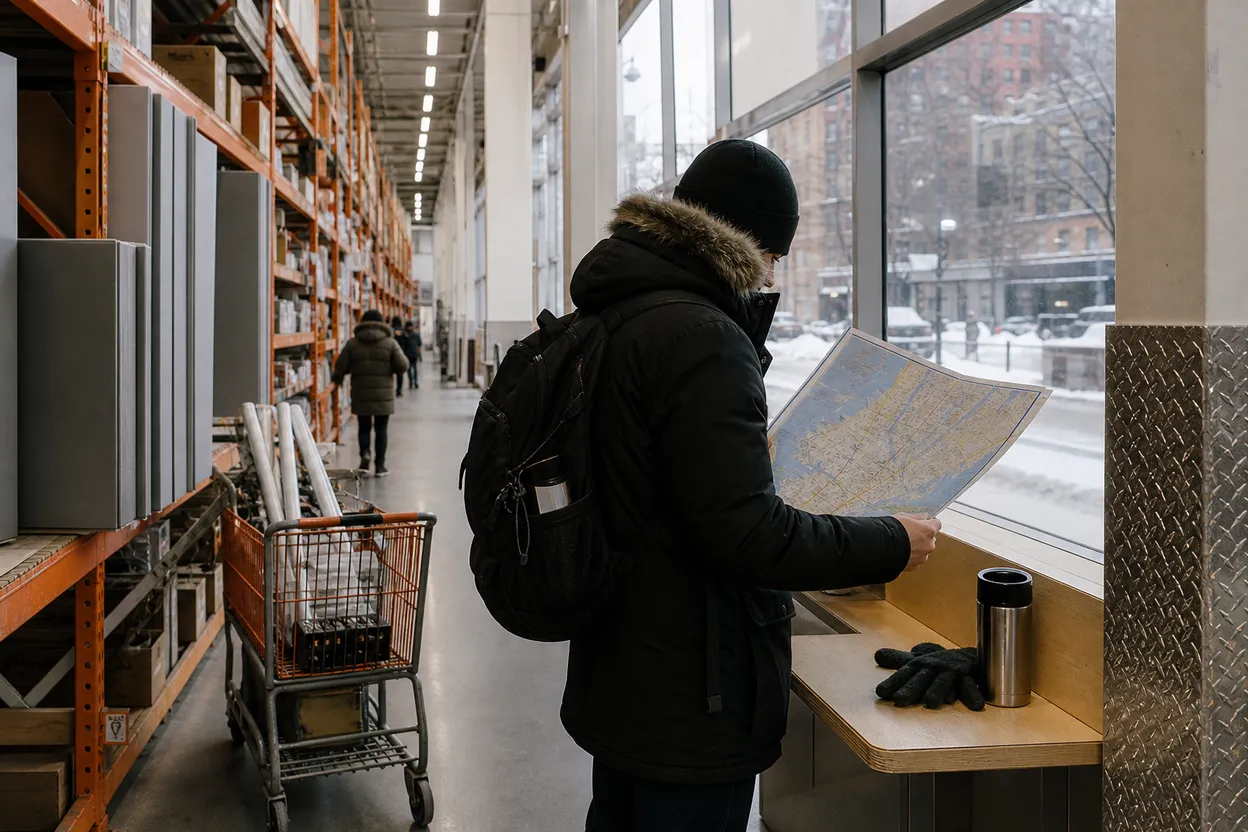
Before crossing town with a tote bag, open the MTA site and check the accessible trip tools, service status, and elevator or escalator status. MTA says accessible travel can be planned through its homepage feature and links riders to accessible station and elevator-status resources. That matters for winter prep because a route that looks short on a map can become difficult when rain, bags, steps, or a stroller enter the plan.
Choose the transit option that matches the person carrying the most, not the fastest possible rider. If an elevator is out, a bus may beat a subway transfer. If service is delayed, shorten the route instead of adding another borough or a second shopping stop. For families, older adults, and anyone using mobility equipment, the backup is part of the plan: identify the nearest accessible station, bus corridor, or library stop before leaving the building.
One Midtown Hardware Tote for Batteries, Tape, and Chargers
Keep the hardware errand intentionally small: batteries, flashlight or replacement bulbs, weatherstripping tape, a basic scraper, surge protector, portable charger, and any apartment-specific item you already know is missing. Do not invent a storm pantry from an August forecast. NYC Emergency Management’s preparedness guidance centers on having a plan, gathering supplies, and staying informed, so the errand should support those basics rather than create storage problems in a small apartment.
The best pacing is one tote and one receipt. If the store is crowded, prices look wrong, or the exact item is unavailable, take a photo of the shelf label and verify later instead of buying a bulky substitute. Roommates should assign items by use: power, warmth, documents, school commute, and medicine. Parents can add backpack-safe extras without turning the trip into a full seasonal shop. The point is fewer fragile gaps, not a perfect winter closet.
Notify NYC Setup While You Are Still Indoors
Set up Notify NYC before leaving the library or hardware aisle. NYC Emergency Management points residents to the city’s free alert system and also advises turning on government alerts on phones. This is the point where forecast curiosity becomes operational: alerts can cover weather and emergency updates that change faster than a seasonal outlook. If you live in a basement or flood-prone area, pay special attention to alert options tied to heavy rain.
Accessibility belongs in the same step. Make sure alerts are visible, audible, or vibration-based for the people who need them, and write down who checks on whom if phone service is spotty. For students and solo renters, add a plain note in the calendar for late November to recheck winter supplies. If any signup page, language option, or phone setting looks different from what you expected, stop and verify through NYC.gov or 311.
Bryant Park Subway Edge for a Rainy Regroup
Bryant Park works as the route’s pressure valve because it sits between the libraries, Midtown offices, and several transit choices. Use the indoor or sheltered edges nearby to review the list, check MTA again, and decide whether the hardware stop is still worth it. On a rainy summer planning day, this pause prevents the classic New York failure mode: pushing through one extra errand, then carrying damp bags through a delayed transfer.
Make the decision boring. If the bag is light, the line is running, and the store is nearby, continue. If any one of those fails, end the route and keep the remaining items for another weekday. This guide is designed for back-to-school households and solo living, so completion matters more than coverage. A partially finished, verified list beats an ambitious loop that leaves you unsure which details were current.
Kitchen Table Receipt File and Final Weather Verification
Finish at home by putting receipts, copies, and small supplies in one visible place. NYC’s preparedness guidance includes a Go Bag, important papers in waterproof bags, flashlight, batteries, chargers, first aid basics, and a home kit for staying put. You do not need to solve everything on August 10. You do need to know where the essentials are before the first icy morning turns a missing charger into a real disruption.
The final action is verification, not confidence. Reopen the Farmers’ Almanac page only as long-range context, then check NYC Emergency Management, Notify NYC, the National Weather Service New York office, and MTA status before any winter-weather trip. Recheck NYPL branch pages before relying on a library stop for work, printing, warmth, or accessibility. If a fact cannot be confirmed today, mark it as uncertain and build the route around the source that updates closest to departure time.
Tags: #AskKarpo #BeforeYouGo #NYC #NewYorkCity #WinterPrep #BackToSchool #NYPL #MTA #NotifyNYC #PublicLibraries #IndoorErrands #SoloLiving #RainyDayPlan #WeatherCheck
Sources consulted: Source 1: farmersalmanac.com · Source 2: nyc.gov · Source 3: nypl.org · Source 4: nypl.org · Source 5: mta.info · Source 6: weather.gov
All trademarks are the property of their respective owners.
Ask Karpo first
Tell Karpo your date, group size, budget, and starting point. We’ll check current access, timing, transit, and the cleanest New York City plan for NYC indoor prep route using public libraries, hardware errands, and transit-friendly winter planning stops before you head out.