
The phrase farmers almanac winter weather forecast is moving through search because people want certainty before they make plans. For a San Francisco weekend, treat it as a reminder to verify, not as proof of a local event, city advisory, or special access. The practical move is simple: choose one public anchor, check official access before leaving, keep your route short, and build in a lower-energy backup. San Francisco rewards flexible planning because transit alerts, street activity, elevator status, park access, and crowd patterns can change faster than a long itinerary can absorb. This guide stays deliberately modest: it uses public official sources, avoids promises, and gives you a weekend plan you can actually execute without depending on hype.
Want a quick sanity check before you cross town? Text Karpo with your starting point, preferred pace, and backup need, and ask for a tighter San Francisco weekend route.

Separate the headline from the local plan
A weather phrase can be useful without being treated as a forecast for your block. The farmers almanac winter weather forecast belongs in this plan as a timing cue: people are thinking ahead, comparing conditions, and trying to avoid wasted trips. It is not a reason to assume a San Francisco attraction is open, a transit line is unaffected, or a public space is guaranteed to be comfortable.
Start by naming what you actually need from the weekend. If the goal is fresh air, choose a public outdoor anchor and verify the city recreation source before leaving. If the goal is low friction, build around Muni access instead of a distant destination. If the goal is a social outing, decide how much waiting, walking, and rerouting your group can tolerate.
Choose one anchor that fits the actual mood
For a realistic San Francisco plan, pick one anchor rather than three competing ambitions. The official SFMTA site points visitors toward Muni, bike, walk, drive and park, taxi, accessibility information, route and stop tools, neighborhood information, and travel maps and guides. That is enough structure to choose a starting framework before you add cafes, viewpoints, shopping, or a park stop.
If your group wants movement, use an SFMTA-served neighborhood as the anchor and let the day branch out on foot. If your group wants rest, make the anchor a public park or recreation space, then verify current details on the San Francisco Recreation and Park Department site because access and conditions can change. Keep the anchor honest: one main place, one nearby add-on, one backup.

Use timing and transit to cut decision fatigue
Before leaving, open the SFMTA trip planner and enter a real starting location and ending location. The official page lets riders plan by Muni, bike, walk, drive, and other modes, which matters when one person wants transit and another wants the shortest walk. Do this before the group chat becomes a debate about every possible route.
Check alerts, not just maps. The SFMTA homepage shows travel and transit updates, including recent alert language about reroutes around Mission and 26th due to San Francisco Fire Department activity, plus a link to Muni Metro elevator status. Those details are exactly why a weekend plan should have a departure window rather than a rigid minute-by-minute script.
Use timing defensively. Leave earlier if your anchor depends on a transfer, an elevator, or a specific stop. Delay departure if the official alerts show a disruption near your route. And if you are driving or mixing ride-hail with walking, still check SFMTA’s drive-and-park and street information rather than assuming the curb will cooperate.
Add one indoor or lower-energy alternative
A backup is not a sign the plan failed; it is what keeps the day usable. For this guide, the cleanest backup is a lower-energy neighborhood version of the same outing: shorten the walk, stay closer to the arrival stop, or switch from a park-forward route to a transit-accessible indoor pause. Do not wait until everyone is tired to decide this.
Because the official tourism site extract available here shows a security verification page rather than usable planning details, do not rely on an unverified tourism listing for current hours or access. Use official venue, park, or transit pages directly when a detail matters. If you cannot confirm the detail, choose the simpler alternative.
Keep the route small enough to enjoy
The biggest weekend mistake in San Francisco is making the map look efficient while ignoring hills, transfers, weather shifts, and crowd risk. A compact route is not boring; it gives you more control. Choose an anchor, identify the nearest practical Muni stop or walking approach through SFMTA tools, and limit the plan to one adjacent district or one nearby public-space option.
Crowd risk is easiest to manage with exit points. If the first stop feels congested, move to your nearby add-on instead of crossing the city. If a transit alert appears, switch modes or trim the route. SFMTA’s site also lists meetings, projects, service changes, and travel updates, so treat the city as a live system rather than a static itinerary.
For August 2026 specifically, note that SFMTA’s official page flags Muni service changes starting Aug. 29 and Hayes Valley Shared Spaces on Fridays and Saturdays in August 2026. Verify the current official notice before building a plan around either item, but use them as reminders that street use and service patterns can affect even familiar weekend routes.
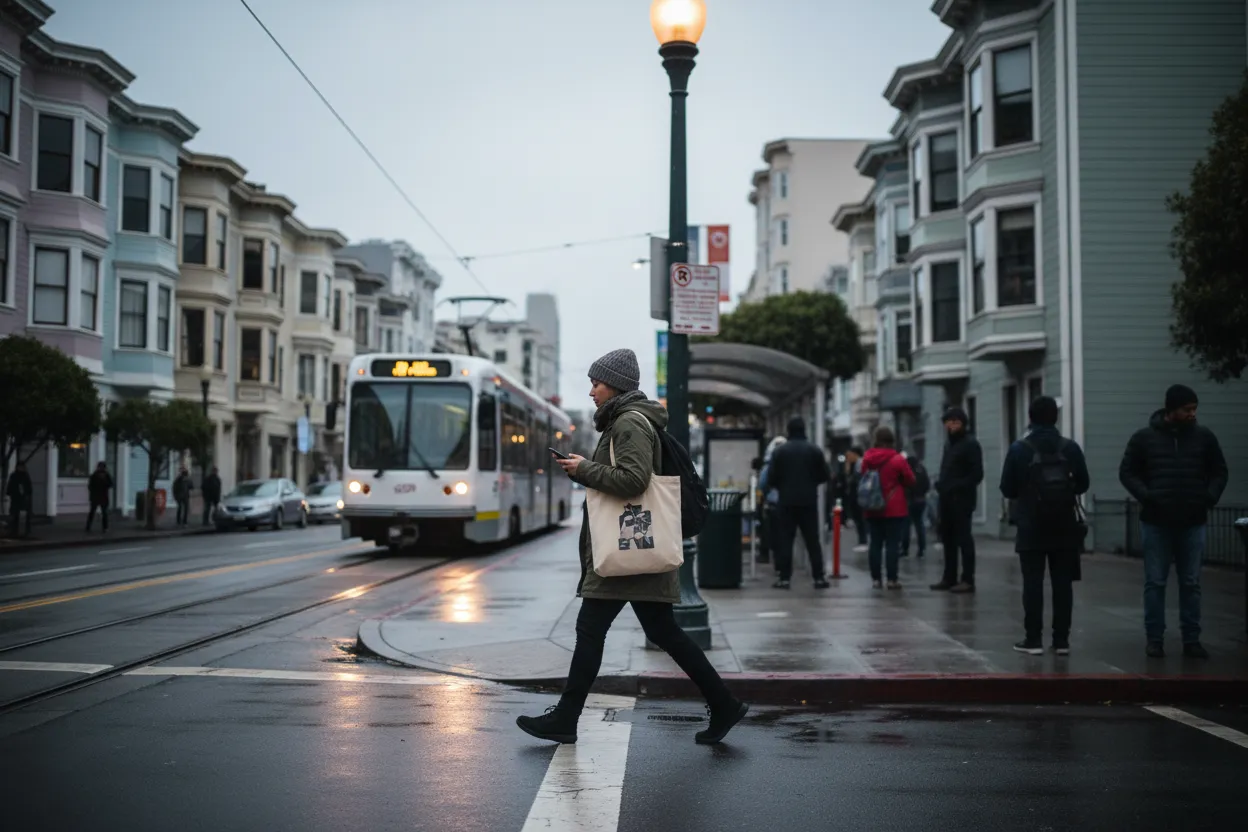
Verify live access before leaving
Make the final check in this order: SFMTA trip planner, SFMTA alerts, Muni Metro elevator status if accessibility or step-free travel matters, then the official page for your anchor. If your anchor is a recreation or park site, verify changing details through the San Francisco Recreation and Park Department because the available official extract here specifically requires readers to check the live site.
Do not treat social posts, old guides, or search snippets as final authority for public access. They can be helpful for ideas, but they are weak for real-time conditions. If a route depends on a specific stop, elevator, street closure, event footprint, or park facility, confirm it on the relevant official page shortly before departure.
The executable version is simple: pick one anchor by Thursday or Friday, run the SFMTA route check the morning of your outing, confirm access at the destination, and text your group one backup. That turns a noisy headline into a calm San Francisco weekend plan.
Tags: #SanFrancisco #WeekendPlans #AskKarpo #BeforeYouGo #SFMTA #Muni #SFTransit #CityGuide #PublicTransit #TravelSmart #BayArea #SFWeekend #WeatherAware #PlanAhead
Sources consulted: sftravel.com · sfmta.com · sfrecpark.org
All trademarks are the property of their respective owners.
Ask Karpo first
Ask Karpo first when your San Francisco plan depends on timing, transit, access, or a realistic backup. Send the anchor, your starting neighborhood, mobility needs, and how much walking your group wants, and ask for the smallest route that still feels worth the trip.


