 Where to Eat Near Penn Station That Isn't a Chain
US Open 2026

Farmers Almanac September Forecast For US Open 2026 Trips
How the Farmers Almanac September forecast shapes your US Open 2026 trip through Queens, from Fan Week through finals weekend.
The Farmers Almanac September forecast offers a long-range planning lens for the 2026 US Open, which runs August 23 through September 13 at the USTA Billie Jean King National Tennis Center in Flushing Meadows Corona Park. Fan Week kicks off August 23, the main draw begins August 30, and finals weekend lands in mid-September—a stretch when Queens weather can swing from summer heat to early-autumn cool fronts. Whether you are catching practice sessions, day matches under open sky, or evening rounds beneath the Arthur Ashe Stadium roof, the almanac's seasonal outlook helps you pack layers, plan shade breaks, and build rain contingencies into every trip. This guide walks you through practical Queens planning shaped by September's forecast rhythm, so you arrive ready for sun, clouds, or surprise showers without missing a moment of the tournament.
Text Karpo your match session, neighborhood start point, and appetite, and we will turn this US Open 2026 local scene into a live Queens plan.
What the Farmers Almanac September forecast means for US Open 2026
The Farmers Almanac publishes long-range weather outlooks months in advance, offering a seasonal snapshot rather than day-by-day precision. For September in the New York metro area, the almanac typically flags warm early-month stretches, midmonth thunderstorm potential, and cooler evenings as autumn approaches. The 2026 US Open spans three weeks, so you may encounter blazing sun during Fan Week, afternoon pop-up storms during the first week of main draw, and crisp nights by the time the singles finals arrive. Use the almanac forecast as a packing prompt—sunscreen and a hat for early rounds, a packable rain layer for midtournament days, and a light jacket for evening sessions—but always check hyperlocal radar and the MTA transit alerts the morning you travel. The almanac sets the tone; live weather apps fill in the details.
Timing your arrival around weather windows
If the Farmers Almanac suggests a stormy midafternoon pattern, plan to arrive at Flushing Meadows by late morning, claim a shaded picnic table near the food village, and settle in before clouds build. The grounds open hours before first serve, giving you time to explore the practice courts, grab lunch, and scout your seat without racing the sky. If the forecast leans hot and clear, reverse the strategy: linger in air-conditioned Corona or Jackson Heights for a midday meal, then ride the 7 train east as temperatures ease into late afternoon. Evening sessions under the Ashe roof are weather-proof, but the walk from Mets–Willets Point station to the gate is not—carry a compact umbrella year-round and wear shoes that dry quickly. Weather windows are short in September; arriving early or late, rather than midday, often means drier clothes and calmer crowds.
Shade, hydration, and sun safety across the grounds
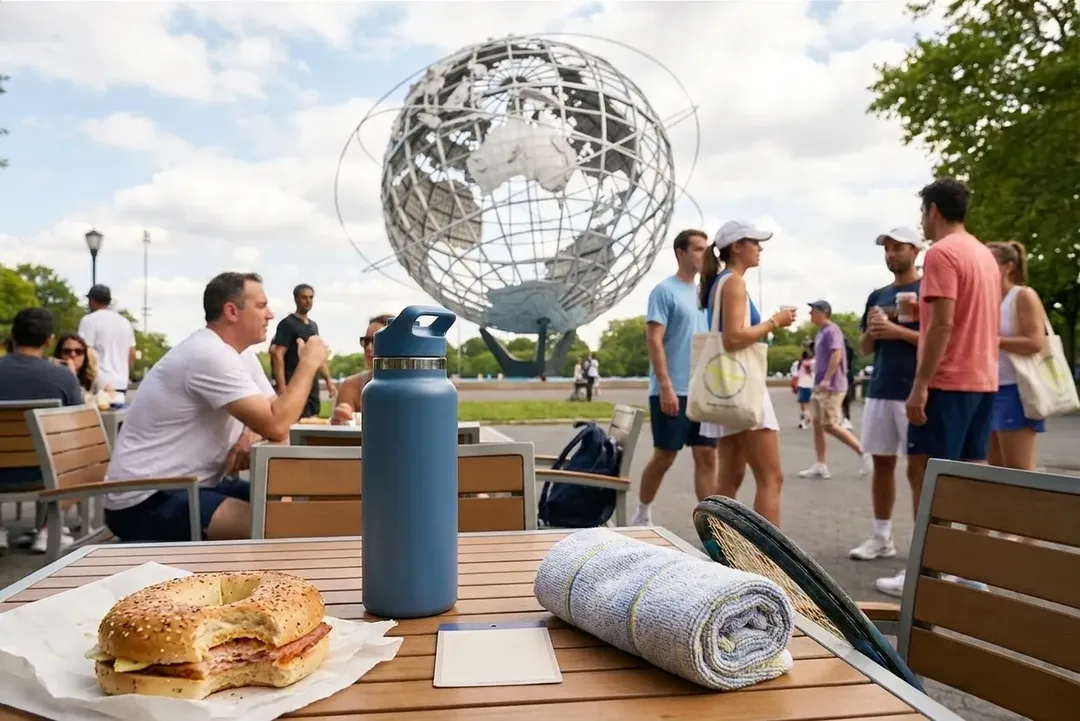
Even if the almanac predicts mild temperatures, the sun reflecting off concrete plazas and metal bleachers can push the feel-it temp much higher. The US Open grounds include shaded lounges, misting stations, and tree-lined paths near the Unisphere, but prime shade fills fast on hot days. Arrive with a refillable water bottle—hydration stations are free and plentiful—and apply sunscreen before you leave your hotel or apartment. Wide-brimmed hats are allowed in general admission areas but not in assigned seats during play, so plan to remove yours courtside. If the forecast shows afternoon heat peaking, schedule your outer-court wandering for morning or late day, and retreat to an indoor food hall or the air-conditioned merchandise pavilion during the hottest hours. Sun safety is not glamorous, but it keeps you comfortable enough to stay for the fifth-set tiebreak.
Rain delays, covered courts, and backup plans
Arthur Ashe Stadium and Louis Armstrong Stadium both feature retractable roofs, so headline matches continue through drizzle and downpour. The outer courts—where early rounds and doubles unfold—do not have cover, and play halts the moment rain arrives. If the Farmers Almanac flags stormy midweek days and you hold grounds passes, treat delays as invitations to explore nearby Queens. The 7 train runs every few minutes; you can reach Jackson Heights for Colombian arepas, Flushing's food courts for hand-pulled noodles, or Long Island City's waterfront parks in under twenty minutes. Check the US Open app or courtside screens for resumption estimates, and keep your ticket handy for reentry. Rain delays are frustrating only if you have no backup plan—build one before you board the subway, and a two-hour pause becomes a neighborhood tasting tour.
What to pack for a three-week forecast range
- Lightweight long-sleeve shirt for sun protection and cool evening sessions
- Packable rain jacket or poncho that fits in a small bag
- Refillable water bottle with carabiner clip for easy carry
- Sunscreen stick for quick reapplication without greasy hands
- Portable phone charger to keep the US Open app and transit maps live
- Compact umbrella that survives wind gusts on the walk from the station
- Comfortable walking shoes with grip—grounds are vast and sometimes wet
- Small backpack or crossbody bag that meets venue security size limits
The Farmers Almanac cannot tell you whether September 5 will be sunny or stormy, but it can tell you that both are possible within the same week. Pack for variability, not a single forecast, and you will stay comfortable whether you are watching qualifying rounds in August heat or the women's final under September clouds.
Queens food stops and weather-proof breaks
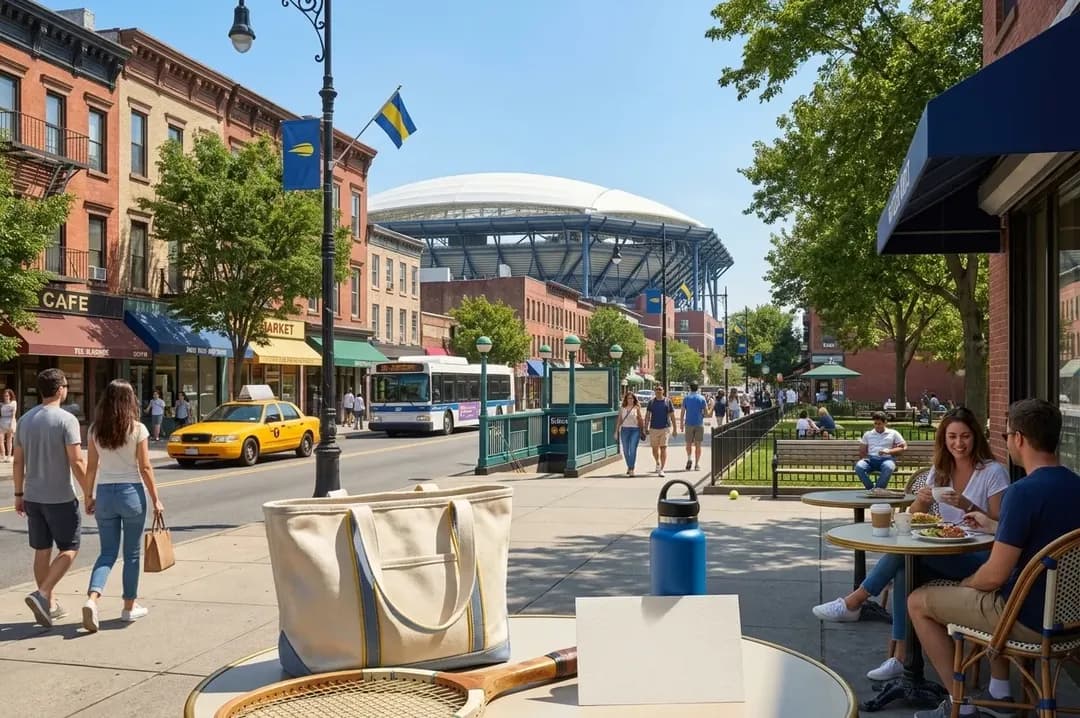
If the almanac suggests unsettled weather and you want a guaranteed dry lunch, skip the outdoor food village and ride one stop west to 111th Street or east to Flushing–Main Street. Corona's Roosevelt Avenue corridor is lined with taquerías, pupuserías, and bakeries under awnings and storefronts. Flushing's New World Mall and food court sit entirely indoors, offering dozens of stalls serving dumplings, hot pot, and bubble tea while you wait out a passing storm. Long Island City's cafés and breweries provide air conditioning and river views if you are arriving early or leaving late. The US Open grounds are excellent, but they are also exposed; knowing where to find four walls and a roof within ten minutes keeps your day on track when the sky turns gray.
Evening sessions, sunset, and September light
September evenings in Queens arrive earlier each week, and the Farmers Almanac often notes the shift from long summer twilight to crisp autumn dusk. If you hold night-session tickets, you will watch the sky fade from blue to pink behind the Ashe Stadium roof, then settle into floodlit tennis as temperatures drop. Bring a layer even if the afternoon was warm—concrete holds daytime heat, but breezes off Flushing Bay can chill quickly once the sun sets. The 7 train runs late, and the walk back to Mets–Willets Point is well-lit, but evening crowds are thick after marquee matches; allow extra time and stay aware of your surroundings. Sunset during the US Open is a photographer's gift—golden light on the Unisphere, long shadows across the practice courts—but it is also a reminder to check your jacket pocket before you leave your seat.
US Open® is a registered trademark of the United States Tennis Association. Karpo is an independent travel tool and is not affiliated with, endorsed by, or connected to the USTA, the US Open, or the USTA Billie Jean King National Tennis Center.
Tags: #USOpen2026 #Queens #FlushingMeadows #KarpoFinds #Karpo #TennisTravel #NYCLocalLife #FanWeek #USTennis #NewYorkGuide #FarmersAlmanac #Buzz
All trademarks are the property of their respective owners.
Ask Karpo first
Want to know what is actually open, how to time the trip, and where to pause around Queens? Ask Karpo for the latest public US Open context, a respectful visitor plan, and a live route around Flushing Meadows before you head out.
Ask Karpo for more information.
Keep reading
- Where to Eat Near Penn Station That Isn't a Chain
 Andytown Coffee in the Outer Sunset: The Snowy Plover Explained
- Best Things to Do in Chicago: What the City Gives Away