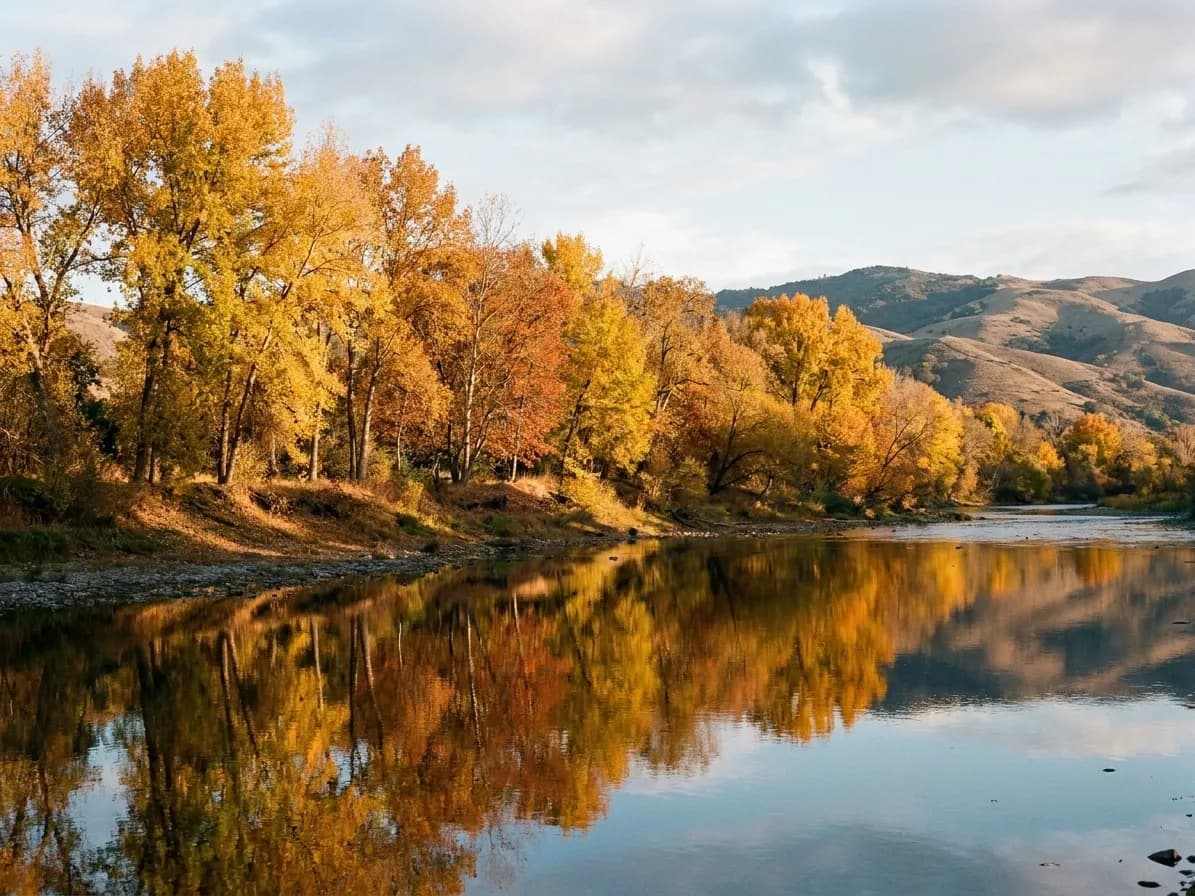
The standing joke is that California has two seasons and neither of them is autumn. It is wrong, but understandably so: the colour here happens above about four thousand feet, in specific valleys, over a window of roughly three weeks, and it is invisible from any city. Anyone hunting waterfalls and nature near San Francisco in October is chasing two different things — the falls, which are at their annual low, and the foliage, which is at its peak — and the trips that work are the ones that admit this.
Peak colour moves downhill by about a thousand feet a week. Ask Karpo where it has actually turned before you commit a Saturday.
Where the colour actually is
Three zones, roughly. The eastern Sierra, which has the aspen groves and is the genuine spectacle, peaks late September to mid-October and is a long way from here. The mid-elevation Sierra foothills and the Gold Country, which turn in late October and early November and are the realistic day-trip option. And the wine valleys north of the bay, where the vineyards turn gold and red in November and which are the closest thing to reliable colour within ninety minutes.
The mechanism is elevation and cold nights, which is why the timing runs from high to low. Peak colour descends roughly a thousand feet a week through October. A trip planned three weeks out is a guess; a trip planned four days out, using current reports, is close to reliable.
The car-free versions that actually work
The regional rail line running north from the ferry terminal in Marin gets you into the wine country corridor without a car, and the vineyards there are the most accessible foliage from the city. Combining the ferry with that line makes for a pleasant three-hour journey each way that is itself part of the day rather than an obstacle.
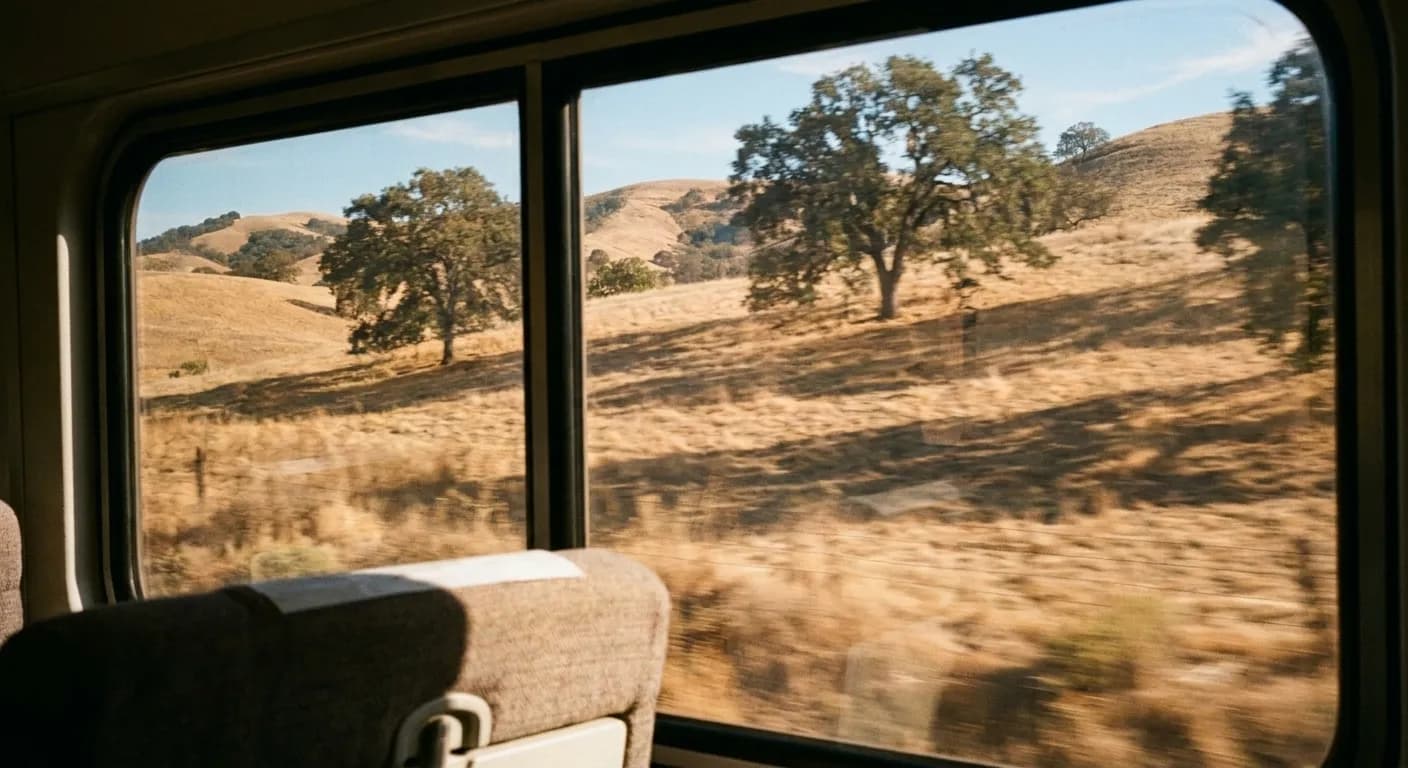
The long-distance rail route east climbs into the Sierra and is, unusually, a genuinely scenic train — it runs through canyon and forest at exactly the elevations that turn in October. As a day trip it is impractical, but as an overnight it is one of the better autumn options available from this city and requires no driving at all.
Waterfalls in October: manage the expectation
Be direct about this: the coastal-range waterfalls are done by October in a normal year. The ones that still run are fed by springs or by dam releases rather than by recent rain, and they are a small subset. Anyone driving two hours to a seasonal fall this month is going to see a rock face, and the photographs that convinced them were taken in March.
What does work is the high country, where snowmelt and elevation keep some water moving later, and the handful of year-round falls in the redwood canyons to the south. Those are worth the trip. The rest are worth waiting for, and the wait is not long — the first substantial storms usually arrive in November and the falls are running again within days.
How to time it without guessing
There are seasonal foliage trackers for California that report by elevation and county, updated weekly through the autumn, and they are accurate enough to plan around. The reliable pattern is that any given spot has about a ten-day useful window and that the week after peak is often better than the week before, because the ground colour compensates for what has come off the trees.
Weekday trips are dramatically better than weekend ones for all of this. The wine-country roads and the foothill towns are busy on an October Saturday in a way that undoes the point of going, and the trains are quieter midweek too. If your schedule permits a Tuesday, the same trip is a different and better experience.
What to bring and what it costs
Layers, because the temperature swing at elevation in autumn is large — a thirty-degree difference between dawn and mid-afternoon is normal. Water, because the air is dry and the hiking is deceptive. And cash for the small-town places that still prefer it.
The car-free versions of these trips are cheap: a ferry and a regional train fare, with no parking, no fuel and no park entry if you stay on public land. That is a meaningful part of the appeal, and it is the reason to build the day around a rail line rather than around a specific destination that happens to need a car.
The shape of a good autumn Saturday
Leave early, accept one destination rather than three, and build in a long lunch. The mistake with all of these trips is treating the colour as a checklist item to be photographed and left, which produces a day spent mostly in transit. The valleys are pleasant to sit in, the towns are quiet in the off-season, and the whole thing works far better at a slow pace.
The other thing worth doing is going back to the same place twice, two weeks apart. Autumn here is a process rather than a moment, and the second visit — with different colour, different light and no novelty to distract from it — is usually the better of the two. That is an unusual piece of advice and it holds up.
Book the return leg with more slack than you think you need. The trains and ferries thin out considerably in the evening off-season, and a missed connection in a small town at seven on a Sunday is a long wait rather than a short one. An hour of margin turns the whole trip from a schedule into a day out.
Tags: #SanFrancisco #FallFoliage #AutumnCalifornia #CarFreeTravel #TrainTrips #WineCountry #SierraNevada #NatureNearSF #WeekendPlans #BayArea #DayTrips #Waterfalls #SlowTravel
All trademarks are the property of their respective owners.
Ask Karpo first
Ask Karpo where the autumn colour has actually turned near San Francisco this week and how to get there without a car.