San Francisco closes its streets more often than almost any American city, and the results range from genuine neighborhood institutions to events that have quietly become attractions for people who do not live here. The difference matters if you want a good Saturday. This is the calendar sorted by whether locals still show up — and, where they do not, which hours are still worth it.
Dates move, streets close differently each year, and the good hours are narrower than the programme suggests. Ask Karpo what is happening this weekend, which streets are shut, and how to get in and out without sitting in a reroute.
The ones that are still the neighborhood's own
Carnaval in the Mission, over the Memorial Day weekend, is the largest multicultural celebration in the city and is run by and for the neighborhood, with a Sunday parade that takes hours to pass. Fillmore Jazz Festival in early July closes a dozen blocks for what is billed as the largest free jazz festival on the West Coast, and it remains a Fillmore event rather than a tourist one. The Castro Street Fair, on the first Sunday of October, was founded by Harvey Milk in 1974 and still functions as the neighborhood's own party.
Fiesta on the Hill in Bernal Heights, the Potrero Hill Festival, the Nihonmachi Street Fair in Japantown and the Sunset's newer night market all belong in the same category: small enough that the people running the stalls live within a few blocks.
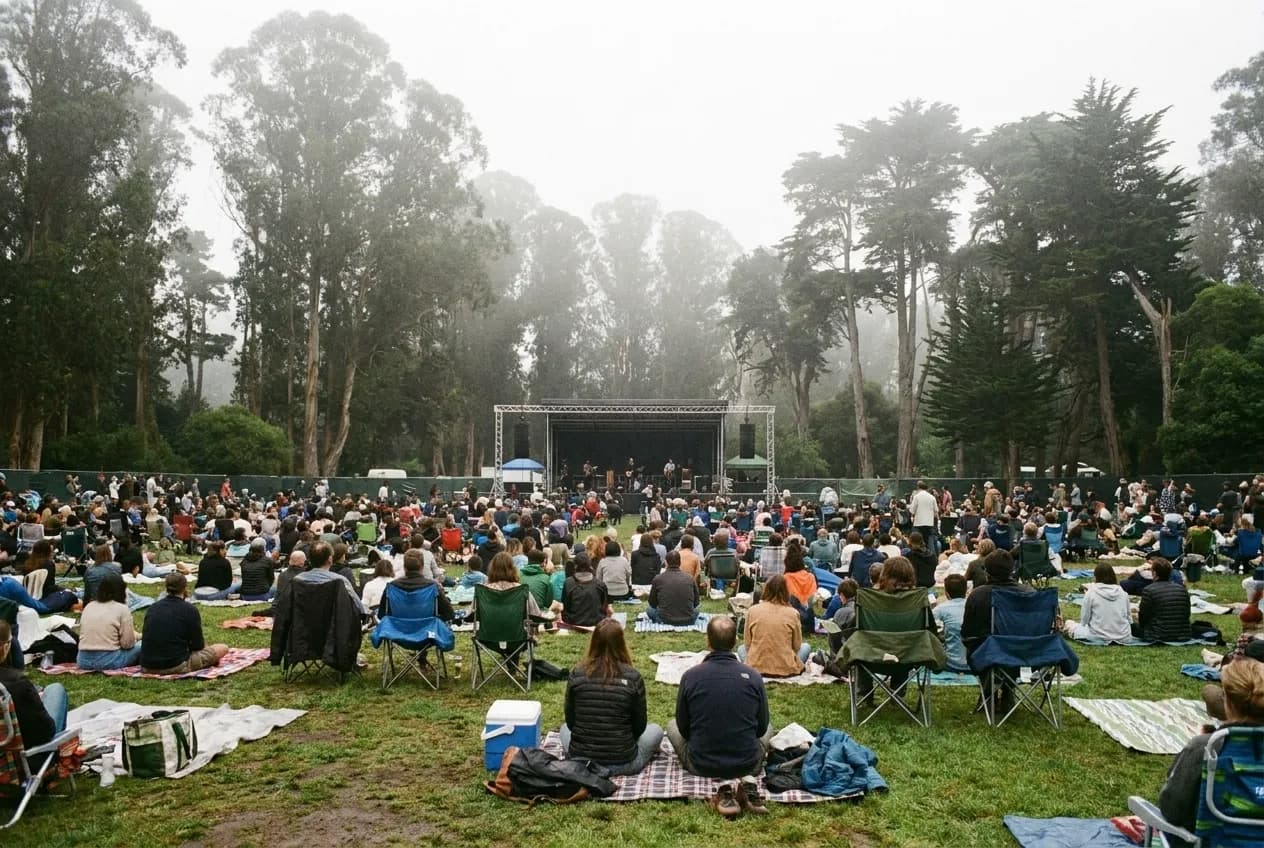
The big free music weekends
Hardly Strictly Bluegrass takes over the western end of Golden Gate Park for a weekend in early October, with several stages, an enormous line-up and no ticket of any kind — it was endowed to be free in perpetuity by its founder. It is the single best free event in the city and the crowd is entirely local. Stern Grove Festival runs free Sunday concerts through the summer in a eucalyptus amphitheatre in the Sunset, and the trick there is arriving early enough to get a spot on the slope.
The ones that changed
The Haight-Ashbury Street Fair and the North Beach Festival are still enjoyable and are now largely visitor-facing, which is fine as long as you know what you are walking into. Folsom Street Fair in late September is the world's largest leather and kink event, an important part of the city's history, and definitively an adult environment — go informed rather than by accident.
Pride at the end of June is enormous, genuinely significant, and a completely different experience depending on whether you attend the parade, the Civic Center celebration or the neighborhood parties around them. Locals mostly pick one and skip the rest.
The cultural calendar sits alongside the street-closure one and is at least as good. The Chinese New Year Parade in February is the largest celebration of its kind outside Asia and has run since the 1860s. The Cherry Blossom Festival takes over Japantown for two weekends in April. The Día de los Muertos procession through the Mission at the start of November is a genuine community observance rather than a spectacle, and it should be treated that way by anyone attending.
Sunday Streets, the underrated one
Several times a year the city closes a long stretch of road in a different neighborhood to cars entirely for a few hours — no stage, no vendors dominating, just the street given back. It is the most pleasant version of all of this and the one that best rewards simply turning up on a bicycle with no plan. Because it moves neighborhoods each time, it stays a local event by construction.
Two more that anchor the autumn: the Folsom weekend and the Castro fair fall a week apart, and Hardly Strictly lands between them, which makes late September and early October the densest stretch of the city's outdoor calendar. If you only do one festival weekend a year in San Francisco, that is the one to pick — the weather is reliably better in October than it is in July, which surprises everyone who has not lived here.
How to do a San Francisco street fair properly
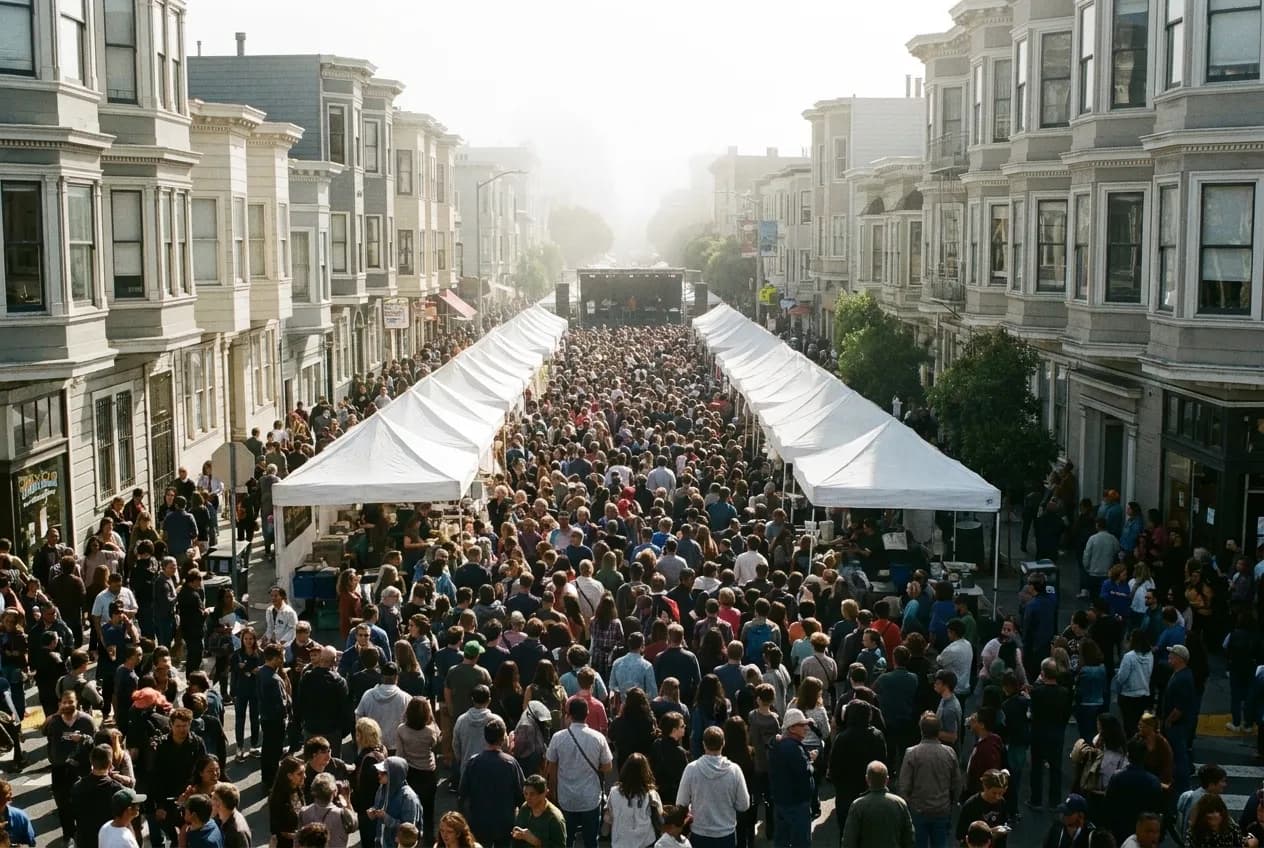
Go early. Every one of these events is at its best in the first two hours, when the food queues are short and you can actually see the stalls. By mid-afternoon the crowd density doubles and the experience becomes about navigating rather than looking.
Take transit and expect reroutes: closed streets mean bus lines shift, and the diversions are posted at stops rather than always reflected in apps. Bring cash for the small vendors and a layer for the moment the fog arrives, which in this city can be the difference between shirtsleeves and shivering inside twenty minutes. And eat at the neighborhood's own restaurants rather than only at the stalls; the fair is the reason to be there, but the block's permanent kitchens are usually better and are having their best day of the year.
Practical notes
Dates shift year to year, and several of these are on the same weekends as each other — confirm before making the trip. Most neighborhood fairs ask for a suggested donation at the entrance; it funds the following year and is worth paying. Dogs are a bad idea at the crowded ones. Accessibility varies enormously between events, so check in advance if it matters. And if the forecast says wind rather than fog, believe it — a twenty-knot afternoon on an exposed street in this city ends events early. Finally, the neighborhood fairs are run by volunteers on thin budgets, and most of them are one bad year away from not happening again — turning up is the whole mechanism by which they survive.
Tags: #SanFrancisco #EventsNearMe #StreetFair #Carnaval #FillmoreJazz #CastroStreetFair #HardlyStrictly #SternGrove #SundayStreets #FreeEvents #MissionDistrict #Japantown #WeekendPlans #SFCulture #ExploreSF
All trademarks are the property of their respective owners.
Ask Karpo first
Want to know which of these is on this weekend, which streets are closed, and how to get there without ending up in a reroute? Ask Karpo for the dates, the transit changes and the hour to arrive if you want it to be enjoyable.