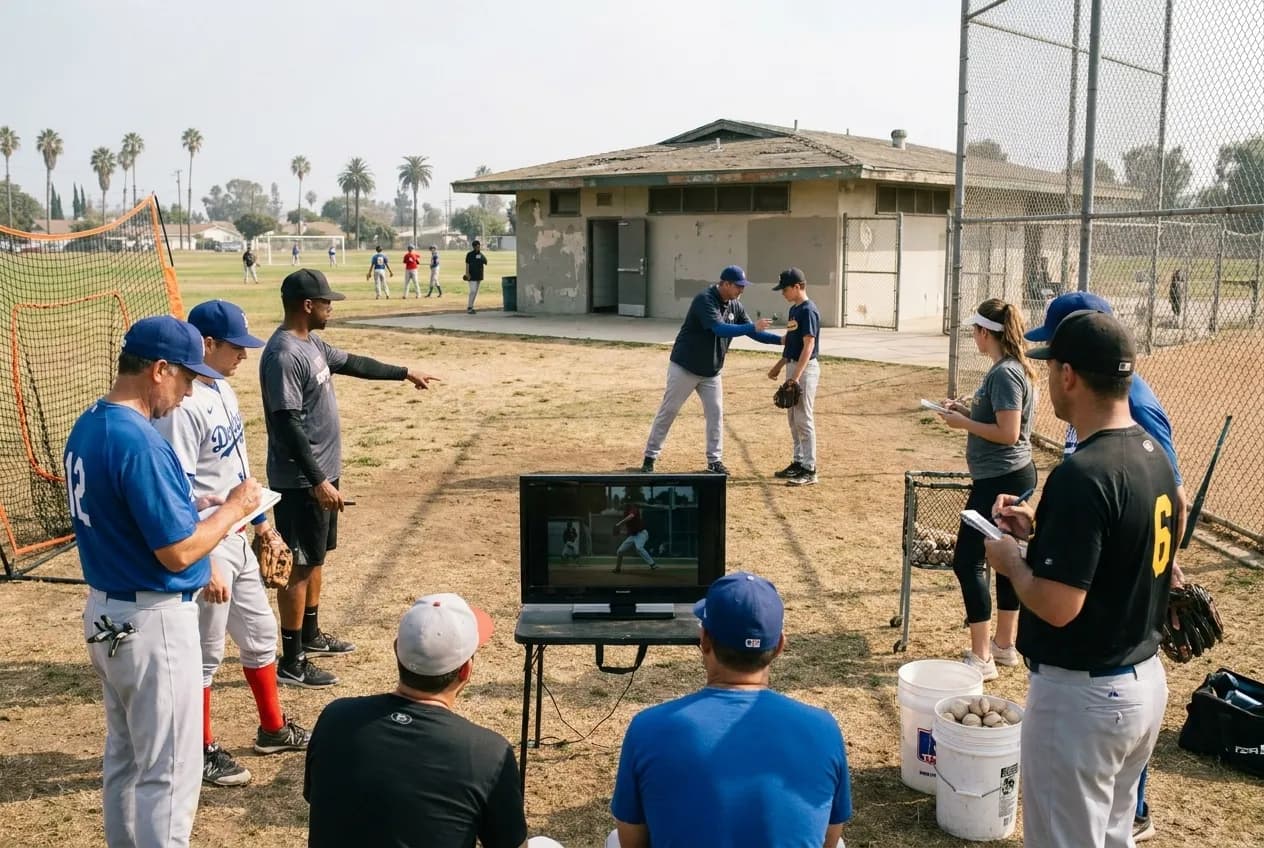
Amateur baseball players looking to refine their throwing motion by studying professionals like erik miller can find valuable free resources across Los Angeles through public recreation programs. While no clinics specifically feature Miller himself, the city's parks system and community baseball organizations offer weekend pitching development sessions that include slow-motion video review, peer feedback, and coaching guidance—all without registration fees or equipment purchase requirements. These sessions attract intermediate-level players working solo or with practice partners who want structured improvement opportunities on a budget. The challenge lies in identifying which fields run consistent programs, understanding what video technology participants can expect versus what they need to bring, and recognizing the tradeoffs between drop-in flexibility and the continuity that builds measurable skill gains over multiple visits.
Text Karpo your starting point, timing, group size, and priorities for a Los Angeles plan tailored to this exact situation, with one realistic backup before you leave.

Locating Free Pitching Development Sessions Across LA County
Los Angeles County maintains dozens of baseball diamonds within its parks system, but not all facilities host organized pitching clinics with coaching staff present. Budget-conscious players should start by checking community center bulletin boards at larger parks with multiple diamonds, since these venues more often coordinate weekend skill sessions. Some neighborhood leagues allow non-members to attend practice drills when space permits, though this access varies by season and field availability. The absence of a centralized online calendar means players often discover opportunities through word-of-mouth or by visiting fields during typical weekend morning hours when volunteer coaches gather.
Transportation logistics matter when comparing options, since carrying personal video equipment on public transit adds complexity. Metro bus and rail lines connect many park locations countywide, with the system offering a regular fare of $1.75 and a daily cap that provides unlimited rides after three trips for no more than $5 total. Players traveling from the Westside to fields in the San Fernando Valley or from Downtown to South LA should verify transfer times and consider whether lugging a tripod and tablet justifies the transit savings versus driving directly to a closer facility with fewer amenities.
What Video Analysis Tools You'll Find Versus What to Bring
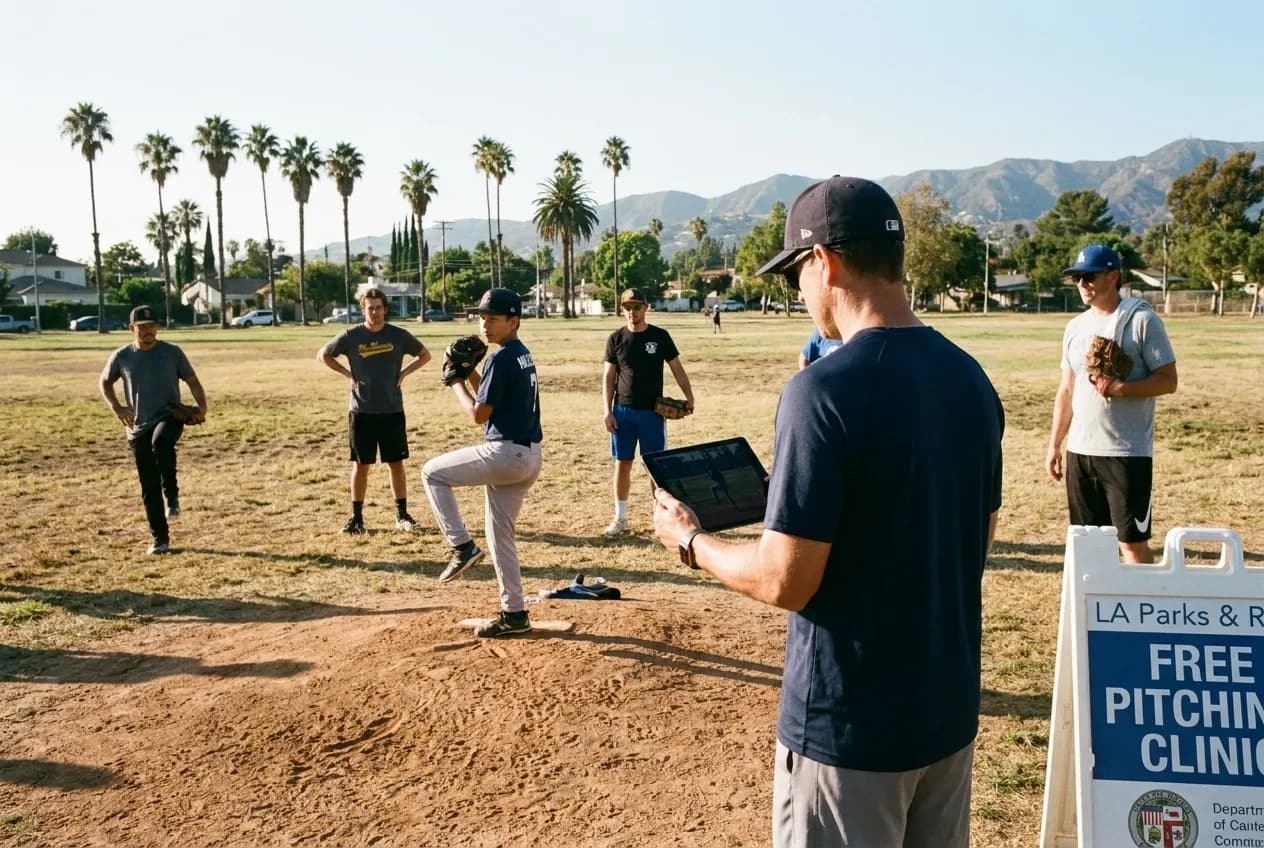
The term "video analysis" means different things at different free clinics. Some programs provide a coach with a tablet who records short clips and reviews them immediately with participants, offering verbal cues about arm slot, stride length, or release point. Other sessions expect players to bring their own recording devices—smartphones work adequately when mounted on inexpensive tripods—and the coach's role focuses on live observation rather than playback review. Understanding this distinction before arrival prevents disappointment and helps players pack appropriately.
Slow-motion capability has become standard on most smartphones manufactured in recent years, making frame-by-frame delivery study accessible without specialized cameras. The practical limitation involves viewing angle: a single phone positioned behind home plate captures different information than one set up along the first-base line. Players attending with a practice partner gain advantage by recording from multiple perspectives during the same session, then comparing footage afterward. Coaches at free clinics typically won't provide individualized video editing or multi-angle compilation, so participants seeking that level of analysis should plan to invest time in their own review process between field visits.
Peer Feedback Dynamics and Coaching Availability Realities
Free clinics attract mixed skill levels, which creates both learning opportunities and potential frustration. An intermediate pitcher working on a specific mechanical adjustment—inspired perhaps by studying how professionals like erik miller generate velocity through hip rotation—may receive valuable observations from peers who notice details a solo thrower would miss. Conversely, spending significant time helping absolute beginners understand basic grip techniques can limit personal development time. Players should assess their own patience for collaborative learning versus focused individual work when choosing between larger open sessions and smaller, more advanced groups.
Volunteer coaches at no-cost programs typically cannot provide the same attention span as paid private instructors. A single coach overseeing fifteen participants might spend three minutes with each player per hour, offering one or two key corrections rather than comprehensive mechanical overhauls. This structure works well for athletes who arrive with specific questions—"Does my front shoulder fly open too early?"—and can self-direct their practice between brief coaching interactions. Players expecting continuous supervision or detailed biomechanical breakdowns may find free clinics insufficient and should weigh whether occasional paid lessons would complement the free practice access more effectively.
Equipment Lending Programs and What Remains Your Responsibility
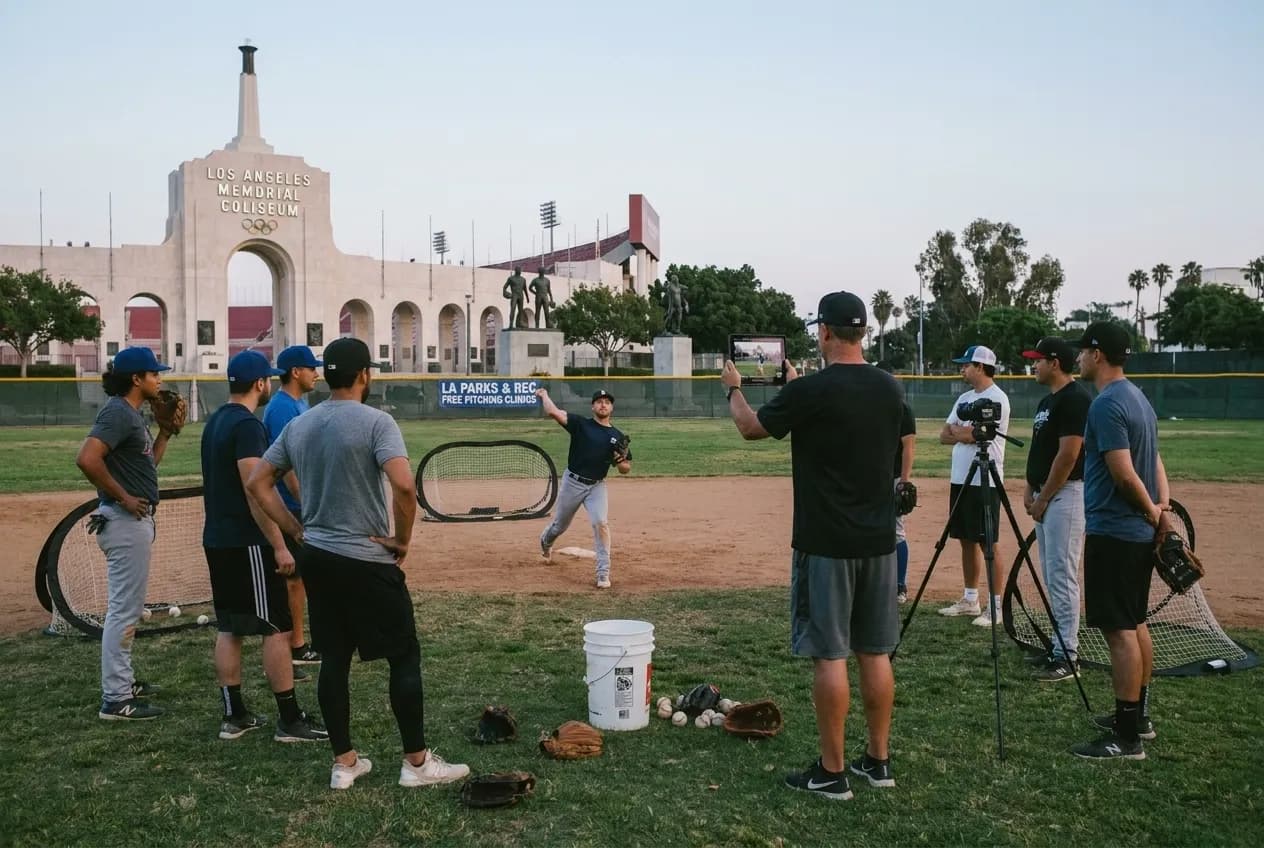
Some LA Parks and Recreation locations maintain equipment lending programs that include baseballs, catcher's gear, and occasionally portable pitching mounds, though availability fluctuates based on budget cycles and theft rates. Players should not assume these resources will be present at every session; calling ahead to confirm what's provided versus what participants must bring prevents wasted trips. Bringing personal baseballs ensures practice continuity even when shared equipment runs short, and carrying a basic first-aid kit addresses minor blisters or abrasions without relying on facility supplies that may be depleted.
Catcher availability represents the most common limiting factor at free pitching clinics. Throwing into a net provides some value for mechanical work, but receiving feedback on pitch location and movement requires a live target. Players attending solo should prepare for the possibility of net-only work or inquire whether the program coordinates catcher volunteers. Those bringing a practice partner can alternate roles, though this arrangement means each person gets less throwing volume per session. Understanding these tradeoffs helps set realistic expectations about what a free two-hour clinic can accomplish compared to paid instruction with guaranteed catcher support.
Measuring Progress Without Formal Benchmarking Systems
Free community programs rarely include radar guns, spin-rate tracking, or other quantitative measurement tools that have become common in paid training facilities. Players focused on velocity gains or breaking-ball development must find alternative progress indicators: video timestamps showing shorter delivery times, peer observations about increased ball movement, or subjective feel improvements in command consistency. Keeping a simple practice journal—noting date, location, drills performed, and one specific thing that felt better or worse—creates continuity across multiple clinic visits when no formal assessment system exists.
The absence of structured progression also means participants must self-advocate for appropriate challenge levels. A pitcher who has mastered basic mechanics but continues attending beginner-focused sessions may plateau, while someone jumping into advanced groups without foundational skills risks injury or discouragement. Honest self-assessment about current ability, combined with willingness to ask coaches which sessions match specific development needs, maximizes the value of free resources. Players serious about long-term improvement often blend free clinic access with occasional paid evaluations that provide objective benchmarks, using the community sessions for volume work between those checkpoints.
Tags: #FreeThingstoDo #Baseball #SportsTraining #LAParksandRecreation #PitchingClinics #VideoAnalysis #AmateurAthletics #SkillDevelopment #CommunitySports #WeekendActivities
Sources consulted: Source 1: laparks.org · Source 2: metro.net · Source 3: discoverlosangeles.com · Source 4: lacity.gov
All trademarks are the property of their respective owners.
Ask Karpo first
Ask Karpo to turn this Los Angeles idea into a current plan for your date, budget, companion, transit preference, and energy level. Karpo can narrow the route and flag what to verify before you go.


