 Haaland Has Seven Goals and Norway Runs Entirely Through Him
⚽️2026 FIFA WORLD CUP

Enzo Fernández’s 448 Passes Couldn’t Break Spain’s Pressure
Argentina's midfield metronome accumulated 448 passes before the final but couldn't translate possession into penetration against Spain's relentless press. The champions were held without a shot until extra time in a 1-0 defeat that exposed the difference between circulation and creation.
Enzo Fernández arrived at the 2026 World Cup final having completed 448 passes across the tournament, the seventh-highest total of any player. Yet when Argentina faced Spain in East Rutherford, those impressive accumulation statistics couldn't prevent a tactical stranglehold that left the defending champions without a single shot until extra time. Spain's 1-0 victory after the additional period illustrated a fundamental truth about modern tournament football: volume doesn't equal value when the opposition controls the spaces that matter.
Ask Karpo about how midfield passing statistics translate into attacking threat, and we'll break down the tactical patterns that separate possession from progression. Text Karpo to explore why high-volume passers sometimes struggle against structured defensive blocks.
The Illusion of Control
Fernández's 448 passes before the final represented more than just technical competence. They reflected Argentina's tournament strategy of controlling tempo through their deep-lying playmaker, allowing the Chelsea midfielder to orchestrate from positions where he could receive pressure-free and distribute across the width of the pitch. In earlier rounds, this approach had provided the platform for Argentina's attackers to find space in transition and exploit disorganized defensive lines.
But Spain presented a different challenge entirely. Their press wasn't designed to win the ball in Fernández's zone but to force Argentina's circulation into predictable patterns. By allowing the midfielder to accumulate touches in deeper areas while aggressively closing passing lanes into advanced positions, Spain created the appearance of Argentine control without the substance. Fernández could pass, but he couldn't progress.

When Passing Lanes Become Dead Ends
The statistic that defined Argentina's frustration was stark: no shots registered until extra time. This wasn't the result of poor finishing or wayward efforts that missed the target. It represented a complete suppression of attacking entries, a systematic denial of the moments where chances are created. For a team that had reached the final, the inability to generate even speculative efforts across 90 minutes spoke to how thoroughly Spain had neutralized their approach.
Fernández's passing volume in the final would have looked similar to his tournament average, maintaining possession through safe connections in the defensive and middle thirds. But the passes that matter most in knockout football are the ones that break lines and create numerical advantages in dangerous areas. Against Spain's organized mid-block, those opportunities never materialized. Every lateral pass was allowed, every backward circulation welcomed, because none of them threatened the Spanish goal.
The Tactical Trap of Accumulation
Modern tournament analytics have created a paradox for possession-oriented teams. High pass completion rates and large passing volumes are often celebrated as indicators of control and quality, particularly for midfielders tasked with building from deep positions. Fernández's seventh-place ranking in completed passes positioned him among the tournament's most active and reliable distributors, a testament to his technical security and positional discipline.
Yet this metric can obscure a crucial distinction between activity and impact. Against opponents who concede possession strategically, high pass totals may simply indicate that a team is doing exactly what the opposition wants them to do: circulating the ball in areas of minimal threat while exhausting creative options. Spain's defensive structure didn't aim to limit Argentina's passing; it aimed to make those passes irrelevant to the final outcome.
Spain's Structural Superiority
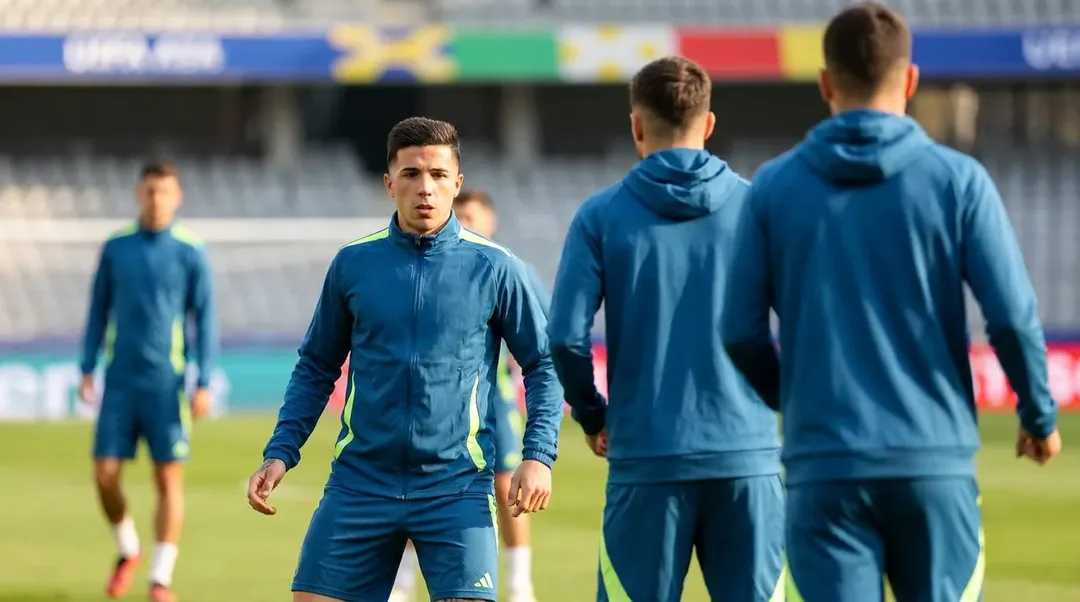
The 1-0 scoreline after extra time reflected Spain's ability to maintain their tactical discipline across 120 minutes. Rather than sitting deep and inviting pressure, they positioned their defensive block to control the vertical spaces between Argentina's build-up phase and their attacking third. This approach required constant positional adjustments and collective pressing triggers, but it prevented the kind of sudden transitions that had troubled other opponents throughout the tournament.
For Fernández, this meant receiving the ball in positions where his trademark long-range passing was either blocked by compact defensive lines or directed toward teammates who were already marked. The Chelsea midfielder's technical quality was never in question, but his ability to influence the match was systematically reduced by opponents who understood that controlling space is more important than controlling the ball.
Extra Time and the Shot Drought
When Argentina finally registered their first shot in extra time, it came not from a breakdown in Spain's structure but from the inevitable fatigue that accompanies an additional 30 minutes of high-intensity football. The fact that it took until this stage for Argentina to threaten the Spanish goal represented one of the most complete defensive performances in recent World Cup final history. Spain hadn't simply limited Argentina's quality of chances; they had prevented chance creation altogether for the duration of regulation.
This drought highlighted the limitations of Fernández's deep role when his team needed penetration rather than possession. While his 448 pre-final passes demonstrated his ability to keep Argentina's attacks alive through multiple phases, the final demanded a different kind of contribution: the incisive vertical pass under pressure, the risk-taking ball into dangerous areas, the willingness to accept lower completion rates in exchange for higher threat potential. Against Spain's structure, those opportunities never presented themselves in conditions where they could be safely attempted.
Lessons from East Rutherford
The match at MetLife Stadium will be studied as a tactical case study in how structured defensive systems can neutralize possession-dominant opponents. For Fernández, the experience underscored that his role in Argentina's system requires support from teammates who can receive in tight spaces and turn pressure into attacking opportunities. When those connections are severed by intelligent defensive positioning, even the most technically gifted midfielders can find themselves passing without purpose.
Spain's victory demonstrated that tournament success at the highest level demands tactical flexibility and the ability to solve problems that raw statistics cannot capture. Fernández's 448 passes represented genuine quality and consistency across the competition, but they also revealed how modern football's most sophisticated teams prepare specifically to turn an opponent's strengths into tactical cul-de-sacs. In East Rutherford, accumulation met its match in intelligent defensive organization, and progression proved more valuable than volume.
Tags: #EnzoFernandez #WorldCup2026 #ArgentinaVsSpain #TacticalAnalysis #MidfieldControl #PossessionFootball #SpainWorldCup #MetLifeStadium #PassingStatistics
All trademarks are the property of their respective owners.
Ask Karpo First
Before your next tournament analysis, get detailed breakdowns of how passing statistics correlate with attacking effectiveness in knockout matches. Karpo helps you understand the tactical nuances that separate circulation from creation, with specific insights into how elite defensive structures neutralize possession-based approaches. Whether you're analyzing midfield performances or studying how teams prepare for finals, Karpo provides the context that raw numbers alone cannot capture.
Ask Karpo for more information.
Keep reading
- Haaland Has Seven Goals and Norway Runs Entirely Through Him
 World Cup Trophy Ceremony Timing Medals and Postmatch Celebrations
 Olise and France's Attack: The Semifinal Tactical Question