 Haaland Has Seven Goals and Norway Runs Entirely Through Him
⚽️2026 FIFA WORLD CUP
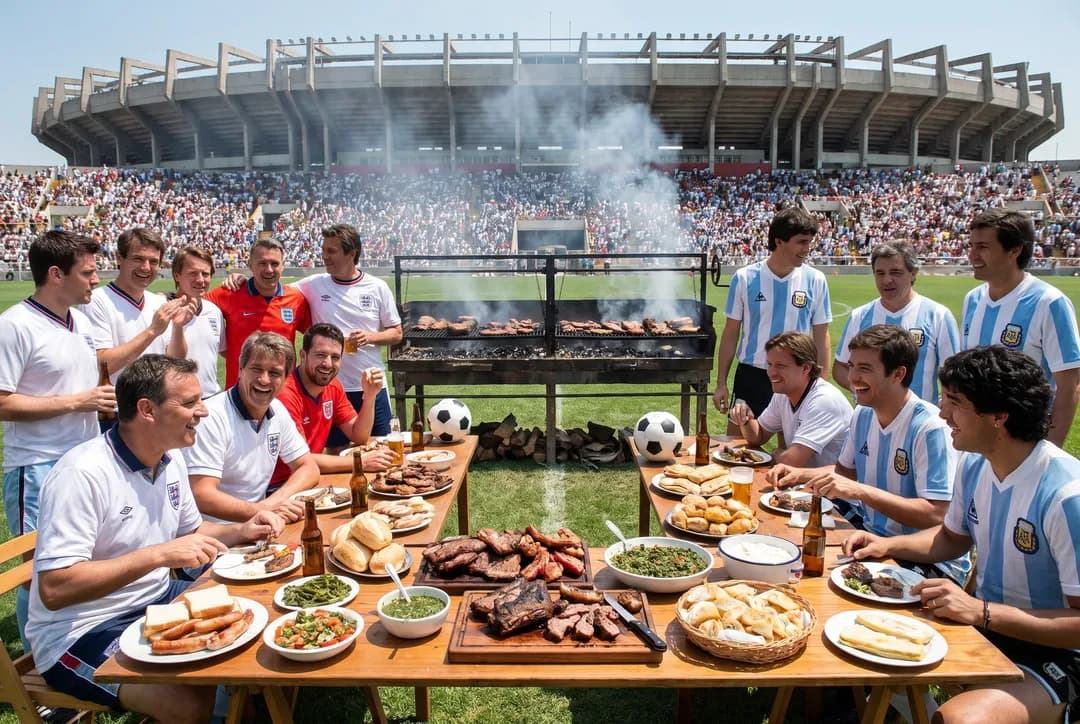
England Argentina Rivalry History Before the Atlanta Semifinal
England and Argentina will meet in Atlanta's World Cup semifinal carrying decades of football history, iconic matches, and unforgettable moments. From the Hand of God to penalty shootouts, this rivalry has defined tournament drama across generations.
When England and Argentina take the field in Atlanta for their World Cup semifinal, they'll add another chapter to one of international football's most compelling rivalries. These two nations have faced each other in moments that transcended sport, producing images and narratives that remain vivid decades later. Understanding the weight of this fixture requires looking back at the tournaments, players, and controversies that built this rivalry into something far beyond ninety minutes of football.
Planning your match day in Atlanta? Text Karpo to build a personalized route to the stadium, discover pre-match dining spots near your hotel, or find the best watch parties if you're experiencing the semifinal from around the city. We'll craft an itinerary that matches your schedule and style.
The 1986 Quarter-Final That Changed Everything
The England-Argentina rivalry crystallized on June 22, 1986, in Mexico City's Estadio Azteca. That quarter-final produced two of the World Cup's most famous goals, both scored by Diego Maradona within five minutes. The first came from a leap in which Maradona's hand clearly punched the ball past goalkeeper Peter Shilton, a moment the Argentine would later describe as scored by the Hand of God. The second goal saw Maradona collect the ball in his own half and dribble past five England players before slotting home what FIFA would later vote the Goal of the Century.
England manager Bobby Robson and his players were furious about the handball, which Tunisian referee Ali Bin Nasser failed to spot. Argentina won 2-1, and the match became inseparable from the broader political context of the Falklands War four years earlier. What might have been remembered as simply a controversial match instead became a flashpoint that gave the football rivalry emotional and historical dimensions that persist today. For many English fans, 1986 remains the rivalry's defining moment, while Argentines celebrate Maradona's genius and defiance.
Redemption and Heartbreak in 1998
When the nations met again in a World Cup knockout match twelve years later, the stage was the round of sixteen in Saint-Étienne, France. This time the match was remembered not for handball but for a red card and penalties. England's Michael Owen, then eighteen, announced himself on the world stage with a stunning individual goal that briefly gave England hope. Argentina's response came through Javier Zanetti and a Juan Sebastián Verón-assisted goal that leveled the match at 2-2.
The turning point arrived early in the second half when David Beckham, reacting to a foul by Diego Simeone, flicked his leg out while on the ground and caught the Argentine midfielder. Danish referee Kim Milton Nielsen showed Beckham a red card, and England played the remaining fifty minutes with ten men. The match went to penalties after a goalless period of extra time, and Argentina advanced when David Batty's spot kick was saved. Beckham faced intense criticism in England, though he would later rebuild his reputation and captain the national team.
The 2002 Group Stage Encounter
The rivalry's next World Cup chapter came in the group stage in Sapporo, Japan. By 2002, David Beckham had become England captain, and the match offered him a narrative of personal redemption. England needed a result to strengthen their position in Group F, while Argentina, among the tournament favorites, sought to control their path to the knockout rounds.
Beckham scored the only goal from the penalty spot early in the first half after Michael Owen was fouled in the area. England's defense, marshaled by Rio Ferdinand and Sol Campbell, held firm through ninety minutes of Argentine pressure. The 1-0 victory was England's first over Argentina in a competitive match since the 1966 World Cup and carried enormous symbolic weight. Argentina would fail to advance from the group stage, a shocking early exit, while England reached the quarter-finals before losing to Brazil.
Maradona, Messi, and Generational Talent
Part of what makes this rivalry compelling is the contrast in footballing identity. Argentina has consistently produced individual talents who define eras, with Maradona and Lionel Messi representing two of the greatest players in the sport's history. Both carried their national teams through tournaments with moments of brilliance that seemed to transcend tactical planning. Maradona's 1986 campaign and Messi's performances across multiple World Cups embody Argentina's romantic vision of football as art.
England's approach has often emphasized structure, physicality, and collective effort, though the nation has produced its share of world-class individuals. The tension between these philosophies has played out across their meetings, with Argentina's flair sometimes overwhelming English organization and English discipline occasionally frustrating Argentine creativity. These stylistic differences, rooted in each nation's football culture, add tactical intrigue to the historical and emotional dimensions of the rivalry.
Beyond the World Cup Pitch
The rivalry's intensity draws from contexts that extend beyond football. The 1982 Falklands War created a political backdrop that neither nation's supporters have forgotten, particularly around the 1986 match. For Argentines, Maradona's performance that day carried meanings related to national pride and post-conflict identity. For the English, the handball felt like an injustice compounded by recent history. These layers have ensured that England-Argentina matches are never simply sporting contests.
Subsequent meetings have gradually shifted focus back toward football itself, though the historical weight remains. Players and managers from both nations acknowledge the fixture's significance while trying to manage the pressure it creates. The rivalry has produced respect alongside tension, with many participants later reflecting on the honor of playing in such consequential matches. As the years pass and new generations take the field, the rivalry evolves while retaining its essential character.
What the Atlanta Semifinal Represents
This semifinal in Atlanta marks the first time these nations have met in a World Cup since 2002, a gap of twenty-four years if the tournament proceeds as scheduled. The match arrives at a stage where both teams are two wins from lifting the trophy, raising the stakes beyond any of their previous group-stage or early knockout encounters. Atlanta's stadium will host a match that carries the accumulated history of 1986, 1998, and 2002, while creating new memories for supporters who have waited decades for another chapter.
For fans traveling to Atlanta or watching around the world, this semifinal represents a rare convergence of sporting quality and historical narrative. The players on the pitch will be focused on tactics and execution, but they'll carry the weight of a rivalry that has produced some of the World Cup's most unforgettable moments. Whether this match is decided by brilliance, controversy, or the finest margins, it will take its place in a story that has captivated football supporters for nearly forty years.
Tags: #WorldCup2026 #England #Argentina #Atlanta #FootballRivalry #SoccerHistory #WorldCupSemifinal
Sources consulted: FIFA World Cup 26 schedule
All trademarks are the property of their respective owners.
Ask Karpo First
Experiencing the semifinal in Atlanta? Text Karpo for a custom match-day plan that covers everything from stadium parking and transit options to pre-match restaurants and post-match celebration spots. We'll help you navigate the city and make the most of this historic occasion.
Ask Karpo for more information.
Keep reading
- Haaland Has Seven Goals and Norway Runs Entirely Through Him
 World Cup Trophy Ceremony Timing Medals and Postmatch Celebrations
 Olise and France's Attack: The Semifinal Tactical Question