 Haaland Has Seven Goals and Norway Runs Entirely Through Him
⚽️2026 FIFA WORLD CUP

Emiliano Martínez Made Final-Record Twelve Saves Against Spain
Emiliano Martínez produced a World Cup final-record 12 saves as Argentina held Spain scoreless through regulation. Spain eventually won 1-0 after extra time, but the goalkeeper’s resistance defined the match before the breakthrough.
Emiliano Martínez left the World Cup final with one of the most striking individual goalkeeping records the match has seen, even as Argentina ended the night on the losing side. In East Rutherford, within the New York City region, Spain eventually defeated Argentina 1-0 after extra time. Before that final separation, Martínez had kept the match level through regulation with a World Cup final-record 12 saves, a number confirmed in the Associated Press final report. The statistic tells the central story of Argentina’s survival before extra time: Spain kept finding ways to ask questions, and Martínez kept the scoreboard unchanged.
Want a recap that fits your night, your group, and your city plans? Text Karpo for a personalized final-recap plan with where to watch reactions, how to celebrate or decompress, and nearby food ideas after the match.
A Final Shaped By One Goalkeeper’s Resistance
The final’s scoreline was narrow, but the path to extra time was defined by repeated Spanish pressure and Martínez’s ability to keep Argentina level. A dozen saves in a World Cup final is not just a large total; it is a record for the event’s decisive match. Without describing any individual stop beyond the confirmed record, the scale of the number makes clear how often Argentina needed its goalkeeper to intervene before the match moved beyond regulation.
That is why Martínez’s performance remains central to the recap, even with Spain lifting the result after extra time. Goalkeeping in a final is often measured by one unforgettable moment, but this was a cumulative performance. The repeated pattern mattered: Spain attacked, Argentina absorbed, and Martínez prevented the match from being decided inside 90 minutes. His work did not change the eventual winner, but it changed the shape and duration of the final.
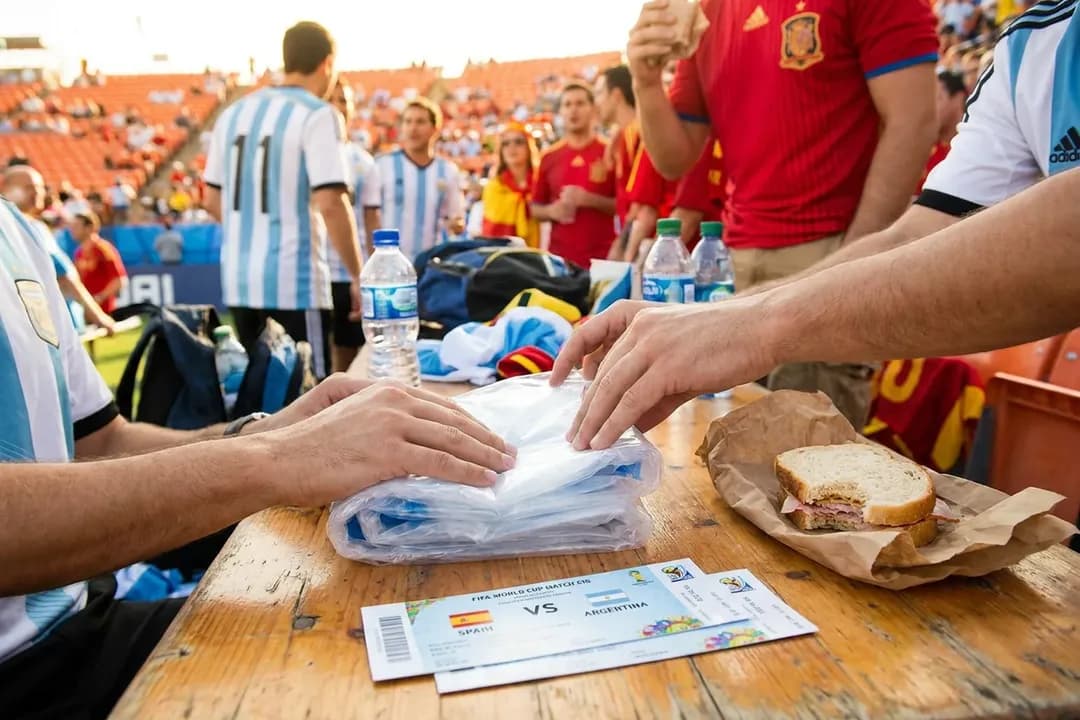
How Argentina Stayed Level Before Extra Time
Argentina’s survival through regulation came from the scoreboard staying untouched, and Martínez was the clearest reason that remained possible. The final report’s 12-save figure gives the performance a concrete frame without needing to add unsupported detail about the difficulty, direction, or timing of specific saves. What can be said safely is that Argentina’s goalkeeper was repeatedly called upon and repeatedly answered before Spain finally found the winning margin after regulation had ended.
In a match that ultimately finished 1-0 after extra time, every scoreless minute before the additional period carried weight. Martínez’s interventions preserved the possibility that Argentina could still decide the final later, whether through a moment of its own or by continuing to stretch the contest. That is the practical value of an elite goalkeeping display: it buys time, protects belief, and keeps tactical choices alive even when the opponent is creating enough to demand constant attention.
Why Twelve Saves In A Final Stand Out
A World Cup final-record 12 saves immediately separates Martínez’s night from ordinary strong performances. Finals usually compress space, emotion, and risk, making every goalkeeper action feel amplified. When the number rises to 12, it suggests a match in which one team’s last line of defense had to carry an unusually heavy burden. The record does not require exaggeration to be meaningful; the confirmed total alone explains why emiliano martínez became one of the night’s defining names.
The record also helps avoid a misleading reading of the final as only a 1-0 Spain win after extra time. That result is decisive and must remain the headline outcome, but the match’s balance before extra time included a major Argentine resistance story. Martínez’s saves kept Argentina in a position where one moment could still change everything. The final eventually turned Spain’s way, yet the goalkeeper’s record shows how long that outcome remained unresolved.

Spain’s Win And Argentina’s Narrow Margin
Spain’s 1-0 victory after extra time is the final fact that frames everything else. Martínez’s record did not deny Spain the trophy, and it should not be written as though Argentina won a moral substitute for the result. The point is more precise: before the decisive extra-time separation, Argentina’s goalkeeper produced enough saves to keep the final level. That combination creates a rare split between the match winner and the most eye-catching individual defensive statistic.
For Argentina, the narrow margin sharpens the meaning of those saves. A final that reaches extra time at 0-0 has already become a test of patience, concentration, and endurance. Martínez’s record was part of how Argentina reached that stage. Spain eventually found the only goal of the match, but Argentina’s path to extra time was not passive or accidental. It rested heavily on the goalkeeper’s repeated ability to prevent the match from breaking open earlier.
East Rutherford As The Stage For A Tense Finish
The setting added to the scale of the night: East Rutherford, in the New York City area, hosted a final that stayed unresolved until extra time. The location matters because World Cup finals are remembered as much by their stage as by their score. In this case, the venue became the backdrop for a goalkeeper record, a scoreless regulation period, and Spain’s eventual 1-0 win. Those elements now sit together in the match’s historical memory.
Nothing about the location needs embellishment to carry significance. A World Cup final in the New York City region already brings global attention, and the match supplied its own drama through the contrast between Spanish pressure and Argentine resistance. Martínez’s 12 saves gave the stadium story a clear central thread before extra time. The crowd and setting framed the occasion, but the verified match details explain why the game will be revisited by fans.
What Martínez’s Record Means After The Final
After a final, statistics can either clarify or distract. In this case, the 12-save record clarifies the match’s rhythm before extra time. It explains why Argentina lasted as long as it did without conceding and why Martínez remained central to the conversation despite Spain’s victory. The number is not a replacement for the result, but it is a meaningful record from the same match. It captures the pressure Argentina faced and the response its goalkeeper provided.
Martínez’s night will be remembered as a rare case where a losing goalkeeper produced a record-setting final performance. Spain’s 1-0 extra-time win is the result that defines the tournament ending, but Argentina’s resistance cannot be separated from the player who kept the final level through regulation. For anyone revisiting the match, that is the key explanation: before extra time delivered the winner, Emiliano Martínez made the saves that kept Argentina alive.
Tags: #WorldCup2026
Sources consulted: Associated Press final report · FIFA final hub
All trademarks are the property of their respective owners.
Ask Karpo First
Ask Karpo for a personalized final recap: tell us your city, your mood after Spain’s 1-0 extra-time win, and whether you want a viewing, celebration, food, or post-match plan.
Ask Karpo for more information.
Keep reading
- Haaland Has Seven Goals and Norway Runs Entirely Through Him
 World Cup Trophy Ceremony Timing Medals and Postmatch Celebrations
 Olise and France's Attack: The Semifinal Tactical Question