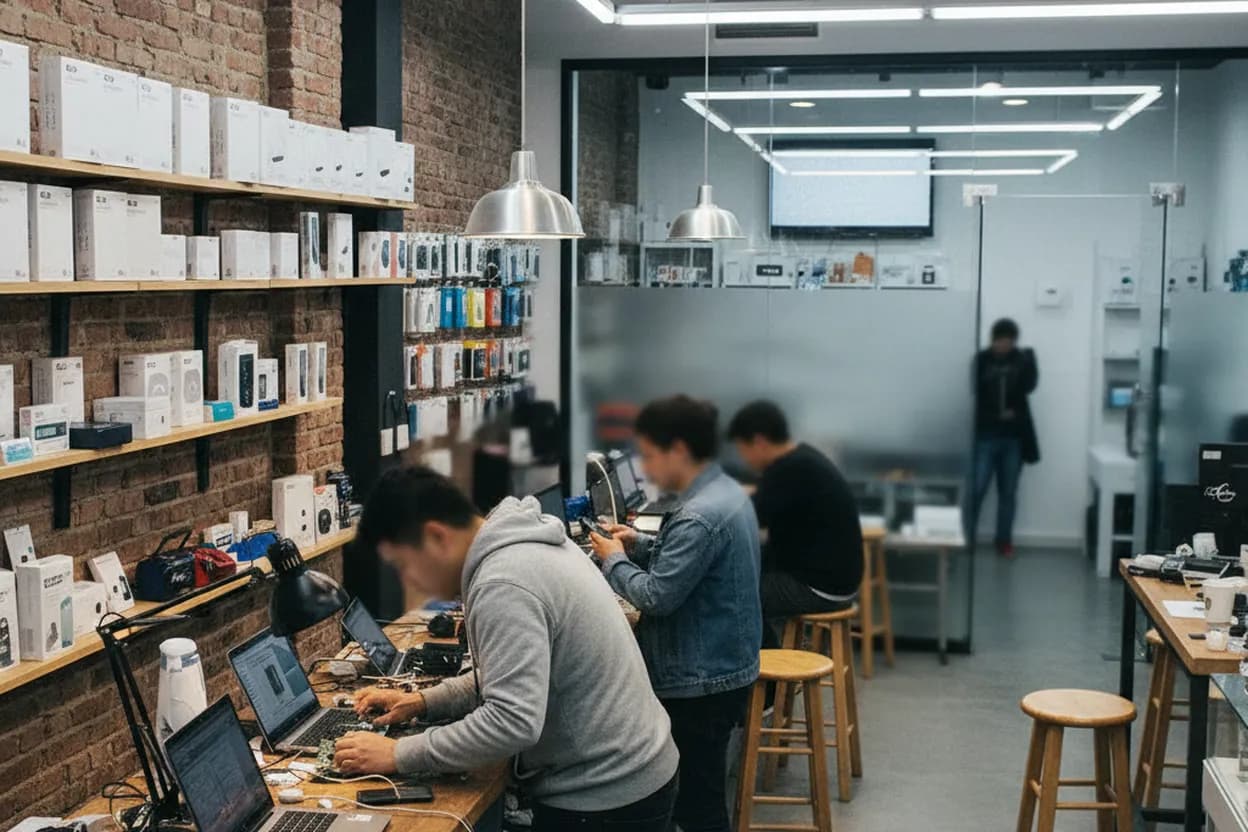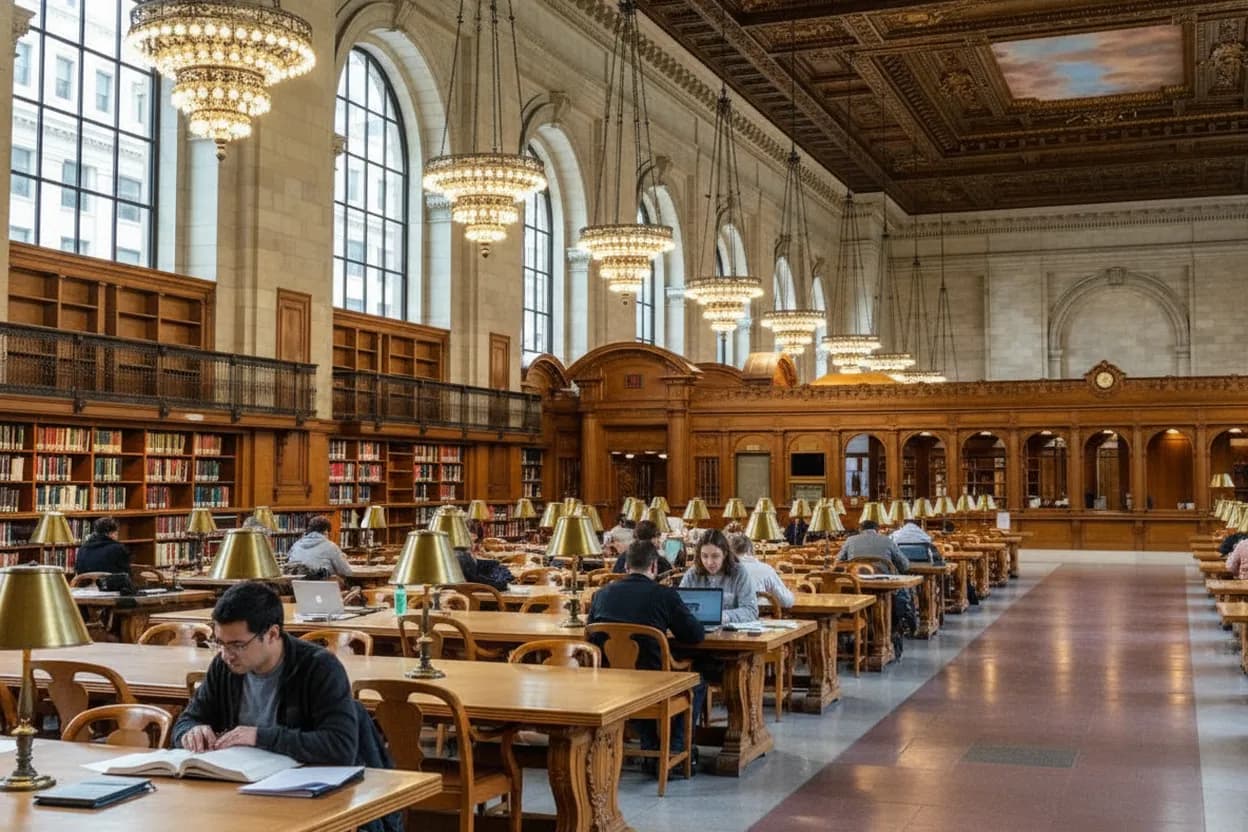
A search spike around elize matsunaga can send New Yorkers toward documentaries, podcasts, clips, and recap threads before the underlying record is understood. The useful response is not to binge harder. It is to build a verification route: separate court fact from narrative framing, ask what editors chose to show, compare sources, and decide what is responsible to repeat. NYC has strong places for that work, from public-library research tools to screen museums and official press-access rules. Use this guide when a true crime story feels compelling but incomplete, especially for students, solo researchers, parents, creators, or anyone trying to slow a viral claim before it becomes borrowed certainty.
Want a calmer way to check true crime stories before you repeat them? Text Karpo for NYC library, archive, and media stops matched to your borough, time, and research depth.

Start With NYPL Research Catalog When a Summary Feels Too Clean
Use The New York Public Library’s Research Catalog as an early filter when a true crime story has moved from reporting into recap culture. Search names, locations, publication titles, and exact phrases, then label what you find: primary record, news report, criticism, biography, or later commentary. That distinction matters because a documentary scene, podcast narration, or social post can make very different source types feel equally firm.
The tradeoff is pace. Research catalogs are built for careful retrieval, not instant certainty, and some materials may require onsite access, staff help, a library card, or a separate request process. If you are working from home, treat the catalog as a map, not a finished answer. Before relying on any item, verify its current access status, location, date, creator, and whether a full text version is actually available.
Use NYPL Digital Collections to Check Images Without Letting Them Do Too Much
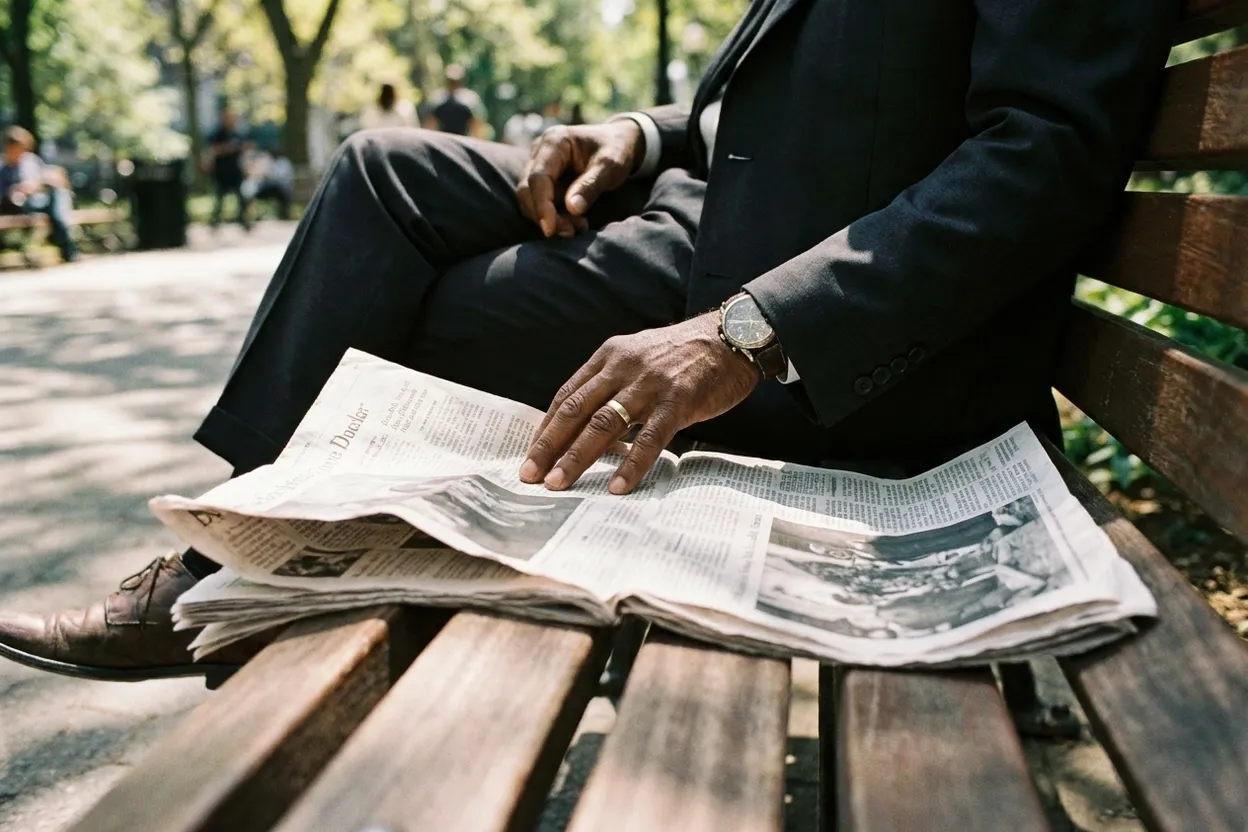
NYPL Digital Collections is useful when a true crime narrative leans on old photographs, maps, posters, or ephemera to create authority. Visual material can help you understand place, period, media format, and institutional context. It should not be allowed to prove motive, guilt, timeline, or character by mood alone. Ask whether the image directly supports the claim being made or merely makes the story feel archival.
The failure mode is overreading. A dated street image or newspaper page may be real and still irrelevant to the specific claim in front of you. Read item descriptions, rights notes, creator names, and dates before using the material. If metadata is thin, make that uncertainty visible in your notes. The backup step is simple: pair every visual source with a written source that explains where it came from and why it matters.
Bring Brooklyn Claims to the Center for Brooklyn History
The Center for Brooklyn History is the better stop when a story makes broad claims about neighborhood memory, borough identity, institutions, or local history. Brooklyn Public Library lists the site at 128 Pierrepont Street and presents it as a research library and public history institution. For media literacy, use it to test whether a narrative’s place-based framing has evidence behind it or is just scenery with confidence.
Do not treat the building and the Othmer Library reading room as interchangeable. Current BPL pages show general Center hours and separate Othmer Library hours, with Sunday closed and partial accessibility details including an accessible entrance, elevator access, and lower-level accessible restrooms. Before going, verify same-day hours, appointment needs, requested material availability, and transit. If archival access is not workable, use exhibitions and staff guidance as your backup.
Watch Editing Choices at Museum of the Moving Image in Astoria
Museum of the Moving Image is the clearest NYC venue for studying how facts become screen experience. Its visit page describes galleries, screenings, education programs, and exhibitions about the art, history, technique, and technology of moving images. Go with one question: how do editing, music, reenactment, voiceover, pacing, and sequence push the viewer toward certainty before the evidence is complete?
Practical details affect whether this is a quick visit or a planned study block. MoMI lists regular hours as Thursday 2:00 to 6:00 p.m., Friday 2:00 to 8:00 p.m., and Saturday and Sunday 11:00 a.m. to 6:00 p.m., with gallery admission posted at $10 to $20 and free Thursday hours. Verify holiday hours, screening ticket rules, accessibility policies, and the 36-01 35 Ave address before committing.
Compare Broadcast Memory at The Paley Museum
The Paley Museum is strongest when the question is how television and audio shape public memory. Its Midtown visit page lists The Paley Archive, archive screenings, exhibits, and programs at 25 West 52 Street. For true crime literacy, compare what a broadcast segment can responsibly hold against what a long-form article, court document, or library database can support. Format limits are part of the evidence trail.
This stop has useful access details and some hard boundaries. Paley lists hours Wednesday through Sunday, noon to 6:00 p.m., with Monday and Tuesday closures, and notes admission categories including free entry for children under 12. The page also says all areas are wheelchair accessible, assisted listening devices are available, and more than 1,000 archive programs have closed captioning. Verify timed-entry availability, archive rules, and the no photography or recording rule inside the archive.
Use NYC Press Credential Rules to Test Access Claims
When a creator presents a true crime post, podcast, or video as journalism, compare the claim with NYC’s official press-access rules. The Mayor’s Office of Media and Entertainment says a City press card helps journalists pass city-controlled lines and attend covered city-government press events. It also states that a press card is not required to work as a journalist in New York City.
That distinction prevents two common mistakes: assuming every independent reporter is illegitimate without a card, or assuming a card grants unlimited access. MOME notes access remains subject to space, safety, and evidence-preservation concerns, and the Press Credentials Office does not accept walk-ins. Your verification step is to check the creator’s byline identity, source trail, corrections policy, document links, and whether any claimed official access matches current city rules.
Make a Go, Slow, or Stop Call Before Sharing
After the library or museum work, force the story into a decision. Go means you can identify the source type, date, author, and evidence behind the claim. Slow means the narrative is plausible but missing context, translation, primary records, or confirmation from a reputable outlet. Stop means the material relies on unnamed posts, invasive speculation, graphic framing, or emotional certainty where documentation should be.
The final verification step belongs right before you share, teach, cite, or recommend. Reopen the official venue or agency pages for hours, prices, access rules, and reservations if you are sending someone to a place. Recheck publication dates and corrections on media sources if you are discussing the case. If a changing fact cannot be confirmed on July 27, 2026, say so directly and make verification part of the recommendation.
Tags: #AskKarpo #BeforeYouGo #NYC #MediaLiteracy #TrueCrime #NYPL #BrooklynPublicLibrary #MuseumOfTheMovingImage #PaleyMuseum #JournalismEthics #ResearchSkills #BackToSchool #SourceCheck #NYCArchives
Sources consulted: Source 1: nypl.org · Source 2: digitalcollections.nypl.org · Source 3: bklynlibrary.org · Source 4: movingimage.org · Source 5: paleycenter.org · Source 6: nyc.gov
All trademarks are the property of their respective owners.
Ask Karpo first
Tell Karpo your date, group size, budget, and starting neighborhood. We’ll check current access, timing, transit, and the cleanest plan for None before you head out.