 Where to Eat Near Penn Station That Isn't a Chain
US Open 2026
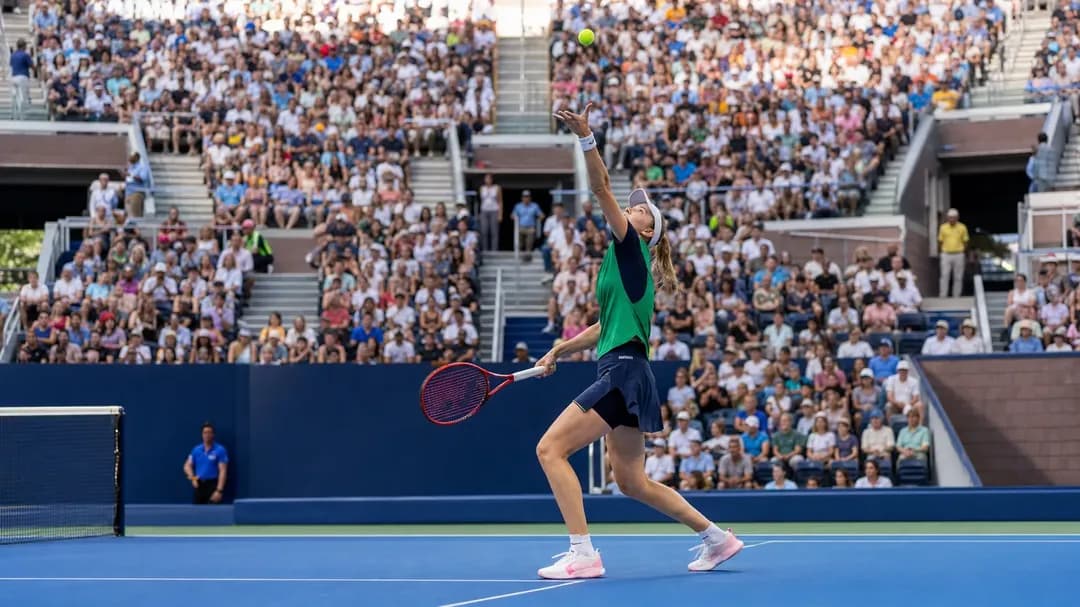
Elena Rybakina’s Serve Could Unlock a Deep US Open Run
If Elena Rybakina is in the US Open field, her serve-first style could shape matches in New York, but the details will decide how far it carries.
Elena Rybakina’s game is easy to describe and harder to solve: a powerful serve, clean first strike, and a calm rhythm that can make opponents feel rushed before a rally has fully formed. The confirmed facts are straightforward: she won Wimbledon in 2022 and is known for one of the more dangerous serves in women’s tennis, paired with efficient attacking patterns. Everything beyond that, including any 2026 US Open participation, seeding, draw, or schedule, should be treated as conditional until official player lists and daily orders of play say otherwise. Still, for US tennis fans and New York visitors, her tactical profile is worth studying. A serve-led player can become especially compelling on hard courts, where reliable bounce, court speed, and confident point construction often reward the player who controls the first two shots.
Text Karpo Now: Tell us what matters most for Elena Rybakina s Serve Could Unlock, and Karpo can turn current US Open updates into a practical plan before you go.
Serve Patterns To Watch
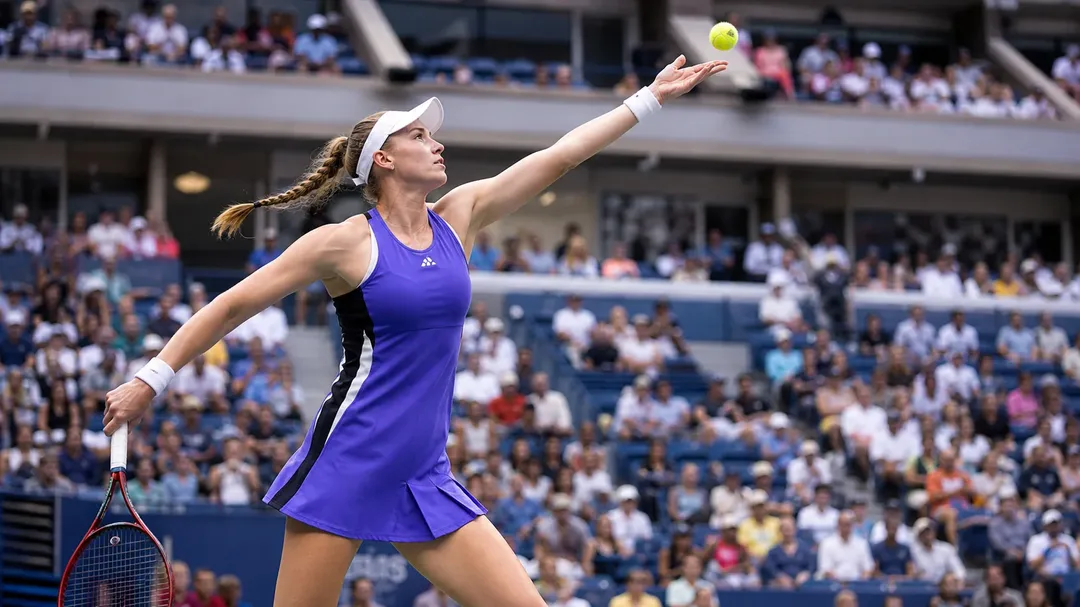
If Rybakina competes in New York, the serve will be the starting point for any realistic analysis. Her advantage is not only pace. It is the way pace narrows the returner’s options. A heavy first serve can force a short block, a floating return, or a defensive chip that lands near the middle of the court. From there, her first-strike tennis becomes most dangerous: one clean forehand or backhand can move the opponent wide, open the opposite side, and shorten the point before movement becomes a long-rally test.
Fans should look beyond aces. The more revealing pattern is what happens after the serve comes back. Does she earn a shoulder-high forehand? Does the return land deep enough to stop her from stepping in? Does she use the body serve to jam aggressive returners, or the wide serve to create open court on the next ball? On hard courts, small directional choices matter because early contact can be rewarded. A serve that pulls the returner one step outside the alley can make the next shot look simpler than it really is.
- Wide serve plus first forehand into the open court.
- Body serve to limit a returner’s full swing.
- T serve when the returner begins leaning toward the sideline.
- Second serve placement that prevents an immediate attack.
Return Games Matter Too
A deep run at the US Open, if she is in the field, would not be built on service games alone. The return game decides whether a server can play from ahead or must survive long scoreboard pressure. Rybakina’s clean ball-striking gives her a clear path on return: shorten the backswing, meet the ball early, and put the server under stress with depth rather than excessive risk. Against big servers, that may mean blocking firmly through the middle to remove angles. Against second serves, it can mean stepping inside the baseline and making the opponent defend immediately.
For normal viewers, the key is not whether every return is spectacular. It is whether she repeatedly starts neutral or slightly ahead. A return that lands deep through the center can be more valuable than a flashy winner because it stops the server from hitting the first forehand with balance. If she can turn enough return points into 50-50 rallies, her first-strike skill becomes useful even when she did not serve. That is especially important in New York, where matches can swing quickly with crowd noise, night-session energy, and a few loose service games.
Movement And Court Geometry
Hard-court geometry is a quiet part of this conversation. A player with Rybakina’s power does not need to paint every line. She needs to hit through sensible lanes. From the deuce court, a wide serve can stretch a returner off the court and leave space behind. From the ad court, a body serve can take away extension and produce a return that sits in the middle. Once the rally begins, the best attacking sequence is often not a winner attempt, but a deep crosscourt shot that pins the opponent, followed by a flatter ball into the open side.
Movement is the balancing question. Efficient attackers can look unbeatable when they strike from stable positions, but the US Open can test how well a player handles awkward balls: low skids, heavy looping replies, quick changes of direction, and defensive stretches into the corners. If Rybakina is forced to hit too many balls while moving backward or reaching outside her preferred contact point, the margins can shrink. If she consistently lands the first heavy shot and keeps her court position near or inside the baseline, the match can tilt toward her preferred tempo.
Watch where contact happens. When she is taking the ball early, her opponent has less time to recover, and the court seems larger on the next shot. When she is half a step late, the same groundstroke can become a safer rally ball rather than a point-changing strike. That difference is often more important than raw speed.
Pressure Points In New York
Serve-first tennis carries a special kind of pressure. Holding serve comfortably can create an aura, but one shaky game can feel costly because the match plan depends on command. At a major, the most revealing moments are often at 30-30, deuce, or break point, when a player must choose between the reliable pattern and the ambitious one. For Rybakina, the question would be whether she can keep the serve location clear, the first strike disciplined, and the emotional tempo steady when a returner begins guessing correctly.
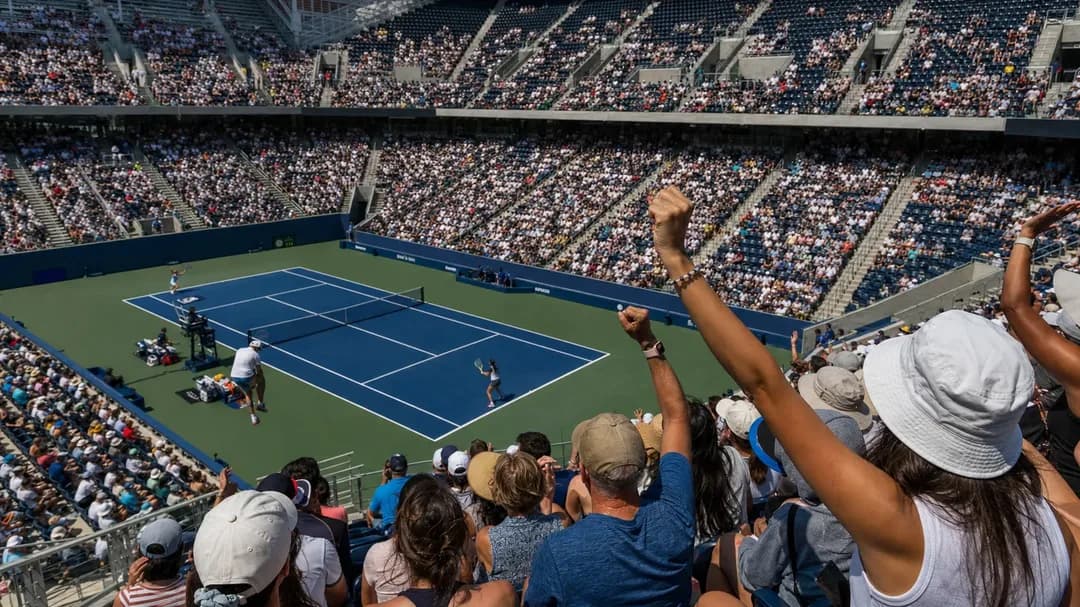
New York can magnify momentum. A loud crowd may reward a great return, a long rally, or a sudden break chance. The best response for a server is usually not to chase even more pace, but to vary location and shape. A body serve can be a pressure play because it aims at the returner’s space, not the sideline. A firm second serve to a less comfortable contact point can prevent the returner from stepping in freely. These are tactical choices rather than guarantees, and they depend on the opponent, conditions, and execution on the day.
Fans should also watch her patience after missed first serves. If a player trusts her second serve pattern and accepts a neutral rally, she is less likely to donate errors. If she feels forced to end points immediately, the opponent can profit by simply making one more ball. The difference between controlled aggression and hurried aggression may decide whether a powerful game travels through multiple rounds.
Practical Notes
For visitors planning around the US Open, use official tournament player pages and the event schedule for confirmed information before making assumptions about who will play, when, or on which court. If Rybakina is listed on a day’s order of play, warmups can be useful viewing because serve rhythm, return position, and first-step movement are easiest to read before the match becomes tense. In the stadium, a higher seat helps reveal patterns and court geometry, while a closer seat emphasizes pace and contact sound. Tennis timing can shift quickly, so schedule flexibility matters.
Tags: #USOpen2026 #Tennis #GrandSlam #NewYorkTennis #ArthurAsheStadium #FlushingMeadows #USOpenGuide #TennisFans #SportsTravel #HardCourt #NewYork #KarpoFinds
Sources consulted: wtatennis.com — Official reference · usopen.org — Official reference · usopen.org — Official reference
All trademarks are the property of their respective owners.
Ask Karpo first
Want to know what is confirmed, when to show up, and how to make elena rybakina s serve could unlock work for your day? Ask Karpo for current US Open updates, a respectful fan plan, and a live route around Flushing Meadows.
Ask Karpo for more information.
Keep reading
- Where to Eat Near Penn Station That Isn't a Chain
 Andytown Coffee in the Outer Sunset: The Snowy Plover Explained
- Best Things to Do in Chicago: What the City Gives Away