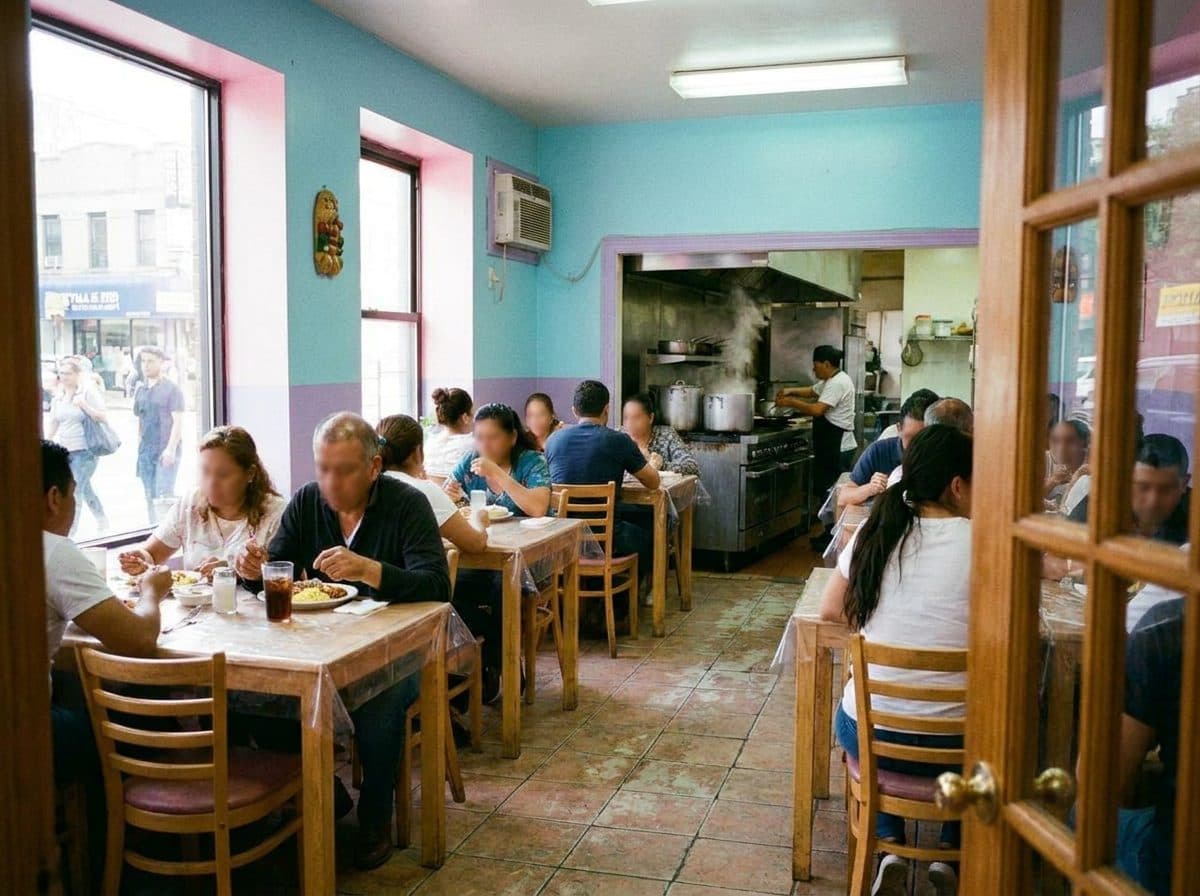
The lunch hour at this Ecuadorian spot in Jackson Heights operates on a different clock than the one outside. Steam rises from plates of seco de pollo before anyone checks the time, and the rhythm of the meal—unhurried, deliberate, communal—feels lifted from a Sunday table even though it's Tuesday. The restaurant sits on a stretch of Roosevelt Avenue where the train rumbles overhead every few minutes, but inside, the clatter of forks and the low hum of conversation drown out the city's tempo.
The Kitchen Stays in Plain Sight
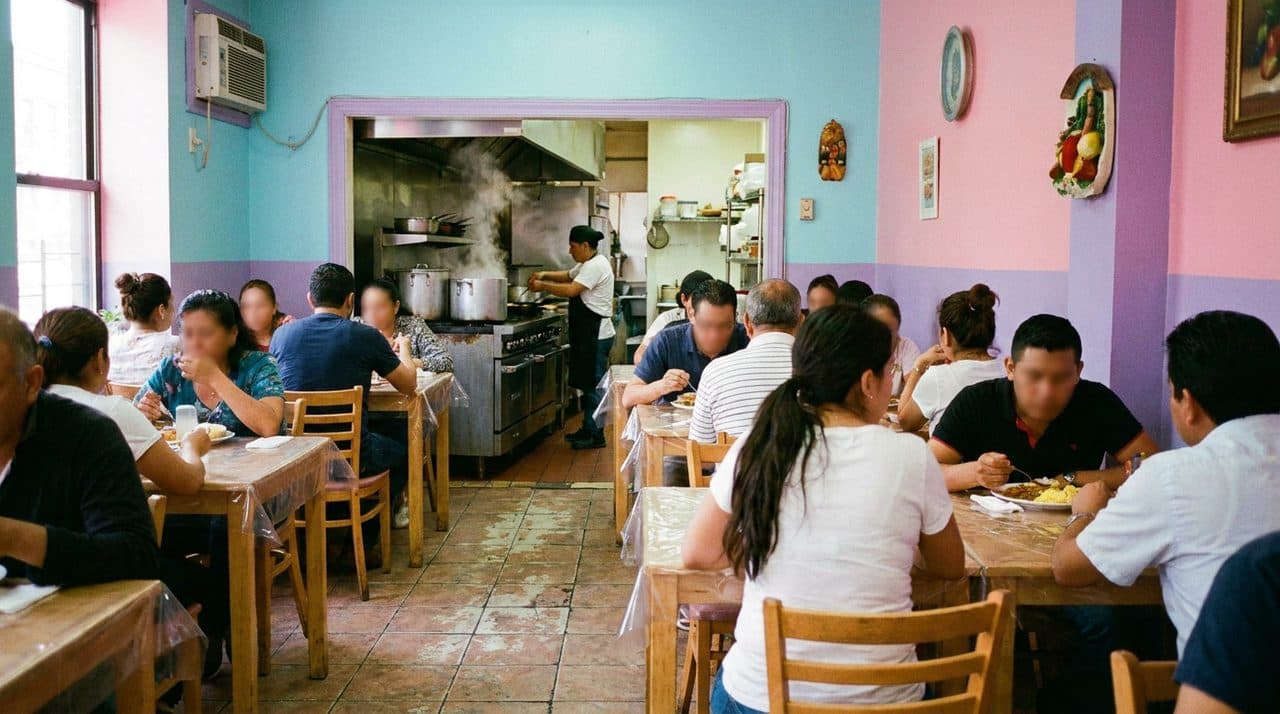
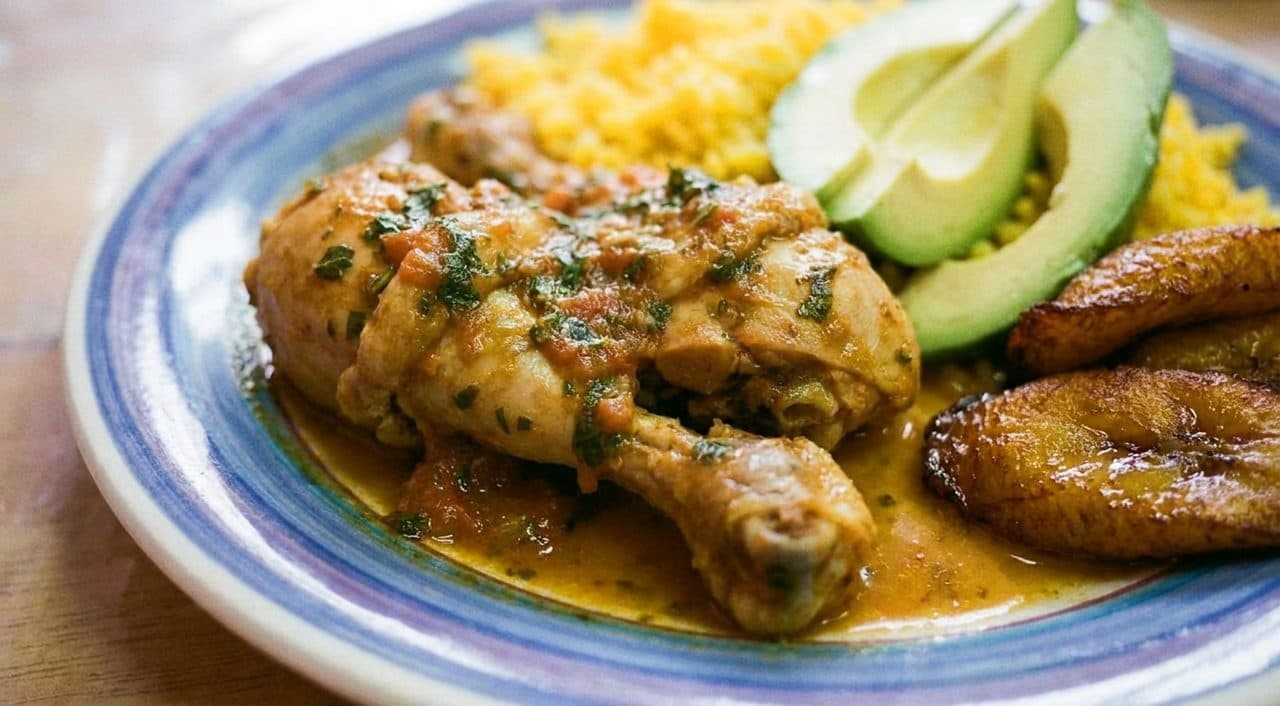
The cook stands visible through the doorway that separates the dining room from the kitchen, her hands moving between pots that have been simmering since early morning. The seco de pollo doesn't arrive on command—it arrives when it's ready. The chicken falls apart under the weight of a fork, braised in a sauce thick with cilantro, beer, and tomato that clings to every grain of rice on the plate. The scent of cumin and garlic threads through the room, mixing with the sharper note of ají that sits in small plastic containers on every table. Regulars know to ask for extra sauce, and the cook obliges without ceremony, ladling more into a side dish that arrives warm from the stove.
The kitchen's proximity means diners catch the sound of metal spoons scraping the bottom of pots, the hiss of onions hitting hot oil, the muffled thud of a cleaver meeting a cutting board. It's a kind of transparency that shifts the meal from transaction to ritual. The food doesn't emerge from some hidden assembly line—it's made a few feet away, in full view, by someone who's been making it the same way for years.
The Weekday Crowd Knows the Drill
The tables fill up around noon, mostly with people who work nearby—construction crews still in their boots, women from the hair salon two doors down, delivery drivers between shifts. They don't linger over menus. Most order the almuerzo, the daily lunch special that rotates but always includes a soup, a main, rice, and a small salad or plantain on the side. The soup arrives first, usually a caldo de bola or a locro de papas, served in wide bowls that steam up glasses and warm hands even in summer.
Conversations happen in Spanish and Kichwa, sometimes both in the same sentence. The woman wiping down tables moves between groups with the ease of someone who knows half the room by name, refilling water glasses and clearing plates without breaking stride. Newcomers get the same treatment as regulars—no special greeting, no performance of hospitality, just the assumption that anyone who walks in knows how to sit down and eat.
The Meal Arrives in Waves
The main plate lands on the table with a certain heft—seco de pollo, or sometimes seco de chivo if the goat came in fresh that morning, or a guatita for those who prefer tripe stewed soft in peanut sauce. The rice is never an afterthought. It's cooked with enough care that each grain stays separate, slightly glossy, ready to soak up whatever sauce gets spooned over it. The beans—usually menestra de lenteja—arrive in a small bowl on the side, stewed with onions and a hint of cumin until they're creamy but not mushy.
The plantain, when it appears, is the sweet maduros type, fried until the edges caramelize and the inside turns soft. It's the kind of side that doesn't need justification, the sweetness cutting through the richness of the stew in a way that makes sense only after the first bite. The salad is minimal—shredded cabbage, tomato, maybe a slice of avocado—but it's dressed with lime and salt, sharp enough to reset the palate between forkfuls of chicken.
The Ají Makes or Breaks the Plate
The green ají on the table isn't decorative. It's a condiment with teeth—cilantro, lime, and hot peppers blended into a sauce that ranges from bright and tangy to aggressively spicy depending on the batch. Regulars know to taste it first, dabbing a little on the edge of a plantain before committing to a spoonful over rice. The heat builds slowly, then lingers, the kind that makes people reach for water and then go back for more.
Some days there's a red ají too, milder and slightly sweet, made with roasted peppers and a touch of oil. The two sauces sit side by side in mismatched containers, and the choice between them becomes part of the meal's architecture. The green goes on the chicken, the red on the rice. Or both get mixed together and spooned over everything. There's no wrong approach, only preferences formed over repeat visits.
The Afternoon Shift Brings a Different Energy
By two o'clock, the lunch rush thins out, and the restaurant shifts into a quieter gear. A few stragglers finish their meals slowly, sopping up the last of the sauce with rice or a piece of bread. The cook takes a break, leaning against the doorframe with a cup of coffee, surveying the room with the satisfied fatigue of someone who's fed a small army. The tables get wiped down, the floor swept, the pots in the kitchen refilled for the next wave.
This is when the restaurant feels most like itself—no performance, no rush, just the low hum of a place settling into its rhythm. The light through the front window slants across the tables, catching the edges of empty plates and half-full water glasses. The train rumbles overhead, and for a moment, the whole room vibrates in unison before going still again.
Practical Notes
The restaurant opens late morning and runs through early evening most days of the week, though hours can shift depending on the season and the crowd. Sundays tend to draw a larger lunch gathering, with families claiming tables for longer stretches. Getting there is straightforward—take the 7 train to the Jackson Heights-Roosevelt Avenue stop, and walk a few blocks along Roosevelt where the Ecuadorian flags hang in storefronts and the smell of grilled meat drifts from open doorways. No reservations, no waitlist, just show up and find a seat. The almuerzo runs a few bucks and includes more food than seems possible for the price. Cash is easier, though some places in the neighborhood have started taking cards. Come hungry, and come ready to eat like the people around the table came to eat—without hurry, without fuss, and with the understanding that lunch here means something more than a quick bite between errands.
Tags: #PullUpAChair #JacksonHeights #EcuadorianFood #QueensEats #SecoDePollo #NewYorkCityFood #AuthenticEats #NeighborhoodGems #LunchDoneRight #RooseveltAvenue #QueensNYC #HiddenFoodSpots #LocalLunch #ImmigrантKitchen #NYCDining
Sources consulted: eater.com · timeout.com · infatuation.com
All trademarks are the property of their respective owners.
Ask Karpo first
Want to know what other lunch specials they rotate, or if they take cards?
Ask Karpo for the current lunch menu and payment options before you head out.