
For budget-conscious SF parents, the smartest back-to-school errand is the one that matches the school list, the child’s stamina, and the day’s route. If the basket is small and the list is settled, a neighborhood stop can protect the economy of the trip by cutting repeat rides and extra decisions. If the family is carrying a backpack, lunch box, and one tired caregiver, convenience may matter more than chasing a slightly lower shelf price. San Francisco’s official transit page points to Muni, walking, biking, driving, and Bay Area connections like BART and Caltrain, while the city library system gives you public places to regroup. In late August, the best plan is usually simple: verify the list, verify the hours, then choose the stop that fits the family.
Send Karpo your SF neighborhood, school list status, child’s stamina, and budget ceiling to plan a back-to-school supply run that balances cost, convenience, and transit.

Build the list before the route
Start by reading the school list line by line before anyone leaves home. The cheap option is not always the closest one; it is the one that avoids a second trip for the missing glue sticks, folders, or earbuds. Put any district distribution event, school handout, or teacher add-on at the top of the checklist, then split the rest into must-buy and can-wait. That keeps the route easy to adjust if a store pickup window shifts or a branch closes early. A late-August afternoon is not the time to discover that one item was optional after all. The real savings come from fewer backtracks, not from squeezing every purchase into one address.
Use the route to decide the purchase channel, not the other way around. If the list is fixed and short, buying near home can be the lowest-friction choice because the family can leave, buy, and return before the day becomes tiring. If the list is still moving, online pickup can work better because it lets you lock in the known items first and leave the uncertainty for later. The key is to think in blocks: backpack, notebook, lunch item, uniform piece, then add-ons. That structure makes it easier to compare price versus convenience without getting stuck in the store browsing for upgrades nobody asked for.
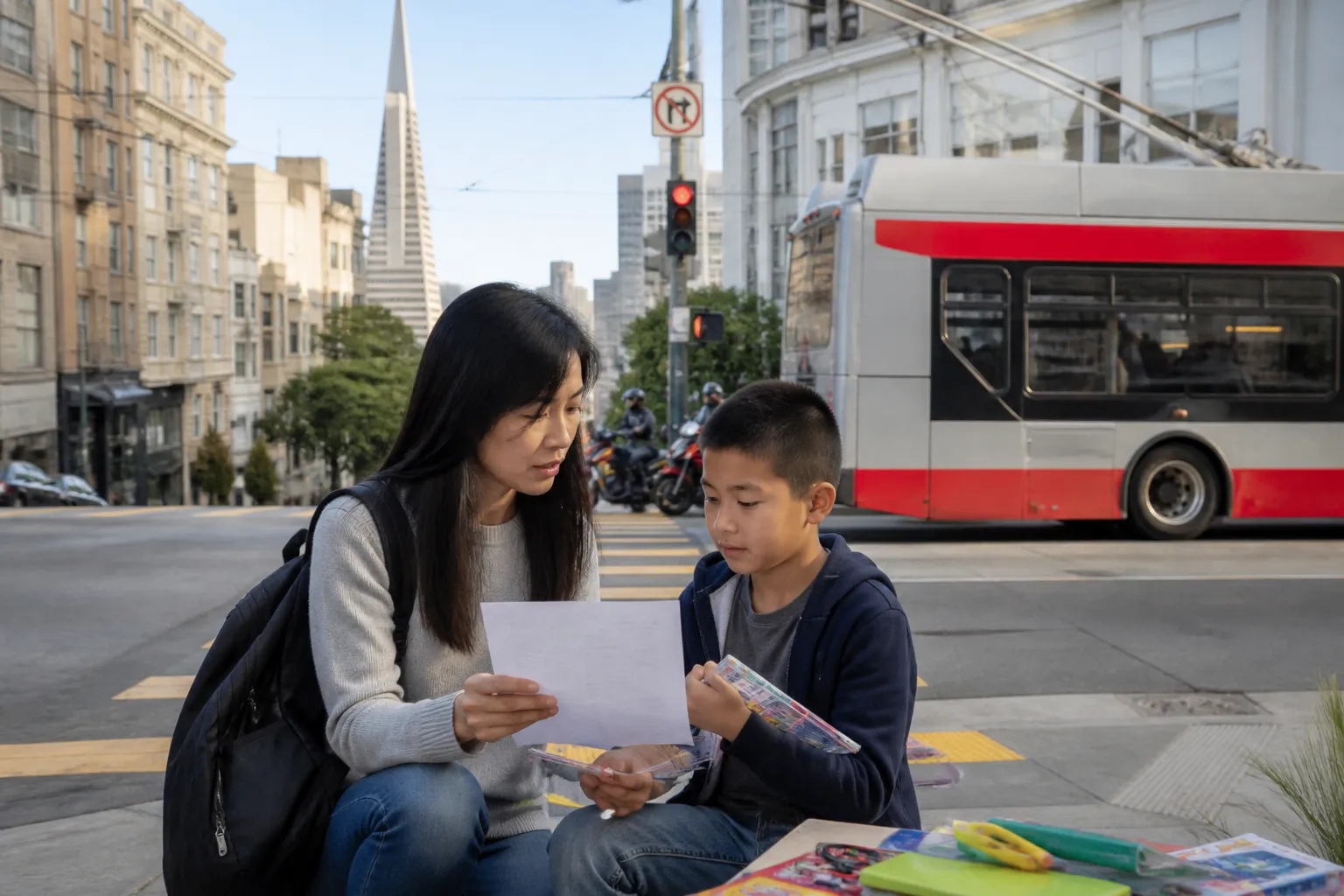
When home wins on cost
The home-neighborhood option usually works best for economy-minded families whose list is already settled and whose time window is narrow. When the basket is mostly basic paper goods, pencils, and a few replacements, a nearby stop can keep the outing short enough that you do not spend more on transportation than you save on the shelf. It also gives a child a simpler job: hold the list, compare counts, and stop the parent from overbuying. If you live far from a direct transit line or know you will be carrying bulky items, reducing the distance home can matter more than chasing a promotional price that disappears after a second errand.
Home pickup also fits families who want to avoid the late-day drift that turns a quick errand into a snack run, a detour, and a meltdown. Because the city weather service is warning about heat this week, shorter outdoor exposure is a sensible bonus even when the forecast changes by late August. Build a small route: leave from home, buy only the items on the settled list, and return before the next obligation begins. If the school still may send a correction, do not stockpile duplicates. Paying once for the right version is better than paying twice for the wrong size, the wrong color, or the wrong notebook count.
When transit wins on time
Transit-adjacent shopping wins when the family already has a trip on Muni or a connection to BART or Caltrain, or when the store sits near a line the caregiver knows well. SFMTA says the city’s core options include Muni, walking, biking, driving, and Bay Area transit links, so the practical question is whether the shopping stop can live inside an existing trip. If it can, the price gap between a neighborhood store and a station-area stop may be small compared with the time saved. That is especially true when one adult is carrying the bags and a child is already tired by the afternoon.
Use SFMTA travel updates before you leave, because temporary diversions and construction can matter more than a few blocks on the map. The current advisory page includes events and work that can affect nearby streets this week, including Outside Lands, Pistahan Parade, and Chinatown construction. You do not need to memorize every notice; you just need to check whether your route has changed since breakfast. This is where the economy of the trip comes from. A clean transfer, a short walk, and one shopping stop can beat a cheaper item that costs an extra hour to retrieve. For parents with kids in tow, predictability often beats a small discount.

Use library branches as planning anchors
A library stop does not replace a purchase, but it can make the shopping route calmer. The city library system publishes branch locations and hours, which helps a caregiver pick a public meeting point before or after the store run. For example, the Main Library on Larkin, or branches like Mission and Sunset, are listed with current service windows. That matters when one child needs a bathroom break, another needs a minute to regroup, and the adult wants to recheck the list without standing in a parking lot. A public anchor keeps the errand contained and makes the next move clearer.
This is also useful if you are comparing near-home and near-transit options. Meet at the branch closest to your day’s first stop, review the list once, and then decide whether the family should continue on foot, by Muni, or by a connection into the wider Bay Area network. The goal is not to use the library as a shopping destination. The goal is to use a known place with published hours as a reset point so the adult can decide whether the next leg is still worth it. That is often the difference between a controlled errand and a wandering afternoon.
Check advisories before the final run
Before you leave, check three things in this order: school list, store or pickup hours, and current travel advisories. The National Weather Service is flagging a heat advisory for this weekend, with mid 90s to low 100s and HeatRisk in the moderate to major range, so the plan should favor shade, water, and the shortest workable route. If you are taking a child and one caregiver, do not schedule the shopping leg as a long outdoor loop. A single indoor stop, or an online pickup that avoids extra walking, is often the better trade when the day is already hot.
Finally, treat district distribution events as a bonus, not a guarantee. If your school or district is handing out supplies, verify the details directly before you depend on them, and do the same for any store pickup window. That keeps the itinerary flexible if the event changes or the item is not covered. When the plan is clear, San Francisco offers enough travel choices to make the route fit the family rather than the other way around. For many parents, the right answer will be whichever option gets the list finished with the fewest transfers, the least heat, and the fewest extra decisions.
Tags: #SanFrancisco #BacktoSchool #Budget #Family #Transit
Sources consulted: Source 1: sfmta.com · Source 2: sfpl.org · Source 3: sfmta.com · Source 4: weather.gov
All trademarks are the property of their respective owners.
Ask Karpo first
Ask Karpo to turn this San Francisco idea into a current plan for your date, budget, companion, transit preference, and energy level. Karpo can narrow the route and flag what to verify before you go.


