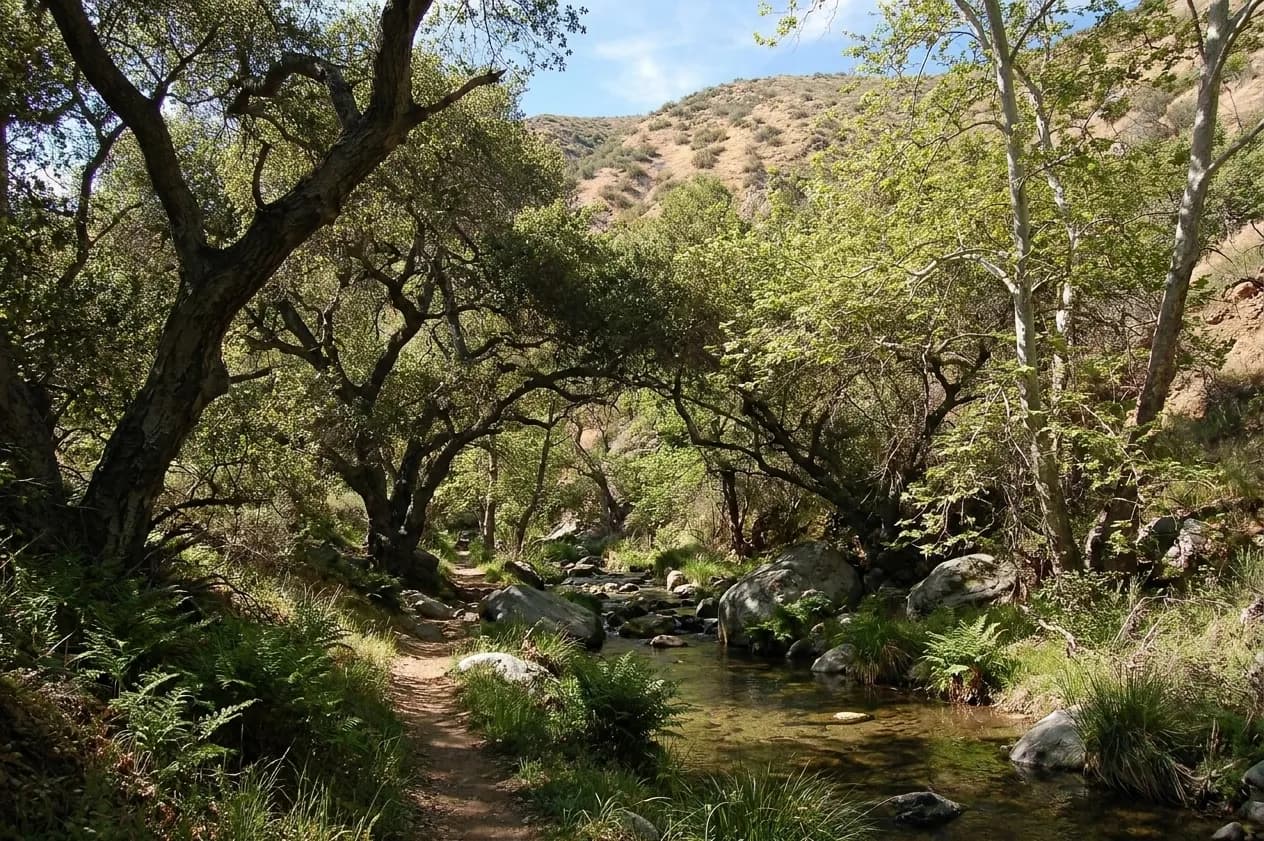
The main thing to understand about waterfalls near me in Los Angeles is that most of them are seasonal. These are chaparral canyons fed by winter rain, not year-round alpine streams, and a fall that is spectacular in March can be a damp streak on a rock face by August. The photographs that make people drive out are almost always taken in a narrow window between the first serious storms and the early summer. Get the month right and the rest of the planning is easy; get it wrong and no amount of trail selection helps.
An easy waterfall hike goes wrong in two ways: the fall is dry, or the trail is harder than the listing implied. Tell Karpo when you are going and who is coming and it will match the month and the legs to a trail.
When there is actually water
The reliable window runs from roughly late winter through late spring, peaking a few days to a couple of weeks after significant rainfall. In a wet year that extends into early summer; in a dry year it may barely open at all. Two practical habits: check recent trip reports rather than the photographs on a listing page, and do not go during or immediately after a heavy storm, when creek crossings become genuinely dangerous and canyon roads close.
The corollary is that a late-summer waterfall trip is best reframed. Go for the shade, the creek and the pools that hold water after the fall itself has thinned, and tell everyone that is the plan, which turns a disappointment into a good morning.
What easy actually means with children
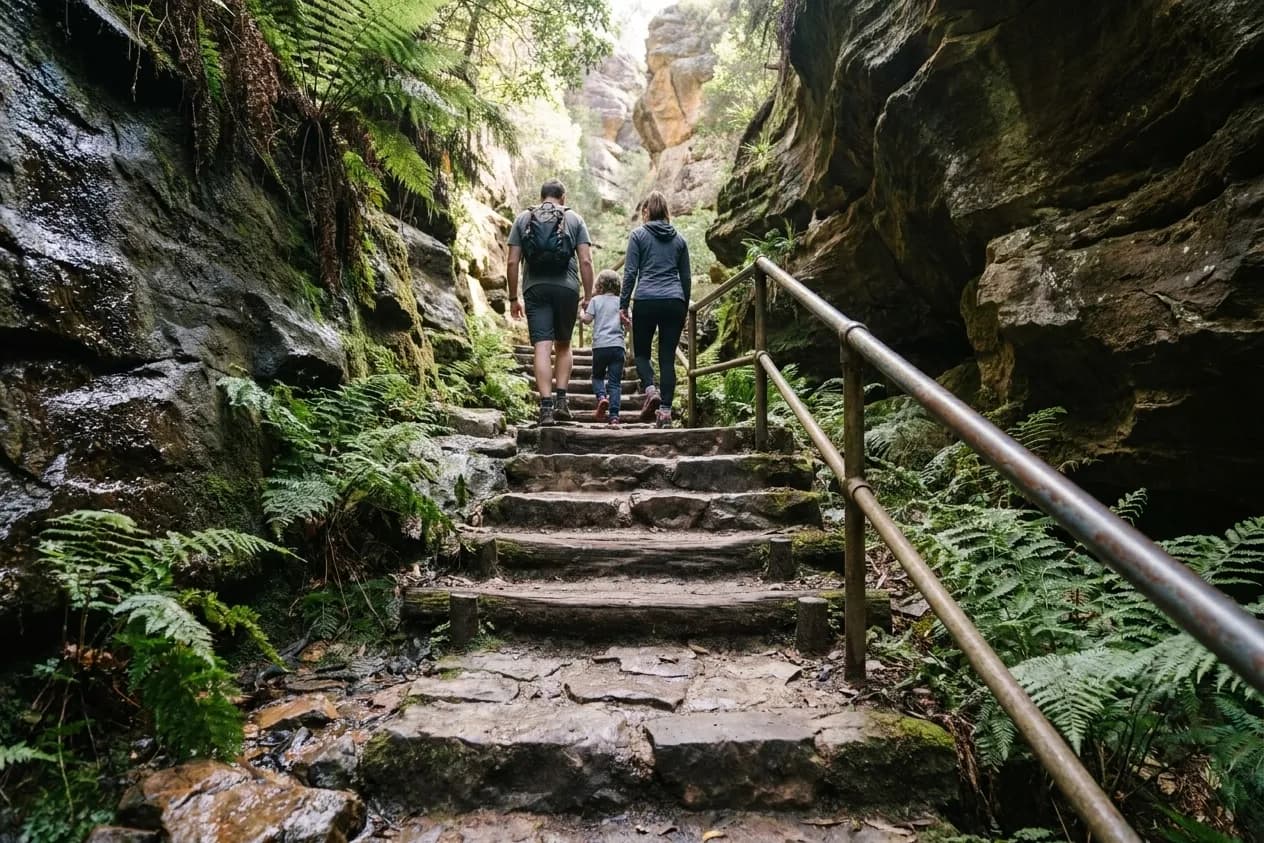
Trail listings measure difficulty by distance and elevation, and neither predicts how a six-year-old will do. The variables that matter are exposure to sun, the number of creek crossings, whether there is any drop-off beside the trail, and how much of the route is loose rock. A flat two-mile path in full sun on a warm day is harder for a child than a shaded mile with a little climbing. Shade and water beat distance every time.
Where the easy canyons are
The gentlest options sit in the shaded canyons on the front range of the Angeles National Forest above the San Gabriel Valley, in the coastal canyons of the Santa Monica Mountains, and in the state parks along the Malibu side. As a group these are short, mostly shaded, mostly out-and-back, and busy on weekends. The Santa Monica options dry out earlier in the year; the front-range canyons hold water longer but sit at the end of roads that close after storms.
The logistics that actually decide the day
Parking is the binding constraint at almost every popular trailhead in this region. Lots fill by mid-morning on spring weekends and roadside parking is frequently restricted and actively ticketed. Many national forest trailheads require a display pass, which you buy in advance rather than at the trailhead. Arrive before nine or come on a weekday and the whole trip changes character.
Carry more water than the distance suggests, because the drive is hot even when the canyon is not. Bring proper shoes for wet rock — the injuries on these trails are almost all slips at the fall itself, where everyone crowds onto the same slick boulders for a photograph. And plan to be back at the car before dusk, since these canyons go dark early and the trails are unlit.
Setting expectations before you leave
Tell the group what they are getting: a short walk in a shaded canyon, a creek to play in, and a waterfall that will be somewhere between impressive and modest depending on the month. That framing makes almost every trip on this list a success. The alternative — promising a photograph taken in a wet March — is how families end up hot, disappointed and an hour from home.
Trail conditions, road closures and parking rules change with the weather and the season, so check the managing agency's current notices before setting out.
Safety, briefly and specifically
Two hazards account for almost every serious incident at these falls. The first is climbing on wet rock above a pool, usually for a photograph, on surfaces that are far more slippery than they look because of algae rather than water. The second is jumping into pools of unknown depth, which change from season to season as debris moves. Neither is a reason to avoid the trip; both are reasons to keep children off the rock beside the fall and to treat any pool as shallower than it appears.
The third, less dramatic risk is heat on the return. Canyon bottoms are cool and the climb back out frequently is not, and people who paced the walk on the way in run short of water on the way back. Carry roughly twice what feels necessary in warm months, and turn around earlier than planned if anyone in the group is struggling — the fall will be there next season, most likely with more water in it.
Tags: #LosAngeles #LA #SoCal #WeekendPlans #ThingsToDo #DayTrip #Waterfalls #LAEats #LAGuide #ExploreLA #LALocal #LAWeekend #LANights #LAFood
Sources consulted: fs.usda.gov · laist.com · parks.ca.gov
All trademarks are the property of their respective owners.
Ask Karpo first
Karpo is a proactive AI assistant that lives in iMessage. Ask it what is flowing this month and it will match a canyon to your group.