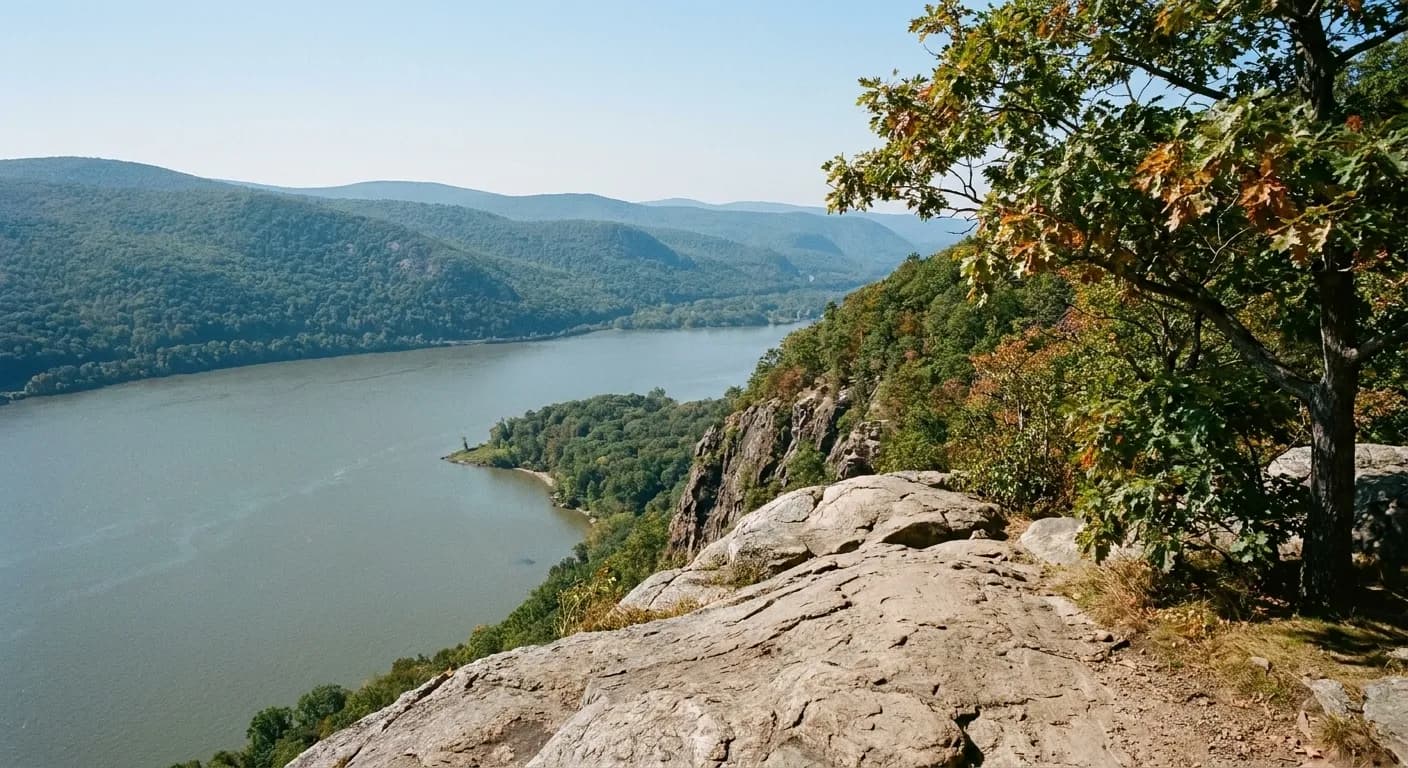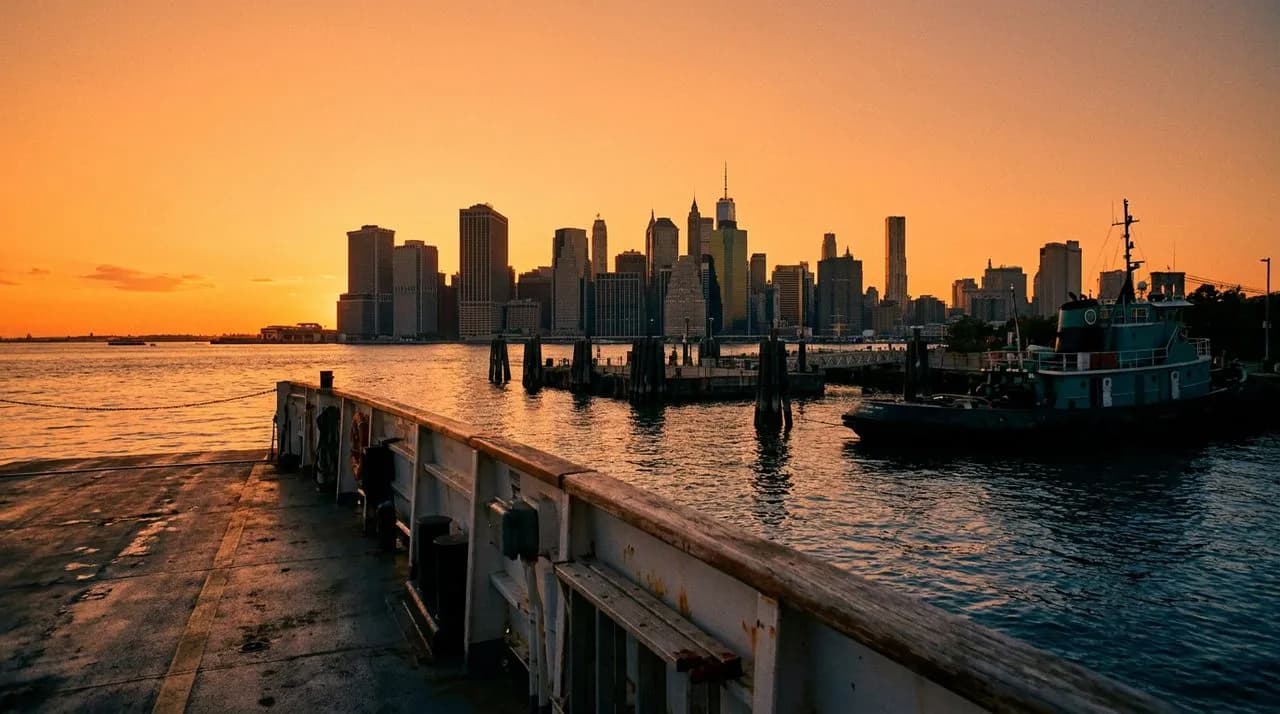
There's a particular alchemy that occurs when municipal transit planning accidentally—or perhaps intentionally—intersects with celestial mechanics. The NYC Ferry's Astoria route achieves this twice a year, but autumn delivers the superior performance. Between late September and November, the 6:30pm weekday departure from Wall Street becomes less commute and more slow-motion theater, the kind where the stage is a river, the backdrop is glass and steel turning amber, and the ticket costs the price of a single subway ride. It's water transit as accidental art installation, and the only skill required is knowing when to board and where to stand.
The geometry of the crossing
Sunset timing shifts roughly four minutes earlier each week through October, which means the ferry's fixed schedule slides in and out of the golden hour window like a dial turning. By late October, the convergence is nearly perfect: the 6:30pm weekday departure from Wall Street/Pier 11 reaches the Queensboro Bridge passage approximately 6:52 to 7:05pm, coinciding with peak sunset color as the vessel threads beneath the cantilevered spans. The light at that moment tends toward ochre and rose, softened by river humidity and the particular haze that settles over the East River corridor when temperatures begin their downward slide.
Earlier in September, the crossing happens while the sun is still too high, the light too harsh. By mid-November, dusk arrives before the boat clears the financial district, and you're chasing the last remnants of color rather than swimming through it. Late October offers the tightest alignment, when the voyage itself becomes a timer counting down to the bridge passage, and passengers on deck find themselves checking the skyline against their watches without quite meaning to.
Deck strategy and sightlines
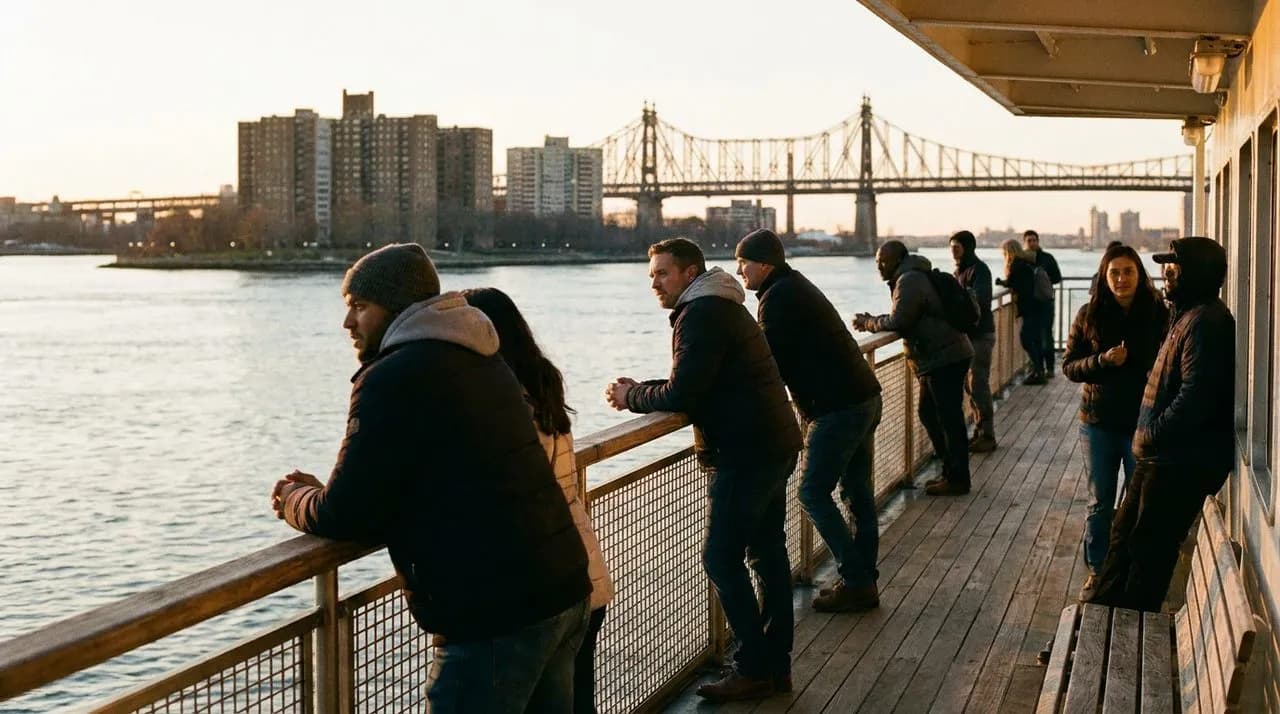
The NYC Ferry fleet runs to a standard layout: indoor cabin seating, fore and aft outdoor decks, and narrow side rails. For this crossing, the port-side—left, as you face the bow—outdoor deck offers unobstructed western views of the Manhattan skyline during the northbound run, and seating fills quickly after the 6:25pm boarding call. Commuters who've cracked this code arrive early, claim the benches, and settle in with the quiet satisfaction of people who've optimized their weekend plans around public infrastructure. If the benches are spoken for, the rail itself works nearly as well; you'll sacrifice a backrest but gain mobility to shift position as the boat angles past Midtown.
The starboard side, by contrast, delivers Queens and Brooklyn in silhouette—fine for the return trip, less useful now. Inside seating offers climate control and large windows, but glass introduces glare and reflection once the sun drops below a certain threshold, and you lose the sensory envelope: the diesel tang, the slap of wake against hull, the way the air temperature notches downward as the boat picks up speed past the Brooklyn Bridge.
The Roosevelt Island interlude
Midway through the crossing, the ferry pulls into the Roosevelt Island stop, adding eight minutes to the voyage. Passengers can remain aboard without disembarking if continuing to Astoria, and most do—there's a brief shuffling as a handful of riders exit and new ones board, then the engines thrum back to life and the boat swings north again. The pause functions as a narrative beat, a moment to reset before the approach to the Queensboro Bridge, which looms larger with each minute. The eight-minute stop also gives latecomers a chance to claim a vacated deck spot, though by this point in the voyage the best positions are usually held.
The bridge passage and the light
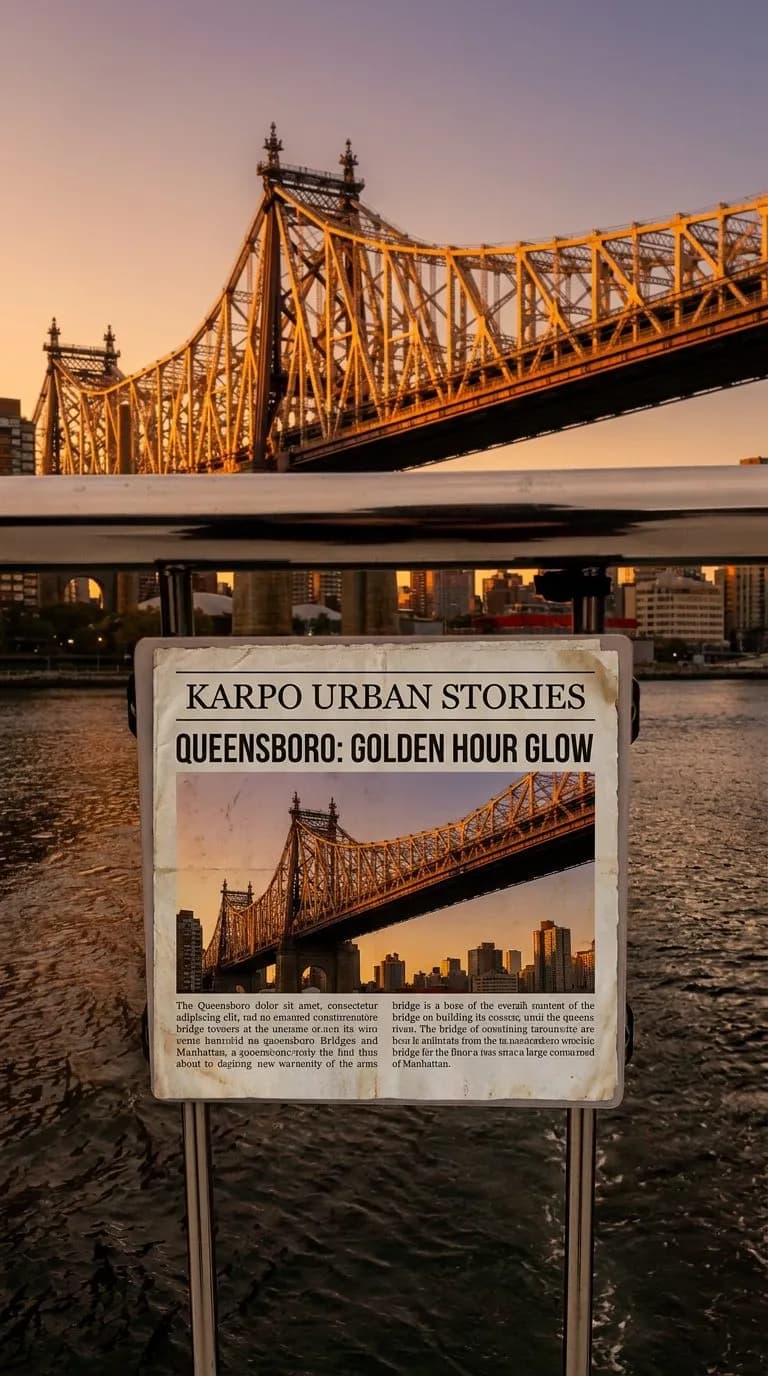
The Queensboro Bridge frames the crossing in both the literal and metaphorical sense. As the ferry approaches, the cantilever spans overhead, the underside a lattice of riveted steel that turns black against the western sky. For a handful of seconds, the vessel is enclosed, the engine noise briefly amplified, the temperature dropping as shadow overtakes the deck. Then you're through, and the river opens north toward Astoria, and the skyline behind you is backlit in shades that don't quite have names.
Photographers tend to cluster near the stern at this point, chasing the receding view of Midtown. It's a fair instinct, but the forward view holds its own: Astoria's low-rise waterfront, the Hellgate span in the distance, the way the East River bends and the city seems to exhale. The final ten minutes of the run trade grandeur for intimacy, the industrial shoreline and pedestrian bridges of Queens sliding past as the boat decelerates toward the terminal.
Return planning and the northbound advantage
The return trip from Astoria offers its own appeal—Manhattan's eastern face lit against the evening sky, the Chrysler Building's crown catching the last light—but it's a different experience, more about arrival than passage. Southbound ferries depart Astoria at intervals that allow for a meal or a walk along the Astoria Park waterfront before heading back. For riders treating the ferry as the destination rather than the conveyance, a same-evening return is workable: disembark at Astoria, spend ninety minutes exploring, then catch a southbound departure. The light will have shifted by then, the crossing reduced to city glow and river reflection, but the route itself remains satisfying in a different register.
Seasonal shifts and the narrow window
The fall 2026 season will follow the same solar choreography as every autumn, but the window remains narrow. Early September sunsets arrive too late; by Thanksgiving, they're too early. The sweet spot spans roughly six weeks, peaking in late October when the 6:30pm departure and the 7:00pm sunset converge with minimal drift. Weekend service runs on a different schedule, and the Saturday and Sunday departures don't align as neatly—this is a weekday phenomenon, best experienced on a Thursday or Friday when the commuter crowd thins and the deck feels less like transit and more like a shared secret.
It's worth checking the sunset tables as October progresses; a difference of ten minutes in boarding time can mean catching the bridge passage in full color or watching it fade to dusk. The NYC Ferry app provides real-time scheduling, and delays are infrequent but not unheard of. Building in a buffer—arriving at Pier 11 by 6:20pm rather than 6:28pm—ensures you're not sprinting down the gangway as the crew prepares to cast off.
Practical notes
NYC Ferry Astoria route departs from Wall Street/Pier 11 (near the intersection of South Street and Gouverneur Lane, Manhattan); nearest subway access via the 2/3 at Wall Street or the R/W at Whitehall. Astoria terminal is located at Hallets Cove (Astoria Boulevard and Main Avenue, Queens); nearest subway via N/W at Astoria Boulevard. Ferry fare is standard NYC transit pricing; purchase tickets via the NYC Ferry app or at terminal kiosks. Outdoor deck seating is first-come; dress for October river wind and bring layers. Accessibility: all NYC Ferry vessels are ADA-compliant with ramp boarding. Service schedules shift seasonally; verify departure times directly via nycferry.com. No reserved seating.
Tags: #EastRiverFerry #NYCFerry #AstoriaRoute #QueensboroBridge #ManhattanSkyline #FallInNYC #GoldenHour #RightOnTime #RooseveltIsland #WaterTransit #AutumnInTheCity #NYCWaterways #SunsetCruise #FerryViews #QueensWaterfront
Sources consulted: NYC Ferry · Queensboro Bridge · Astoria Route Schedule · NYC DOT Ferry Services · Time Out NYC Ferry Guide
All trademarks are the property of their respective owners.