Search interest in dylan mulvaney can turn quickly from celebrity news into a more useful local question: where can New Yorkers find LGBTQ+ community, care, history, and low-pressure support right now? NYC has major institutions, neighborhood centers, health providers, and public history sites, but the right choice depends on what you need today. Some places are best for a quiet first visit, others for scheduled programs, medical care, youth services, or cultural context. Use this guide as a practical decision map, not a promise that every service is available on arrival. Before leaving, verify current hours, event listings, appointment rules, and accessibility details directly with the venue.
Want a low-pressure LGBTQ+ resource plan for today? Text Karpo with your borough, timing, access needs, and whether you want community, care, culture, or quiet space.

Start at The Center on West 13th Street for a Low-Pressure First Stop
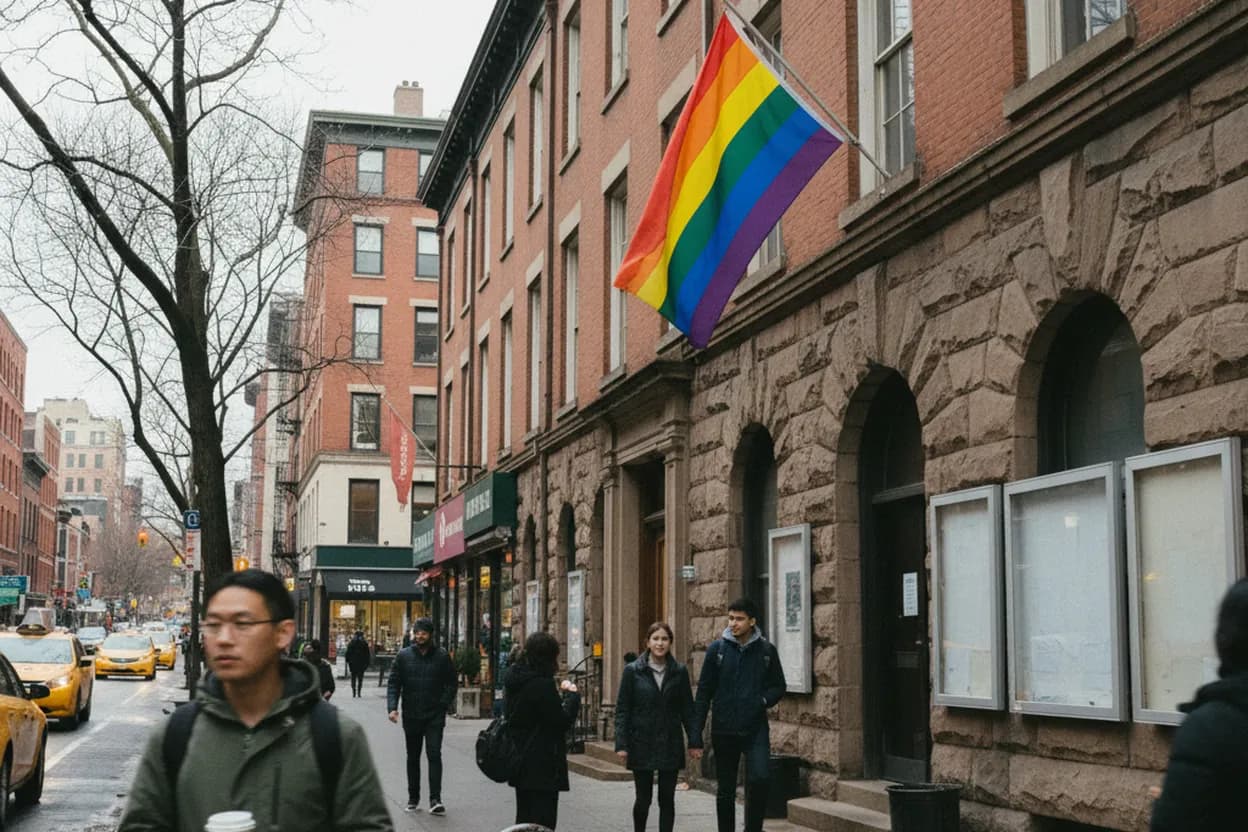
The Lesbian, Gay, Bisexual & Transgender Community Center at 208 West 13 Street is the strongest first stop if you want a familiar, centrally located LGBTQ+ institution without committing to a specific event. Its official contact page lists general building hours of Monday through Saturday, 8 a.m. to 10 p.m., and Sunday, 8 a.m. to 8 p.m.; program and service hours are Monday through Friday, 10 a.m. to 6 p.m. That gap matters: a building may be open when staff services are not.
This is best for someone going solo, new to NYC LGBTQ+ spaces, or trying to understand what support exists before making an appointment elsewhere. The tradeoff is that structured programs, meetings, and the Bureau of General Services-Queer Division can run on narrower schedules than the building. Check the current calendar before going, especially near holidays or early closures, and call if you need a specific service rather than a place to orient yourself.
Use Stonewall National Monument Visitor Center for Context, Not Crisis Support
The Stonewall National Monument Visitor Center at 51 Christopher Street is a cultural and historical stop, not a replacement for a community center or care provider. Its official visit page lists free entry, no ticket required, and arrival between 10 a.m. and 4 p.m., Tuesday through Sunday, with Monday closed. That makes it useful for a daytime Greenwich Village plan, especially if you want grounding in local LGBTQ+ history before visiting nearby Christopher Park.
The failure mode here is expecting the Visitor Center to solve an immediate personal need. Treat it as a place to learn, reflect, and connect the public story of LGBTQ+ visibility to NYC streets and institutions. If you are planning around accessibility, use the venue’s visit page rather than assuming every historic building experience is simple. If it is closed or too busy, Christopher Park and the National Park Service Stonewall pages can still support a self-guided visit.
Pair Christopher Park with Official Stonewall History Before You Interpret the Site
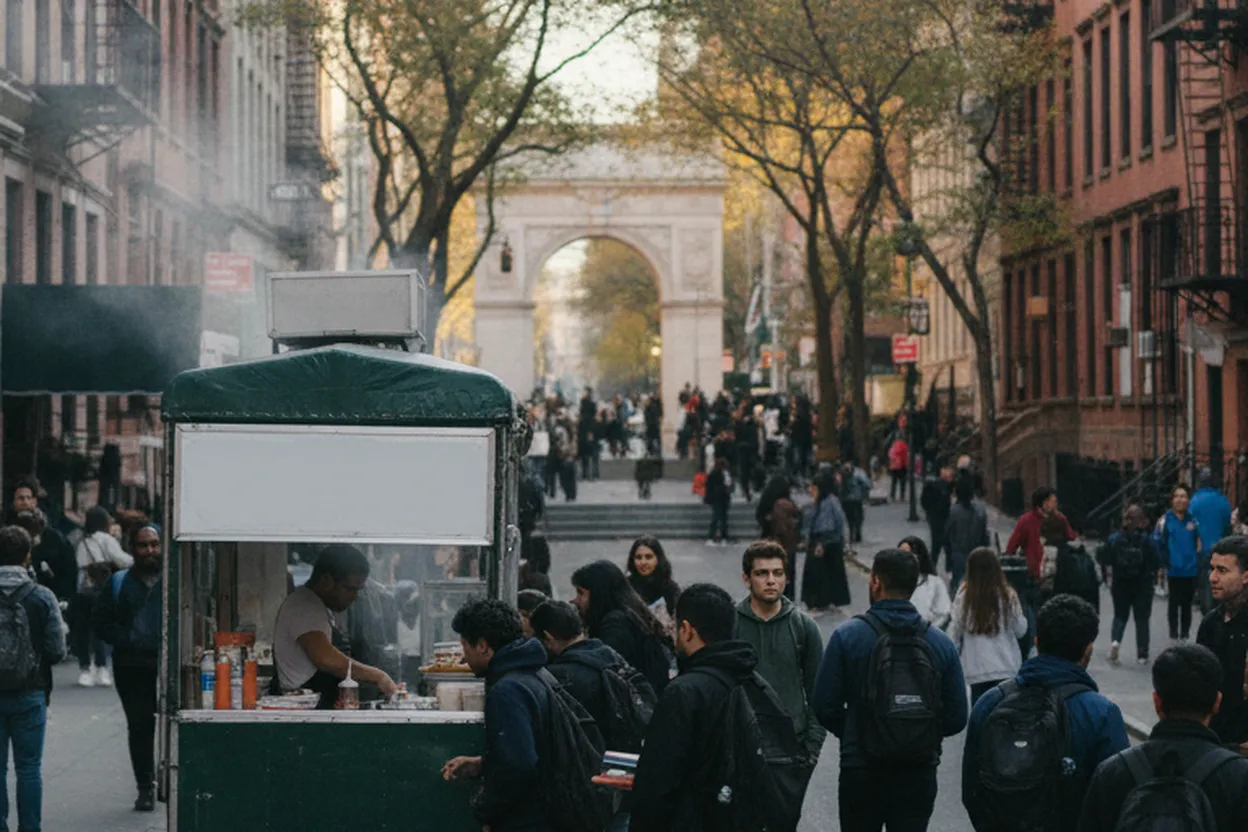
Christopher Park sits inside the Stonewall National Monument landscape, and the National Park Service describes the monument as a 7.7-acre site in Greenwich Village that includes the park, streets, sidewalks, and privately owned Stonewall Inn property. The NPS also calls Stonewall a park in progress with limited services. That wording is useful for visitors: expect public space and interpretation, not a full-service museum campus with predictable indoor amenities.
This stop works best when you have time to walk slowly and read before moving on. It can be emotionally meaningful, but it is also a public, tourist-heavy area where privacy is limited. If the weather is bad, crowds feel intense, or you need seating, bathrooms, or staff support, make the Visitor Center, The Center, or Leslie-Lohman your backup. Verify any ranger programs or tours before relying on them, because public history programming changes.
Choose Leslie-Lohman Museum When Culture Feels Easier Than Group Programming
Leslie-Lohman Museum of Art at 26 Wooster Street is a practical option when you want queer culture without the social pressure of a support group. The museum’s visit page lists Wednesday hours of 12 to 5 p.m., Thursday through Sunday hours of 12 to 6 p.m., and Monday-Tuesday closure. It also lists a suggested donation of $10, which means budget-sensitive visitors should verify the current admissions language rather than assuming a mandatory ticket price.
The museum is especially useful for a solo afternoon, a quieter date, or a reflective stop after heavier news cycles. Accessibility details are clearer than many small venues: the museum notes external steps, a wheelchair lift, wheelchair-accessible galleries, an accessible restroom, gender-neutral restrooms, masks available at the front desk, and large-print texts by request. The tradeoff is limited operating days, so confirm hours, closures, and exhibition status before building your whole plan around it.
Go to Brooklyn Community Pride Center for Borough-Based Community, Then Check the Calendar
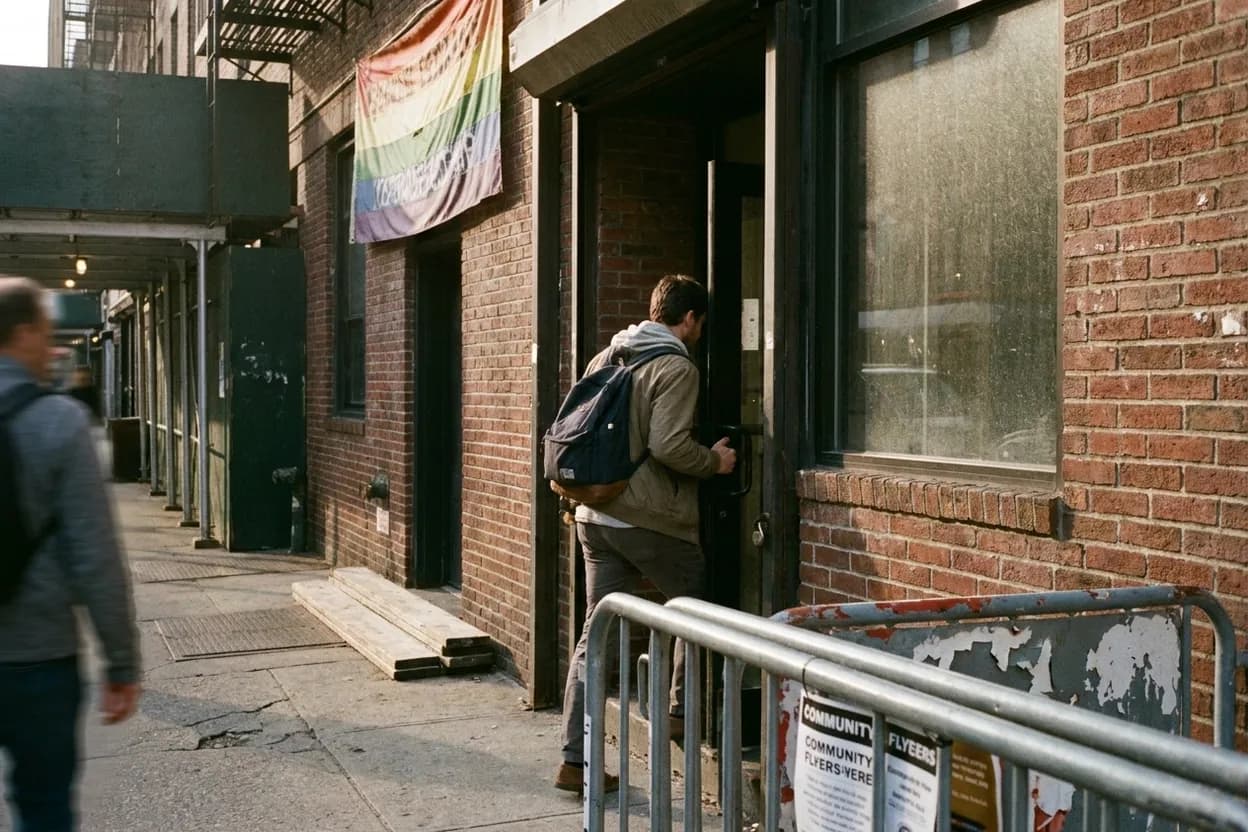
Brooklyn Community Pride Center’s Pride Center is inside the Major R. Owens Health & Wellness Community Center at 1561 Bedford Avenue. Its official Pride Center page lists public hours Monday through Thursday, noon to 5 p.m., with the Cyber Center and telework pods available during public hours on a first-come, first-served basis. It also notes that evening structured programming can close the center to general public use after 5 p.m.
This is the better fit if Crown Heights is easier than Manhattan or if you want a borough-based LGBTQ+ space rather than a tourist corridor. The practical tradeoff is timing: a casual drop-in plan has a narrower window than The Center’s building hours. Check the event calendar or contact the center before leaving if you want a support group, pantry timing, youth programming, or a specific community event. Bring backup logic, especially if you are crossing boroughs.
Use Destination Tomorrow for Bronx-Based Services and Walk-In Triage
Destination Tomorrow describes itself as the LGBTQ+ center of the Bronx, with in-house and referral-based programming. Its official site lists Bronx walk-in hours Monday through Friday, 10 a.m. to 6 p.m., with the last client taken at 5 p.m., at 452 East 149th Street, third floor. The CDC’s current NPIN listing also points to HIV testing, prevention services, PrEP navigation, case management, English and Spanish language access, and no-fee HIV testing information.
This is a practical option when the need is service-oriented: prevention, navigation, referrals, housing-related questions, or culturally competent support closer to the Bronx. The main failure mode is arriving late or expecting every listed service to be available without intake. If timing is tight, call first and ask what can happen same day. If you need medical treatment rather than prevention or navigation, use Destination Tomorrow as a referral point and verify the receiving provider’s appointment rules.
Make Callen-Lorde Chelsea the Health-Care Route, Not a Casual Drop-In Hangout
Callen-Lorde Chelsea at 356 West 18th Street is the clearest route when the need is health care. Its official Chelsea page says it offers primary care, sexual health, behavioral health, women’s health, transgender health, HIV treatment, prevention, and more in an affirming environment, regardless of ability to pay. It lists Quick Care walk-in appointments as first-come, first-served and gives clinic hours from Monday through Saturday, with Sunday closed.
The decision point is whether your need is clinical, social, or cultural. For care, Callen-Lorde is stronger than a museum or historical site; for community browsing, it is not the right atmosphere. The page says new patients are being accepted at this time, but that is exactly the kind of fact to re-check before going. Confirm registration steps, insurance or sliding-fee expectations, pharmacy hours, and whether Quick Care is appropriate for your situation that day.
Tags: #AskKarpo #BeforeYouGo #DylanMulvaney #NYCLGBTQ #LGBTQResources #QueerNYC #TransSupport #TheCenterNYC #StonewallNYC #LeslieLohman #BrooklynPrideCenter #DestinationTomorrow #CallenLorde #WeekendPlans
Sources consulted: Source 1: gaycenter.org · Source 2: stonewallvisitorcenter.org · Source 3: nps.gov · Source 4: leslielohman.org · Source 5: lgbtbrooklyn.org · Source 6: callen-lorde.org
All trademarks are the property of their respective owners.
Ask Karpo first
Tell Karpo your date, group size, budget, and starting neighborhood. We’ll check current access, timing, transit, and the cleanest plan for LGBTQ+ community centers, cultural spaces in NYC before you head out.