 Nisei Week Events: Little Tokyo's Enduring Japanese American Heritage Festival
Free Things to Do
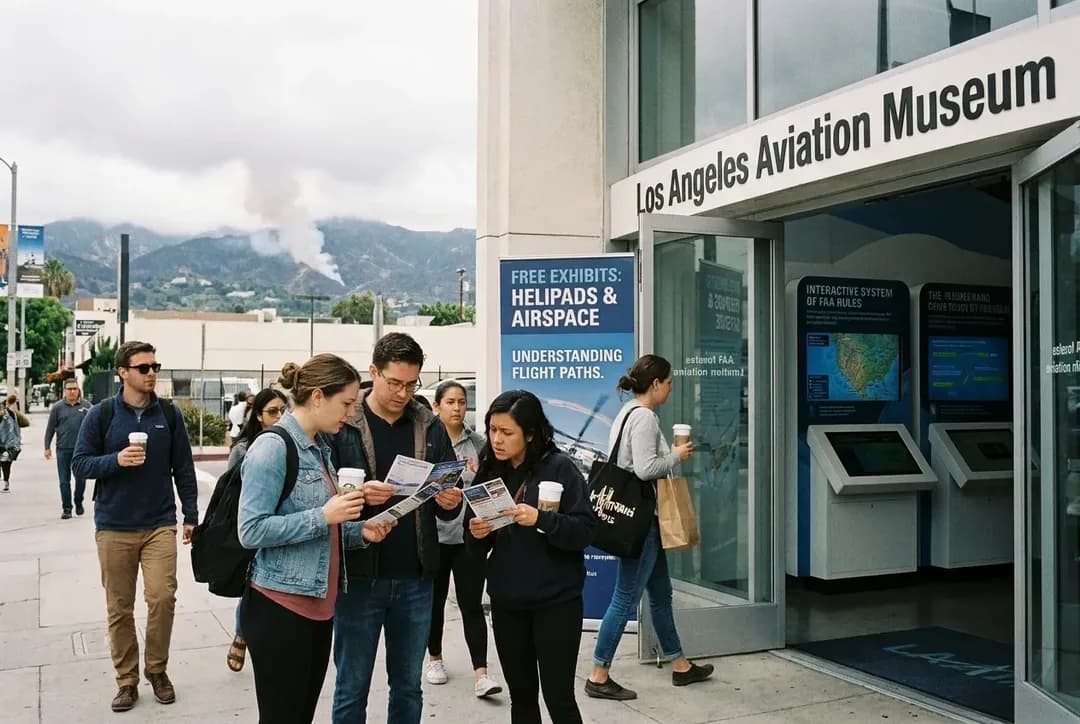
donald trump helipad changes: Free LA Aviation Museum Exhibits on
Los Angeles aviation museums offer free exhibits explaining airspace rules, heliport permits, and noise regulations—knowledge that helps homeowners understand the regulatory framework behind recent helipad-related headlines. Plan a 90-minute Saturday visit to explore FAA classifications and local ordinance displays without needing prior aviation expertise.
Homeowners searching for clarity on donald trump helipad changes often encounter clickbait rather than regulatory facts. Los Angeles aviation museums provide a grounded alternative: free exhibits that explain Federal Aviation Administration airspace classifications, municipal noise ordinances, and the multi-agency permit process governing private heliports. A Saturday afternoon visit requires no aviation background—just curiosity about how local and federal rules intersect when helicopters operate near residential zones. These museums suit solo learners or couples willing to spend 90 minutes reading placards, watching short films, and examining scale models that illustrate how altitude restrictions, flight paths, and community input shape urban airspace decisions. Before driving, verify current operating status and whether parking validation applies to your vehicle type.
Text Karpo your Los Angeles starting point, timing, companion, and priorities for a current museum self-education inspired by donald trump helipad changes, with one realistic backup before you leave.
Deciding Between Docent-Led Tours and Self-Guided Audio
Most free aviation museums in Los Angeles offer both docent-led group tours and self-guided audio options, each with distinct tradeoffs for a 90-minute visit. Docent tours typically run on fixed schedules—often Saturday mornings or early afternoons—and last 45 to 60 minutes, leaving you half an hour to revisit exhibits that sparked questions. Guides can clarify how FAA Part 157 heliport notifications differ from city building permits, but you sacrifice the freedom to linger at noise-contour maps or skip sections on fixed-wing aircraft. Self-guided audio, accessed via smartphone app or loaner device, lets you control pacing and replay explanations of airspace Class B versus Class D designations as many times as needed. The downside: you miss spontaneous answers to questions like whether residential complaints trigger formal FAA reviews.
Check the museum's website or call ahead to confirm tour availability on your chosen Saturday; some institutions pause docent programs during staff training periods or extreme heat advisories. If you prefer self-guided audio, ask whether the system requires downloading an app in advance or if the museum provides devices at the entrance—cellular dead zones inside hangars can prevent mid-visit downloads. For policy hobbyists annoyed by vague news coverage, docent interaction often surfaces local case studies (an older heliport dispute, a noise variance hearing) that contextualize current headlines without naming specific individuals or properties.
What Free Exhibits Reveal About Heliport Permit Processes
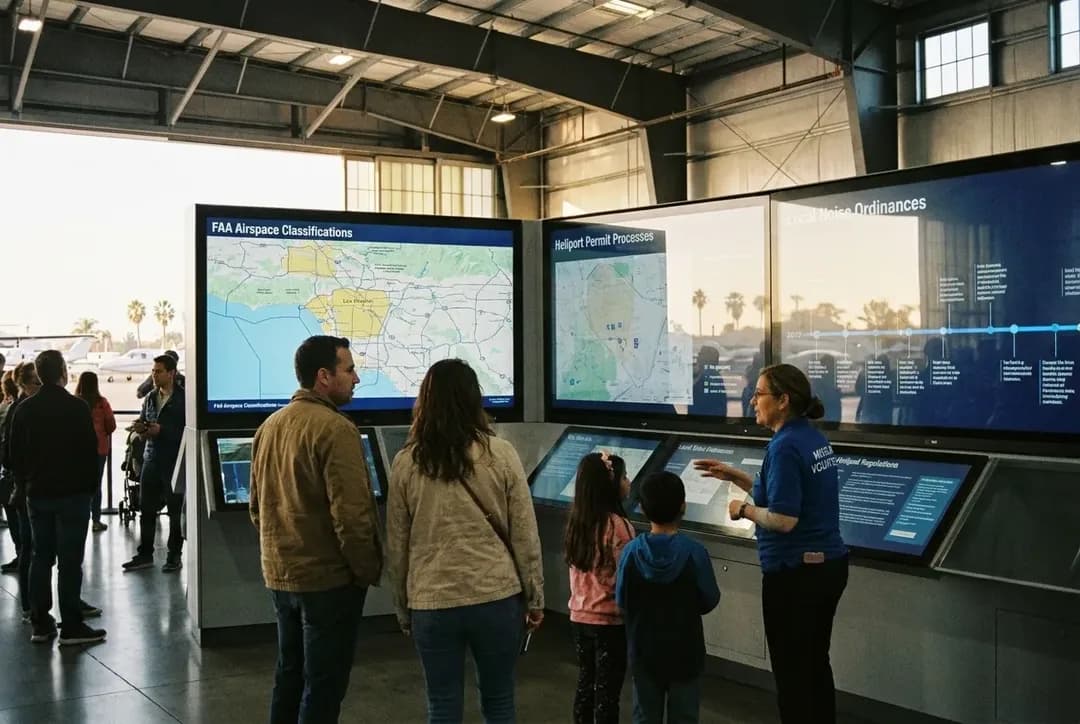
Interactive displays at LA aviation museums walk visitors through the layered approval process for private heliports, starting with FAA airspace obstruction reviews and extending to city planning department conditional-use permits. Touch-screen kiosks may let you input a hypothetical address and see which flight corridors, noise-sensitive zones, and existing heliport buffers apply—a hands-on exercise that demystifies why some properties face stricter scrutiny than others. Exhibits often include sample permit applications, redacted to protect privacy, showing required documents: liability insurance certificates, environmental impact checklists, and neighbor-notification affidavits. You learn that approval timelines stretch from months to years depending on proximity to schools, hospitals, or already-congested airspace.
Museums cannot predict outcomes for any real-world application, but they illustrate decision points: Does the site fall within a coastal zone requiring additional California Coastal Commission review? Is the heliport for emergency medical use, which may qualify for expedited processing, or private convenience, which invites more public comment? Placards explain how noise ordinances—measured in decibels at property lines—intersect with FAA altitude rules, creating scenarios where a heliport is federally permissible yet locally prohibited during evening hours. This exhibit content helps homeowners distinguish between federal airspace authority and municipal land-use control, a distinction often blurred in sensational headlines.
Navigating Parking Validation and Public Transit Access
Free admission does not always mean free parking; some LA aviation museums occupy airport-adjacent land where hourly rates apply unless you secure validation at the front desk. Bring your parking ticket inside immediately and ask staff whether validation covers the full visit or caps at two hours—a critical question if you plan to watch a 20-minute film on airspace history after touring exhibits. Museums near active airfields may restrict parking to designated visitor lots, with shuttle buses running every 15 minutes to the main hangar; factor this transit time into your 90-minute budget. If the museum's website lists "validated parking available," confirm whether that applies to all days or excludes weekends when adjacent airport events draw crowds.
Public transit offers an alternative: LA Metro bus and rail lines connect to several aviation museums, though the final approach may involve a 10- to 15-minute walk across open tarmac with minimal shade. According to Metro's official site, regular fare is $1.75 with free transfers within two hours when you tap a TAP, credit, or debit card, and a daily cap means you never pay more than five dollars even if you explore multiple museums in one day. Check real-time arrivals via the LA Metro app before leaving home, and review route maps to identify which stop places you closest to the museum entrance. On hot Saturday afternoons, prioritize stops with covered waiting areas and plan hydration breaks, as outdoor platforms can become uncomfortable during extended waits.
Who This Museum Visit Fits—and Who Might Want Alternatives
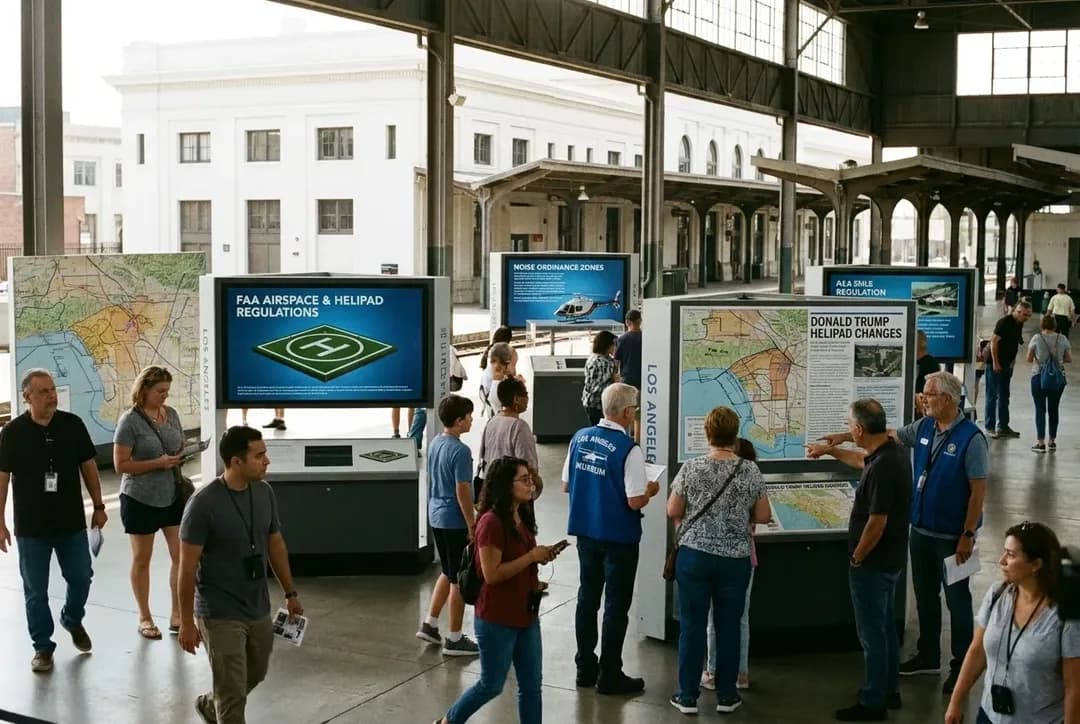
This self-education approach suits homeowners or policy hobbyists frustrated by clickbait who prefer primary-source learning over opinion columns. If you tolerate reading dense regulatory text on wall panels and appreciate scale models that show helicopter approach angles over residential neighborhoods, a 90-minute museum visit delivers factual grounding without requiring you to parse Federal Register entries at home. Solo visitors can move at their own pace, while couples benefit from discussing tradeoffs aloud: "Would you accept a heliport two blocks away if it only operated weekdays?" The casual-interest difficulty level means you need no engineering background, but you must enjoy absorbing information through static displays rather than interactive simulations.
Conversely, if you seek immediate answers about a specific property or recent news event, museums cannot provide that service—staff may redirect you to city planning departments or FAA regional offices for case-specific inquiries. Families with young children may find 90 minutes of policy-focused exhibits too dry, though some museums offer separate hands-on zones with flight simulators that occupy kids while adults read airspace placards. People with mobility challenges should confirm whether hangars have step-free access and whether audio tour devices include visual transcripts for those who prefer reading to listening. The museum experience works best when you accept it as foundational education, not real-time news analysis.
Verifying Current Museum Status Before You Drive
Free museums occasionally close for private events, facility maintenance, or heat-related safety protocols, so verification prevents wasted trips. Call the museum's main number—listed on their official website—at least 24 hours before your planned Saturday visit and ask three questions: Are you open this coming Saturday? Are docent tours running, and at what times? Is parking validation available? Automated recordings may not reflect last-minute changes; if possible, speak with a staff member who can confirm whether specific exhibits (like the airspace classification display) are currently accessible or under renovation. Some museums post closure alerts on social media, but these updates can be inconsistent.
Check whether the museum shares grounds with an active airport or military base, which may impose visitor restrictions during heightened security periods or airshows. If the museum's website mentions "subject to operational needs," understand that flight training or emergency responses can temporarily close public areas without advance notice. For transit riders, cross-reference the museum's hours with Metro schedules; a museum closing at 4:00 PM means little if the last convenient bus departs at 3:30 PM, leaving you rushed. Confirming these logistics in advance preserves your 90-minute learning window and reduces the annoyance that drove you away from clickbait in the first place.
Tags: #aviationmuseumsLosAngeles #freemuseumsLA #FAAairspacerules #heliportpermits #noiseordinances #selfguidedmuseumtours #LAMetrotransit #SaturdayactivitiesLosAngeles #policyeducation #urbanairspace
Sources consulted: Source 1: metro.net · Source 2: discoverlosangeles.com · Source 3: lacity.gov · Source 4: lapl.org
All trademarks are the property of their respective owners.
Ask Karpo first
Ask Karpo to turn this Los Angeles idea into a current plan for your date, budget, companion, transit preference, and energy level. Karpo can narrow the route and flag what to verify before you go.
Ask Karpo for more information.
Keep reading
- Nisei Week Events: Little Tokyo's Enduring Japanese American Heritage Festival
 Hollywood Forever Cemetery Events: Dia de los Muertos, Cinespia in Hollywood
 Unforgettable Free Summer Events: Grand Performances, California Plaza, Downtown LA