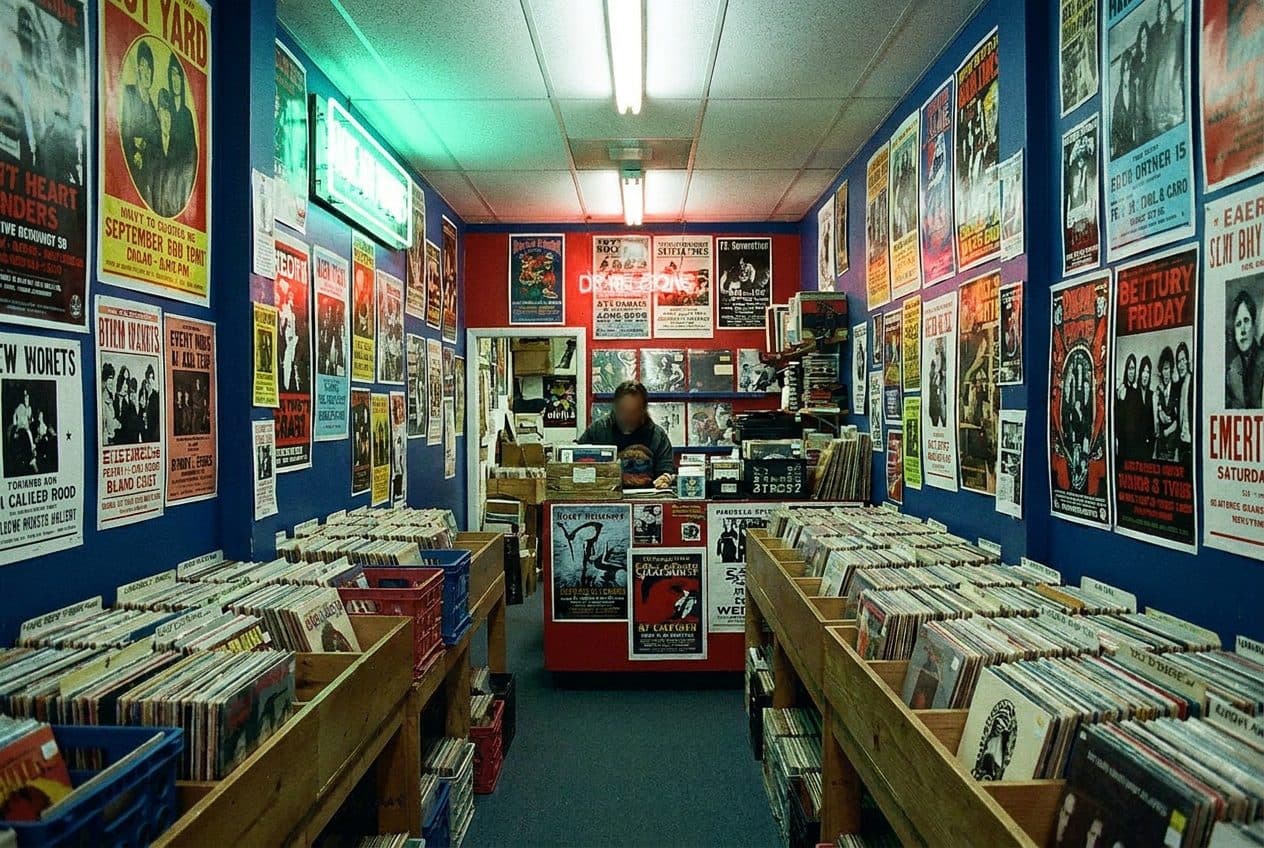
The storefront on Church Avenue measures just wide enough for two people to pass if one turns sideways. Inside, vinyl climbs toward the ceiling in stacks that seem to defy both gravity and fire code, and behind the counter sits a man who can tell the difference between a 1978 Karen Records pressing and its 1982 reissue by the weight of the wax alone.
A Geography of Crates
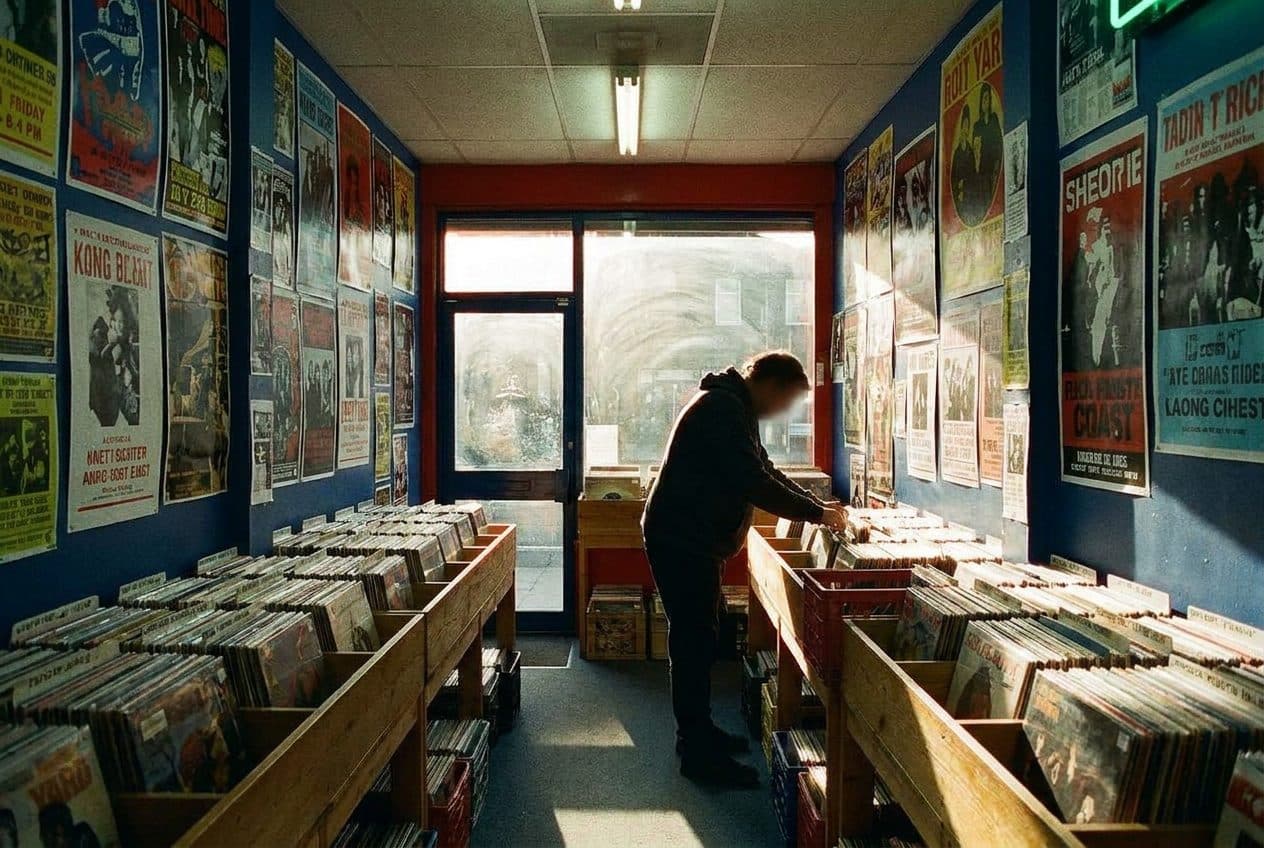
The shop announces itself with hand-painted lettering and a window display that hasn't changed in years—album covers faded to pastels by afternoon sun. The door opens inward, which means whoever enters first must commit to the narrow central aisle that runs like a canyon between mountains of records. Milk crates line both walls, organized by a system that makes perfect sense to the owner and absolutely none to first-timers. Merengue típico occupies the left wall, salsa romántica the right, and bachata lives in the back corner where the fluorescent light flickers in a rhythm all its own.
The air smells like cardboard and old paper sleeves, with a faint undertone of the cologne favored by regulars who stop in before work. Dust particles hang suspended in the shaft of light that cuts through the front window around three in the afternoon, and the wooden floor creaks in specific spots that longtime customers have learned to avoid when the owner is concentrating on a repair.
The Encyclopedia Behind the Counter
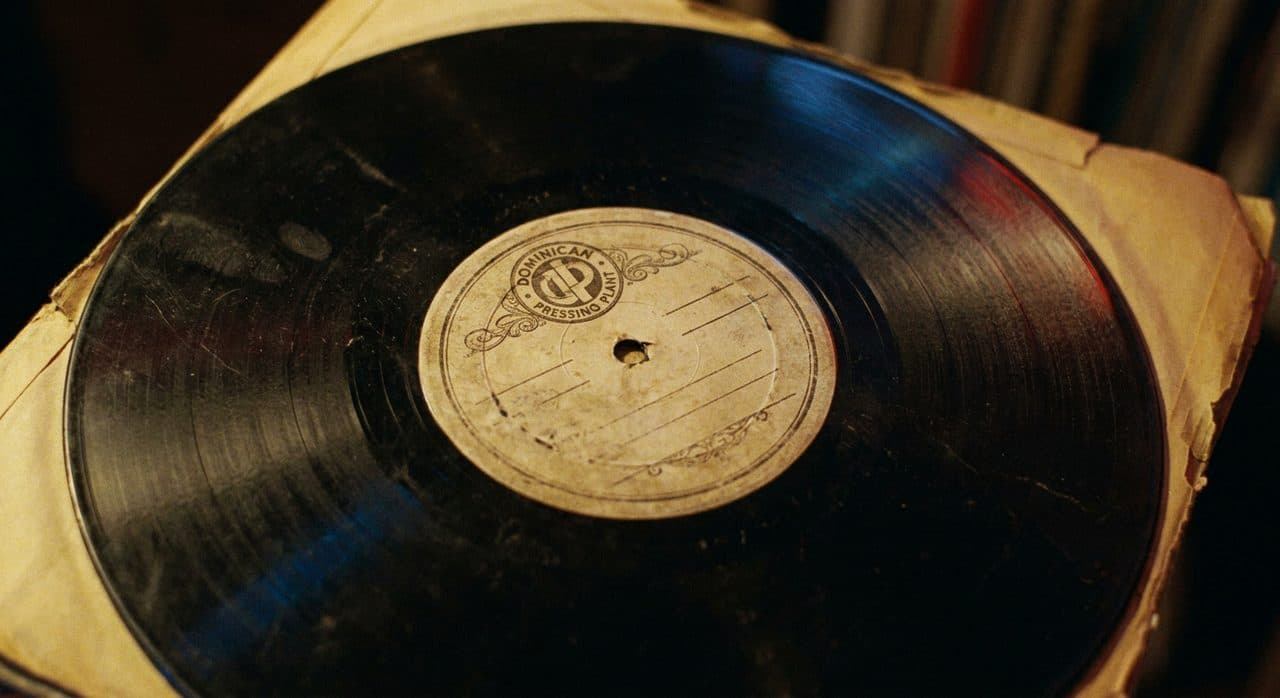
The owner keeps a jeweler's loupe on a chain around his neck and a stack of reference books under the register—discographies printed in Santo Domingo in the eighties, their spines held together with packing tape. He can date a record by examining the label's typography, identify a bootleg by the groove spacing, and recall which pressing plant in New York handled which artist's contract in which year. His knowledge extends to the session musicians, the engineers, even the graphic designers who created the covers.
Regulars bring him records from estate sales and thrift stores, hoping for authentication or appraisal. He'll hold a disc up to the light, checking for the telltale signs of a first pressing, then launch into a story about the studio where it was recorded or the neighborhood in the Bronx where that particular label operated. The conversation might last five minutes or forty, depending on the record and who else is in the shop. No one rushes him.
The Morning Crowd and the Saturday Surge
Weekday mornings bring the early shift—older men who remember when these records were new, who buy one or two albums and stay to talk about singers who've been dead for decades. They lean against the counter, careful not to disturb the stacks, and debate the merits of different orchestras with the intensity of scholars defending dissertations. The owner pours coffee from a thermos that lives on a shelf behind him, and the conversations drift between Spanish and English depending on who's speaking.
Saturdays transform the space. The narrow aisle becomes a slow-moving queue of diggers—collectors from Manhattan and Brooklyn who've heard rumors about the inventory, DJs looking for samples, younger listeners discovering their parents' music for the first time. The owner works the room like a conductor, pulling specific records for specific people, remembering what a customer bought three months ago and suggesting something adjacent. The transactions happen in cash, counted out on top of a stack of albums because there's no clear counter space.
What Lives in the Listening Station
A turntable sits on a wooden stool near the back, its needle replaced so frequently that the owner keeps spares in a drawer. This is where the real education happens. Someone pulls a record they're considering, and the owner cues up a specific track—not the hit everyone knows, but a deep cut that demonstrates why this particular pressing matters. The speakers are older than most of the customers, but they've been maintained with the kind of care usually reserved for vintage cars.
The sound fills the small space completely, and whoever's in the shop at that moment becomes an accidental audience. Strangers nod along to the same guitar line, and occasionally someone will start explaining the context to whoever's standing next to them—where this style came from, which neighborhood in Santo Domingo, what was happening politically when this album dropped. The shop becomes a classroom without anyone announcing the lesson.
The Archive That Never Closes
Behind the counter and in the basement below, the inventory extends into territory that never makes it to the floor. The owner maintains a mental catalog of everything he owns, including records he hasn't physically seen in years. A customer will ask about a specific album, and he'll disappear down the basement stairs, returning ten minutes later with the exact pressing requested, dust on his shoulders and a story about where he acquired it.
Some records aren't for sale at any price—personal copies, rarities he's holding for specific collectors, albums with sentimental value he's never quite explained. These live in a separate section, visible but untouchable, like museum pieces. He'll pull them out occasionally to show someone who'll appreciate the significance, handling the vinyl with the kind of reverence usually reserved for religious texts.
The Sidewalk Spillover and the Closing Ritual
On warm evenings, the music spills out onto Church Avenue, and people gather on the sidewalk outside, drawn by a melody they half-remember or a rhythm that catches them mid-stride. The owner props the door open with a crate, and the shop's interior becomes visible from the street—a glimpse into a very specific kind of archive, one that exists nowhere else in quite this configuration.
He closes when he closes, which is to say there's no strict schedule. The lights go off when the last customer leaves and the last conversation winds down. He pulls a metal gate across the front, secures it with a padlock that's older than the shop itself, and walks toward the subway with his headphones on, listening to a test pressing someone brought in that afternoon.
Practical Notes
The shop keeps irregular hours, generally open late mornings through early evening most days, though calling ahead isn't an option—there's no published number. The nearest subway stop is a short walk along Church Avenue, and street parking exists for those who drive. Bring cash, as cards aren't accepted, and prepare for limited space if visiting during weekend afternoons when the crowd thickens. Serious collectors should ask about basement inventory, though access depends on the owner's schedule and mood. The neighborhood offers plenty of Dominican restaurants and bakeries within a few blocks for before or after.
Tags: #TheOddEdit #FlatbushFinds #VinylCulture #DominicanMusic #RecordShop #ChurchAvenue #BrooklynDigs #MerengueTipico #DiggerLife #HiddenArchive #NeighborhoodGems #MusicHistory #CrateDigging #NYCVinyl #DiasporaStories
Sources consulted: atlasobscura.com · timeout.com · nytimes.com
All trademarks are the property of their respective owners.
Ask Karpo first
Want to know which days the owner has time to talk pressings or where the most valuable records hide?
Ask Karpo for the shop's unwritten browsing etiquette and the best visiting hours before you head out.