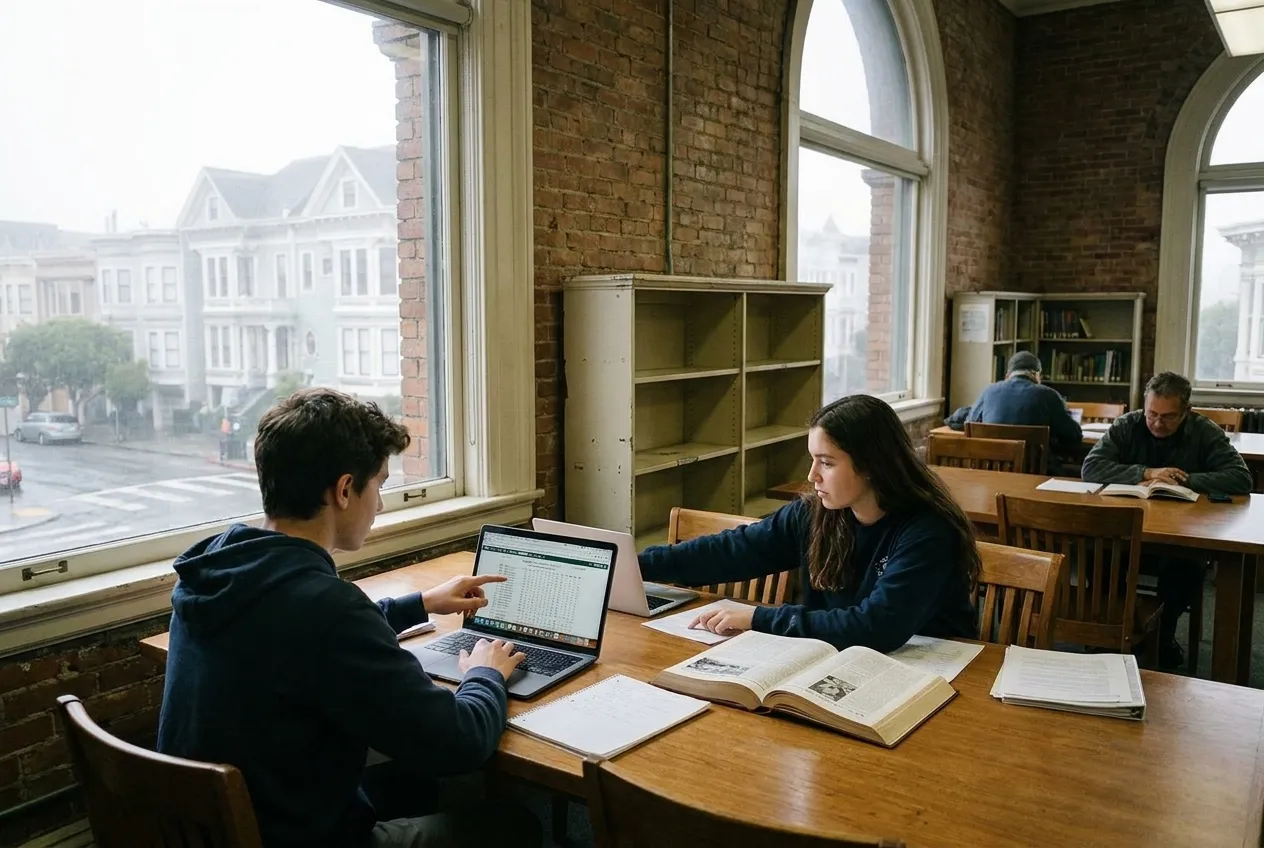
When your sports history project demands primary sources on the dodgers vs cubs rivalry, San Francisco's public library system becomes a strategic research hub rather than a simple book repository. High school students working on National League rivalry analysis need more than Wikipedia summaries—they need access to digitized game footage, newspaper archives from Chicago and Los Angeles, and statistical databases that trace competitive dynamics from Brooklyn to Chavez Ravine. The challenge lies not in finding a single perfect location but in understanding which branches offer the specific combination of resources, study space, and afternoon availability that matches your group's schedule and research depth. This guide maps the verification steps and transit tradeoffs that turn scattered library visits into a coherent research strategy.
Text Karpo your starting point, timing, group size, and priorities for a San Francisco plan tailored to this exact situation, with one realistic backup before you leave.

Branch Selection Based on Database Access and Afternoon Hours
The Main Library at 100 Larkin Street operates Monday 9-6, Tuesday through Thursday 9-8, Friday 12-6, Saturday 10-6, and Sunday 12-6, making it the most flexible option for weekday afternoon research sessions. However, popularity means competition for study rooms and computer terminals during peak after-school hours between 3-5 PM. Students should call 415-557-4400 in advance to confirm whether sports history databases like JSTOR or newspaper archives with 1950s-1980s coverage are accessible without university affiliation, since subscription access varies by funding cycles and vendor contracts.
Neighborhood branches offer quieter alternatives with distinct afternoon schedules. Mission branch (1234 Valencia Street) maintains Tuesday through Thursday 10-8 hours, while Richmond branch (351 9th Avenue) matches that schedule, both closing at 8 PM on research-friendly weeknights. Bayview (5075 3rd Street) and Excelsior (4400 Mission Street) also extend to 8 PM Tuesday through Thursday, but students must verify which branches maintain active subscriptions to sports databases versus general periodical collections. The tradeoff involves traveling farther from school for guaranteed seating versus competing for resources at the central location with the deepest archive holdings.
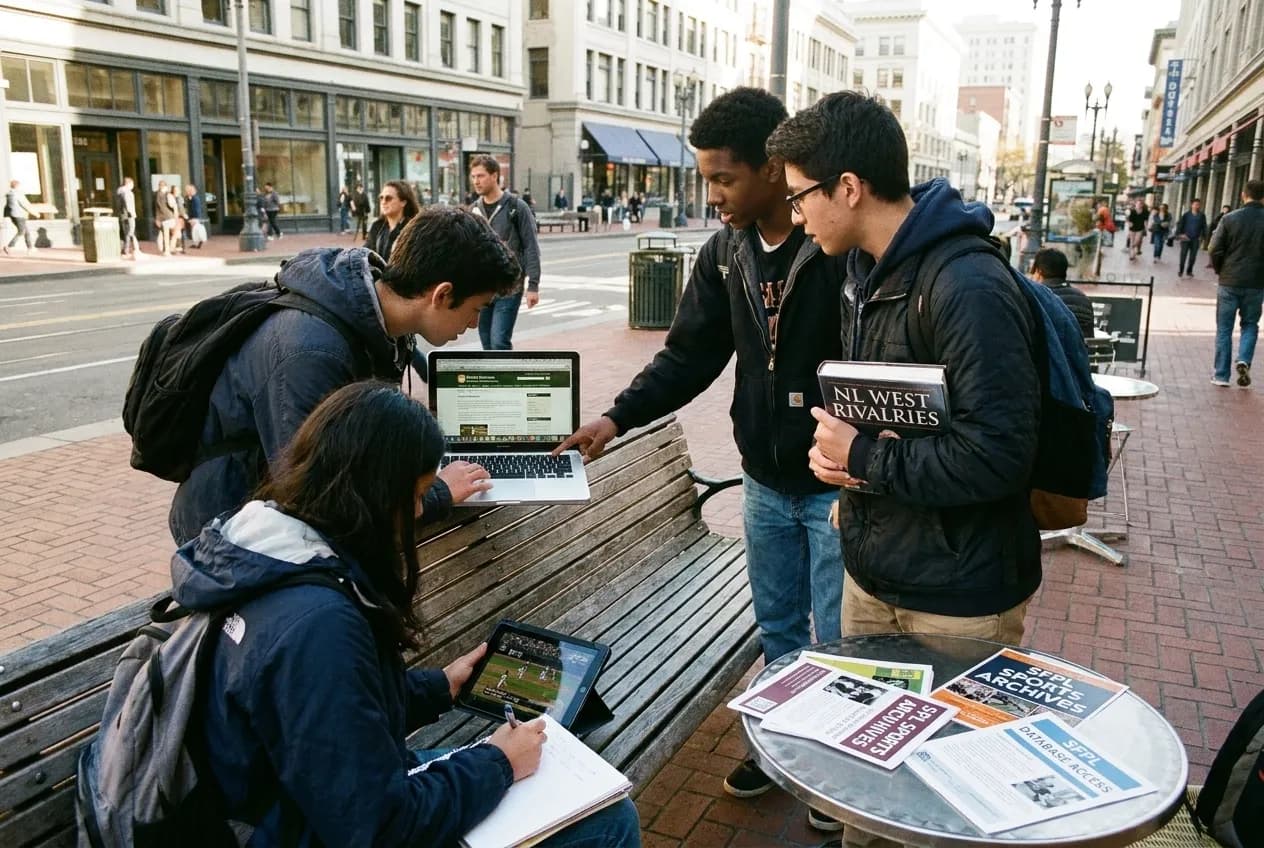
Transit Routes for Study Group Coordination
According to SFMTA's transportation guide, Muni connects students to library branches throughout the city, with the Trip Planner tool at SFMTA.com/Go allowing route comparison based on school dismissal times. Groups coming from different high schools need to identify transfer points—the Main Library sits near Civic Center BART and multiple bus lines, making it the easiest convergence point despite crowding. Students traveling from the Sunset District might find the Ortega branch (3223 Ortega Street, open Wednesday 12-8 and Thursday 11-8) more practical than crossing the city, though they'd need to confirm database availability by phone at 415-355-5700.
The T Third line benefits from upgraded traffic signals that reduce delays, relevant for students accessing Bayview or Visitacion Valley branches from eastern neighborhoods. Groups should build 15-minute schedule buffers into afternoon plans, since even improved transit faces variability between 3-4 PM. Walking from school may prove faster for students within a mile of branches like Mission Bay (960 4th Street, Wednesday 11-8, Thursday 10-6) or Noe Valley (451 Jersey Street, Tuesday and Wednesday 10-8), though those branches serve smaller populations and may lack specialized sports collections compared to Main.
Verifying Archive Depth for Rivalry Research
Not all library databases treat the dodgers vs cubs matchup with equal depth. Students need to distinguish between general sports databases that provide box scores and specialized collections offering game film, scouting reports, or beat writer columns from the rivalry's peak decades. Before committing to a branch, call reference desks to ask specifically whether they can access streaming video of classic games, digitized newspaper morgues from the Los Angeles Times and Chicago Tribune, or academic journals covering sports sociology and franchise relocation. The answer determines whether your group can complete visual analysis assignments or must rely solely on text sources.
The Main Library's San Francisco History Center focuses on local teams, meaning Giants-related materials dominate over Dodgers content despite the geographic rivalry. Students researching NL West dynamics may find this useful for comparative context but insufficient for deep Dodgers-Cubs analysis unless the collection includes national sports periodicals. Branches with strong periodical archives from the 1960s-1980s offer the richest primary sources for tracking how the rivalry evolved after the Dodgers moved west, but confirming this requires asking librarians about specific date ranges and publication titles rather than assuming comprehensive coverage.
Study Room Logistics and Group Work Policies
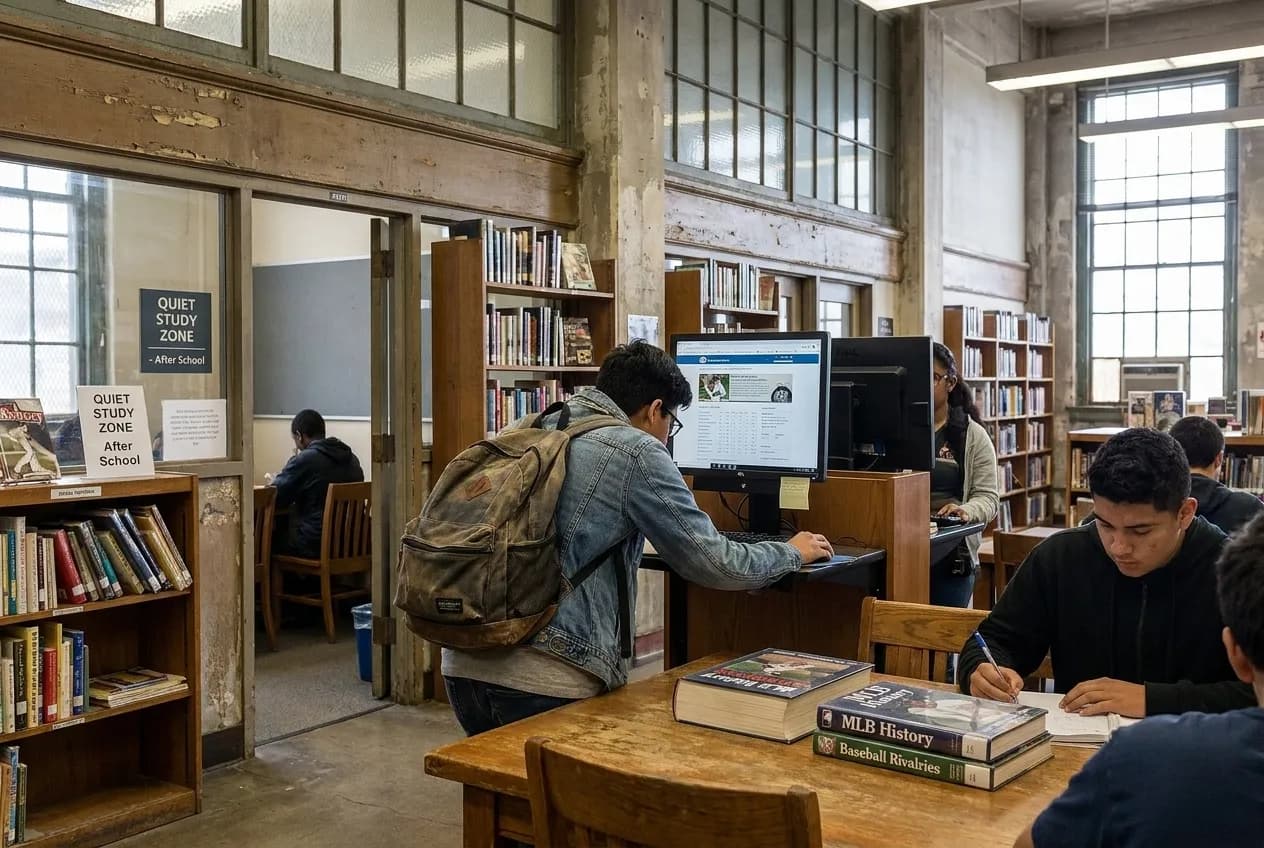
Quiet study rooms accommodate group discussion without disturbing other patrons, but availability varies dramatically by branch and time. The Main Library's group study rooms require advance reservation during peak hours, while smaller branches operate first-come systems that may leave groups splitting up or working in open areas. Students should ask when calling about afternoon availability whether rooms accommodate four people (a typical study group size), include whiteboards or monitors for presenting research findings, and permit food or drinks during extended sessions. These practical details shape whether a branch supports collaborative work or forces individual silent study.
Some branches enforce stricter policies on student gatherings during after-school hours, particularly if local middle schoolers already occupy space for homework help programs. The tradeoff between a branch with perfect database access but no group space versus one with excellent rooms but limited archives forces students to split research tasks—one subgroup handles database searches at Main while another outlines arguments at a neighborhood branch, then reconvening to synthesize findings. This distributed approach works only if transit between locations remains under 30 minutes and both sites stay open past 6 PM on the same weekdays.
Who This Research Strategy Fits Best
This multi-branch approach suits academically curious students comfortable navigating public transit and making verification phone calls rather than expecting a single perfect solution. Groups with members scattered across San Francisco neighborhoods benefit more than those attending the same school within walking distance of one branch. The strategy assumes weekday afternoon availability—students with after-school jobs or athletics need weekend options, when most branches operate reduced 1-5 or 10-6 Sunday hours that compress research time. Projects requiring deep archival work across multiple sessions favor this plan over those needing only surface-level statistics available through free internet sources.
Students who thrive on independent problem-solving will appreciate the challenge of comparing branch resources and building custom research routes, while those preferring clear instructions may find the verification steps frustrating. The approach works best for projects with flexible deadlines allowing time to discover which branch combinations yield the best sources, rather than last-minute cramming. Groups willing to divide labor—one person calls branches about database access, another maps transit routes, a third reserves study rooms—execute this strategy more efficiently than individuals trying to coordinate everything alone while managing other coursework.
Tags: #SanFranciscolibraries #highschoolresearch #baseballhistory #studygroupplanning #SFPLbranches #Munitransit #sportsarchives #academicresources #weekdayafternoonstudy #MLBresearch
Sources consulted: Source 1: sf.gov · Source 3: sfmta.com · Source 4: sfpl.org
All trademarks are the property of their respective owners.
Ask Karpo first
Ask Karpo to turn this San Francisco idea into a current plan for your date, budget, companion, transit preference, and energy level. Karpo can narrow the route and flag what to verify before you go.


