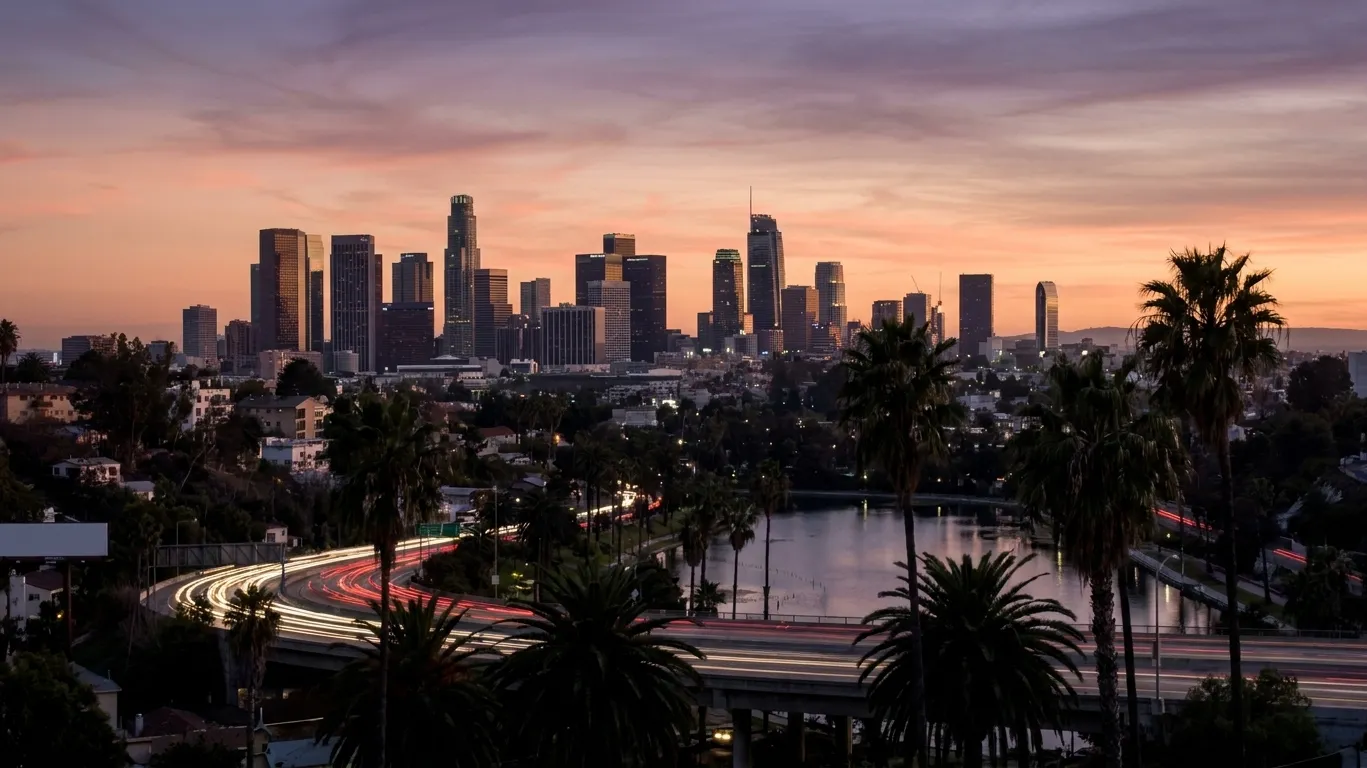
Everywhere else, choosing a restaurant is a food decision and the time is a preference. In Los Angeles the time is the decision and the restaurant follows from it. A booking at 6:45pm on the other side of the city is not a dinner plan, it is an hour in a car followed by an apology to the host stand. Locals do not have better information about restaurants than visitors do — they have a different sequencing instinct, built around three things: when the freeways clear, where you can actually leave a car, and how the evening moves after the plates are cleared. Learn those three and the city becomes considerably easier to eat in.
Karpo can time your Los Angeles evening around the traffic that exists right now, pick a district you can actually reach, and flag which blocks are valet-only.
The two hours to avoid crossing the city
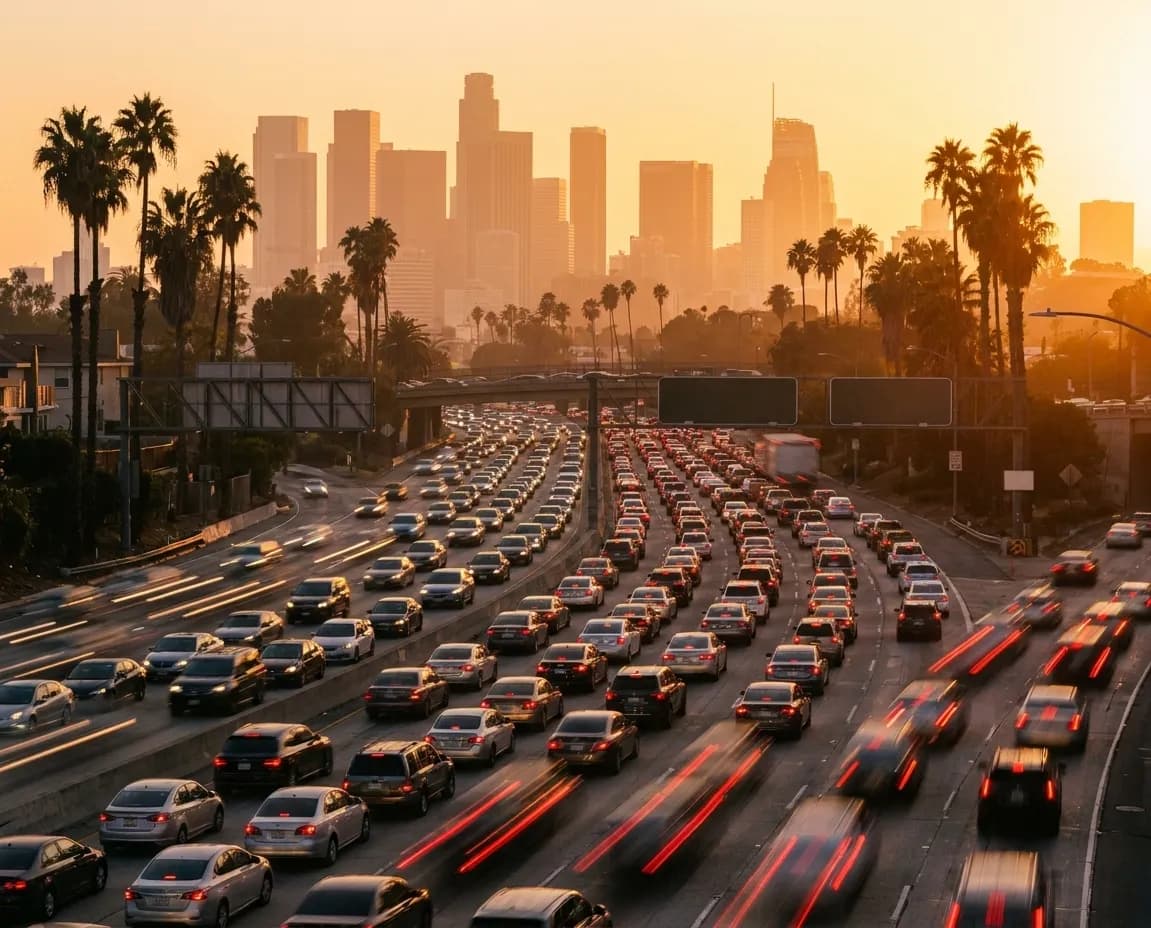
Los Angeles has a broad afternoon peak rather than a sharp one, and the worst window for crossing between the Westside and anywhere east is roughly 4pm to 7pm on weekdays. A journey that takes twenty-five minutes at nine at night can take an hour and ten inside that window, and no route avoids it because every route is full.
This produces the local booking habit that surprises visitors: either eat early, arriving before the peak solidifies, or eat late, leaving after it dissolves. A 5:30pm or a 8:30pm reservation across town are both easy. The 7pm reservation across town is the one that makes you late, and it is the one everyone books.
Eat in your own half of the city on weeknights
The single most useful local rule is that a weeknight dinner happens on your side of town. Not because the restaurants are better, but because the ninety minutes you save is worth more than the marginal difference between a very good restaurant nearby and an outstanding one far away.
Save the cross-city trips for weekends, and specifically for Saturday and Sunday earlier in the day, when the freeways move. A Saturday lunch in a district you would never drive to on a Tuesday evening is one of the genuine pleasures of living here, and it costs a fraction of the time.
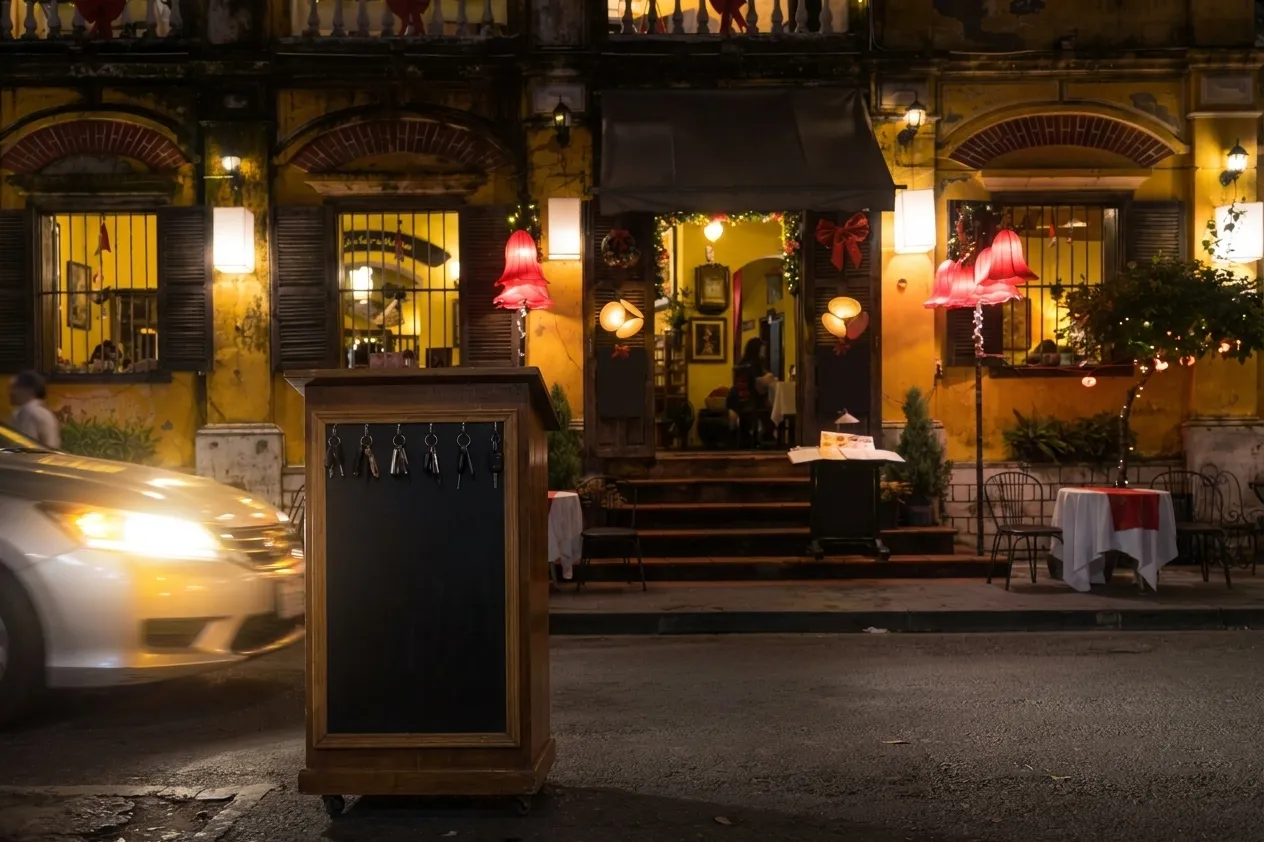
Parking is a cost, and valet is usually the cheaper one
Visitors resist valet on principle and then spend twenty-five minutes circling, which at any realistic valuation of an evening is a worse deal. In the dense dinner districts — much of Koreatown, parts of Hollywood, the busier stretches of the Westside — valet is effectively the parking system, and on a Friday night there is no meaningful street alternative.
Where street parking is realistic, read the sign properly. Los Angeles kerbside signs stack multiple rules on one pole: permit-only hours, street-cleaning windows, time limits, and rush-hour tow zones. The rush-hour restrictions are the expensive ones, because a car left in a peak-hour lane is towed rather than ticketed, and retrieving it costs several hundred dollars and most of the following morning.
Sequencing an evening so it does not involve a second drive
The best Los Angeles evenings involve exactly one drive. You park once, and everything afterwards happens on foot. That constraint immediately narrows the map to the districts that support it — Highland Park's York and Figueroa stretch, Sawtelle, the walkable core of Koreatown, downtown's Arts District, parts of Silver Lake and Echo Park — and it improves the evening enormously, because it removes the point at eleven o'clock where someone has to decide whether they are able to drive.
If drinks are part of the plan, this stops being a convenience question. Rideshare surge pricing after last call in the busy districts is significant and the wait can be long, so the version where you left the car at home and took one ride each way is frequently both cheaper and simpler than the version where you drove.
Late is easier than early, everywhere except the kitchen
The pleasant irony of Los Angeles is that the city becomes easy exactly when most kitchens close. From about nine o'clock the freeways open up, parking appears, and driving across town becomes a genuine pleasure. The catch is that outside Koreatown, Thai Town, the taco trucks and a handful of institutions, the food has stopped.
So a late Los Angeles evening works if you choose the district for its hours rather than its reputation. Book the 9:30pm table in Koreatown rather than the 9:30pm table on the Westside, and the whole evening cooperates — easy drive, easy park, kitchen still going, and a room that is at its best rather than winding down.
A workable default plan
For a weeknight: pick a district within twenty minutes of where you already are, book for 6pm or after 8:30pm, and choose somewhere you can walk from afterwards. For a weekend: pick the district first, go earlier than feels necessary, and treat the drive as part of the outing rather than an obstacle to it.
And build in the fifteen minutes. Every experienced person in this city adds a quarter of an hour to every estimate, arrives on time, and has a drink at the bar if they are early. The alternative is arriving flustered at 7:20 for a 7pm table, which in Los Angeles is not bad luck. It is arithmetic.
Public transport deserves more credit than Angelenos give it for specific journeys. The Metro rail lines genuinely work for a handful of dinner districts — downtown, Koreatown, Highland Park and Boyle Heights among them — and on those corridors a train removes both the traffic and the parking problem at once. It is not a citywide solution and nobody pretends otherwise, but for the right four or five destinations it is simply the better option.
Tags: #LADining #LATraffic #DinnerNearMe #LosAngelesFood #Parking #ValetParking #Koreatown #HighlandPark #Sawtelle #LAEats #EveningPlans #WeekendPlans #CityGuide #DriveTime
Please drink responsibly. Must be of legal drinking age.
All trademarks are the property of their respective owners.
Ask Karpo first
Want to know how long tonight's drive really takes, which district you can reach before the kitchen closes, and where you can park once and walk? Ask Karpo before you leave.